
Ressources
Explorez une large gamme de ressources sur le GCED afin d’approfondir votre compréhension et de renforcer vos activités de recherche, de plaidoyer, d’enseignement et d’apprentissage.
2,161 résultats trouvés
 [Summary] Media and Information Literacy: The Time to Act is Now! Année de publication: 2021 Auteur institutionnel: UNESCO UNESCO has developed a comprehensive Curriculum which provides a framework for training teachers. But it is also a foundation that will also be of help to others: to learners, to content providers like internet companies and news media outlets, and to citizens of all ages as they consume, create and use content, including information.The second edition of the learning resource has been significantly expanded since the first publication in 2011. The MIL Curriculum reflects the changing nature of the information landscape. It now includes insight from a broader range of content providers than before, including libraries, archives, museums, media, and digital communications companies.The Curriculum is designed to empower educators and learners in general – from schoolteachers to those involved in training, the media and libraries, governments, and NGOs – to train people to spot misrepresentations and disinformation, and most importantly develop critical thinking competencies.
  Education for Global Citizenship as a Transformative Methodological Proposal: Reflections and Practical Proposals Année de publication: 2019 Auteur: Isarel García | Joan Gratacós | Desiderio De Paz | Mercè Gil | Assumta Zapata Auteur institutionnel: Oxfam International This publication, the result of the collaborative work of the Network of educators for global citizenship, is a proposal for reflection and practical examples regarding the transformative nature of Education for global citizenship, being essential that for this educational approach that its actions educational activities are aimed at promoting critical thinking, dialogue, collaboration, solidarity and commitment to transform inequalities and promote social justice, equity and sustainable development. The methodological approach, therefore, must also be transformative and the strategies that accompany processes, promote this social transformation. Transformative methodologies are inherent to Education for global citizenship and the methodological processes that contribute to the construction of schools for global citizenship, in our opinion, should be based on three different pillars: promote the transformative dimension of education to build another world possible and necessary, promote a socio-affective approach focused on solidarity and cosmopolitan empathy and promote the construction of a more participatory and integrated curriculum that generates meaning in teachers and students. La educación para la ciudadanía global como propuesta metodológica transformadora: Reflexiones y propuestas prácticas Année de publication: 2019 Auteur: Isarel García | Joan Gratacós | Desiderio De Paz | Mercè Gil | Assumta Zapata Auteur institutionnel: Oxfam Intermón Esta publicación, fruto del trabajo colaborativo de la Red de educadores y educadoras para una ciudadanía global, es una propuesta de reflexión y ejemplos prácticos en torno al carácter transformador de la Educación para la ciudadanía global, siendo esencial que para este enfoque educativo que sus acciones educativas vayan encaminadas a fomentar el pensamiento crítico, el diálogo, la colaboración, la solidaridad y el compromiso para la transformación de las desigualdades y la promoción de la justicia social, la equidad y el desarrollo sostenible. El enfoque metodológico, por lo tanto, debe ser también transformador y las estrategias que acompañen procesos, fomentar esta trasformación social. Las metodologías transformadoras son consustanciales a la Educación para la ciudadanía global y los procesos metodológicos que contribuyen a la construcción de escuelas para la ciudadanía global, a nuestro entender, deberían basarse en tres pilares distintos: promover la dimensión transformadora de la educación para construir otro mundo posible y necesario, promover un enfoque socio afectivo centrado en la solidaridad y la empatía cosmopolita y promover la construcción de un currículo más participativo e integrado que genero sentido en docentes y alumnado.
  Participatory Diagnosis of Youth Perceptions and Attitudes Towards Hate Speech and Denialism of Gender Violence and Rights of Migrants From the Approaches of Global Citizenship Education Année de publication: 2024 Auteur: Bárbara Biglia | Aloe Cubero Auteur institutionnel: InteRed | Agencia Española de Cooperación Internacional para el Desarrollo (AECID) This diagnosis seeks to respond to the need to explore the perceptions and attitudes of youth regarding hate speech, specifically those that deny gender violence and the rights of migrants. We wanted to carry out this process recognizing the agency of young people and therefore we seek to generate collective and mobilizing reflections that increase their commitment as agents of change in our society. To this end, we place ourselves within the framework of Feminist Activist Research (IAF) using photovoice as a research strategy. Diagnóstico participativo a través de photovoice sobre percepciones y actitudes de la juventud en torno a los discursos de odio y negacionistas de la violencia de género y de los derechos de las personas migrantes desde los enfoques de la educación para Année de publication: 2024 Auteur: Bárbara Biglia | Aloe Cubero Auteur institutionnel: InteRed | Agencia Española de Cooperación Internacional para el Desarrollo (AECID) Este diagnóstico busca responder a la necesidad de explorar las percepciones y actitudes de la juventud en torno a los discursos de odio, específicamente sobre aquellos negacionistas de las violencias de género y en contra de los derechos de las personas migrantes. Hemos querido hacer este proceso reconociendo la agencia de las personas jóvenes y por ello buscamos generar reflexiones colectivas y movilizadoras que aumenten su compromiso como agentes de cambio en nuestra sociedad. Para tal fin, nos ubicamos en el marco de la Investigación Activista Feminista (IAF) haciendo uso del photovoice como estrategia de investigación.
 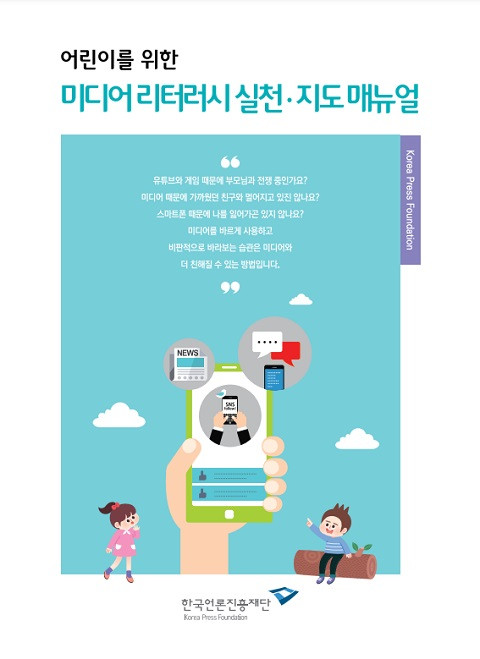 어린이를 위한 미디어 리터러시 실천·지도 매뉴얼 Année de publication: 2018 Auteur: 김형태 Auteur institutionnel: 한국언론진흥재단 본 자료는 어린이가 생활 속에서 미디어를 긍정적으로 활용할 수 있는 방법과 지침을 제시하여, 학생들의 발달역량 및 디지털 시민성 등 디지털 시대를 건강하게 살아갈 수 있는 능력을 향상시킬 수 있도록 구성하였다.
 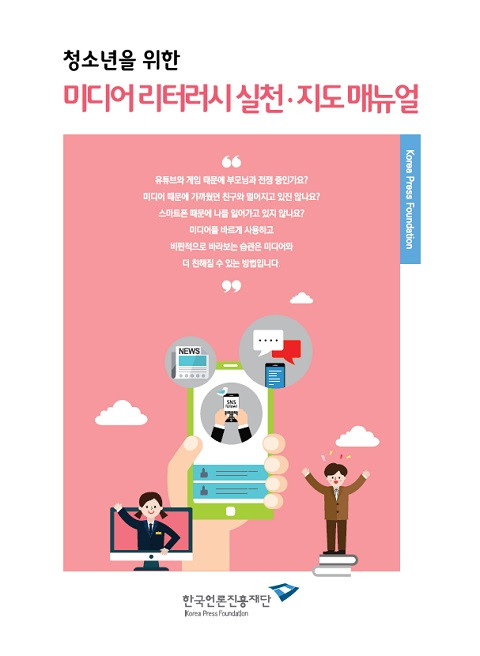 청소년을 위한 미디어 리터러시 실천·지도 매뉴얼 Année de publication: 2018 Auteur: 이연희 Auteur institutionnel: 한국언론진흥재단 본 매뉴얼은 미디어가 무엇인지, 미디어는 나의 삶에서 어떤 위치를 차지하고 있고 어떤 영향을 주고 있는 안내하면서, 청소년이 주체적으로 올바른 미디어 사용을 통해 세상을 바로 보는 힘을 키울 수 있도록 구성하였다.
  대학의 미디어 리터러시 교육 활성화 방안 Année de publication: 2020 Auteur: 김경희 | 정윤경 | 오연주 Auteur institutionnel: 한국언론진흥재단 본 연구는 한국언론진흥재단에서 공모연구로 수행한 지정주제 연구보고서로 국내외 대학의 미디어 리터러시 교육 및 관련 사업 현황과 우수 사례의 분석을 토대로 대학 내 미디어 리터러시 교육의 활성화 방안을 마련하고 대학이 미디어 리터러시 교육의 지역거점으로 거듭나기 위한 정책적 제언을 도출하는 것을 목표로 한다. 1. 서론2. 국내 대학의 미디어 리터러시 교육 현황3. 해외 대학의 미디어 리터러시 교육 우수 사례 분석4. 국내 대학의 미디어 리터러시 교육 우수 사례 분석5. 대학 미디어 리터러시 교육 활성화 및 대학 거점화 방안6. 결론
  노년층 미디어교육 활성화 방안 Année de publication: 2019 Auteur: 조재희 | 나은영 | 이혜선 Auteur institutionnel: 한국언론진흥재단 미디어 생태계가 급격히 변하고 있는 현대 사회에서 미디어 소수자들에 대한 디지털 격차는 여전히 확장되고 있다. 특히 환경의 변화에 유연하게 적응하기 어려운 노년층들은 이러한 미디어 생태계 변화에 적절히 대처하기 어려우며 이로 인해 디지털 격차를 겪게 된다. 이에 미디어 소수자로서의 노년층에 대한 미디어교육의 필요성이 강조되고 있고 정부와 지자체를 비롯한 다양한 기관에서 노년층을 대상으로 미디어교육을 실시하고 있다.본 연구는 다양한 방법론을 통해 노인 미디어교육을 활성화시키기 위한 방안을 다각도로 탐색해 보았다. 본 연구의 연구결과는 노년층에 특화된 미디어교육 프로그램을 개발하고 진행하기 위한 실질적인 제언을 줄 수 있으며 노인 미디어교육 활성화를 위한 정책 마련을 위해 고려해야 하는 구체적인 사항들을 제시한다.
 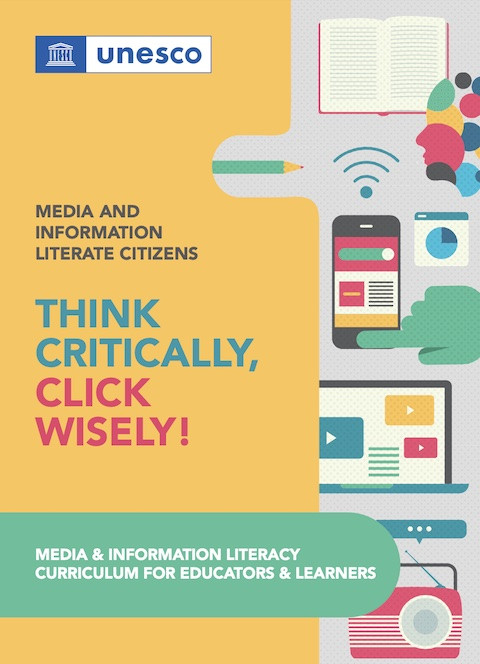 Media and Information Literate Citizens: Think Critically, Click Wisely! Année de publication: 2021 Auteur: Alton Grizzle | Carolyn Wilson | Ramon Tuazon | C.K. Cheung | Jesus Lau | Rachel Fischer | Dorothy Gordon | Kwame Akyempong | Jagtar Singh | Paul R. Carr | Kristine Stewart | Samy Tayie | Olunifesi Suraj | Maarit Jaakkola | Gina Thésée | Curmira Gulston Auteur institutionnel: UNESCO Content providers such as libraries, archives, museums, media and digital communications companies can enable inclusive and sustainable development. However, they do not always live up to these ideals, which creates challenges for the users of these services. Content providers of all types open up new opportunities for lifelong learning. But at the same time, they open up challenges such as misinformation and disinformation, hate speech, and infringement of online privacy, among others.Media and information literacy is a set of competencies that help people to maximize advantages and minimize harms. Media and information literacy covers competencies that enable people to critically and use of digital technologies. Capacities in these areas are indispensable for all citizens regardless of their ages or backgrounds.This pioneering curriculum presents a comprehensive competency framework of media and information pedagogical suggestions. It features various detailed modules covering the range of competencies needed to navigate today’s communications ecosystem. This resource links media and education, education for sustainable development, cultural literacy and the exponential information literacy curriculum, everyone can become media and information literate as well as peer-educators of media and information literacy.