
Ressources
Explorez une large gamme de ressources sur le GCED afin d’approfondir votre compréhension et de renforcer vos activités de recherche, de plaidoyer, d’enseignement et d’apprentissage.
328 résultats trouvés
 EIU Best Practices Series No. 13: Integrating Organic Waste Management In Fijian Schools Année de publication: 2009 Auteur: Bulou Daiana Taoba Auteur institutionnel: APCEIU This monograph is one of APCEIU's EIU Best Practices Series, which aims to encourage educators, scholars, and activists to implement and share local initiatives on EIU. The Series No.13 introduces a case study of University of the South Pacific PACE’s projects, which showcase students learning about waste management that contribute to environmental protection. As issues of water disposition, rapid urbanization, limited land areas, consumer behavior change, and vulnerable ecosystems are increasingly concerning in the Pacific Island nations, the case highlights the need to educate students on the importance of solid waste management, social responsibility, and global citizenship.
 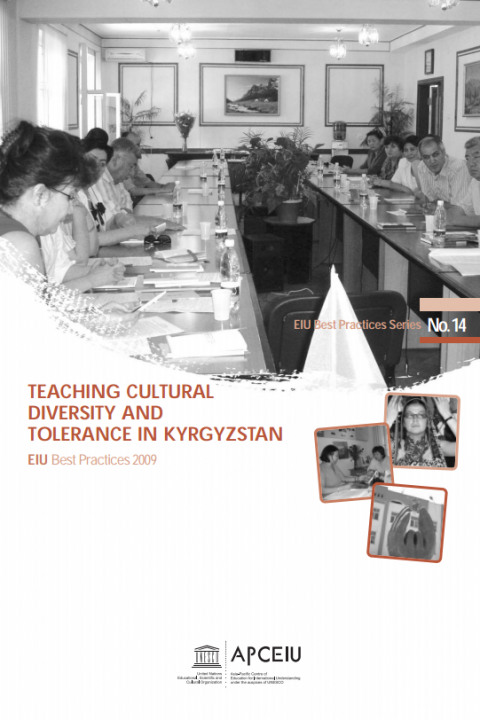 EIU Best Practices Series No. 14: Teaching Cultural Diversity and Tolerance in Kyrgyzstan Année de publication: 2009 Auteur: Erkeayim Jorobekavo | Almakan Naizabekova Auteur institutionnel: APCEIU This report is one of APCEIU's EIU Best Practices Series, which aims to encourage educators, scholars, and activists to implement and share local initiatives on EIU. The Series No.14 introduces ‘Culturology,’ a mandatory course instituted in Kyrgyz-Uzbek University, designed and implemented to teach cultural diversity and tolerance to students. Given the nation’s recent history of independence and racial and religious diversity, the University chose to develop the course program and methodology guidebook to foster understanding of international education and multiculturalism.
  EIU Best Practices Series No. 16: A Korean Agricultural Village's Communal Movement for Education for Sustainable Development Année de publication: 2009 Auteur: Seungkwan Jung Auteur institutionnel: APCEIU This monograph is one of APCEIU's EIU Best Practices Series, which aims to encourage educators, scholars, and activists to implement and share local initiatives on EIU. The Series No.16 introduces the Poolmoo School, which turns surrounding economy, ecology, culture into educational learning material, and endeavor to create a school culture with emphasis on sustainable development. Students of Poolmoo School learn about organic farming, ecological village, and agricultural sustainability, essentially raising awareness of environmental preservation for the next generation.
  EIU Best Practices Series No. 19: Culture-Based Education Programme for Indigenous Children & Youth in the Philippines Année de publication: 2010 Auteur: Benjamin David Abadiano Auteur institutionnel: APCEIU This monograph is one of APCEIU's EIU Best Practices Series, which aims to encourage educators, scholars, and activists to implement and share local initiatives on EIU. The Series No.19 introduces the Pumulaan program, a successful culture-based education programme for indigenous children and youth in the Philippines. The program is similar to that of Tugdaan, a widely recognized education program that promote learning for the Indigenous people. The Pumulaan program focuses on providing culturally sensitive, appropriate, and relevant education to students in Mangyan Tribe in Mindoro and the Matigsalog Tribe in Mindanao, incorporating values of peace, harmony, and diversity within the education programs.
 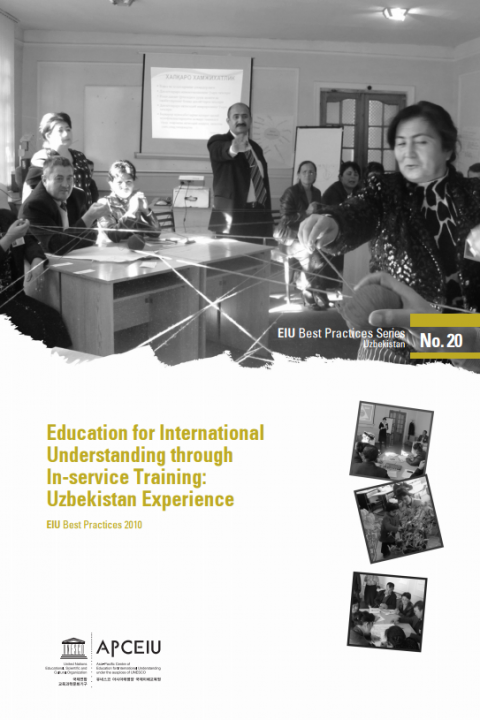 EIU Best Practices Series No. 20: Education for International Understanding through In-service Training: Uzbekistan Experience Année de publication: 2010 Auteur: Mukhamadjon Aliyev Auteur institutionnel: APCEIU This monograph is one of APCEIU's EIU Best Practices Series, which aims to encourage educators, scholars, and activists to implement and share local initiatives on EIU. The Series No.20 introduces EIU projects undertaken by the Avloni In-Service Teacher Training Institute in Uzbekistan. The programme integrates EIU concepts into the public education through in-service training programs, promotes EIU concepts in different subjects and projects, and broadcasts good practices in the field of global citizenship education nationwide. Although it is still in the process of improvement, the programme is expected to raise awareness of EIU and empower education managers, principals and teachers in Uzbekistan.
  EIU Best Practices Series No. 21: EIU School-based Initiatives in Bhutan Année de publication: 2010 Auteur: Rinzin Wangmo Auteur institutionnel: APCEIU This monograph is one of APCEIU's EIU Best Practices Series, which aims to encourage educators, scholars, and activists to implement and share local initiatives on EIU. The Series No.21 introduces the case of Yonphula Lower Secondary School in Trashigang, Bhutan, which successfully incorporated EIU principles into the existing curriculum. With the Gross National Happiness (GNH) principle as Bhutan’s educational framework, EIU can fit easily to the academic settings and system. The case highlights activities, such as providing non-formal education for illiterate parents, and counseling services, health programs, and meditation programs to students, in exemplifying how innovative school activities can optimize the GNH framework for the promotion of EIU.
 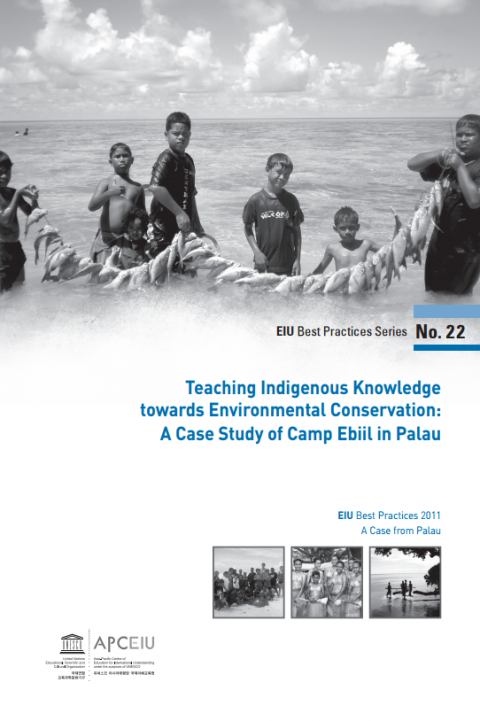 EIU Best Practices Series No. 22: Teaching Indigenous Knowledge towards Environmental Conservation: A Case Study of Camp Ebiil in Palau Année de publication: 2011 Auteur: Ann Kloulechad Singeo Auteur institutionnel: APCEIU This monograph is one of APCEIU's EIU Best Practices Series, which aims to encourage educators, scholars, and activists to implement and share local initiatives on EIU. The Series No.22 introduces a case study of community-based education program from Camp Emiil in Palau that promote protection of one's identity and heritage by teaching the youth with the traditional knowledge. The camp allows young participants to take direct part in fun activities and learning opportunities to immerse in culture and nature. Through such experiential learning, participants become more knowledgeable about ethnic practices and acquire important character building skills and conservation knowledge.
 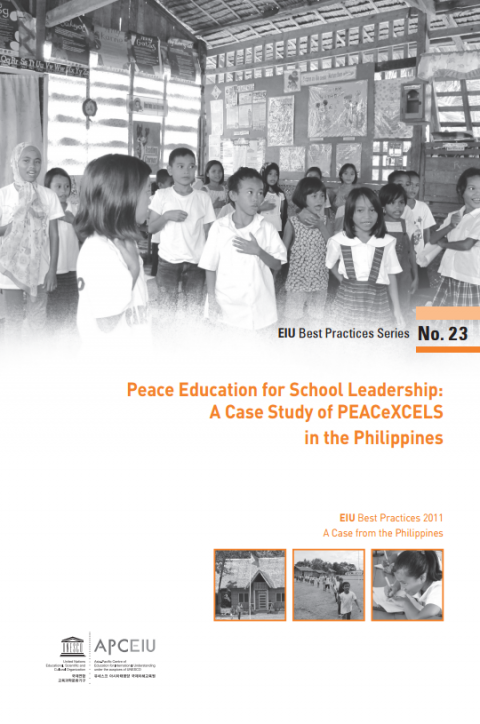 EIU Best Practices Series No. 23: Peace Education for School Leadership: A Case Study of PEACeXCELS in the Philippines Année de publication: 2011 Auteur: Ethel Agnes Pascua-Valenzuela | Elaissa Marina Mendoza | Cristina Villanueva-Moreno Auteur institutionnel: APCEIU This report is one of APCEIU's EIU Best Practices Series, which aims to encourage educators, scholars, and activists to implement and share local initiatives on EIU. The Series No.23 showcases Peace Education Excellence in School Leadership for Southeast Asia (PEACeXCELS) in the Philippines, a competency building program for educators on EIU. Through comprehensive training, principals and educators undertook reforms in respective schools, implementing various activities to include concept of peace and multiculturalism within school policies and lesson plans.
 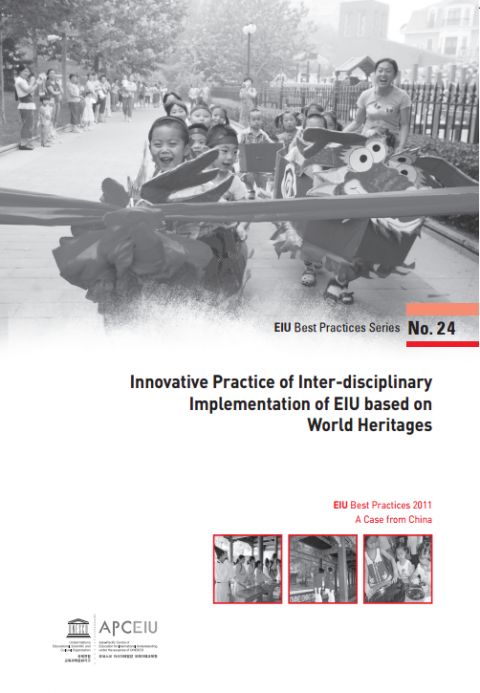 EIU Best Practices Series No. 24: Innovative Practice of Inter-disciplinary Implementation of EIU based on World Heritages Année de publication: 2011 Auteur: QIAN Lixia Auteur institutionnel: APCEIU This monograph is one of APCEIU's EIU Best Practices Series, which aims to encourage educators, scholars, and activists to implement and share local initiatives on EIU. The Series No.24 introduces a research undertaken by the Research Center for ESD, which outline projects that can be implemented to explore and promote education for international understanding and world heritage. To test the effectiveness, the Center carried out activities such as role-playing discussions and hands-on festival experiences at four kindergartens of the Huijia Education Organization and the High School Affiliated to the Renmin University of China. Overall, such initiative increased multicultural awareness of students and teachers alike, and affirmed commitment for further research and development.
 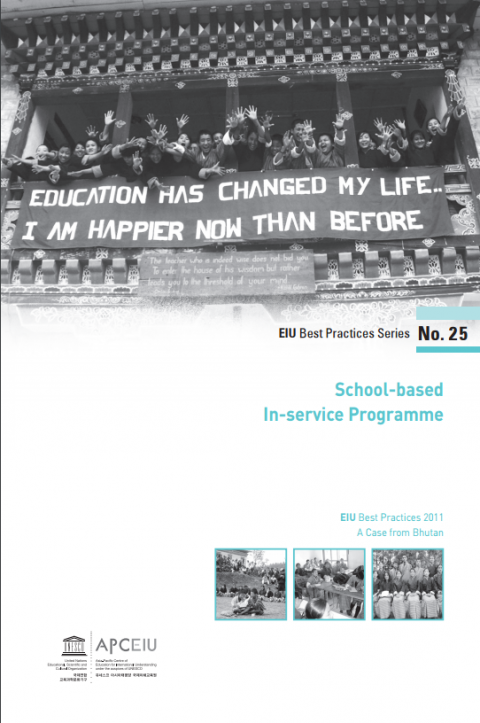 EIU Best Practices Series No. 25: School-based In-service Programme Année de publication: 2011 Auteur: Yeshi Pemo Auteur institutionnel: APCEIU This monograph is one of APCEIU's EIU Best Practices Series, which aims to encourage educators, scholars, and activists to implement and share local initiatives on EIU. The Series No.25 introduces the case of the Damphu Lower Secondary School in Bhutan, which carried out a number of initiatives to promote culture of peace and EIU through workshops, literary activities, and contests for students, teachers, parents, and nation-wide UNESCO clubs. The case showcases that the educators’ aspirations toward education for peace can be achieved through the combination of excellent school leadership, strong commitment, high competency, and available resources.