
Ressources
Explorez une large gamme de ressources sur le GCED afin d’approfondir votre compréhension et de renforcer vos activités de recherche, de plaidoyer, d’enseignement et d’apprentissage.
518 résultats trouvés
 Citoyenneté et éducation à la citoyenneté: points de vue d’enseignants et d’enseignantes du secondaire au Gabon Année de publication: 2013 Auteur: René Casimir Zoo Eyindanga Auteur institutionnel: McGill University. Faculty of Education Le présent article vise à dégager les significations que des enseignants et enseignantes de quelques écoles secondaires du Gabon attribuent à la citoyenneté et à l’éducation à la citoyenneté sur la base d’un sondage effectué auprès d’une soixantaine d’entre eux, dont plusieurs enseignent l’éducation civique. Le contexte de la démocratie est évoqué, sur fond d’exigences sociales nouvelles, contexte qui commande un regard renouvelé sur l’éducation civique dispensée à l’école. Les points de vue exprimés, qui font écho à l’expérience personnelle et professionnelle des pédagogues concernés, rendent compte d’une conception quelque peu normative de la citoyenneté bien qu’ouverte sur la participation, mais aussi de l’obligation qu’a l’école d’assurer une éducation civique plus robuste malgré les obstacles sociaux et scolaires rencontrés.
  L'education a la citoyennete: Le role de l'ecole Auteur: Saliou Sarr Auteur institutionnel: EIP-Sénégal L'éducation à la citoyenneté est un thème fédérateur des programmes transversaux en cours dans l'école Sénégalaise (Education à la vie familiale et en matière de population, le Programme de formation et d'information à l'environnement, l'éducation aux droits Humains, l'éducation à la paix, l'éducation pour le développement et prend assise dans le renouvellement constant des approches et pratiques pédagogiques à l'école, à ce titre l'éducation à la citoyenneté est un élément novateur dans le projet d'école; et l'école parce qu'elle a une certaine autonomie par rapport à la société peut être un agent de changement, agir pour se démocratiser et démocratiser la société.Dans mon propos, j'aborderai plusieurs aspects liés à la citoyenneté, aux objectifs de l'éducation à la citoyenneté, ses grands axes, les approches et, ensemble nous installerons le dispositif pour renforcer les acquis et faire de l'école un lieu d'apprentissage du vivre ensemble et de l'ouverture sur le monde.
  D’une pensée coloniale à une pensée du colonial ?: La question de la restitution des œuvres africaines issues de la colonisation Année de publication: 2019 Auteur: Aurélie Duvivier En 2013, le Musée de Tervuren fermait ses portes pour la première grande rénovation de son histoire. Ce samedi 8 décembre 2018, flambant neuf, il a pu à nouveau accueillir des visiteurs. Comme nous le fait remarquer le magazine Culture Remains, au fil des temps, le musée a changé de dénominations : appelé successivement Musée du Congo, Musée du Congo belge puis Musée Royal de l’Afrique centrale, son nom a été dorénavant anglicisé en Africa Museum, l’ancrant ainsi symboliquement dans son époque. Mais ce n’est pas tout : considéré comme « trop colonialiste » par certains, la rénovation a permis une profonde modification de la scénographie plus en adéquation avec la pensée de son siècle.
  Education for Global Citizenship in a Postcolony: Lessons from Cameroon Année de publication: 2015 Auteur: Michael Foaleng Auteur institutionnel: Éducation des Adultes et Développement Global citizenship is only possible where individuals are able to engage locally in the identification and solution of their basic problems. The postcolonial education system of Cameroon, with its outdated teaching methods, produces poor scholars, who identify with the adult world through attitudes of hesitancy. We have not yet learned to be a citizen here. This is why citizenship education is currently recognised as a necessity. But its effectiveness presupposes that it is addressed not only to young people but to adults as well. One of the major challenges is to create an appropriate pedagogy for this purpose. Educación para la ciudadanía mundial en una nación postcolonial: lecciones de Camerún Année de publication: 2015 Auteur: Michael Foaleng Auteur institutionnel: Éducation des Adultes et Développement La ciudadanía mundial solo puede ejercerse allí donde las personas son capaces de participar a nivel local en la identifi cación y la solución de sus problemas básicos. El sistema postcolonial de educación de Camerún, cuyos métodos pedagógicos están obsoletos, forma estudiantes deficientes, que se identifi can con el mundo de los adultos mediante actitudes de vacilación. Aún no hemos aprendido a ser ciudadanos en este país. Por eso en la actualidad se reconoce la necesidad de impartir educación para la ciudadanía. Sin embargo, para que resulte efi caz es preciso que no solo esté orientada a los jóvenes, sino también a los adultos. Uno de los principales desafíos consiste en crear una pedagogía adecuada para alcanzar este objetivo. Éducation à la citoyenneté mondiale à l’ère postcoloniale : leçons du Cameroun Année de publication: 2015 Auteur: Michael Foaleng Auteur institutionnel: Éducation des Adultes et Développement Une citoyenneté mondiale n’est possible que là où localement les individus sont capables de s’engager dans l’identification et la résolution de leurs problèmes élémentaires. Le système éducatif du Cameroun postcolonial, avec ses méthodes pédagogiques désuètes, produit des déchets scolaires, qui se reconnaissent dans le monde des adultes par des attitudes attentistes. On n’a pas encore appris ici à être citoyen. C’est pourquoi l’éducation à la citoyenneté est actuellement reconnue comme une nécessité. Mais son efficacité présuppose qu’elle s’adresse non seulement aux jeunes, mais aussi adultes. L’un des défis majeurs reste alors d’imaginer une pédagogie appropriée à cet effet.
 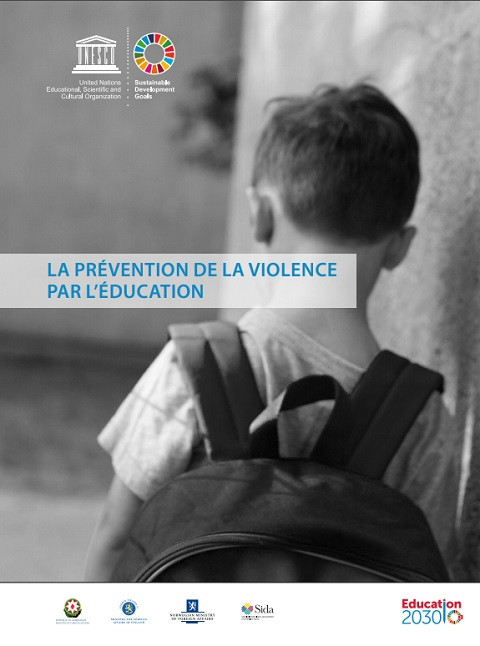 La prévention de la violence par l'éducation Année de publication: 2018 Auteur: Gabriele Goettelmann Auteur institutionnel: UNESCO Rabat Ce matériel de formation est composé de trois modules dédiés à La Prévention de la Violence par l’Education (PVE). Chaque unité devrait permettre aux participants à cette formation de mieux cerner la problématique de la violence et des extrémismes violents et d’utiliser correctement la terminologie associée. En même temps, il aborde le rôle de l’éducation dans la prévention de la violence et des extrémismes violents.
 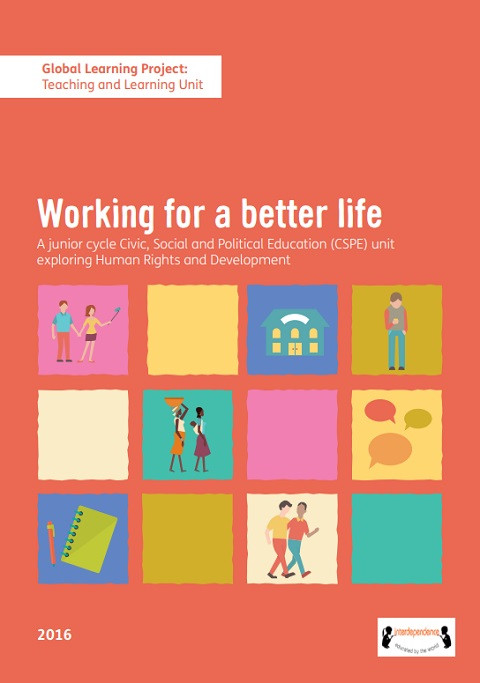 Working for a Better Life: A Junior Cycle Civic, Social and Political Education (CSPE) Unit Exploring Human Rights and Development Année de publication: 2016 Auteur: Kathryn Moore | Mella Cusack Auteur institutionnel: A Partnership with Africa (APA) | City of Dublin Education and Training Board (CDETB) The aim of this Teaching and Learning Unit is to encourage teachers and junior cycle students to question the sources of generalisations about ‘developing countries,’ and to use a human rights framework when engaging with case studies about people who are working to lift themselves out of situations of poverty and inequality. The unit can also be used to support teaching and learning in Civic, Social and Political Education (CSPE), and to contribute to the delivery of Wellbeing at junior cycle level. The unit could also be used in citizenship, social justice or development education module for Transition Year students.
 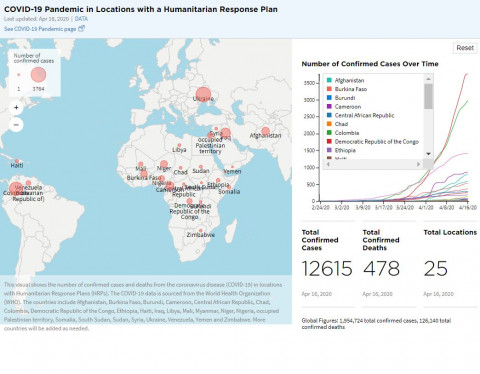 COVID-19 Pandemic in Locations with a Humanitarian Response Plans Année de publication: 2020 Auteur institutionnel: United Nations Office for the Coordination of Humanitarian Affairs (OCHA) This visual shows the number of confirmed cases and deaths from the coronavirus disease (COVID-19) in locations with Humanitarian Response Plans (HRPs). The COVID-19 data is sourced from the World Health Organization (WHO). The countries include Afghanistan, Burkina Faso, Burundi, Cameroon, Сentral African Republic, Chad, Colombia, Democratic Republic of the Congo, Ethiopia, Haiti, Iraq, Libya, Mali, Myanmar, Niger, Nigeria, occupied Palestinian territory, Somalia, South Sudan, Sudan, Syria, Ukraine, Venezuela, Yemen and Zimbabwe. More countries will be added as needed.
  L’éducation à la citoyenneté en Egypte Année de publication: 2013 Auteur: Madeline Waddell Auteur institutionnel: University of Puget Sound Le printemps arabe a apporté l'espoir d'un Moyen-Orient démocratique pour beaucoup dans la communauté internationale. Alors que la littérature sur les transitions démocratiques comprend un ensemble de composants, les chercheurs sur la région se sont concentrés sur les développements institutionnels tels que les élections et les constitutions. Bien que ces composants structurels sont essentiels, ce document préconise pour l'éducation à la citoyenneté comme un autre élément crucial dans les transitions démocratiques. Bien que généralement pas partie de cette littérature, l'éducation à la citoyenneté implique la construction d'une population informée et active capable de contribuer à une culture totale de la démocratie. Cet article analyse ces efforts pédagogiques en Egypte transitoire par contraste le rôle de l'État dans l'éducation à la citoyenneté avec celle de la société civile. Ce contraste conduit à la conclusion que l'aCECnt mis sur le troisième secteur est nécessaire pour la réalisation des objectifs de l'éducation à la citoyenneté apolitique. Le système scolaire de l'Egypte est non seulement le plus robuste dans le monde arabe, mais a toujours été utilisé par différents régimes autoritaires pour faire avancer des objectifs politiques. Lorsque juxtaposée à l'immergence d'une abondance des ONG après la révolution 2011, il devient un cas d'étude idéal. L'analyse est basée sur les théories de l'éducation à la citoyenneté et à la recherche du système éducatif égyptien, et est complétée par des entretiens informels dans le pays.