
Ressources
Explorez une large gamme de ressources sur le GCED afin d’approfondir votre compréhension et de renforcer vos activités de recherche, de plaidoyer, d’enseignement et d’apprentissage.
1,180 résultats trouvés
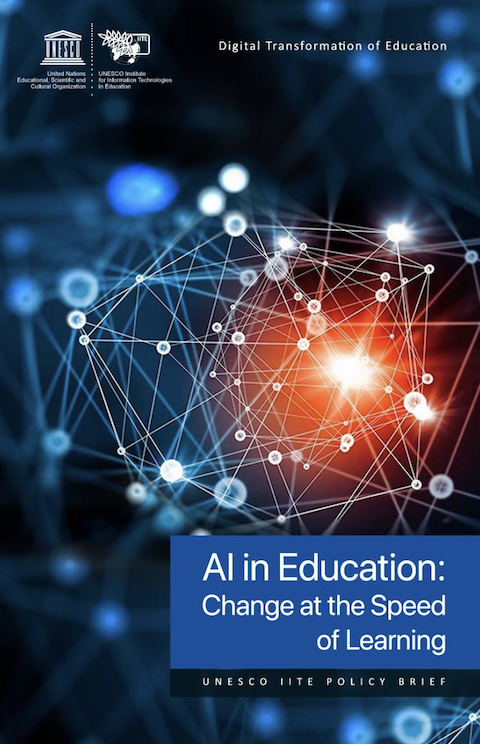 AI in Education: Change at the Speed of Learning Année de publication: 2020 Auteur: Steven Duggan Auteur institutionnel: UNESCO Institute for Information Technologies in Education (IITE) The policy brief “AI in Education: Change at the Speed of Learning” published by the UNESCO Institute for Information Technologies in Education (UNESCO IITE) opens a new series of publications “Digital Transformation of Education”. The new publication describes the advancements in technology, including data, analytics and personalized learning, Artificial Intelligence (AI), cloud computing and machine learning, and explores the promises of AI for students, teachers, school leaders, parents and education administrators. The publication also highlights the ethical aspects of AI implementation and challenges that it might bring. Искусственный интеллект в образовании: Изменение темпов обучения Année de publication: 2020 Auteur: Steven Duggan Auteur institutionnel: UNESCO Institute for Information Technologies in Education (IITE) Аналитическая записка «Искусственный интеллект в образовании: Изменение темпов обучения», опубликованная Институтом ЮНЕСКО по информационным технологиям в образовании (ИИТО ЮНЕСКО), открывает издание новой серии публикаций «Цифровая трансформация образования». В новой публикации представлены достижения в области технологий, включая данные, аналитику и персонализированное обучение, искусственный интеллект (ИИ), облачные вычисления и машинное обучение, а также рассматриваются многообещающие возможности ИИ для учащихся, педагогов, родителей, руководителей учебных заведений и администраторов системы образования. В публикации также обозначены этические аспекты и вызовы, связанные с применением ИИ.
 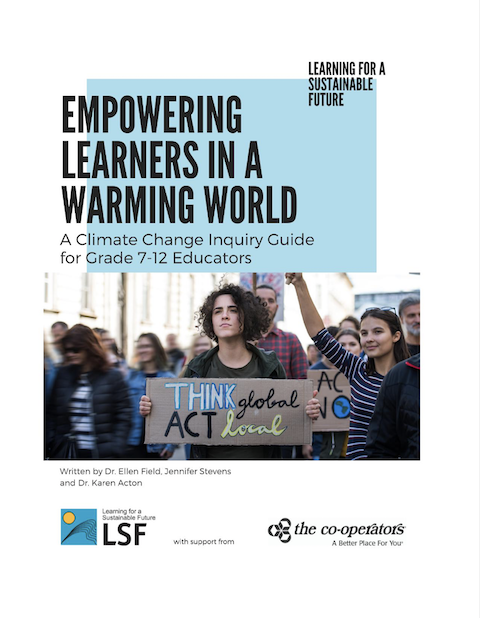 Empowering Learners in a Warming World: A Climate Change Inquiry Guide for Secondary Educators Année de publication: 2020 Auteur: Ellen Field | Jennifer Stevens | Karen Acton Auteur institutionnel: Learning for a Sustainable Future (LSF) The purpose of this guide is to present opportunities to evolve students’ understanding of the climate and climate change, assess the risks and opportunities to mitigate and adapt to the changing climate, unpack ethical dimensions, and honour emotions that are part of the process of coming to understand the complexity and urgency of the issue.Transformative teaching strategies used throughout this guide are important to tackling complex problems like climate change. These strategies often begin with the understanding and experiences that students bring with them. Educators, who themselves are grappling with climate change issues, take the role of facilitators and co-learners as the class works together to learn, critically reflect, and take action.Most importantly, this guide aims to engage students in contributing to solutions in their schools, communities and homes. It aims to connect educators to instructional strategies that allow for students’ perspectives and voice, currently available climate change science and research, teacher resources and activities, datasets, and action solutions.
  Building Knowledge Exchange Partnerships: Dialogues Across Europe Année de publication: 2020 Auteur institutionnel: Bridge 47 This publication ‘Building Knowledge Exchange Partnerships Dialogues Across Europe’ shares some of the experiences learned from this area of the Bridge 47 project.The Knowledge Exchange Partnerships hosted expert events, on site and online, carried on networking and exchange, disseminated information about GCE on other platforms and collectives, and came together for specific activities, such as workshops, webinars, publications, with the support of the larger Bridge 47 network.
  연극을 통한 민주 시민 교육 방법 (2019 문화예술교육 유관학회 연계 ‘작은 연구’ - 서울어젠다 예술교육 목표 3. 예술교육의 사회적 가치 확산성을 중심으로) Année de publication: 2019 Auteur: 이화식 Auteur institutionnel: 한국예술경영학회 | 한국문화교육학회 본 자료는 2019 문화예술교육 유관학회 연계 '작은 연구’에서 발췌한 '연극을 통한 민주 시민 교육 방법' 연구자료이다. 본 연구는 연극 활동을 통하여 민주시민의 가치를 함양하는 민주 시민교육의 모형을 제시하며, 시민교육이라는 주제의 특성을 반영하여 학습자가 실제 생활과 유사한 환경에서 민주적인 가치를 체험하고 구성하며 생활에서 적용할 수 있는 교육 방법을 모색하는 것을 목적으로 한다. 본 저작물은 한국예술경영학회, 한국문화교육학회에서 2019년 작성하여 공공누리 제4유형으로 개방한 ‘연극을 통한 민주 시민 교육 방법(이화식)'을 이용하였으며 해당 저작물은 한국문화예술교육진흥원 arte 라이브러리 홈페이지(lib.arte.or.kr)에서 무료로 다운받으실 수 있습니다.
 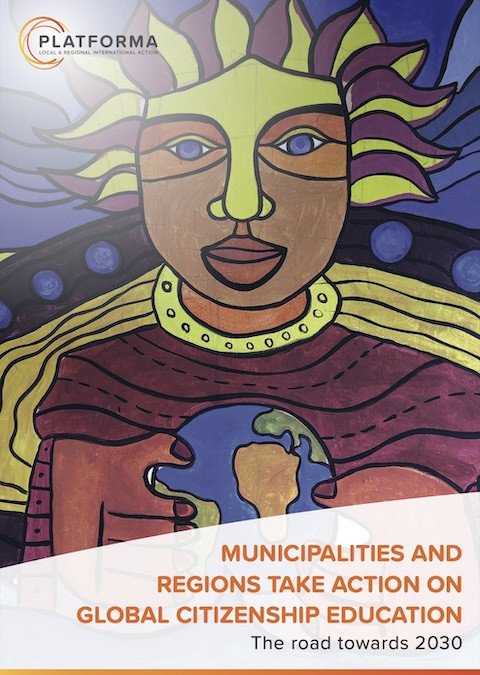 Municipalities and Regions Take Action on Global Citizenship Education: The Road Towards 2030 Année de publication: 2021 Auteur: Aurèle Destrée | Tereza Čajková Auteur institutionnel: PLATFORMA | European Union (EU) Development Education and Awareness Raising (DEAR)/Global Citizenship Education (GCE) can cultivate the spirit of the 2030 Agenda because it helps acquiring missing knowledge on global interconnections and creates spaces for enquiries.Whilst old constraints still remain and new challenges are appearing, local and regional governments continue to innovate, experiment and work hand in hand with key partners, including with their peers across the globe, to find new solutions and achieve their ambitions.Discover in this publication how local and regional governments are active in supporting learning and fostering changes in a context of socio-economic recovery plans. Actions des municipalités et des régions en faveur de l'éducation à la citoyenneté mondiale: En route vers 2030 Année de publication: 2021 Auteur: Aurèle Destrée | Tereza Čajková Auteur institutionnel: PLATFORMA | EU L’éducation au développement et la sensibilisation (DEAR) et l’éducation à la citoyenneté mondiale (ECM) soutiennent et alimentent l’esprit de l’Agenda 2030 car elles permettent d’acquérir les connaissances manquantes sur les interconnexions mondiales et de créer des espaces de recherche.Alors que d’anciennes contraintes subsistent et que de nouveaux défis apparaissent, les gouvernements locaux et régionaux continuent d’innover, d’expérimenter et de travailler de concert avec des partenaires clés, notamment avec leurs homologues du monde entier, pour trouver de nouvelles solutions et concrétiser leurs ambitions.Découvrez dans la présente publication comment les gouvernements locaux et régionaux s’emploient à soutenir l’apprentissage et à favoriser les changements dans un contexte de plans de relance socio-économique.
 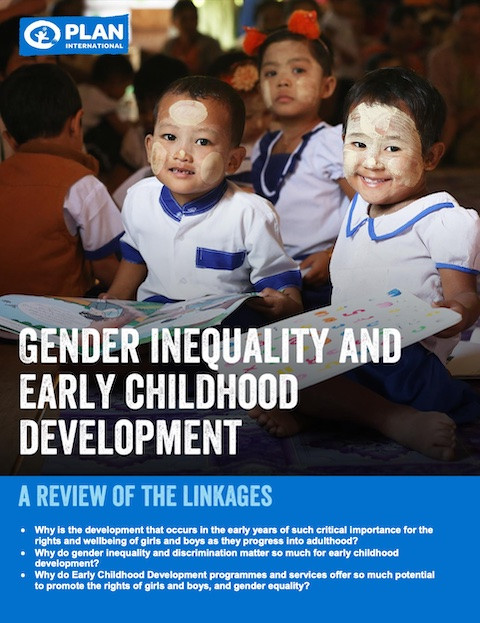 Gender Inequality and Early Childhood Development: A Review of the Linkages Année de publication: 2017 Auteur institutionnel: Plan International This paper aims to respond to the fact that Early Childhood Development initiatives and programmes, both internal and external, often appear to give limited attention to gender inequality and discrimination. Furthermore, initiatives to promote girls’ rights and gender equality often pay little attention to early childhood, instead focusing on older girls and adolescents.
 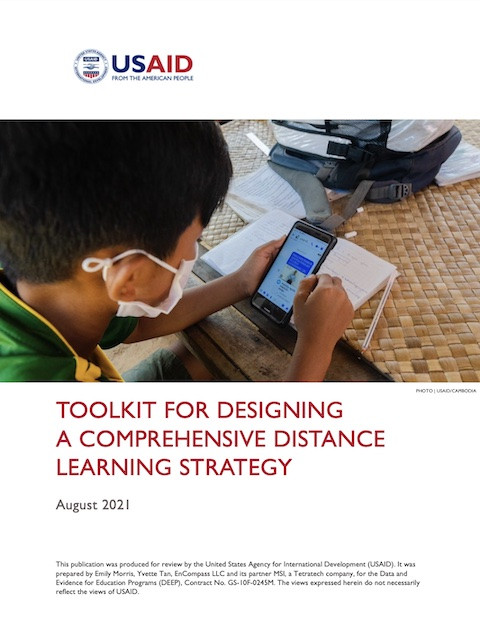 Toolkit for Designing a Comprehensive Distance Learning Strategy Année de publication: 2021 Auteur: Emily Morris | Yvette Tan Auteur institutionnel: United States Agency for International Development (USAID) The purpose of this toolkit is to provide practical guidance (tools, examples, and resources) for designing a comprehensive distance learning strategy that covers an entire education sector or system.
 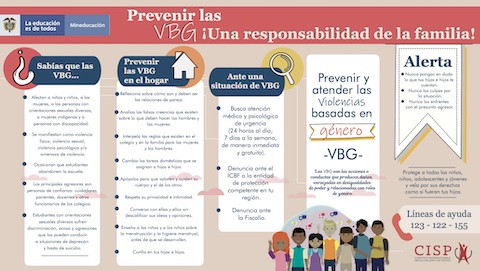 Prevenir las VBG: ¡Una responsabilidad de la familia! Auteur institutionnel: Ministry of National Education of Colombia Esta infografía habla de lo que sucede con las violencias basadas en género, define este tipo de violencias y explica qué hacer cuando se presentan. En este documento se pretende hacer consciente a la familia de su papel dentro de este fenómeno y el papel se juega en el mismo.