
Ressources
Explorez une large gamme de ressources sur le GCED afin d’approfondir votre compréhension et de renforcer vos activités de recherche, de plaidoyer, d’enseignement et d’apprentissage.
1,443 résultats trouvés
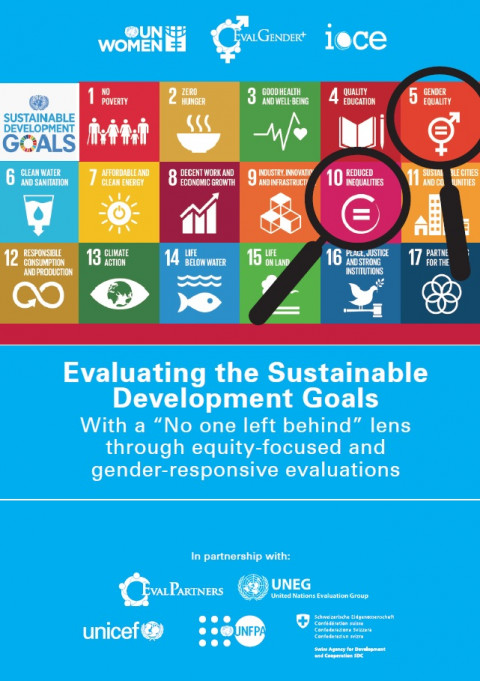 Оценка Целей Устойчивого Развития на основе принципа «Развитие для всех без исключения» через призму гендерного равенства и социальной справедливости Année de publication: 2016 Auteur: Michael Bamberger | Marco Segone | Florencia Tateossian Цель данной публикации – предоставить рекомендации относительно возможных путей интеграции принципов социальной справедливости и гендерного равенства в национальные системы оценки, которые должны будут передавать информацию для страновых обзоров Целей в области устойчивого развития (ЦУР). Статистический анализ с учетом гендера и дезагрегированных показателей, хотя и имеет важное значение, должен дополняться оценками, проводимыми на основе принципов социальной справедливости и гендерного равенства, для того, чтобы развитие охватывало всех без исключения. Руководство в первую очередь предназначено для лиц, вовлеченных в национальные системы оценки; системы Организации Объединенных Наций; многосторонних и двусторонних агентств развития; академических институтов, в том числе специализированных исследовательских и аналитических центров; частных фондов; организаций частного сектора и добровольных объединений в области профессиональной оценки.
  Статистика Целей устойчивого развития в Казахстане Année de publication: 2023 Auteur institutionnel: ООН-женщины | Бюро национальной статистики Агентства по стратегическому планированию и реформам Республики Казахстан В публикации отражены данные о текущем состоянии и прогрессе в области устойчивого развития на основе имеющихся официальных данных и статистики по ЦУР с учетом гендерных аспектов. Сборник был представлен на национальном семинаре по распространению официальной статистики, организованном Бюро национальной статистики Казахстана и Европейской экономической комиссией ООН (ЕЭК ООН) 19-21 октября 2022 года.
 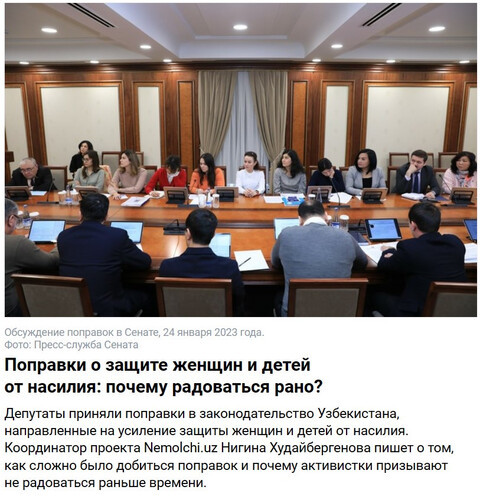 Amendments on the Protection of Women and Children From Violence: Why Is It Too Early To Rejoice? Année de publication: 2023 Auteur: Нигина Худайбергенова The deputies adopted amendments to the legislation of Uzbekistan aimed at strengthening the protection of women and children from violence. Nigina Khudaibergenova, the coordinator of the Project 'Nemolchi.uz'(Don't be silent) writes about how difficult it was to achieve amendments and why activists urge not to rejoice ahead of time. Поправки о защите женщин и детей от насилия: почему радоваться рано? Année de publication: 2023 Auteur: Нигина Худайбергенова Депутаты приняли поправки в законодательство Узбекистана, направленные на усиление защиты женщин и детей от насилия. Координатор проекта Nemolchi.uz Нигина Худайбергенова пишет о том, как сложно было добиться поправок и почему активистки призывают не радоваться раньше времени.
  Annual Report for 2021 (UNODC Regional Office in Central Asia) Année de publication: 2022 Auteur institutionnel: UN. Office on Drugs and Crime (UNODC) This Annual Report provides an account of the main results achieved by the United Nations Office on Drugs and Crime, Regional Office for Central Asia (UNODC ROCA), in 2021. UNODC has stepped up efforts to help people in these challenging times, addressing emerging threats in line with human rights and gender equality standards, and the rule of law. Through our strategic interventions, we have contributed to strengthening peace, preventing conflict, and tackling the root causes and drivers of instability and violence. Годовой отчет за 2021 (Региональное представительство УНП ООН в Центральной Азии) Année de publication: 2022 Auteur institutionnel: UN. Office on Drugs and Crime (UNODC) Отчет содержит сведения об основных результатах, достигнутых Региональным представительством Управления Организации Объединенных Наций по наркотикам и преступности в Центральной Азии (РЦПДЦА УНП ООН) в 2021 году. УНП ООН наращивает свои усилия с целью оказания помощи людям в непростое время, помочь противостоять возникающим угрозам с учетом стандартов в области прав человека и гендерного равенства, а также верховенства закона. Благодаря стратегическим инициативам, способствуют укреплению мира, предотвращению конфликтов, устранению коренных причин и факторов нестабильности и насилия.
  خطة العمل: البرنامج العالمي لل تثقيف في مجال حقوق الإنسان؛ المرحلة الأولى Année de publication: 2006 Auteur institutionnel: UN Office of the High Commissioner for Human Rights The Plan of Action for the first phase (2005-2007) of the World Programme was adopted by all United Nations Member States in July 2005. It proposes a concrete strategy and practical guidance for implementing human rights education in primary and secondary schools. On 10 December 2004, the General Assembly of the United Nations proclaimed the World Programme for Human Rights Education (2005-ongoing) to advance the implementation of human rights education programmes in all sectors. Building on the foundations laid during the United Nations Decade for Human Rights Education (1995-2004), this new initiative reflects the international community’s increasing recognition that human rights education produces far-reaching results. By promoting respect for human dignity and equality and participation in democratic decision-making, human rights education contributes to the long-term prevention of abuses and violent conflicts. To help make human rights a reality in every community, the World Programme seeks to promote a common understanding of the basic principles and methodologies of human rights education, to provide a concrete framework for action and to strengthen partnerships and cooperation from the international level down to the grass roots. План действий Всемирная программа образования в области прав человека : Первый этап Année de publication: 2006 Auteur institutionnel: UN Office of the High Commissioner for Human Rights The Plan of Action for the first phase (2005-2007) of the World Programme was adopted by all United Nations Member States in July 2005. It proposes a concrete strategy and practical guidance for implementing human rights education in primary and secondary schools. On 10 December 2004, the General Assembly of the United Nations proclaimed the World Programme for Human Rights Education (2005-ongoing) to advance the implementation of human rights education programmes in all sectors. Building on the foundations laid during the United Nations Decade for Human Rights Education (1995-2004), this new initiative reflects the international community’s increasing recognition that human rights education produces far-reaching results. By promoting respect for human dignity and equality and participation in democratic decision-making, human rights education contributes to the long-term prevention of abuses and violent conflicts. To help make human rights a reality in every community, the World Programme seeks to promote a common understanding of the basic principles and methodologies of human rights education, to provide a concrete framework for action and to strengthen partnerships and cooperation from the international level down to the grass roots. Plan de acción: programa Mundial para la Educación en Derechos Humanos, primera etapa Année de publication: 2006 Auteur institutionnel: UN Office of the High Commissioner for Human Rights The Plan of Action for the first phase (2005-2007) of the World Programme was adopted by all United Nations Member States in July 2005. It proposes a concrete strategy and practical guidance for implementing human rights education in primary and secondary schools. On 10 December 2004, the General Assembly of the United Nations proclaimed the World Programme for Human Rights Education (2005-ongoing) to advance the implementation of human rights education programmes in all sectors. Building on the foundations laid during the United Nations Decade for Human Rights Education (1995-2004), this new initiative reflects the international community’s increasing recognition that human rights education produces far-reaching results. By promoting respect for human dignity and equality and participation in democratic decision-making, human rights education contributes to the long-term prevention of abuses and violent conflicts. To help make human rights a reality in every community, the World Programme seeks to promote a common understanding of the basic principles and methodologies of human rights education, to provide a concrete framework for action and to strengthen partnerships and cooperation from the international level down to the grass roots. Plan d'action: programme mondial en faveur de l'Éducation aux droits de l'Homme, première phase Année de publication: 2006 Auteur institutionnel: UN Office of the High Commissioner for Human Rights The Plan of Action for the first phase (2005-2007) of the World Programme was adopted by all United Nations Member States in July 2005. It proposes a concrete strategy and practical guidance for implementing human rights education in primary and secondary schools. On 10 December 2004, the General Assembly of the United Nations proclaimed the World Programme for Human Rights Education (2005-ongoing) to advance the implementation of human rights education programmes in all sectors. Building on the foundations laid during the United Nations Decade for Human Rights Education (1995-2004), this new initiative reflects the international community’s increasing recognition that human rights education produces far-reaching results. By promoting respect for human dignity and equality and participation in democratic decision-making, human rights education contributes to the long-term prevention of abuses and violent conflicts. To help make human rights a reality in every community, the World Programme seeks to promote a common understanding of the basic principles and methodologies of human rights education, to provide a concrete framework for action and to strengthen partnerships and cooperation from the international level down to the grass roots.