
Ressources
Explorez une large gamme de ressources sur le GCED afin d’approfondir votre compréhension et de renforcer vos activités de recherche, de plaidoyer, d’enseignement et d’apprentissage.
2,161 résultats trouvés
 Localizing the 2030 Agenda and Global Citizenship Education: An Essential Dialogue Année de publication: 2020 Auteur institutionnel: Diputació de Barcelona Diputació de Barcelona has produced a document that offers guidelines to strengthen the links between Global Citizenship Education (GCE) actions and localizing SDGs initiatives, in order to drive real changes in local policies.What we call Global Citizenship Education (GCE) brings together key elements of different educational trends, such as development education, peace education or education for sustainability, among others. Each of them has decades of experience in promoting changes in citizen’s knowledge, attitudes and behaviours through formal or informal channels. This experience can help to reinforce the 2030 Agenda’s capacity to generate real change towards a more sustainable future for the planet, connecting local and global realities and highlighting interdependencies and co-responsibility. The document points out what can be done at the local level to improve this dialogue between SDG and GCE with practical proposals such as introducing GCE perspective in the SDGs training activities or implementing joint initiatives between development cooperation departments and other areas to reach new audiences. Localización de la agenda 2030 y la educación para la ciudadanía global: Un diálogo imprescindible Année de publication: 2020 Auteur institutionnel: Diputació de Barcelona Este documento pretende contribuir al diálogo entre los procesos de localización de la Agenda 2030 y la ECG, así como ofrecer orientaciones concretas para la acción local.
  YouthLearn: Media Literacy Toolbox Année de publication: 2020 Auteur institutionnel: Education Development Center (EDC) YouthLearn’s Media Literacy Toolbox includes activities, handouts, and curricular resources to support media literacy education in a variety of settings—classroom or afterschool program, low-tech or high-tech, children or teens.
  Building Healthy Relationships With Media: A Parent’s Guide to Media Literacy Année de publication: 2020 Auteur institutionnel: National Association for Media Literacy Education (NAMLE) | Trend Micro This guide gives a few examples of how to incorporate questions into the conversation when discussing media and related topics with your children. It is vital for parents to model curiosity and skepticism in their discussions with their children. Teaching the next generation to be critical thinkers allows them to hone this important skill for navigating life in a digital world. Construyendo relaciones saludables con los medios de comunicación: Guía para los padres sobre la alfabetización mediática Année de publication: 2020 Auteur institutionnel: National Association for Media Literacy Education (NAMLE) | Trend Micro Esta guía ofrece ejemplos de cómo incorporar en una conversación con sus hijos preguntas sobre los medios de comunicación y otros temas relacionados. Es vital que en conversaciones con sus hijos los padres sean modelos de curiosidad y precaución. Enseñar a la próxima generación de jóvenes a hacer preguntas y ser pensadores críticos les permite desarrollar esta importante habilidad para navegar la vida en un mundo digital.
  Media and Information Literacy: A Practical Guidebook for Trainers Année de publication: 2021 Auteur: Sylvia Braesel | Thorsten Karg Auteur institutionnel: DW Akademie Literacy is the ability to read and write. Media and information literacy (MIL) is the ability to understand how the media work and can be used to participate in public debate. MIL includes social media like Facebook, as well as traditional media like books, newspapers, radio and television.Media and information literacy - A practical guidebook for trainers provides MIL trainers with background information, training ideas, methods and worksheets. The book also provides sample training schedules to help you determine the length of time needed to teach individual aspects of media and information literacy.Download the Media and information literacy guidebook for trainers as well as the worksheets and guidelines.DW Akademie defines MIL as a composite of five core competencies:Access: The ability to find and access relevant media and information sources.Analyze: The ability to evaluate the credibility, accuracy and objectivity of media content, for example a news story.Create: The ability to create and produce media and information content, such as photos, texts, or videos.Reflect: The ability to think critically about media habits, experiences, trends, and technologies, and how they impact individuals and society.Act: The ability to use media to achieve specific goals, for example launching a social media campaign about health.Read more about DW Akademie's approach to Media and Information Literacy here.
 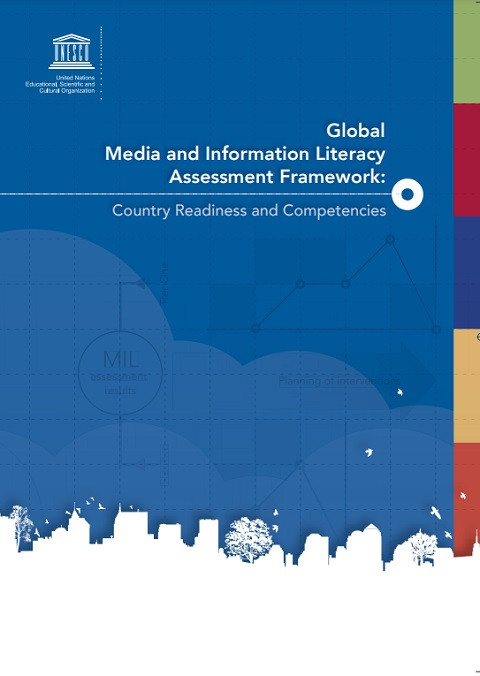 Global Media and Information Literacy Assessment Framework: Country Readiness and Competencies Année de publication: 2013 Auteur institutionnel: UNESCO The MIL Assessment Framework can foster lifelong learning initiatives by building on the relationship between information, media, digital, and ICT literacies, along with societal transformations, education, workforce, policy and decision making processes, economic growth and democracy. The overall goal of the publication is to guide UNESCO’s Member States throughout the assessment of country readiness and competencies regarding the media and information literacy of citizens, in particular teachers in service and in training. The document is particularly aimed at the following stakeholders: policy makers and decision makers; national officers responsible for statistical data collection and analysis; educational policy makers and planners working in formal and informal education settings; teacher training institutions and teachers. It is also of relevance to the professional information and communication community, and has wide applicability for civil society at large.
 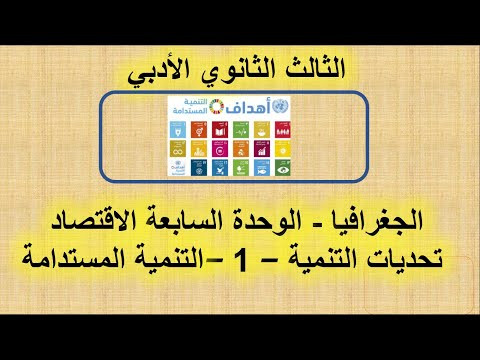 Literary Economic Unit Année de publication: 2021 Auteur institutionnel: Luqman Education This video presents one of the geography lessons in the third secondary grade of in the Syrian Republic. The video focuses on the challenges people face in achieving sustainable development. It explains the 17 goals of the sustainable development goals. أدبي وحدة الاقتصاد Année de publication: 2021 Auteur institutionnel: Luqman Education يقدم الفيديو أحد دروس مادة الجغرافيا بالصف الثالث الثانوي الأدبي بالجمهورية السورية. ويركز الفيديو عل التحديات التي تواجه الشعوب في تحقيق التنمية المستدامة. ويستعرض الفيديو الأهداف 17 لأهداف التنمية المستدامة.
 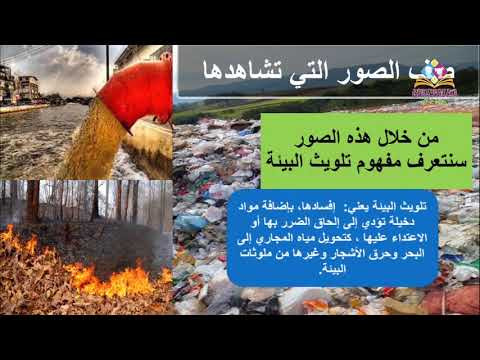 The Prohibition of Environmental Pollution Année de publication: 2020 Auteur institutionnel: Smart Students Schools The video is an explanation of the lesson "Prohibition of Environmental Pollution" for the fifth grade. In which the teacher provided an explanation for the students about the concept of the environment and examples of its pollution. The teacher also shows the position of the Islamic religion on environmental pollution. Finally, the teacher reviews some solutions to preserve the environment and also reviews the efforts of the Sultanate of Oman in preserving the environment.