
Ressources
Explorez une large gamme de ressources sur le GCED afin d’approfondir votre compréhension et de renforcer vos activités de recherche, de plaidoyer, d’enseignement et d’apprentissage.
2,781 résultats trouvés
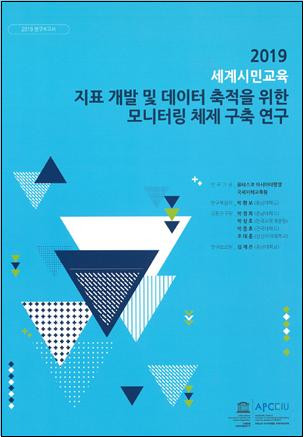 Establishing a Monitoring System for Global Citizenship Education in South Korea: A Preliminary Study with a Focus on Policy Area Année de publication: 2019 Auteur institutionnel: APCEIU The Asia-Pacific Centre of Education for International Understanding published a report titled "Establishing a Monitoring System for Global Citizenship Education in South Korea: A Preliminary Study with a Focus on Policy Area." The purpose of this research report is to provide implications for the development of indicators for Global Citizenship Education (GCED) which is the target 4.7 of the Sustainable Development Goals (SDGs) and the establishment of a Korean monitoring system for data accumulation. It is difficult for GCED to set up common indicators to monitor the implementation of each country, as it comprehensively deals with the direction and contents of education, whereas other targets of SDG4 are relatively clear targets and goals such as guaranteeing educational opportunities and improving educational conditions. For this reason, this study proposed Korean indicators based on domestic and international trends and analysis of issues concerning the development of SDG4.7.1 indicators and reviewed the domestic status in implementation based on them, thereby contributing to the development and consolidation of global indicators development and monitoring systems in the future. 세계시민교육 지표 개발 및 데이터 축적을 위한 모니터링 체제 구축 연구 Année de publication: 2019 Auteur institutionnel: 유네스코 아시아태평양 국제이해교육원 유네스코 아태교육원은 “세계시민교육 지표 개발 및 데이터 축적을 위한 모니터링 체제 구축 연구” 보고서를 발간하였다. 본 연구보고서는 지속가능발전목표(SDGs)의 4번 교육 목표 중 7번째 세부목표(SDG4.7)인 세계시민교육의 지표 개발과 데이터 축적을 위한 국내 모니터링 체제 구축을 위한 시사점을 제공하는데 목적이 있다. SDG4.7이 추구하는 세계시민교육은 교육기회의 보장이나 교육여건 개선 등 비교적 대상과 목표가 명확한 다른 SDG4의 세부목표와 달리 교육의 방향성과 내용을 포괄적으로 다루기 때문에, 국가별로 이행 여부를 모니터링하기 위한 공동의 지표 설정에 어려움이 있다. 이와 같은 이유로, 본 연구에서는 SDG4.7.1 지표 개발에 대한 국내외 동향과 쟁점 분석을 토대로 국내 지표를 제안하고 이를 바탕으로 국내 이행 수준을 검토함으로써, 향후 글로벌 지표 개발과 모니터링 체제를 발전 및 공고화하는데 기여하고자 하였다.
 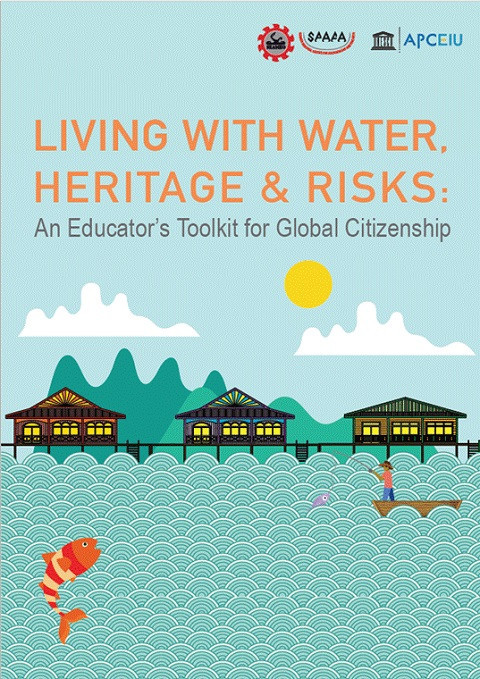 Living with Water, Heritage & Risks: An Educator’s Toolkit for Global Citizenship Année de publication: 2019 Auteur institutionnel: APCEIU | SEAMEO. Regional Centre for Archeology and Fine Arts (SPAFA) Designed to help young global citizens gain an awareness of the culture-nature connection in heritage conservation, this toolkit provides visual learning aids and ideas to explore water heritage in Southeast Asia. It is composed of an Educator's Booklet, Activity Sheets, and Inquiry-Based and Self-Learning Photocards. Learners are encouraged to THINK, SHARE and ACT in ways that will enable them to become critical thinkers who can make compassionate and ethical decisions.
  Asia-Pacific Teacher Exchange for Global Education Année de publication: 2019 Auteur institutionnel: APCEIU | Korea R. Ministry of Education Asia-Pacific Teacher Exchange for Global Education (APTE) is a bilateral teacher exchange programme between the Republic of Korea and Asia-Pacific partner countries, hosted by the Ministry of Education of the Republic of Korea and implemented by the Asia-Pacific Centre of Education for International Understanding under the auspices of UNESCO (APCEIU) in collaboration with the Ministries of Education of the partner countries. Launched with two partenr countries -- Mongolia and the Philippines -- in 2012, APTE has grown into a well-known regional programme, now working with seven partner countries in the Asia-Pacific region -- Cambodia, Indonesia, Malaysia, Mongolia, Philippines, Thailand, and Vietnam. 다문화가정 대상국가와의 교육교류사업 Année de publication: 2019 Auteur institutionnel: 유네스코 아시아태평양 국제이해교육원 | Korea R. Ministry of Education 「다문화가정 대상국가와의 교육교류사업」은 대한민국 교육부가 주최하고 유네스코 아시아태평양 국제이해교육원이 주관하며, 교류 대상국 교육부가 현지 협력주체로서 함께하는 한국 - 아태지역 국가양자 간 교육교류 사업이다. 2012년도에 몽골과 필리핀, 두 나라를 대상으로 시작한 본 교육교류사업은 지난 8년간 급성장하여, 2020년 현재에는 아태지역 7개국 (말레이시아, 몽골, 라오스, 인도네시아, 캄보디아, 태국, 필리핀)과 교류를 실시하고 있다.
 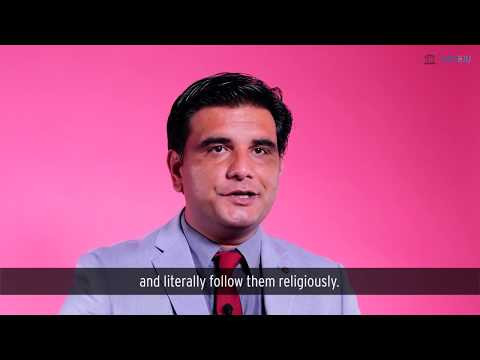 Why Contextualization is Critical for Global Citizenship Education Année de publication: 2019 Auteur: Waqar Shams Auteur institutionnel: APCEIU This video is an interview on "Why contextualization is Critical for Global Citizenship Education". It is also under UNESCO's APCEIU "Meet the Global Citizens" series.Do you want to know why Contextualization is Critical for GCED? Check out what Waqar has to say. This is a story of Waqar Shams from Pakistan.In this video you will learn why Contextualization is Critical for GCED and through it, learn to think globally but act locally.
 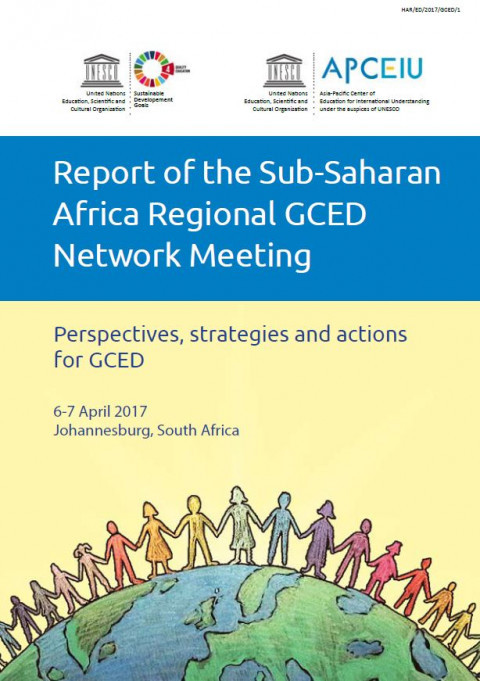 Report of the Sub-Saharan Africa Regional GCED Network Meeting: Perspectives, Strategies and Actions for GCED Année de publication: 2017 Auteur: Gertie Steukers | Carolyn Medel-Añonuevo | Abdoul Wahab Coulibaly Auteur institutionnel: UNESCO Harare | APCEIU An increasingly globalized world has raised questions about what constitutes meaningful citizenship as well as about its global dimensions. Global Citizenship Education (GCED) aims to empower learners to assume active roles to face and resolve global challenges and to become proactive contributors to a more peaceful, tolerant, inclusive and secure world.Education is the most important tool for equipping young people, our future generation of leaders, with the knowledge, skills and attitudes to tackle prejudice and hostility, and to build more peaceful, tolerant and equitable societies. While there are different understandings and manifestations of GCED in different countries, GCED in its various forms is fast becoming an important and necessary component of education systems in sub-Saharan Africa and across the world.The commitment of actors around the world to promoting GCED has contributed highly to the development of GCED, including raising awareness and catalysing action. Furthermore, this has led to the incorporation of GCED in the Sustainable Development Goals (SDGs) through Target 4.7, which captures the clear call for an education that addresses the needs of the twenty-first century, empowering learners to act towards a more peaceful, just, inclusive and sustainable world.GCED reflects the aim of education to go beyond just access and ‘ensure inclusive and equitable quality education and promote lifelong opportunities for all’ in the next fifteen years.UNESCO Regional Office for Southern Africa (ROSA) and the Asia-Pacific Centre of Education for International Understanding (APCEIU) invited partners across Africa for the 2017 Sub-Saharan Africa GCED Regional Network Meeting on 6–7 April 2017 in Johannesburg. The meeting was designed to jumpstart the formation of the Africa Regional GCED Network, map different GCED programmes in the region, and explore areas of possible collaboration in light of solidifying regional action on GCED.
 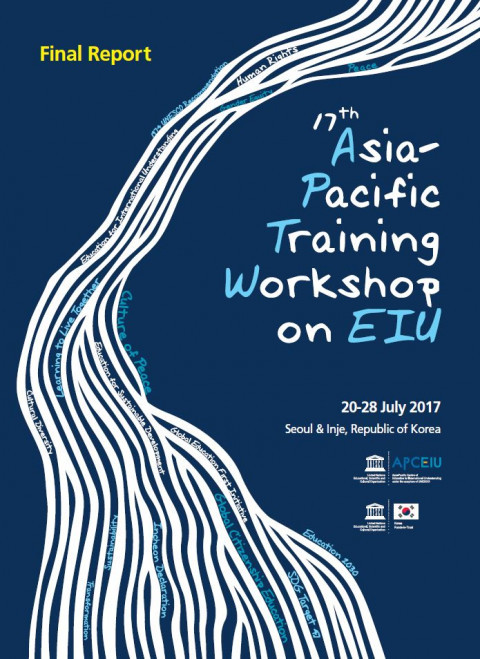 17th Asia-Pacific Training Workshop on EIU: Final Report Année de publication: 2017 Auteur: Yeonwoo Lee | Grace Na Auteur institutionnel: APCEIU Since its establishment in 2001, APCEIU has been organizing capacity building training workshops on Education for International Understanding (EIU) for educators to promote a Culture of Peace through education. The critical importance of preparing educators towards building a more peaceful and sustainable world has been reaffirmed by the increased attention to GCED (Global Citizenship Education), with the adoption of the Sustainable Development Goals (SDGs) and Education 2030 Framework for Action in 2015. Fostering global citizenship is in line with EIU’s core values in terms of the promotion of learning to live together to make a more just, peaceful, and inclusive society.The Asia-Pacific Training Workshop on EIU (APTW), APCEIU’s flagship programme, aims to enhance participants’ knowledge, skills, and commitment to EIU and GCED and enable them to competently design and implement EIU/GCED activities in their local and national contexts. Designed as a Training of Trainers (TOT), the APTW not only encompasses key themes and concepts surrounding EIU/GCED, but also has a strong focus on creative methodologies and approaches to teach EIU/GCED. In order to achieve this goal, this intensive 9-day training workshop includes lectures, discussions, workshops, in-depth seminars, field visits, action plan development in small groups where participants can learn from one another and from the experiences they encounter during the workshop. Furthermore, participants are encouraged to plan and carry out their own training workshops to spread the messages of EIU/GCED after their participation in the workshop.This workshop is sponsored by Ministry of Education and partnered with UNESCO Bangkok, supported by Korea Funds-in-Trust. 28 teacher educators/trainers in the Asia-Pacific region participated in the workshop and strengthened their understanding of Global Citizenship Education and discussed pedagogy, and action planning to practice GCED at national and international levels. This report provides an overview, summary, photographs and other information about the 17th Asia-Pacific Workshop on EIU (APTW).
 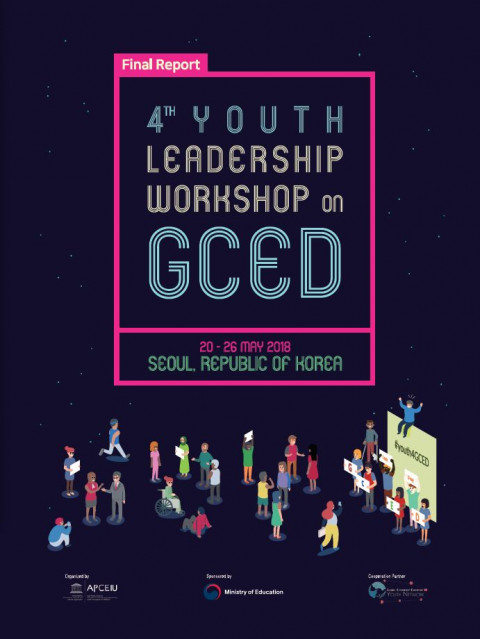 4th Youth Leadership Workshop on GCED: Final Report Année de publication: 2018 Auteur institutionnel: APCEIU This report provides an overview of the activities and outcomes of the 4th Youth Leadership Workshop on GCED held in Seoul, Republic of Korea from 20 - 26May 2018.The 4th Youth Leadership Workshop on GCED invited 48 dynamic youth leaders around the world including those from developing countries and representatives of marginalized groups, and focused on developing effective advocacy strategies to maximize youth contribution in achieving SDG 4.7 through promotion of global citizenship.
 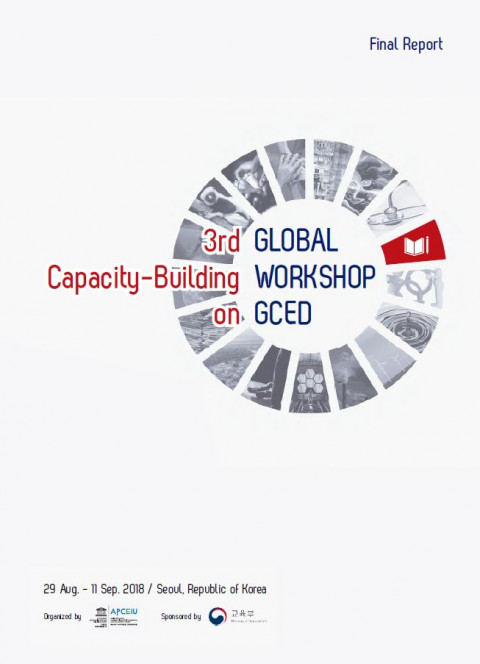 3rd Global Capacity-Building Workshop on GCED: Final Report Année de publication: 2018 Auteur institutionnel: APCEIU This report provides an overview of the activities and outcomes of the 3rd Global Capacity-Building Workshop on GCED held in Seoul, Republic of Korea from 29 August - 11 September 2018.APCEIU organized the 3rd Global Capacity-Building Workshop on GCED with the aim of enhancing the capacities of teacher educators in developing countries on utilizing GCED. This 2-week intensive workshop provided participants opportunities to better understand the concept and principles of GCED, while engaging in meaningful dialogues and sharing experiences with educators from different countries, cultures, and contexts, and to develop their own action plans.