
Ressources
Explorez une large gamme de ressources sur le GCED afin d’approfondir votre compréhension et de renforcer vos activités de recherche, de plaidoyer, d’enseignement et d’apprentissage.
2,781 résultats trouvés
 Asia-Pacific Teacher Exchange for Global Education: 2020 Final Report Année de publication: 2020 Auteur institutionnel: APCEIU | Korea R. Ministry of Education The Asia-Pacific Teacher Exchange for Global Education (APTE) has been conducted since 2012 and marks its 9th anniversary this year. This report looks back over the past 9 years and the achievements of the programme for 2020.This year, due to the pandemic effects, the Office of International Teacher Exchange (ITE) focused on expanding the foundation for online exchange and developing content to strengthen the sustainability of educational exchange and ensure the internal stability of the programme. 다문화가정 대상국가와의 교육교류사업: 2020년도 사업 최종보고서 Année de publication: 2020 Auteur institutionnel: 유네스코 아시아태평양 국제이해교육원 | 대한민국 교육부 2012년부터 시작된 「다문화가정 대상국가와의 교육교류사업」 은 2020년에 9년 차를 맞이하였다. 본 보고서에서는 지난 9년간의 사업 추진 현황 및 2020년도 추진 실적을 돌아본다.2020년에는 팬데믹으로 인해 대면 교류를 중단한 국제교사교류실은 교육교류를 지속하고, 사업의 내실을 다지기 위하여 온라인 교류 기반 확대와 콘텐츠 개발에 집중하였다.
  2020 Online SSAEM Conference: Teaching Across Borders; Final Report (November 24-30, 2020) Année de publication: 2020 Auteur institutionnel: APCEIU | Korea R. Ministry of Education 2020 Online SSAEM (Sharing Stories of Asia-Pacific Education Movements) Conference is a space for examining and sharing the educational outcomes of the participating teachers and schools of the Programme. This Conference, which has been held annually since 2014, aims to provide an excellent opportunity for the Programme participants and stakeholders to showcase the impact of the Programme and to explore methods on strengthening cooperation for further development of the Programme. Main Programme included the Panel Discussion of the Ministry representatives of the 8 countries, the Presentation and Live Talk show of 2012-2019 programme alumni, and the exhibition of various educational materials etc. More than 450 teachers participated and their educational network has strengthened. Table of Contents PrologueWhat is 「Asia-Pacific Teacher Exchange about」?Ⅰ. 2020 Online SSAEM ConferenceBackground and ObjectivesConference OutlineConference ContentsConference OutcomesⅡ. Presentations by Exchange TeachersDay 1Day 2Day 3 2020 온라인 쌤(SSAEM) 컨퍼런스: 최종보고서 Année de publication: 2020 Auteur institutionnel: 유네스코 아시아태평양 국제이해교육원 | 대한민국 교육부 쌤 컨퍼런스(SSAEM Conference)는 「다문화가정 대상국가와의 교육교류사업」 종합 성과보고회로서, 교류국가 교육부 관계자를 비롯한 국내·외 사업 참가교사가 사업 참가 경험 및 활동을 소개하는 소통의 장이다. 비대면으로 개최된 2020 온라인 쌤 컨퍼런스에서는, 8개국 교육부 관계자의 사업 성과 공유 패널토론, 2012~2019 사업 참가 교사의 후속활동 발표, 아태지역으로 파견되었던 한국 교사들의 라이브 토크쇼, 교육활동 결과물 전시, 촉하공연, 영상·사진 공모전, 포토 방명록 등이 진행되었다. 2020 온라인 쌤 컨퍼런스를 통해, 약 450명의 국내외 사업 참가 교사들이 네트워킹 하였으며, 사업성과 공유 및 비전 수립 등이 이루어졌다. 목차프롤로그Ⅰ. 2020 Online SSAEM Conference행사배경 및 목적행사개요행사내용행사 주요성과Ⅱ. 활동발표1일차2일차3일차
 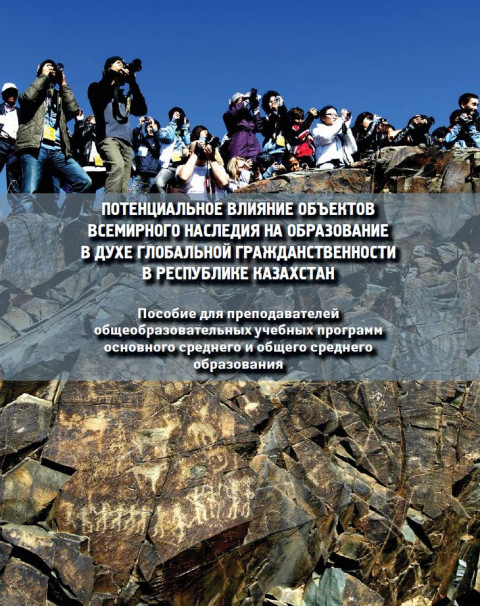 Potential Influence of World Heritage Sites over the Global Citizenship Education in the Republic of Kazakhstan: Manual for Teachers of General Secondary and High school Education Programmes Année de publication: 2017 Auteur: Baipakov K.M. | Voyakin D.A. | Massanov M.N. | Sarsenova E.A. | Shaigozova Z.N. Auteur institutionnel: APCEIU | National World Heritage Committee (Kazakhstan) Present publication is a manual for teachers for of general secondary and high school education programmes of the Republic of Kazakhstan and Central Asia. It aims to raise awareness of teachers and students on the issue of local cultural and natural heritage, and Global Citizenship Education Concept, and to introduce World Heritage and Global Citizenship Education topics to the general secondary and high school education programmes of Kazakhstan. For Kazakhstan and Central Asian, it is a first attempt to understand the potential contribution of UNESCO World Heritage Sites to the Global Citizenship Education.This publication can be separated in three parts. First part presents general description of UNESCO and its cooperation with the Republic of Kazakhstan. It pays particular attention to each Kazakhstan’s site from the UNESCO World Heritage list. Second part covers Global Citizenship Education concept, and main international trends in field of school education in the world. Third part of this publication provides practical guide on the ways that Kazakhstan’s teachers of general secondary and high school education programmes can use World and Intangible Heritage for promotion of global citizenship concept among their students. All three examples of education courses were made as much different from each other as possible in order to provide to Kazakhstan’s teachers a wider choice for preparation of their own classes dedicated to the World Heritage sites and Global Citizenship Education.
  2021 쌤컨퍼런스 결과보고서 Année de publication: 2021 Auteur institutionnel: 유네스코 아시아태평양 국제이해교육원 쌤 컨퍼런스(SSAEM Conference)는 「다문화가정 대상국가와의 교육교류사업」 종합 성과보고회로서, 교류국가 교육부 관계자를 비롯한 국내·외 사업 참가교사가 사업 참가 경험 및 활동을 소개하는 소통의 장이다. 현장과 온라인 동시에 진행되는 하이브리드 형식으로 개최된 2021 쌤 컨퍼런스에서는, 8개국 교육부 관계자의 사업 성과 공유 패널토론, 21년도 사업에 참가한 국내외 교사의 사례 발표 등이 진행되었다. 또한 2021 쌤 컨퍼런스를 통해 향후 사업에 대한 비전 수립 등이 이루어졌다. 유튜브게 게시된 컨퍼런스 영상은 누계 2000여명의 시청자 수를 기록하였다.
  다문화가정 대상국가와의 교육교류사업 2022년도 사업 최종보고서 Année de publication: 2022 Auteur institutionnel: 유네스코 아시아태평양 국제이해교육원 2012년부터 시작되어 2022년에 11년 차를 맞이한 「다문화가정 대상국가와의 교육교류사업」 은, 2020년도 팬데믹으로 인해 물리적 교류가 불가능한 상황에서 비대면 온라인 교육교류의 형태로 진행되었다. 2022년도 교육교류 추진 실적 및 결과, 교육활동 결과물 등이 수록되어있다.
  다문화가정 대상국가와의 교육교류사업: 2021년도 최종 결과보고서 Année de publication: 2021 Auteur institutionnel: 유네스코 아시아태평양 국제이해교육원 2012년부터 시행되어 2021년에 10년차를 맞은 「다문화가정 대상국가와의 교육교류사업」은 팬데믹 상황으로 인해 비대면 온라인 교육교류 방식으로 이루어졌다. 본 보고서에는 2021년도 교육교류 추진 실적과 결과, 교육활동 결과물 등이 수록 되었다.
  2021 다문화가정 대상국가와의 교육교류사업 성과분석: 글로벌 역량과 디지털 리터러시 역량을 중심으로 Année de publication: 2021 Auteur: 박주형 | 문찬주 Auteur institutionnel: 유네스코 아시아태평양 국제이해교육원 본 보고서는 2021년 온라인으로 시행한 「다문화가정 대상국가와의 교육교류사업」의 참가자를 대상으로 교육교류사업의 핵심성과인 글로벌 역량과 디지털 리터러시 역량의 향상도를 측정하여 제시하고 있다.
  2021 다문화가정 대상국가와의 교육교류사업 성과분석: 성과측정도구 개발 Année de publication: 2021 Auteur: 박현정 | 박민호 | 권현주 Auteur institutionnel: 유네스코 아시아태평양 국제이해교육원 이 보고서는 유네스코 아태교육원이 시행하는 「다문화가정 대상국가와의 교육교류사업」의 성과를 측정하는데 있어 보다 적합한 ‘글로벌 역량’ 측정 도구를 개발하고자 진행된 연구 내용을 담고 있다.