
Ressources
Explorez une large gamme de ressources sur le GCED afin d’approfondir votre compréhension et de renforcer vos activités de recherche, de plaidoyer, d’enseignement et d’apprentissage.
2,668 résultats trouvés
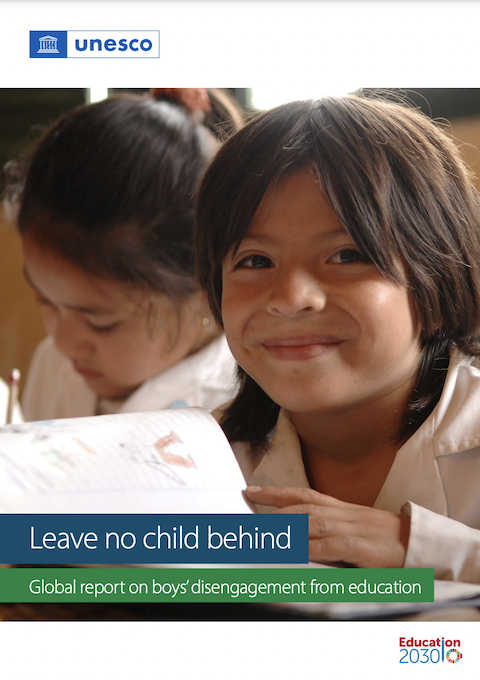 Leave No Child Behind: Global Report on Boys’ Disengagement From Education Année de publication: 2022 Auteur institutionnel: UNESCO The 2030 Agenda for Sustainable Development makes the promise to leave no one behind. While improving educational opportunities for girls globally continues to be of paramount importance to achieve gender equality in and through education, this focus on achieving gender parity and equality must not ignore boys. No less than 132 million boys of primary and secondary school age are out of school. To leave no child behind, UNESCO developed the first global report of this scope on boys’ disengagement from education, bringing together qualitative and quantitative evidence from over 140 countries. As this report shows, addressing boys’ disengagement from and disadvantage in education is not a zero-sum game. Supporting boys does not mean that girls lose out and vice versa. Addressing boys’ disengagement from and disadvantage in education not only benefits boys’ learning, employment opportunities, income and well-being, but it also benefits girls and the broader society.
 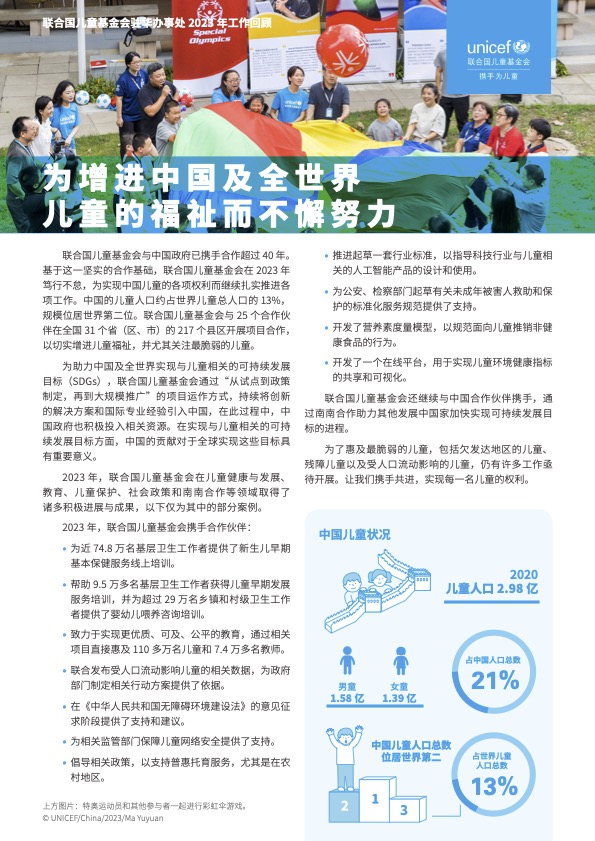 为增进中国及全世界儿童的福祉而不懈努力: 联合国儿童基金会驻华办事处2023年工作回顾 Année de publication: 2024 Auteur institutionnel: 联合国儿童基金会 联合国儿童基金会与中国政府已携手合作超过40年。基于这一坚实的合作基础,联合国儿童基金会在2023年笃行不怠,为实现中国儿童的各项权利而继续扎实推进各项工作。中国的儿童人口约占世界儿童总人口的13%,规模位居世界第二位。联合国儿童基金会与25个合作伙伴在全国31个省(区、市)的217个县区开展项目合作,以切实增进儿童福祉,并尤其关注最脆弱的儿童。为助力中国及全世界实现与儿童相关的可持续发展目标(SDGs),联合国儿童基金会通过“从试点到政策制定,再到大规模推广”的项目运作方式,持续将创新的解决方案和国际专业经验引入中国,在此过程中,中国政府也积极投入相关资源。在实现与儿童相关的可持续发展目标方面,中国的贡献对于全球实现这些目标具有重要意义。2023年,联合国儿童基金会在儿童健康与发展、教育、儿童保护、社会政策和南南合作等领域取得了诸多积极进展与成果,以下仅为其中的部分案例。2023年,联合国儿童基金会携手合作伙伴:为近74.8万名基层卫生工作者提供了新生儿早期基本保健服务线上培训。帮助9.5万多名基层卫生工作者获得儿童早期发展服务培训,并为超过29万名乡镇和村级卫生工作者提供了婴幼儿喂养咨询培训。致力于实现更优质、可及、公平的教育,通过相关项目直接惠及110多万名儿童和7.4万多名教师。联合发布受人口流动影响儿童的相关数据,为政府部门制定相关行动方案提供了依据。在《中华人民共和国无障碍环境建设法》的意见征求阶段提供了支持和建议。为相关监管部门保障儿童网络安全提供了支持。倡导相关政策,以支持普惠托育服务,尤其是在农村地区。推进起草一套行业标准,以指导科技行业与儿童相关的人工智能产品的设计和使用。为公安、检察部门起草有关未成年被害人救助和保护的标准化服务规范提供了支持。开发了营养素度量模型,以规范面向儿童推销非健康食品的行为。开发了一个在线平台,用于实现儿童环境健康指标的共享和可视化。联合国儿童基金会还继续与中国合作伙伴携手,通过南南合作助力其他发展中国家加快实现可持续发展目标的进程。为了惠及最脆弱的儿童,包括欠发达地区的儿童、残障儿童以及受人口流动影响的儿童,仍有许多工作亟待开展。让我们携手共进,实现每一名儿童的权利。
  التوصية الخاصة بالتربية والتعليم من أجل السلام وحقوق الإنسان والتنمية المستدامة: دليل تفسيري Année de publication: 2024 Auteur institutionnel: منظمة الأمم المتحدة للتربية والعلم والثقافة (UNESCO) ويقدّم هذا الكتيّب تعريفاً بالتوصية بصيغتها المعدّلة ويبيّن مضمون التوصية ويوضح لمختلف الجهات المعنية بالتربية والتعليم كيفية استخدامها بطريقة عملية في عملها اليومي.
  The Recommendation on Education for Peace, Human Rights and Sustainable Development: An Explainer Année de publication: 2024 Auteur institutionnel: UNESCO This is an explainer brochure of the new UNESCO Recommendation on Education for Peace and Human Rights, International Understanding, Cooperation, Fundamental Freedoms, Global Citizenship and Sustainable Development, which is commonly referred to as the Recommendation on Education for Peace, Human Rights and Sustainable Development, about its purpose, history, content and potential to bring about necessary change.
  Recomendación sobre la Educación para la Paz, los Derechos Humanos y el Desarrollo Sostenible : nota explicativa Année de publication: 2024 Auteur institutionnel: Organización de las Naciones Unidas para la Educación, la Ciencia y la Cultura (UNESCO) En este folleto se presenta la versión actualizada de la Recomendación y se explica lo que ofrece y el modo en que las distintas partes interesadas en la educación pueden utilizarla de manera concreta en el día a día.
  La Recommandation sur l’éducation pour la paix, les droits de l’homme et le développement durable: Brochure explicative Année de publication: 2024 Auteur institutionnel: Organisation des Nations Unies pour l'éducation, la science et la culture (UNESCO) Cette brochure présente la version actualisée de la Recommandation et explique ce que cette dernière peut apporter et comment elle peut être mise en application de manière concrète par les différents acteurs de l’éducation au quotidien.
  UNESCO in action for gender equality: 2022-2023 Année de publication: 2023 Auteur institutionnel: UNESCO <Short summary>Intersecting Global Crises Cannot Be Solved Without Gender Equality The compounding global crises that have emerged and amplified over the past two years require transformative, structural solutions if we are to build and shape sustainable and peaceful societies. Education has experienced the largest disruption in history as a result of the COVID-19 health crisis. Biodiversity has seen a steep decline – at alarming rates – on both land and in the ocean. Conflicts and emergencies that destabilise progress towards just and peaceful societies have increased in number, while human rights violations are multiplying in new contexts, including online and offline. The decisions we make and the actions we take – now – will have consequences for generations to come.None of these intersecting crises can be solved by one country alone and none of them are gender neutral. Placing gender equality at the heart of multilateral action can harness the talents, ingenuity, and visions of one-half of the world’s population. The standards of ethics and human rights demand gender equality. So, too, do the numbers. Some of humankind’s greatest challenges require efficient and tangible solutions. The paradigm shift is needed now.Yet, despite a growing demand for equity and justice, the UN now predicts it will take almost three centuries to close the gender gap. Under that reality, UNESCO will continue to meet barriers to its mandate and vision since gender inequality has a direct impact on all areas in which UNESCO works.This report shows how UNESCO and its partners have provided concrete and effective solutions during the 2022-2023 biennium to advance gender equality. It has reduced inequalities in and through quality education; it has empowered women in science and technology for environmental action; it has promoted inclusion and combatted gender-based violence; it has bridged the digital gender divide and it has promoted gender equality and women’s empowerment in crisis, emergency and early recovery contexts.UNESCO’s Global Priority Gender Equality is more relevant than ever. Together, we can amplify and expand its reach and multiply gender-transformative results for the benefit of women and girls, men and boys, all around the world.
  Technology-facilitated gender-based violence in an era of generative AI Année de publication: 2023 Auteur institutionnel: UNESCO <Short summary>Experiments reveal how generative AI facilitates gender-based violence Generative Artificial Intelligence (AI) — deep-learning models that create voice, text, and image — are revolutionizing the way people access information and produce, receive and interact with content. While technological innovations like ChatGPT, DALL-E and Bard offer previously unimaginable gains in productivity, they also present concerns for the overall protection and promotion of human rights and for the safety of women and girls.The arrival of generative AI introduces new, unexplored questions: what are the companies’ policies and normative cultures that perpetuate technology-facilitated gender-based violence and harms? How do AI-based technologies facilitate gender-specific harassment and hate speech? What “prompt hacks” can lead to gendered disinformation, hate speech, harassment, and attacks? What measures can companies, governments, civil society organisations and independent researchers take to anticipate and mitigate these risks?A combination of measures are proposed to be put in place by generative AI companies and the technology companies that platform them, regulators and policy makers, by civil society organisations and independent researchers, as well as users.
 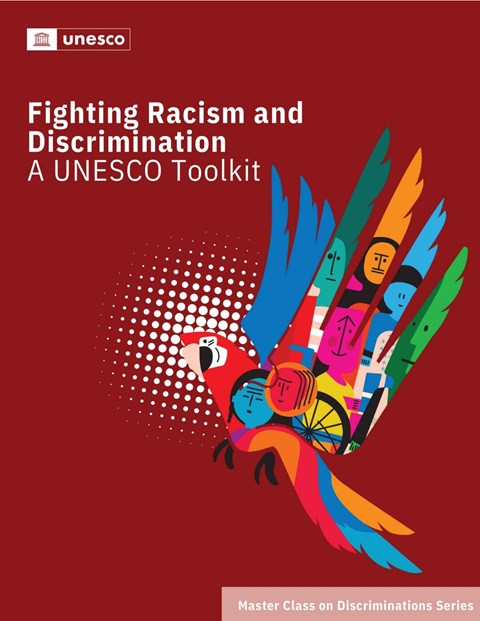 Fighting Racism and Discrimination: A UNESCO Toolkit Année de publication: 2023 Auteur institutionnel: UNESCO Globally, 1 in 5 people have experienced discrimination on at least one of the grounds prohibited under international human rights law. Despite action around the world to end hate and combat discrimination, our societies continue to struggle. Institutionalised and structural racism remains a significant challenge with societies only beginning to come to terms with the harsh realities of historical legacies of inequality. Regardless of the rise of the Black Lives Matter movement following the death of George Floyd and increased discussion, policies tackling the legacies of historical racism as well as contemporary racism remain limited. Arguments on the ethics of collecting racial and ethnicity data persist, making measurement of racism and discrimination all the more challenging and leading to difficulties in fully comprehending this issue. However, with impact ranging from education to housing to income to criminal justice, these issues cannot wait. Recognising the magnitude of this challenge and responding to the urgent call for action – the Global Call against Racism – by our Member States, UNESCO has developed the UNESCO Anti-Racism Toolkit. Within the pages of this guide, you will find core concepts, good practices from around the world, practical exercises, and more. A tool designed to support policy-makers in developing anti-racist legislation, it is a first step to tackling the historical and structural racism within our societies.
 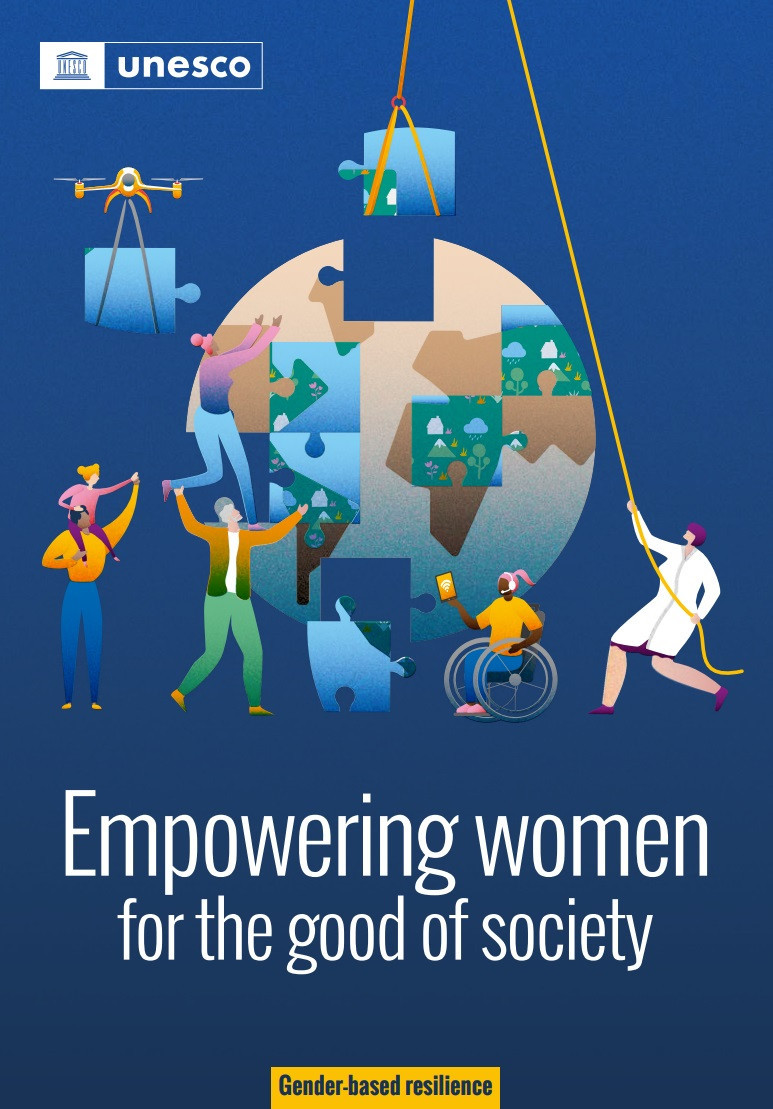 Empowering women for the good of society: gender-based resilience Année de publication: 2023 Auteur: Squicciarini, Mariagrazia | Sarlat, Garance | Manca, Anna Rita Auteur institutionnel: UNESCO <Short Summary> Let’s change the resilience paradigmWhat are the root causes and drivers of resilience? Societal resilience is shaped by the unique roles that individuals play and their ability to respond to shocks, gender-based expectations and discriminations hinder women’s and girls’ ability to participate in, and contribute to, society. In times of crises, their vulnerability intensifies resulting in a weakened response that ripples throughout society.In response, UNESCO designed the first Gender-Based Resilience Framework. As a compass for inclusive policymaking, this report analyzes how differences in opportunities, needs and constraints impact resilience and proposes a measurement Framework based on: (1) fundamental human rights; (2) socioeconomic characteristics, such as health, education, work, political engagement, and climate justice; (3) contextual factors, such as values and perceptions.Moving beyond the standard approach of coping with and recovering from shocks; UNESCO calls for a gender-transformative resilience, which leverages the interrelations between individuals and institutions. Decision- and policy-makers, researchers, and gender equality advocates are invited to use and add to this Framework to effectively navigate through current and future crises.It is only by empowering all women and girls, and people of all genders, that we will be able to face the challenges ahead.