
Ressources
Explorez une large gamme de ressources sur le GCED afin d’approfondir votre compréhension et de renforcer vos activités de recherche, de plaidoyer, d’enseignement et d’apprentissage.
3,446 résultats trouvés
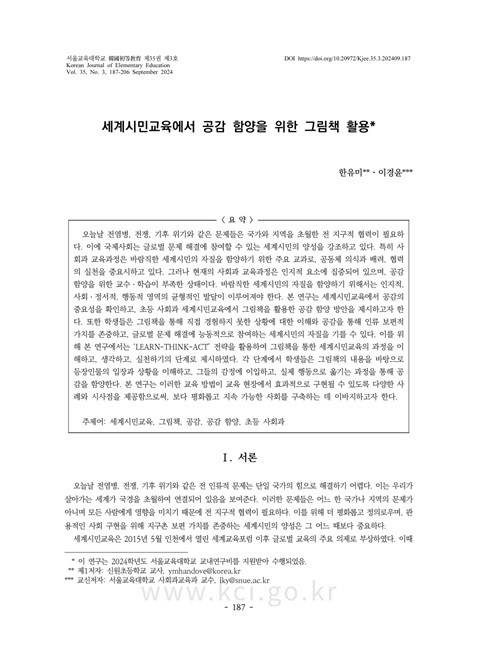 세계시민교육에서 공감 함양을 위한 그림책 활용 (한국초등교육; Vol. 35, No. 3) Année de publication: 2024 Auteur: 한유미 | 이경윤 Auteur institutionnel: 서울교육대학교 초등교육연구원 오늘날 전염병, 전쟁, 기후 위기와 같은 문제들은 국가와 지역을 초월한 전 지구적 협력이 필요하다. 이에 국제사회는 글로벌 문제 해결에 참여할 수 있는 세계시민의 양성을 강조하고 있다. 특히 사회과 교육과정은 바람직한 세계시민의 자질을 함양하기 위한 주요 교과로, 공동체 의식과 배려, 협력의 실천을 중요시하고 있다. 그러나 현재의 사회과 교육과정은 인지적 요소에 집중되어 있으며, 공감함양을 위한 교수ㆍ학습이 부족한 상태이다. 바람직한 세계시민의 자질을 함양하기 위해서는 인지적, 사회ㆍ정서적, 행동적 영역의 균형적인 발달이 이루어져야 한다. 본 연구는 세계시민교육에서 공감의중요성을 확인하고, 초등 사회과 세계시민교육에서 그림책을 활용한 공감 함양 방안을 제시하고자 한다. 또한 학생들은 그림책을 통해 직접 경험하지 못한 상황에 대한 이해와 공감을 통해 인류 보편적가치를 존중하고, 글로벌 문제 해결에 능동적으로 참여하는 세계시민의 자질을 기를 수 있다. 이를 위해 본 연구에서는 ‘LEARN-THINK-ACT’ 전략을 활용하여 그림책을 통한 세계시민교육의 과정을 이해하고, 생각하고, 실천하기의 단계로 제시하였다. 각 단계에서 학생들은 그림책의 내용을 바탕으로등장인물의 입장과 상황을 이해하고, 그들의 감정에 이입하고, 실제 행동으로 옮기는 과정을 통해 공감을 함양한다. 본 연구는 이러한 교육 방법이 교육 현장에서 효과적으로 구현될 수 있도록 다양한 사례와 시사점을 제공함으로써, 보다 평화롭고 지속 가능한 사회를 구축하는 데 이바지하고자 한다.
 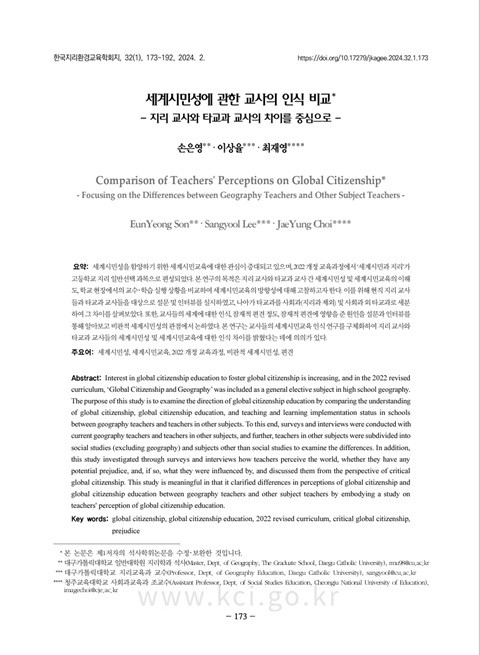 세계시민성에 관한 교사의 인식 비교: 지리 교사와 타교과 교사의 차이를 중심으로 (한국지리환경교육학회지; Vol. 32, No. 1) Année de publication: 2024 Auteur: 손은영 | 이상율 | 최재영 Auteur institutionnel: 한국지리환경교육학회 세계시민성을 함양하기 위한 세계시민교육에 대한 관심이 증대되고 있으며, 2022 개정 교육과정에서 ‘세계시민과 지리’가고등학교 지리 일반선택 과목으로 편성되었다. 본 연구의 목적은 지리 교사와 타교과 교사 간 세계시민성 및 세계시민교육의 이해도, 학교 현장에서의 교수・학습 실행 상황을 비교하여 세계시민교육의 방향성에 대해 고찰하고자 한다. 이를 위해 현직 지리 교사들과 타교과 교사들을 대상으로 설문 및 인터뷰를 실시하였고, 나아가 타교과를 사회과(지리과 제외) 및 사회과 외 타교과로 세분하여 그 차이를 살펴보았다. 또한, 교사들의 세계에 대한 인식, 잠재적 편견 정도, 잠재적 편견에 영향을 준 원인을 설문과 인터뷰를통해 알아보고 비판적 세계시민성의 관점에서 논하였다. 본 연구는 교사들의 세계시민교육 인식 연구를 구체화하여 지리 교사와타교과 교사들의 세계시민성 및 세계시민교육에 대한 인식 차이를 밝혔다는 데에 의의가 있다.
 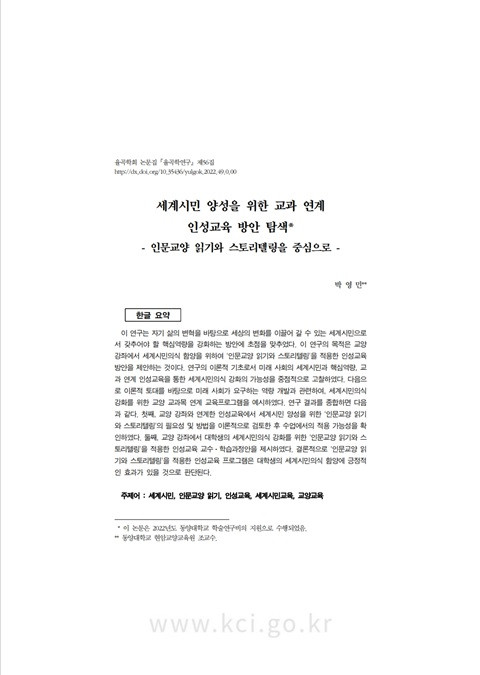 세계시민 양성을 위한 교과 연계 인성교육 방안 탐색: 인문교양 읽기와 스토리텔링을 중심으로 (율곡학연구; Vol. 56) Année de publication: 2024 Auteur: 박영민 Auteur institutionnel: 율곡학회 이 연구는 자기 삶의 변혁을 바탕으로 세상의 변화를 이끌어 갈 수 있는 세계시민으로서 갖추어야 할 핵심역량을 강화하는 방안에 초점을 맞추었다. 이 연구의 목적은 교양 강좌에서 세계시민의식 함양을 위하여 ‘인문교양 읽기와 스토리텔링’을 적용한 인성교육 방안을 제안하는 것이다. 연구의 이론적 기초로서 미래 사회의 세계시민과 핵심역량, 교과 연계 인성교육을 통한 세계시민의식 강화의 가능성을 중점적으로 고찰하였다. 다음으로 이론적 토대를 바탕으로 미래 사회가 요구하는 역량 개발과 관련하여, 세계시민의식 강화를 위한 교양 교과목 연계 교육프로그램을 예시하였다. 연구 결과를 종합하면 다음과 같다. 첫째, 교양 강좌와 연계한 인성교육에서 세계시민 양성을 위한 ‘인문교양 읽기와 스토리텔링’의 필요성 및 방법을 이론적으로 검토한 후 수업에서의 적용 가능성을 확인하였다. 둘째, 교양 강좌에서 대학생의 세계시민의식 강화를 위한 ‘인문교양 읽기와 스토리텔링’을 적용한 인성교육 교수·학습과정안을 제시하였다. 결론적으로 ‘인문교양 읽기와 스토리텔링’을 적용한 인성교육 프로그램은 대학생의 세계시민의식 함양에 긍정적인 효과가 있을 것으로 판단된다.
  Intercultural Education : special issue on Holocaust Education in North America and Europe (Vol 14) Issue 2 "Intercultural Education is a global forum for the analysis of issues dealing with education in plural societies. It provides educational professionals with the knowledge and information that can assist them in contributing to the critical analysis and the implementation of intercultural education." This special issue concerns Holocaust Education in North America and Europe.
  Intercultural Education : Supplement 1 : Teaching the Holocaust in diverse classrooms : Opportunities and Challenges (Vol 21) Supplement 1 "Intercultural Education is a global forum for the analysis of issues dealing with education in plural societies. It provides educational professionals with the knowledge and information that can assist them in contributing to the critical analysis and the implementation of intercultural education." This special issue is about the opportunities and challenges about teaching the Holocaust in diverse classrooms.
  The contribution of "study abroad" programs to Japanese internationalization Année de publication: 2009 Auteur: Takako Asaoka | Jun Yano “Study abroad” needs promoting, as it is an effective alternative for many Japanese university students to enhance their international experience and cross-cultural understanding, thus contributing to the internationalization of Japanese universities. To consider what has to be done to promote “study abroad” programs, this research attempts to ascertain (a) the characteristics of the “study abroad” program of Japanese university students, (b) what Japanese university students think about the “study abroad” program, (c) the factors discouraging them from studying abroad, and (d) suggestions made by university staff to promote “study abroad” programs. Online survey results of 173 Japanese university students, interview answers and monthly reports of 20 Japanese university exchange students, opinions of 15 JAFSA members, and the JASSO symposium reports from 2005 to 2007 were used as data for this study. Suggestions are made to enable Japanese university staff to further promote “study abroad” programs among their students.
  Установки молодежи современного Казахстана на проявление социальной активности Année de publication: 2018 Auteur: O.V. Kaldybayeva | F.M. Mussataeva | G.Ye. Okasova В статье поднимается проблема исследования социальной активности среди современной молодежи, от степени которой во многом зависит эффективность реализации многих государственных программ. Выводы основаны на результатах социологического исследования, реализованного Научно-исследовательским центром «Молодежь» во второй половине 2017 г. в Республике Казахстан.
  Analysis of Cultural Values of Russian Youth and Central Asian Migrants at the Present Stage (by G. Hofstede methodology) Année de publication: 2022 Auteur: A.I. Evdokimov | I.V. Ponomareva This paper is a summary analysis of cultural values in young Russians and migrants from Central Asian countries, conducted in 2019- 2021 according to the methodology of the Dutch scientist Geert Hofstede. In the sociological The study involved 404 people: 182 representatives of Russian youth and 222 representatives of the migration communities of the Central Asian states. Анализ культурынх ценностей Российской молодежи и мигрантов из стран Центральной Азии на современном этапе (по методике Г. Хофстеде) Année de publication: 2022 Auteur: A.I. Evdokimov | I.V. Ponomareva Данная работа является обобщающим анализом культурных ценностей у молодых россиян и мигрантов из стран Центральной Азии, проведенной в 2019– 2021 гг. по методике голландского ученого Герта Хофстеде. В проведенном социологическом исследовании принимали участие 404 человека: 182 представителя российской молодежи и 222 представителя миграционных сообществ государств Центральной Азии.
 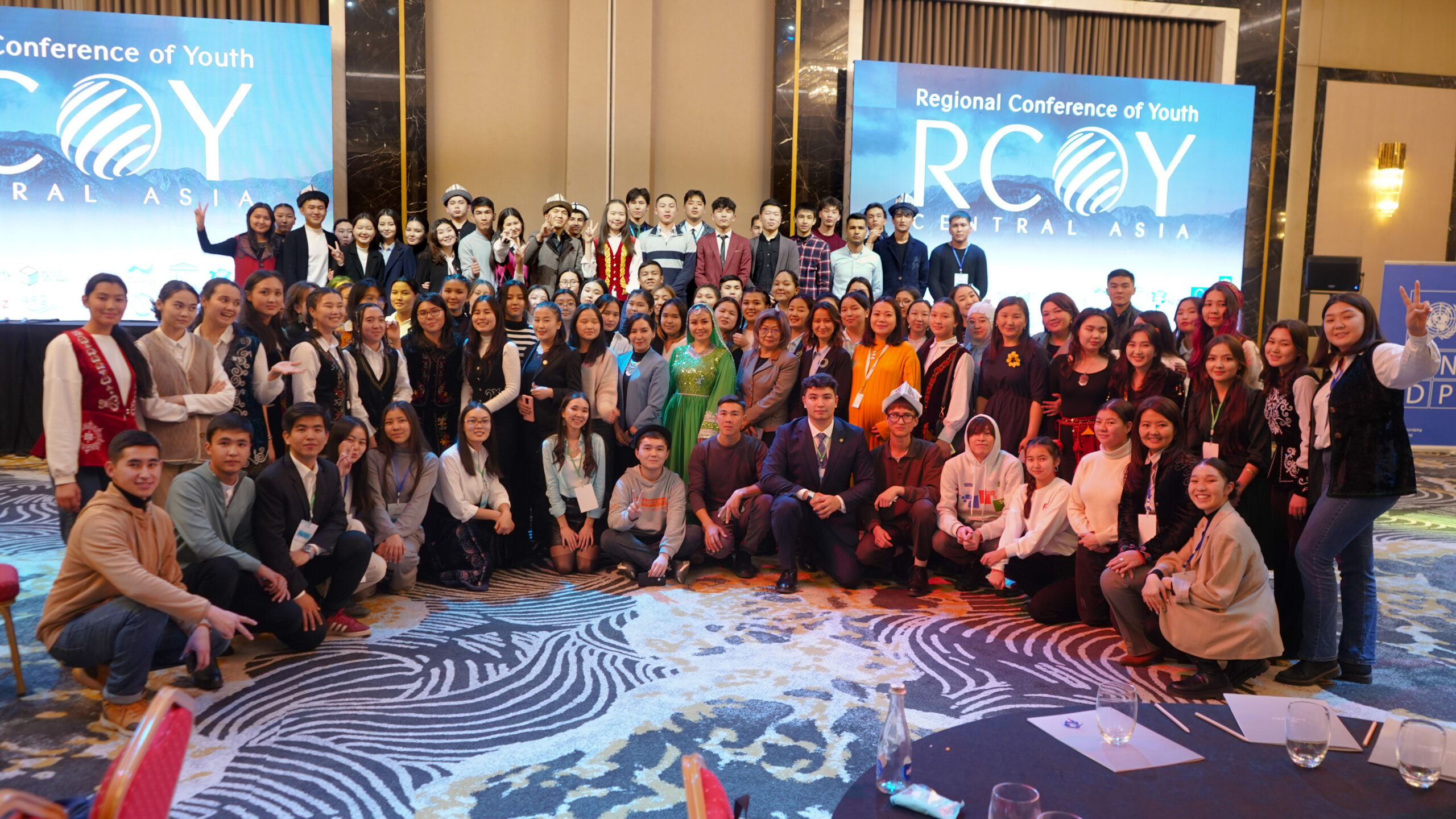 Youth Involvement in Climate Issues in Kazakhstan and Tajikistan: Illusion or Reality? Année de publication: 2024 Auteur: Anisa Abibulloyeva | Mukhtar Amanbayuly Auteur institutionnel: Central Asian Bureau for Analytical Reporting (CABAR) Government agencies in Central Asian countries and international organizations that deal with environmental issues, especially climate change, do not sufficiently take into account the opinions of young environmentalists, according to young experts from Tajikistan and Kazakhstan, Anisa Abibulloyeva and Mukhtar Amanbayuly.