
Ressources
Explorez une large gamme de ressources sur le GCED afin d’approfondir votre compréhension et de renforcer vos activités de recherche, de plaidoyer, d’enseignement et d’apprentissage.
3,446 résultats trouvés
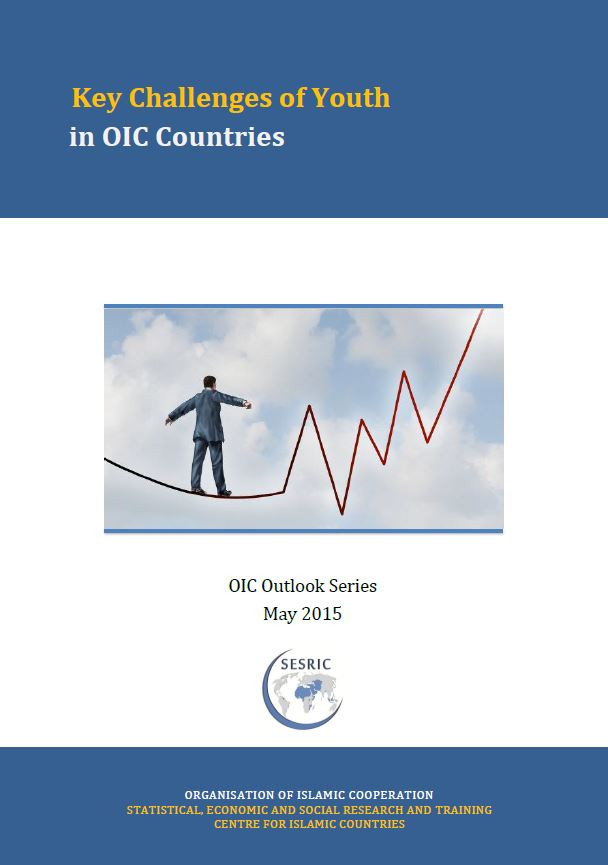 Key Challenges of Youth in OIC Countries Année de publication: 2015 Auteur institutionnel: Organization of Islamic Cooperation (OIC) | Statistical, Economic and Social Research and Training Centre for Islamic Countries (SESRIC) The report contains four main sections, with the exception of the introductory and concluding sections. The first section briefly reviews some of the main educational outcomes in OIC countries. Literacy and participation rates in tertiary schools and international student mobility are the main indicators reviewed in this section. The second section highlights some important labor market indicators related to the young population in order to identify the main challenges and obstacles in the OIC countries. The third section deals with some social problems of young people. The fourth section deals with mental health issues. The last section is devoted to recommendations. التحديات الرئيسية للشباب في دول منظمة التعاون اإلسالمي Année de publication: 2015 Auteur institutionnel: Organization of Islamic Cooperation (OIC) | Statistical, Economic and Social Research and Training Centre for Islamic Countries (SESRIC) ويحتوي التقرير على أربعة أقسام رئيسية، باستثناء الأقسام التمهيدية والختامية. يستعرض القسم الأول بإيجاز بعض النتائج التعليمية الرئيسية في دول المنظمة. وتشكل معدلات الإلمام بالقراءة والكتابة والمشاركة في مدارس التعليم العالي والحراك الطلابي الدولي المؤشرات الرئيسية المستعرضة في هذا القسم. يبرز القسم الثاني بعض المؤشرات الهامة لسوق العمل المتعلقة بالسكان الشباب بهدف التعرف على التحديات والعقبات الرئيسية في دول المنظمة. ويتناول القسم الثالث بعض المشاكل الاجتماعية للشباب. أما القسم الرابع فيتناول قضايا الصحة النفسية. والقسم الأخير مخصص للتوصيات.
  Installations of the Youth of Modern Kazakhstan to Implement Social Activity Année de publication: 2018 Auteur: O.V. Kaldybayeva | F.M. Mussataeva | G.Ye. Okasova The article discusses the issues related to the study of social activity among modern youth, which largely determines the implementation effeciency of a number of national programs. The conclusions in this article are based on the results of sociological study by Scientific Research Center “Youth”, carried out in the second half of 2017 in the Republic of Kazakhstan.
 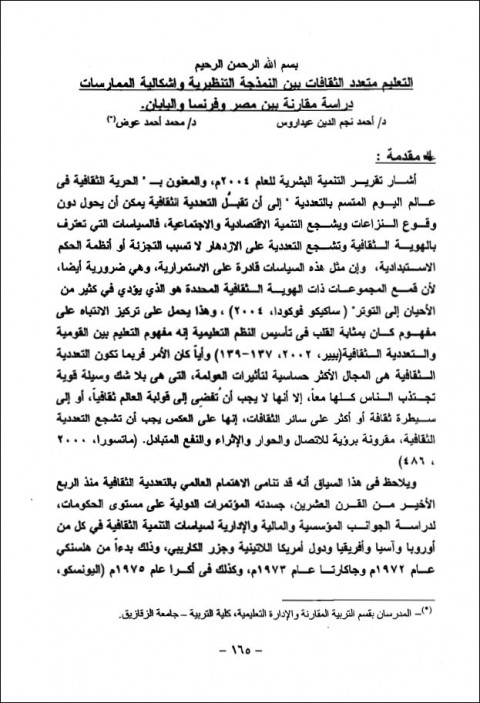 التعليم متعدد الثقافات بين النمذجة التنظيرية وإشكالية الممارسات : دراسة مقارنة بين مصر وفرنسا واليابان Année de publication: 2006 Auteur: Ahmed Aidrous | Mohammed Awad Auteur institutionnel: Zagazig University تركز هذه الورقة على دراسة التعددية الثقافية كمفهوم والنظريات والأطر والنماذج التطبيقية المرتبطة بها. وتستعرض الدراسة خبرة كلا من فرنسا واليابان ومصر، وتضع مقارنات بينها. تنتهي الدراسة بوضع تصور مقترح للتعليم متعدد الثقافات في ضوء الخبرات المعروضة.
 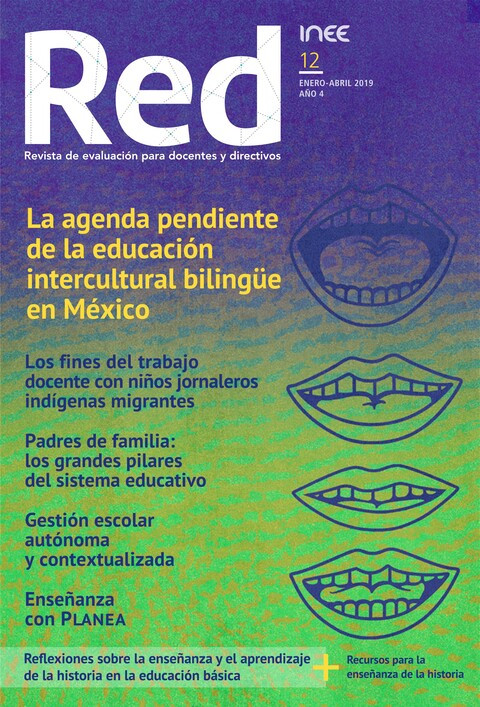 Journal of Evaluation for Teachers and Managers: The Pending Agenda of Bilingual Intercultural Education in Mexico (Red Magazine; No.4, 2019) Année de publication: 2019 Auteur institutionnel: National Institute for the Evaluation of Education (NIEE) This journal addresses an outstanding concern within the Mexican state: indigenous, intercultural, and bilingual education in our nation. It delves into the pedagogy of history at the elementary and secondary levels, along with an exploration of the internet's resources for stimulating student interest in this subject, as presented in our inaugural issue of 2019. Equally noteworthy are inquiries into teacher professionalization and insights shared by several educators on this subject. In the direct discourse titled "From Educator to Educator," Ms. Tsut Tsuy Tamayo also imparts her experiences in the realm of mathematics education. Additionally, this issue includes substantial statistics from the PLANEA assessment, an investigative report on parental involvement in their children's academic pursuits, and an extensive evaluation course tailored for educators, elucidated through an interview with Bernardo Naranjo, a counselor at the National Institute for the Evaluation of Education (INEE). Revista de evaluación para docentes y directivos: La agenda pendiente de la educación intercultural bilingüe en México (Revista Red; No.4, 2019) Année de publication: 2019 Auteur institutionnel: National Institute for the Evaluation of Education (NIEE) Esta revista aborda una asignatura pendiente del Estado mexicano: la educación indígena, intercultural y bilingüe en nuestro país. La enseñanza de la historia en primaria y secundaria, y los recursos que nos ofrece internet para propiciar el interés de los alumnos en esta asignatura también se plantean en nuestra primera entrega de 2019. No menos interesantes resultan la profesionalización docente y las opiniones que varias maestras nos comunican sobre este tema. En el diálogo directo “De profesor a profesor”, la maestra Tsut Tsuy Tamayo nos comparte igualmente su experiencia en la enseñanza de las matemáticas. Las significativas cifras arrojadas por PLANEA, un reportaje sobre la participación de los padres de familia en la educación académica de sus hijos, un curso masivo sobre evaluación dirigido a docentes expuesto en entrevista por Bernardo Naranjo, consejero del INEE.
 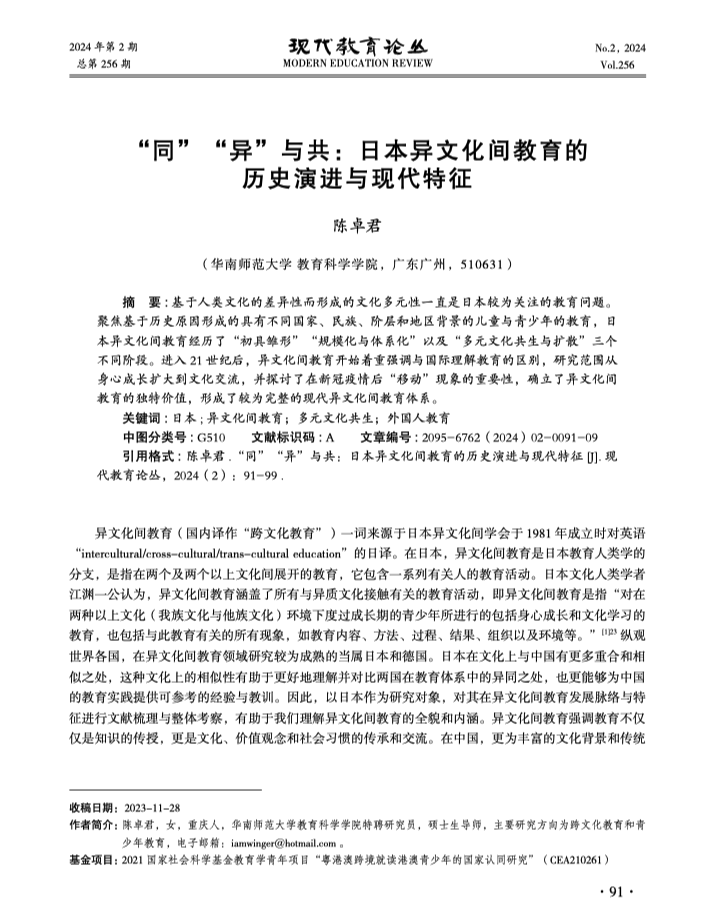 “同”“异”与共:日本异文化间教育的历史演进与现代特征 (现代教育论丛 第256期) Année de publication: 2024 Auteur: 陈卓君 基于人类文化的差异性而形成的文化多元性一直是日本较为关注的教育问题。 聚焦基于历史原因形成的具有不同国家、民族、阶层和地区背景的儿童与青少年的教育,日 本异文化间教育经历了“初具雏形”“规模化与体系化”以及“多元文化共生与扩散”三个 不同阶段。进入 21 世纪后,异文化间教育开始着重强调与国际理解教育的区别,研究范围从 身心成长扩大到文化交流,并探讨了在新冠疫情后“移动”现象的重要性,确立了异文化间 教育的独特价值,形成了较为完整的现代异文化间教育体系。
 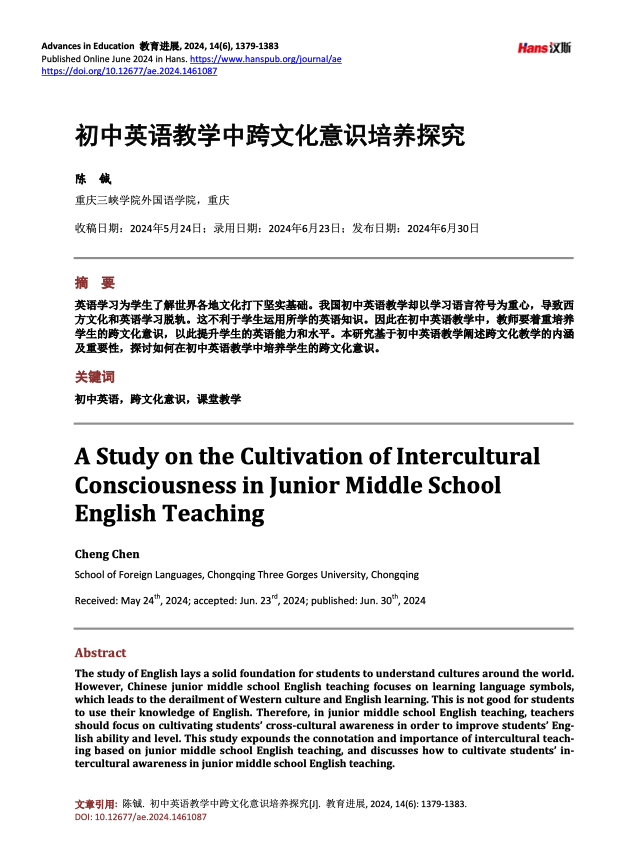 初中英语教学中跨文化意识培养探究 (教育进展 第14卷 第6期) Année de publication: 2024 Auteur: 陈铖 英语学习为学生了解世界各地文化打下坚实基础。我国初中英语教学却以学习语言符号为重心,导致西方文化和英语学习脱轨。这不利于学生运用所学的英语知识。因此在初中英语教学中,教师要着重培养学生的跨文化意识,以此提升学生的英语能力和水平。本研究基于初中英语教学阐述跨文化教学的内涵及重要性,探讨如何在初中英语教学中培养学生的跨文化意识。
  指向文化意识培养的高中英语5E阅读教学模式研究 (教育进展 第14卷 第6期) Année de publication: 2024 Auteur: 陈乐乐 针对高中英语阅读课中文化意识培养“浅层化与碎片化”的教学现状,本文通过对人教版高中英语必修教材(2019) Reading and Thinking板块的文化内容分析,以必修三第1单元Festivals and Celebrations的阅读语篇“Why Do We Celebrate Festivals?”为例,设计了多层次的阅读教学活动,探讨如何利用基于学习活动观的高中英语5E阅读教学模式充分挖掘语篇包含的文化内容,从而培养学生的文化意识。
 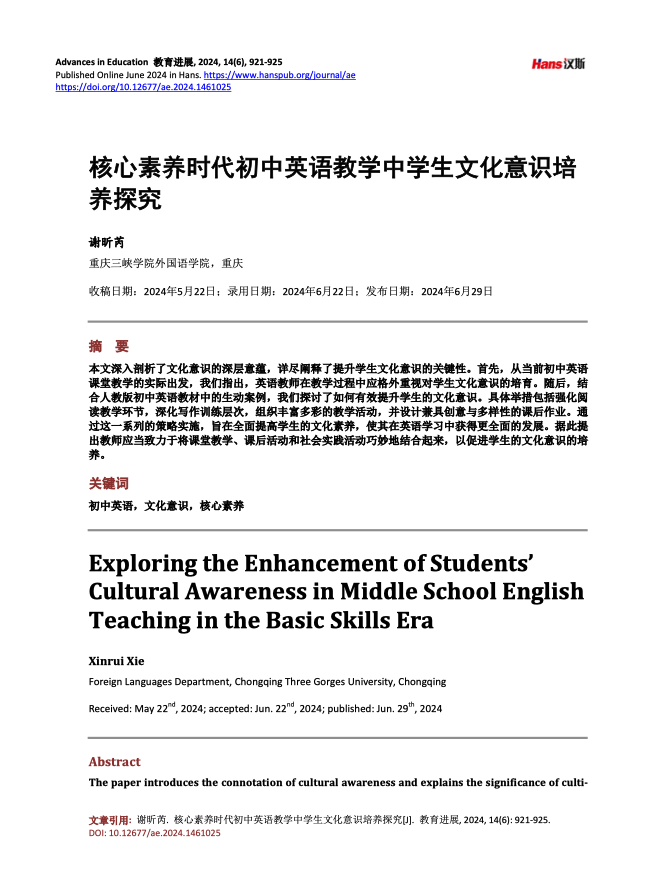 核心素养时代初中英语教学中学生文化意识培养探究 (教育进展 第14卷 第6期) Année de publication: 2024 Auteur: 谢昕芮 本文深入剖析了文化意识的深层意蕴,详尽阐释了提升学生文化意识的关键性。首先,从当前初中英语课堂教学的实际出发,我们指出,英语教师在教学过程中应格外重视对学生文化意识的培育。随后,结合人教版初中英语教材中的生动案例,我们探讨了如何有效提升学生的文化意识。具体举措包括强化阅读教学环节,深化写作训练层次,组织丰富多彩的教学活动,并设计兼具创意与多样性的课后作业。通过这一系列的策略实施,旨在全面提高学生的文化素养,使其在英语学习中获得更全面的发展。据此提出教师应当致力于将课堂教学、课后活动和社会实践活动巧妙地结合起来,以促进学生的文化意识的培养。