
Ressources
Explorez une large gamme de ressources sur le GCED afin d’approfondir votre compréhension et de renforcer vos activités de recherche, de plaidoyer, d’enseignement et d’apprentissage.
3,446 résultats trouvés
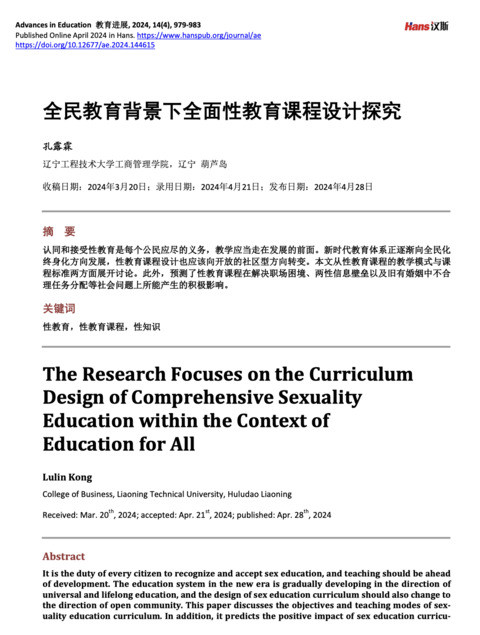 全民教育背景下全面性教育课程设计探究 (教育进展 第14卷 第4期) Année de publication: 2024 Auteur: 孔露霖 Auteur institutionnel: 汉斯出版社 认同和接受性教育是每个公民应尽的义务,教学应当走在发展的前面。新时代教育体系正逐渐向全民化 终身化方向发展,性教育课程设计也应该向开放的社区型方向转变。本文从性教育课程的教学模式与课 程标准两方面展开讨论。此外,预测了性教育课程在解决职场困境、两性信息壁垒以及旧有婚姻中不合 理任务分配等社会问题上所能产生的积极影响。
 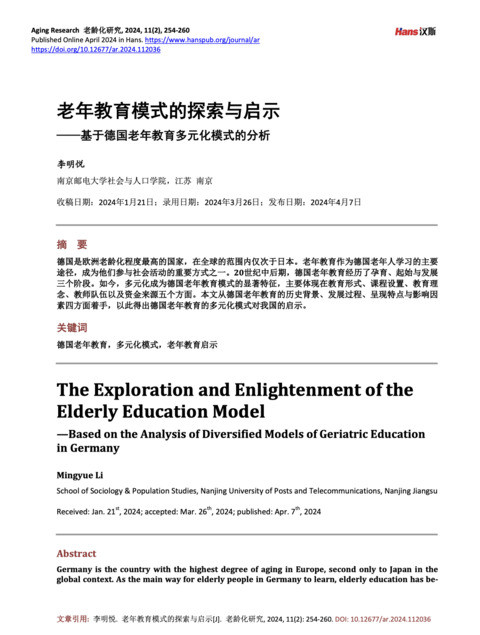 老年教育模式的探索与启示 : 基于德国老年教育多元化模式的分析 (老龄化研究 第11卷 第2期) Année de publication: 2024 Auteur: 李明悦 Auteur institutionnel: 汉斯出版社 德国是欧洲老龄化程度最高的国家,在全球的范围内仅次于日本。老年教育作为德国老年人学习的主要 途径,成为他们参与社会活动的重要方式之一。20世纪中后期,德国老年教育经历了孕育、起始与发展 三个阶段。如今,多元化成为德国老年教育模式的显著特征,主要体现在教育形式、课程设置、教育理 念、教师队伍以及资金来源五个方面。本文从德国老年教育的历史背景、发展过程、呈现特点与影响因 素四方面着手,以此得出德国老年教育的多元化模式对我国的启示。
 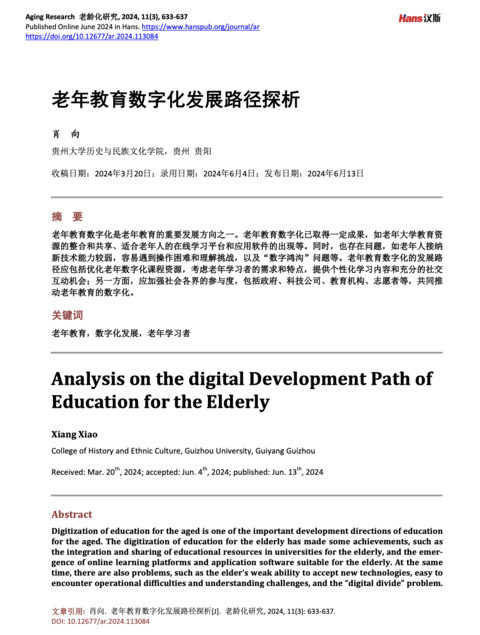 老年教育数字化发展路径探析 (老龄化研究 第11卷 第3期) Année de publication: 2024 Auteur: 肖向 Auteur institutionnel: 汉斯出版社 老年教育数字化是老年教育的重要发展方向之一。老年教育数字化已取得一定成果,如老年大学教育资 源的整合和共享、适合老年人的在线学习平台和应用软件的出现等。同时,也存在问题,如老年人接纳 新技术能力较弱,容易遇到操作困难和理解挑战,以及“数字鸿沟”问题等。老年教育数字化的发展路 径应包括优化老年数字化课程资源,考虑老年学习者的需求和特点,提供个性化学习内容和充分的社交 互动机会;另一方面,应加强社会各界的参与度,包括政府、科技公司、教育机构、志愿者等,共同推 动老年教育的数字化。
 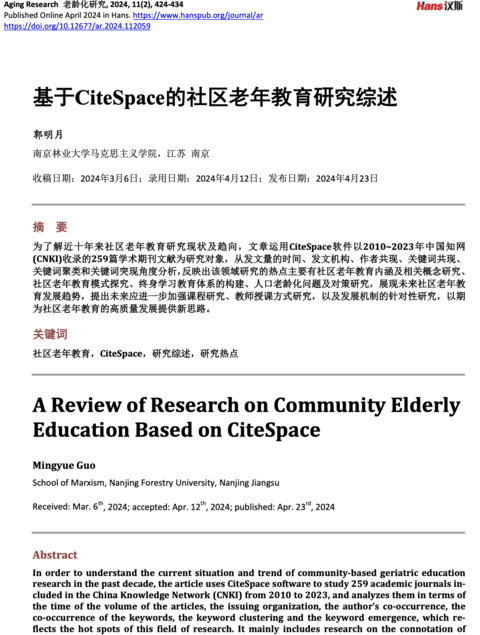 基于CiteSpace的社区老年教育研究综述 (老龄化研究 第11卷 第2期) Année de publication: 2024 Auteur: 郭明月 Auteur institutionnel: 汉斯出版社 为了解近十年来社区老年教育研究现状及趋向, 文章运用CiteSpace软件以2010~2023年中国知网 (CNKI)收录的259篇学术期刊文献为研究对象,从发文量的时间、发文机构、作者共现、关键词共现、 关键词聚类和关键词突现角度分析,反映出该领域研究的热点主要有社区老年教育内涵及相关概念研究、 社区老年教育模式探究、终身学习教育体系的构建、人口老龄化问题及对策研究,展现未来社区老年教 育发展趋势,提出未来应进一步加强课程研究、教师授课方式研究,以及发展机制的针对性研究,以期 为社区老年教育的高质量发展提供新思路。
 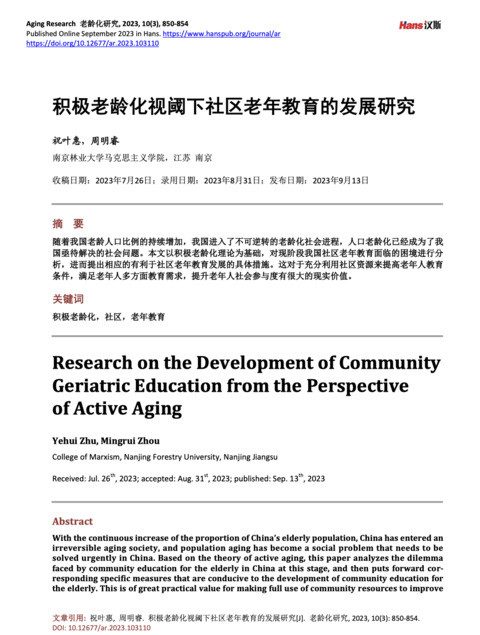 积极老龄化视阈下社区老年教育的发展研究 (老龄化研究 第10卷 第3期) Année de publication: 2023 Auteur: 祝叶惠 | 周明睿 Auteur institutionnel: 汉斯出版社 随着我国老龄人口比例的持续增加,我国进入了不可逆转的老龄化社会进程,人口老龄化已经成为了我 国亟待解决的社会问题。本文以积极老龄化理论为基础,对现阶段我国社区老年教育面临的困境进行分 析,进而提出相应的有利于社区老年教育发展的具体措施。这对于充分利用社区资源来提高老年人教育 条件,满足老年人多方面教育需求,提升老年人社会参与度有很大的现实价值。
 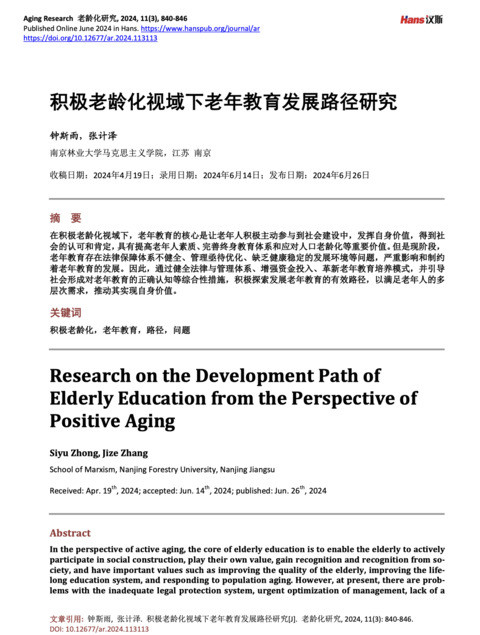 积极老龄化视域下老年教育发展路径研究 (老龄化研究 第11卷 第3期) Année de publication: 2024 Auteur: 钟斯雨 | 张计泽 Auteur institutionnel: 汉斯出版社 在积极老龄化视域下,老年教育的核心是让老年人积极主动参与到社会建设中,发挥自身价值,得到社 会的认可和肯定,具有提高老年人素质、完善终身教育体系和应对人口老龄化等重要价值。但是现阶段, 老年教育存在法律保障体系不健全、管理亟待优化、缺乏健康稳定的发展环境等问题,严重影响和制约 着老年教育的发展。因此,通过健全法律与管理体系、增强资金投入、革新老年教育培养模式,并引导 社会形成对老年教育的正确认知等综合性措施,积极探索发展老年教育的有效路径,以满足老年人的多 层次需求,推动其实现自身价值。
 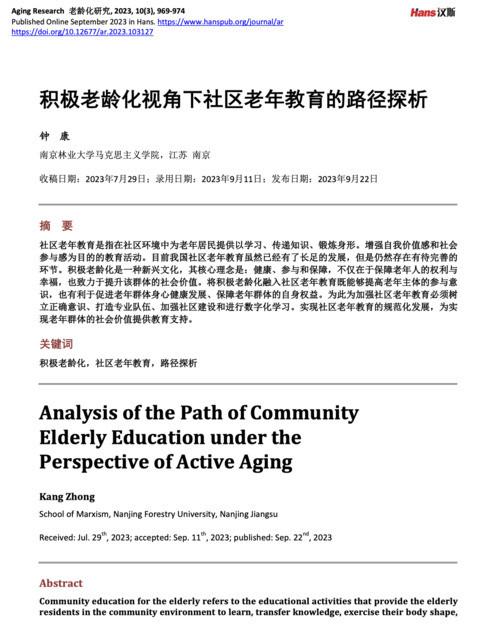 积极老龄化视角下社区老年教育的路径探析 (老龄化研究 第10卷 第3期) Année de publication: 2023 Auteur: 钟康 Auteur institutionnel: 汉斯出版社 社区老年教育是指在社区环境中为老年居民提供以学习、传递知识、锻炼身形。增强自我价值感和社会 参与感为目的的教育活动。目前我国社区老年教育虽然已经有了长足的发展,但是仍然存在有待完善的 环节。积极老龄化是一种新兴文化,其核心理念是:健康、参与和保障,不仅在于保障老年人的权利与 幸福,也致力于提升该群体的社会价值。将积极老龄化融入社区老年教育既能够提高老年主体的参与意 识,也有利于促进老年群体身心健康发展、保障老年群体的自身权益。为此为加强社区老年教育必须树 立正确意识、打造专业队伍、加强社区建设和进行数字化学习。实现社区老年教育的规范化发展,为实 现老年群体的社会价值提供教育支持。
 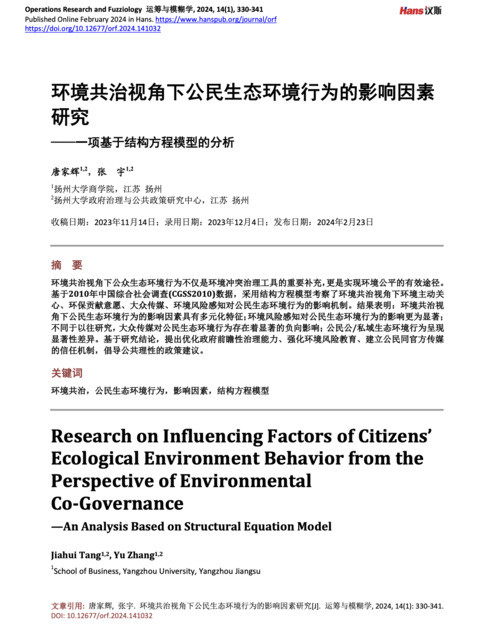 环境共治视角下公民生态环境行为的影响因素研究 : 一项基于结构方程模型的分析 (运筹与模糊学 第14卷 第1期) Année de publication: 2024 Auteur: 唐家辉 | 张宇 Auteur institutionnel: 汉斯出版社 环境共治视角下公众生态环境行为不仅是环境冲突治理工具的重要补充,更是实现环境公平的有效途径。 基于2010年中国综合社会调查(CGSS2010)数据,采用结构方程模型考察了环境共治视角下环境主动关 心、环保贡献意愿、大众传媒、环境风险感知对公民生态环境行为的影响机制。结果表明:环境共治视 角下公民生态环境行为的影响因素具有多元化特征;环境风险感知对公民生态环境行为的影响更为显著; 不同于以往研究,大众传媒对公民生态环境行为存在着显著的负向影响;公民公/私域生态环境行为呈现 显著性差异。基于研究结论,提出优化政府前瞻性治理能力、强化环境风险教育、建立公民同官方传媒 的信任机制,倡导公共理性的政策建议。
  Analytical Mapping of Life Skills and Citizenship Education in the Middle East and North Africa Année de publication: 2017 Auteur institutionnel: UNICEF Middle East and North Africa The Analytical Mapping of the Life Skills and Citizenship Education in MENA, published in October 2017, provides a multi-stakeholder view of the status of life skills and citizenship education in MENA and the corresponding vision for the region. It does not evaluate existing interventions, nor is it meant to generate an exhaustive list of all existing life skills programmes in MENA. It rather aims to provide an analytical overview of Life Skills and Citizenship Education (LSCE) related intervention in the region. Through analyzation, it also attempts to highlight general challenges encountered in the programming of LSCE, as well as focus on opportunities for LSCE in MENA national education systems.
 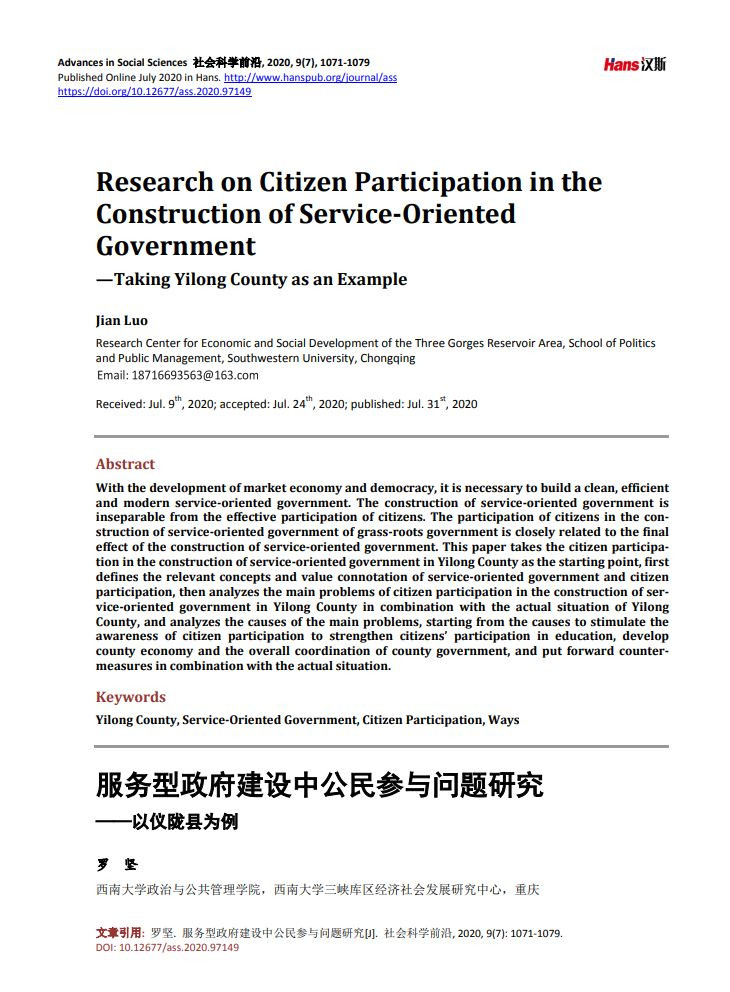 Research on Citizen Participation in the Construction of Service-Oriented Government—Taking Yilong County as an Example Année de publication: 2020 Auteur: Luo Jian Using a particular county as an exmple, this paper analyses the role of civic participation in transforming local government into service-oriented government, and provides suggestions for improvement.