
Ressources
Explorez une large gamme de ressources sur le GCED afin d’approfondir votre compréhension et de renforcer vos activités de recherche, de plaidoyer, d’enseignement et d’apprentissage.
3,387 résultats trouvés
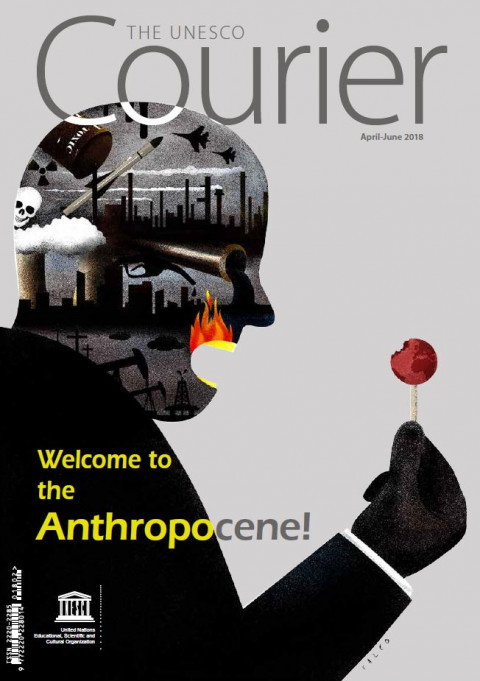 Bienvenue dans l'Anthropocène! (Le Courrier de l'UNESCO no. 2; Avril-Juin 2018) Année de publication: 2018 Auteur institutionnel: Organisation des Nations Unies pour l'éducation, la science et la culture (UNESCO) Selon les uns, l’Anthropocène n’est qu’un autre nom pour l’époque que nous appelons Holocène, les humains ayant commencé à exercer une pression sur l’environnement depuis 10 000ans, c’est-à-dire depuis leur sédentarisation et l’invention de l’agriculture. Selon d’autres, l’Anthropocène commencerait autour de 1800, avec la révolution industrielle. D’autres encore voient l’Anthropocène éclore dupremier champignon atomique de 1945. Malgré ces divergences, très rares sont ceux qui ne reconnaissent pas qu’au cours du dernier demi-siècle l’état de la planète s’est dégradé plus rapidement et plus dramatiquement que jamais : amasgigantesques de plastique sur les plages et dans les mers, développement sans précédent de nouveaux matériaux qui couvrent la surface terrestre et ne se recyclent que très peu, sols gorgés d’engrais, augmentation du taux d’acidité des mers, tauxde pollution sans précédent, érosion des forêts tropicales, dérèglement desécosystèmes, extinction massive des espèces et diminution drastique de la biodiversité, réchauffement climatique...À qui la faute ? Auxhumains – répond lamajorité des scientifiques. Reste à savoir si nous devrions tous porter la même charge deresponsabilité. Certains blâmant avant tout le système capitaliste né en Occident, parlent de Capitalocène ou d’Occidentalocène. Courons-nous à la catastrophe? Des voix s’élèvent pour prophétiser la fin du monde! Des notions comme Chtulhucène ou Thanatocène sont avancées pour signifier que le monstre rôde, quela mort nous guette... Des experts, bien plus modérés, n’en sont pas moins inquiets face à l’indécision des décideurs. «Tout se passe comme si l’humanité, léthargique, attendait la fin du film et le moment où les héros viendront tout arranger et où nous serons tous heureux pour toujours», lira-t-on dans ces pages.Le débat fait rage, les solutions tardent à venir. Le Courrier fait le point.
 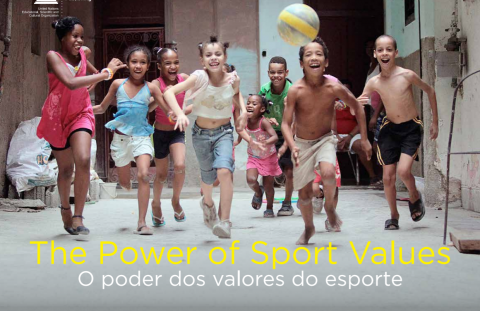 The Power of Sport Values Année de publication: 2016 Auteur institutionnel: UNESCO In the contexts of malnutrition, conflict, inactivity and unemployment, sport can act as springboard for social transformation, as a gateway to rounded development and as a facilitator for inclusive and responsible citizenship. Not only is sport a bridge between individuals and nations, it can also be an active tool for overcoming stereotypes, rising above exclusion and fostering citizenship. The Power of Sport Values is a collection of the best 15 entries of UNESCO’s photo contest on the power of sport values, selected from over 300 photos submitted by photographers from 76 countries all around the world. Be it in South Sudan, Kazakhstan, Mexico, Bangladesh or Cuba, sport provides joy, fosters inclusion and strengthens social mobilization.
  Universities: Increasingly Global Players Année de publication: 2015 Auteur: Patrick Aebischer Auteur institutionnel: UNESCO The role of science, technology and innovation has been explicitly recognized as a vital driver of sustainability. This paper addresses Des Universités de plus en plus tournés vers l'international Année de publication: 2015 Auteur: Patrick Aebischer Auteur institutionnel: Organisation des Nations Unies pour l'éducation, la science et la culture (UNESCO) The role of science, technology and innovation has been explicitly recognized as a vital driver of sustainability. This paper addresses
 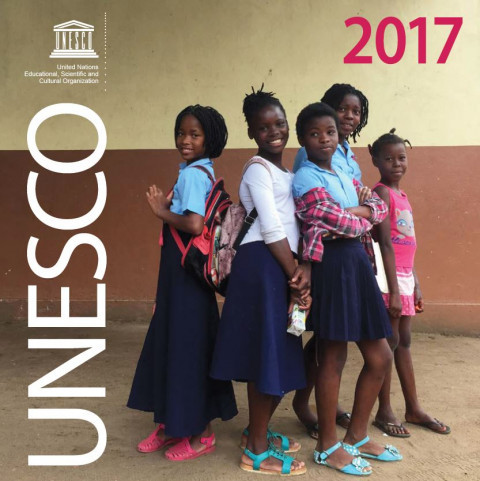 UNESCO 2017: Annual Report 2017 Année de publication: 2018 Auteur institutionnel: UNESCO This Annual Report takes stock of these actions and many others, undertaken during the mandate of the former Director-General, Irina Bokova, to whom I wish to pay tribute. The Report also reflects the professionalism and expertise of the Organization’s staff working across the world, and translating the 2030 Agenda for Sustainable Development’s Goals into action. The Report features UNESCO’s commitment to provide a world of justice, peace and sustainable development.Guided by the ideals of peace and progress, UNESCO represents a powerful force for transformation in the face of today’s challenges. It is also well-placed to share our wide-ranging experience and formulate the innovative ideas that the world currently needs, bearing in mind specific conditions on the ground and the need to respect local history and culture. Rapport UNESCO 2017 Année de publication: 2018 Auteur institutionnel: Organisation des Nations Unies pour l'éducation, la science et la culture (UNESCO) Ce rapport annuel dresse le bilan de ces actions et de nombreuses autres, engagées par la précédente Directrice générale, Irina Bokova, à qui je souhaite rendre hommage. Il reflète également le professionnalisme et l’expertise du personnel de l’UNESCO dans le monde entier, traduisant en actions les objectifs du Programme de développement durable à l’horizon 2030. Il met en mots et en images leur engagement pour construire un monde de justice, de développement durable et de paix.Guidée par les idéaux de paix et de progrès, l’UNESCO représente une puissante force de transformation face aux défis du monde contemporain. Elle est aussi le lieu par excellence pour partager la pluralité des expériences et faire naître les idées novatrices dont le monde a besoin – en tenant compte des spécificités du terrain, dans le respect des histoires et des cultures particulières.
  Manual for Developing Intercultural Competencies: Story Circles Année de publication: 2020 Auteur: Darla K. Deardorff Auteur institutionnel: UNESCO This book presents a structured yet flexible methodology for developing intercultural competence in a variety of contexts, both formal and informal. Piloted around the world by UNESCO, this methodology has proven to be effective in a range of different contexts and focused on a variety of different issues. It, therefore, can be considered an important resource for anyone concerned with effectively managing the growing cultural diversity within our societies to ensure inclusive and sustainable development.The book serves as a tool to develop those competences, presenting an innovative adaptation of what could be considered an ancient tradition of storytelling found in many cultures. Through engaging in the methodology, participants develop key elements of intercultural competence, including greater self-awareness, openness, respect, reflexivity, empathy, increased awareness of others, and in the end, greater cultural humility.This book will be of great interest to intercultural trainers, policy makers, development practitioners, educators, community organizers, civil society leaders, university lecturers, and students – all who are interested in developing intercultural competence as a means to understand and appreciate difference, develop relationships with those across difference, engage in intercultural dialogue, and bridge societal divides. Manuel de développement des compétences interculturelles: les cercles d’histoires Année de publication: 2020 Auteur: Darla K. Deardorff Auteur institutionnel: Organisation des Nations Unies pour l'éducation, la science et la culture (UNESCO) Le présent ouvrage propose une méthode structurée mais flexible de développement des compétences interculturelles qui pourra être utilisée dans les contextes les plus divers, formels ou informels. Mise en oeuvre à titre expérimental par l’UNESCO dans plusieurs pays du monde, cette méthode, qui aborde une grande diversité de thèmes, a apporté la preuve de son efficacité dans des situations très variées. Elle constitue donc un outil capital pour tous ceux qui ont à coeur d’appréhender efficacement la diversité culturelle grandissante qui est devenue la marque de nos sociétés, et ce afin de parvenir à un développement inclusif et durable.Ce manuel consacre l’adaptation innovante d’une tradition très ancienne, celle du récit, que l’on retrouve dans un très grand nombre de cultures. À l’aide de cette méthode, les participants apprennent à renforcer certains aspects clés des compétences interculturelles comme la conscience de soi, l’ouverture d’esprit, le respect, la réflexivité, l’empathie, la conscience d’autrui, en manifestant, en fin de compte, une plus grande humilité culturelle.Cette publication présente un grand intérêt pour les formateurs interculturels, les dirigeants politiques, les praticiens du développement, les éducateurs, les responsables des communautés et de la société civile, les universitaires et les étudiants – pour tous ceux qui s’intéressent au développement des compétences interculturelles comme moyen de comprendre et d’apprécier la différence, d’approfondir les relations indépendamment des différences, de participer au dialogue interculturel et de surmonter tout ce qui divise les sociétés. 培养跨文化能力手册 : 故事圈 Année de publication: 2020 Auteur: Darla K. Deardorff Auteur institutionnel: 联合国教科文组织 (UNESCO) 该文件详细介绍了用以培养跨文化能力的“故事圈”的方法,包括其使用的工具,操作方法等,同时包括了大量培训资源、案例素材与辅助材料。
  A Guide for Gender Equality in Teacher Education Policy and Practices Année de publication: 2015 Auteur: María C. Arango Restrepo | Esther Corona-Vargas Auteur institutionnel: UNESCO Transforming the culture of teacher education institutions and making them gender-sensitive entities is a daunting task. However, it is not an impossible task. Understanding gender and applying gender mainstreaming are critical foundations for fostering social cohesion that goes beyond teacher education institutions and the school. Teachers are increasingly expected to play crucial roles in preparing young people to face the future with confidence, purpose, responsibility and gender sensitivity. Teacher education institutions must be ready to provide the enabling environment and training and continuing education for the development of knowledge, values, skills and gender-responsive practices that the teachers need in the 21st century.This Guide, through its ten Modules, takes the reader through step by step on how gender can be mainstreamed in all areas of teacher education and training: from policy and planning, administration and management, gender-responsive budgeting, social services, the environment, curriculum, pedagogy, research, and to advocacy. Through this Guide, teacher educators are also reminded what teachers must know and be able to do in order to promote gender equality through education. The Modules can be used individually or comprehensively depending on the situation and context of countries.This Guide is dedicated to all teacher educators, whose intellectual rigour and tireless efforts to foster enabling environments for inclusive and gender sensitive education, are indispensable for success in continuing education.