
Ressources
Explorez une large gamme de ressources sur le GCED afin d’approfondir votre compréhension et de renforcer vos activités de recherche, de plaidoyer, d’enseignement et d’apprentissage.
2,781 résultats trouvés
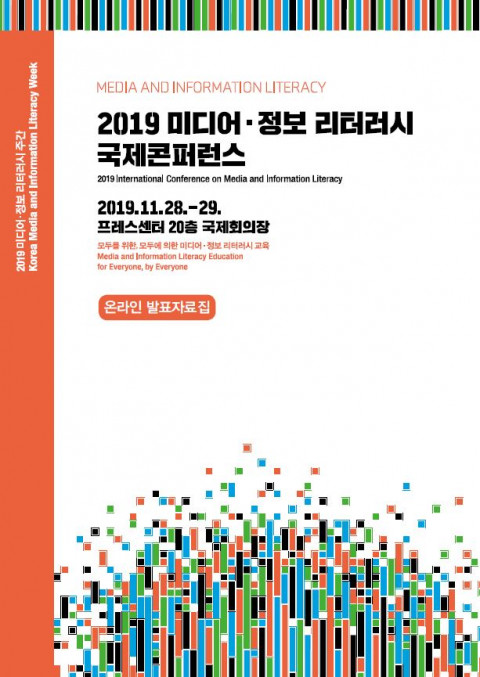 2019 미디어·정보 리터러시 국제콘퍼런스: 온라인 발표자료집 Année de publication: 2020 Auteur: Julian Sefton-Green | Matthew Johnson | Jagtar Singh | Jaehee Cho | Benjamin Thull | Jungim Ahn | Seojoong Kim | Dokyung Lee | Jaeyoung Chung | Cheungmoon Cho | Hyungtae Kim | Ohyeon Kweon | Eunryung Chong | Dayyoung Oh | Junehee Jung | Jerry Jacques | Hyeonseon Jeong | Jérémy Grosman | Anne-Sophie Collard | Maxime Verbesselt | Valentine François | Kyeong Hur | Amie Kim | Yeonju Oh | Gwanghee Kim | Minyoung Choi | Seungku Jung | Jisu Kim | Eunmi Hwang | Seongcheol Lee | Yeonju Choi Auteur institutionnel: 시청자미디어재단 | 전국미디어센터협의회 | 한국방송공사 | 한국정보화진흥원 | 유네스코한국위원회 | 한국교육학술정보원 2019년 미디어·정보 리터러시 주간 행사로 11월 28~29일 개최되었던 미디어·정보 리터러시 국제콘퍼런스의 온라인 발표자료집으로 미디어리터러시, 디지털리터러시, 미디어 교육의 현황과 과제 및 디지털 사회에 맞는 새로운 디지털 리터러시 모델의 필요성에 대해서 논의 하였다.
  교육과정연계 다문화사회 세계시민교육의 실제 Année de publication: 2020 Auteur institutionnel: 한국교육학술정보원 본 영상자료는 교육과정과 연계한 실제 사례 중심의 교육 콘텐츠로, 모든 학생대상으로 효과적인 다문화사회 세계시민교육 방안을 모색할 수 있다.
 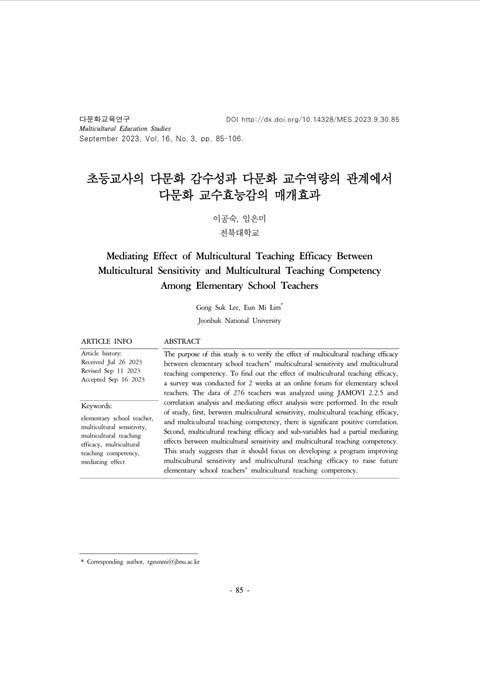 초등교사의 다문화 감수성과 다문화 교수역량의 관계에서 다문화 교수효능감의 매개효과 (다문화교육연구; Vol. 16, No. 3) Année de publication: 2023 Auteur: 이공숙 | 임은미 Auteur institutionnel: 한국다문화교육학회 본 연구는 초등교사의 다문화 감수성과 다문화 교수역량의 관계에서 다문화 교수효능감을 매개로 효과를 검증하는데 목적을 두고 있다. 이를 위하여 초등교사 온라인 커뮤니티를 통해 2주 동안 설문조사를 실시한 후, 276명의 응답 자료를 분석하였다. 수집된 자료는 JAMOVI 2.2.5를 활용하여 분석하였으며 상관분석, 매개효과 분석을 하였다. 주요 연구 결과는 다음과 같다. 첫째, 초등교사의 다문화 감수성과 다문화 교수효능감, 다문화 교수역량 모두 유의한 정적 상관을 보였다. 둘째, 다문화 교수효능감 전체 및 하위변인은 다문화 감수성과 다문화 교수역량 간의 관계에서 모두 유의하게 부분매개 효과가 있는 것을 검증하였다. 따라서 본 연구를 통해 향후 초등교사의 다문화교수역량을 높일 수 있도록 다문화 감수성과 다문화 교수효능감을 향상시키는 교사연수 자료 및 프로그램 개발이 필요함을 시사한다.
 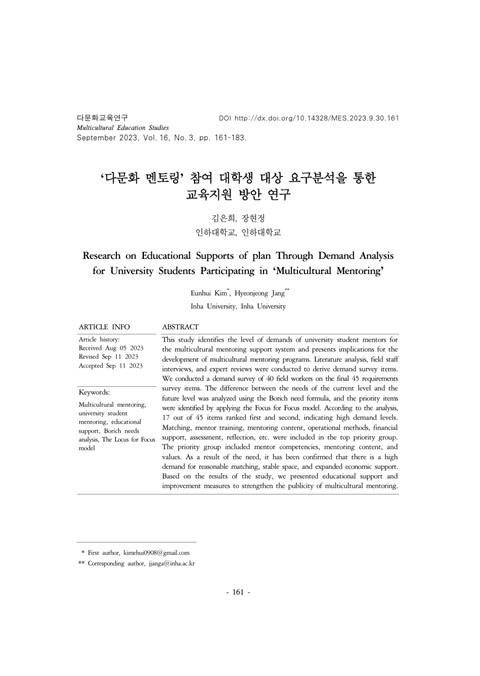 ‘다문화 멘토링’ 참여 대학생 대상 요구분석을 통한 교육지원 방안 연구 (다문화교육연구; Vol. 16, No. 3) Année de publication: 2023 Auteur: 김은희 | 장현정 Auteur institutionnel: 한국다문화교육학회 본 연구의 목적은 다문화 멘토링 지원 체계에 대한 대학생 멘토의 요구수준을 파악하여 다문화 멘토링 프로그램의 발전을 위한 시사점을 제시하는 것이다. 문헌분석과 현장실무자 면담을 실시하여 요구조사를 위한 항목을 1차로 도출하고 이를 전문가 검토를 통해 타당성을 검증하였다. 두 차례의 검증을 통해 최종 도출된 45개의 요구조사 항목을 활용하여 다문화 멘토링에 참여한 40명의 대학생을 대상으로 요구조사를 실시하였다. Borich 요구도 공식을 활용하여 45개 항목에 대한 현재 수준과 미래 필요 수준 간 차이를 분석하고, The Locus for Focus 모델을 추가로 적용하여 우선순위에 대한 항목을 확인하였다. 분석 결과 45개의 문항 중 17개가 최우선순위와 차순위에 해당하여 높은 요구 수준을 보였다. 최우선순위군에는 매칭과 멘토 교육, 멘토링 내용, 운영방식, 경제적 지원, 평가 및 성찰의 항목이 포함되었고 차순위군에는 멘토 역량과 멘토링 내용, 가치 등 3개의 내용이 해당되었다. 시급도를 파악하고자 실시한 필요성에 대한 결과를 통해 안정적 공간 확보와 합리적 매칭, 경제적 지원 확대 등에 대한 요구가 높음을 확인하였다. 연구 결과를 바탕으로 다문화 멘토링의 공적 성격을 강화하기 위한 교육적 지원 및 개선 방안을 제시하였다.
 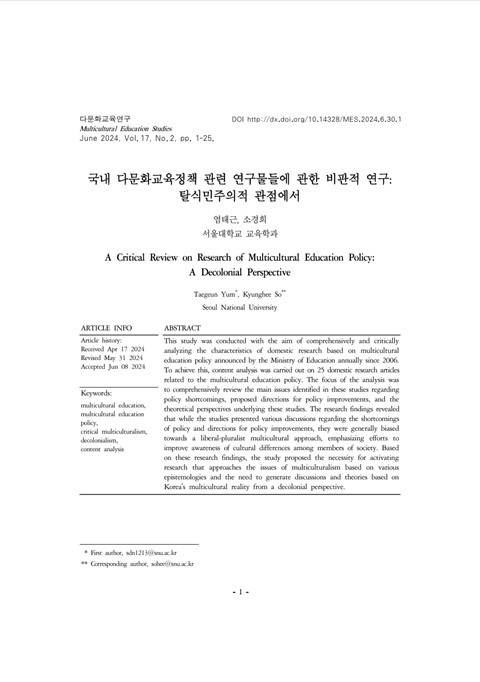 국내 다문화교육정책 관련 연구물들에 관한 비판적 연구: 탈식민주의적 관점에서 (다문화교육연구; Vol. 17, No. 2) Année de publication: 2024 Auteur: 염태근 | 소경희 Auteur institutionnel: 한국다문화교육학회 본 연구는 교육부 다문화교육정책을 토대로 하여 연구된 국내 연구물들의 특징을 종합적 이고 비판적인 관점에서 분석하기 위한 목적으로 실시되었다. 이를 위해 국내 교육 분야 학술지에 투고된 25 편의 다문화교육정책 관련 연구물들을 대상으로 내용 분석을 실시하였다. 이때 분석의 초점은 이들의 연구가 주요하게 지적하고 있는 정책의 문제점, 제안하고 있는 정책의 개선 방향, 그리고 이들 연구가 터하고 있는 이론적 관점을 종합적으로 검토하는 것에 있었다. 연구 결과, 연구물들은 정책의 문제점 및 개선 방안과 관련하여 다양한 논의들을 제시해온 것으로 드러났으나, ‘모든 교육 주체들을 위한 다문화교육 기회의 부족 문제를 지적하고 이를 해결하기 위한 방안으로서 ‘모든 사회 구성원들의 인식 개선을 위한 노력을 강조하는 자유주의작다원적 다문화주의 접근에 편중된 경향이 있는 것으로 나타났다. 이러한 연구 결과를 기반으로, 다문화 문제를 다양한 인식론에 기반하여 접근하는 연구들이 활성화될 필요성과 한국의 다문화 현실에 기반한 논의와 이론 탐구의 필요성을 탈식민주의적 관점에서 논하였다.
 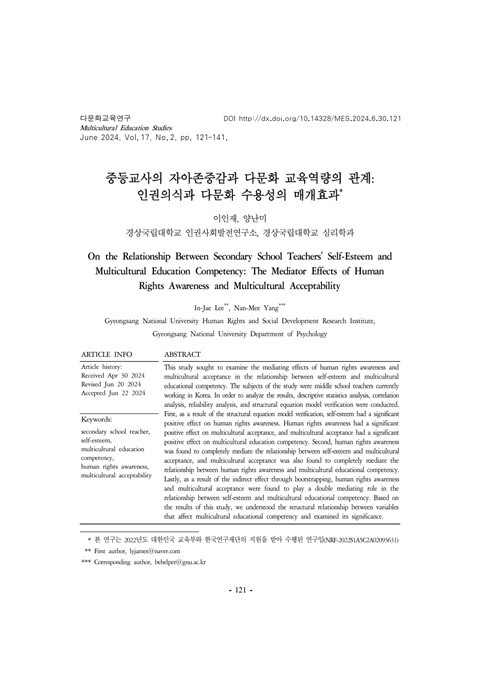 중등교사의 자아존중감과 다문화 교육역량의 관계: 인권의식과 다문화 수용성의 매개효과 (다문화교육연구; Vol. 17, No. 2) Année de publication: 2024 Auteur: 이인재 | 양난미 Auteur institutionnel: 한국다문화교육학회 본 연구는 자아존중감과 다문화 교육역량의 관계에서 인권의식과 다문화 수용성의 매개 효과를 살펴보고자 하였다. 연구대상은 국내 재직 중인 중등교사를 대상으로 하였다. 결과 분석을 위해 기술 통계 분석, 상관 분석, 신뢰도 분석, 구조 방정식 모형검증을 실시하였다. 연구결과는 첫째, 구조방정식 모형 검증 결과, 자아존중감은 인권의식에 유의한 정적인 영향을 미쳤다 인권의식은 다문화 수용성에 유의한 정적인 영향을 미쳤고 다문화 수용성은 다문화 교육역량에 유의한 정적 영향을 미쳤다. 둘째, 인권의식은 자아존중감과 다문화 수용성의 관계에서 완전매개하는 것으로 나타났고 다문화 수용성 또한 인권의식과 다문화 교육역량의 관계를 완전매개하는 것으로 나타났다. 마지막으로, 부트스트랩을 통해 간접효과를 본 결과 인권의식과 다문화 수용성은 자아존중감과 다문화 교육역량의 관계에서 이중매개를 하는 것으로 나타났다. 본 연구의 결과를 바탕으로 다문화 교육역량에 영향을 미치는 변인들의 구조적 관계를 이해하고 의의를 살펴보았다.
 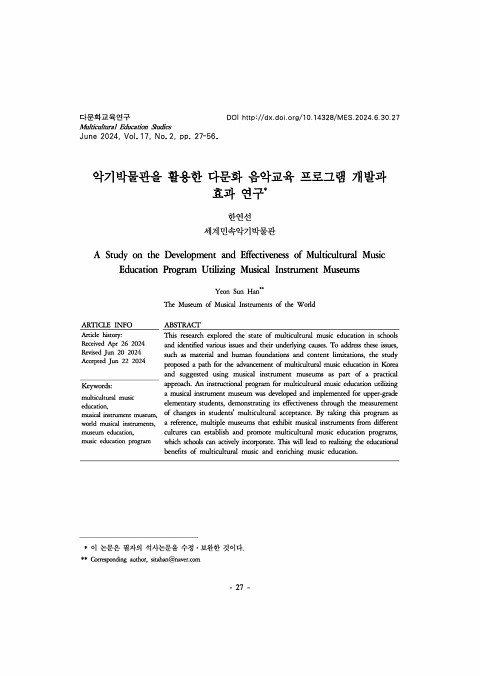 악기박물관을 활용한 다문화 음악교육 프로그램 개발과 효과 연구 (다문화교육연구; Vol. 17, No. 2) Année de publication: 2024 Auteur: 한연선 Auteur institutionnel: Korean Association for Multicultural Education (KAME) 본 연구는 학교 다문화 음악교육의 현실을 돌아보고 몇 가지 문제점과 그 원인을 진단했다. 이렇게 도출된 물적 • 인적 토대와 내용적 한계 등 당면한 여러 문제를 극복하기 위해 우리 사회 다문화 음악교육이 나아가야 할 방향을 타진하고, 그 실천적 방안으로서 악기박물관을 활용한 다문화 음악교육을 제안하였다. 초등학교 고학년을 대상으로 악기박물관을 활용한 다문화 음악교육 프로그램을 개발 • 적용하고, 학생들의 다문화수용성의 변화를 측정해 프로그램의 효과를 입증하였다. 세계 악기를 소장한 여러 박물관이 이를 참고해 다문화 음악교육 프로그램을 활성화하고 학교가 이를 적극 활용한다면 음악이 가진 다문화 교육적 효용을 성취하고 음악교육을 더욱 풍성하게 만들 수 있을 것이다.
 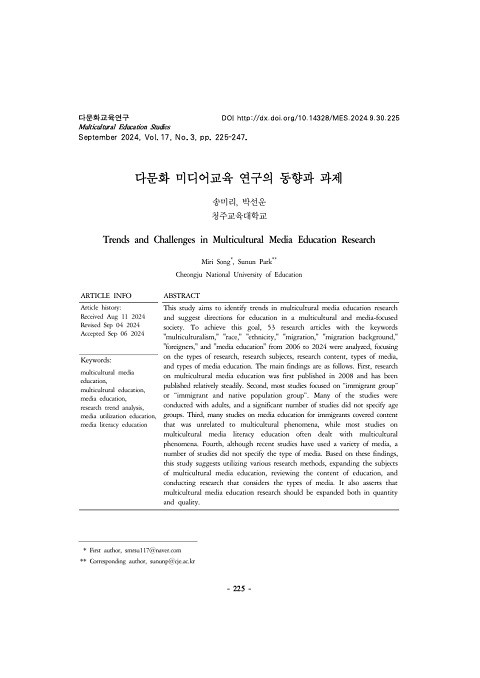 다문화 미디어교육 연구의 동향과 과제 (다문화교육연구; Vol. 17, No. 3) Année de publication: 2024 Auteur: 송미리 | 박선운 Auteur institutionnel: 한국다문화교육학회 본 연구는 다문화 미디어교육 연구의 동향을 파악하고, 다문화 사회, 미디어 사회에서의 교육 방향을 제안하는 것을 목표로 한다. 이를 위해 2006년부터 2024년까지 “다문화”, “인종”, “민족”, “이주”, “이주 배경”, “외국인”과 “미디어교육”을 주제어로 하는 국내 학술논문 53편을 연구 유형, 교육 대상, 연구 내용, 미디어 종류, 미디어교육 유형을 중심으로 분석하였다. 주요 연구 결과는 다음과 같다. 첫째, 다문화 미디어교육 관련 연구는 2008년에 처음 발표되어 비교적 꾸준히 발표되고 있으나, 큰 폭으로 증가하지는 않았다. 둘째, 연구 대상면에서는 “이주 배경 집단” 또는 “이주 배경 집단과 선주민 집단”을 대상으로 한 연구가 많았다. 연령별로는 성인 대상 연구가 다수 수행되었으며 연령을 특정하지 않은 연구도 상당수 있었다. 셋째, 다문화 미디어 활용 교육 연구의 경우 이주 배경 집단 대상의 다문화 현상과 무관한 내용을 활용한 교육이 많았으며, 다문화 미디어 리터러시 교육은 다문화 현상 과 관련된 내용의교육이가장많았다. 넷째, 최근 연구들에서는 다양한 미디어를 사용하여 논의를 진행하고 있으나, 미디어를 특정하지 않고 수행한 연구 또한 다수 발견되었다. 이러한 연구 결과를 바탕으로 향후 다양한 연구 방법의 활용, 다문화 미디어교육 대상의 확대, 다문화 미디어교육 내용에 대한 검토, 미디어의 종류를 고려한 연구 수행과 함께 다문화 미디어교육 연구의 양적, 질적 성장이 이루어져야함을 제언하였다.
 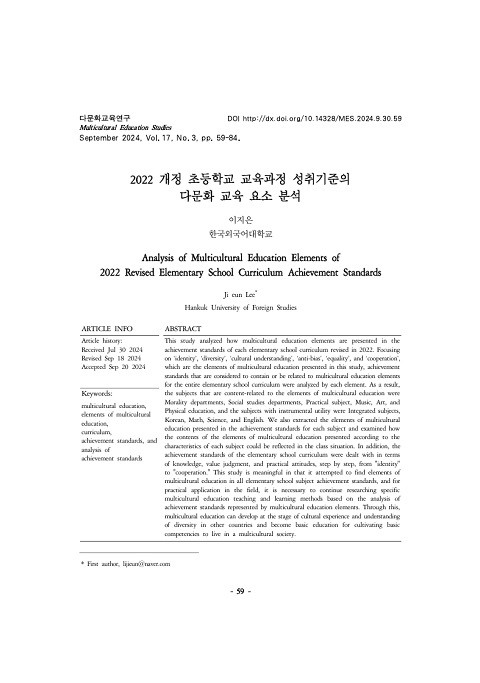 2022 개정 초등학교 교육과정 성취기준의 다문화 교육 요소 분석 (다문화교육연구; Vol. 17, No. 3) Année de publication: 2024 Auteur: 이지은 Auteur institutionnel: 한국다문화교육학회 본 연구는2022 개정 초등학교 각 교과 교육과정의 성취기준에 다문화 교육 요소가 어떻게 제시되어 있는지 분석한 것으로 본 연구에서 제시하는 다문화 교육 요소인 정체성, 다양성, 문화 이해, 반편견, 평등성, 협력을 중심으로 초등학교의 전체 교과에 대하여 다문화 교육 요소를 포함하고 있거나 관련이 있다고 판단되는 성취기준을 요소별로 분석하였다. 그 결과 다문화 교육 요소에 대해 내용적 연관성을 지닌 교과는 도덕과, 사회과, 실과, 음악과, 미술과, 체육과이며, 도구적 활용성을 지닌 교과는 통합교과, 국어과, 수학과, 과학과, 영어과로 나타났다. 또한 각 교과별 성취기준에 제시된 다문화 교육 요소를 추출해보고, 각 교과 특성에 따라 제시된 다문화 교육 요소의 내용을 어떻게 수업 상황에 반영할 수 있을지 알아보았다. 또한 초등학교 교육과정의 성취기준은 다문화 교육 요소가 ‘정체성’에서 ‘협력’까지 단계적으로 지식적, 가치 판단적, 실천적 태도의 측면에서 모두 다루어지고 있었다. 본 연구는 초등학교의 모든 교과 성취기준에서 다문화 교육 요소를 찾아보고자 시도를 하였다는 데에서 그 의미를 찾을수있다. 그러나 실질적인 현장 적용을 위해서는 교과 성취 기준에 대한 다문화 교육 요소 분석을 토대로 구체적인 다문화 교육 교수·학습 방법 연구가 이어져야 한다. 이러한 과정을 통해 다문화 교육이 다른 나라 문화 체험 및 다양성 이해의 단계에서 발전하여 다문화 사회를 살아갈 수 있는 기본 역량 함양 수준의 기초·기본 교육으로 자리잡을수있을것이다.
 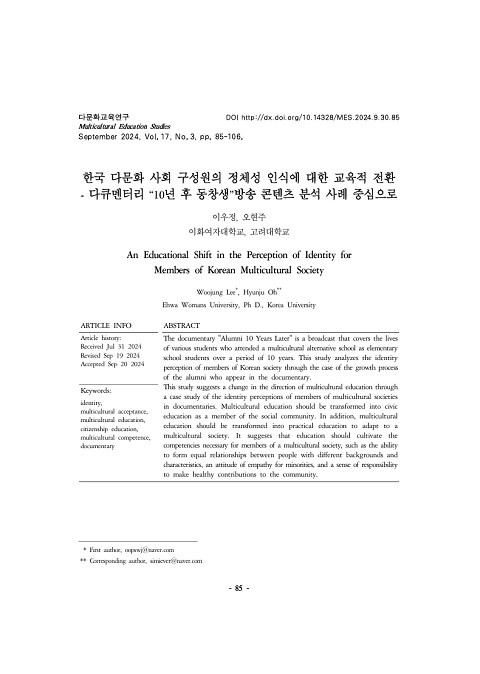 한국 다문화 사회 구성원의 정체성 인식에 대한 교육적 전환: 다큐멘터리 “10년 후 동창생” 방송 콘텐츠 분석 사례 중심으로 (다문화교육연구; Vol. 17, No. 3) Année de publication: 2024 Auteur: 이우정 | 오현주 Auteur institutionnel: 한국다문화교육학회 다큐멘터리 “10년 후 동창생”은 다문화 대안학교에 초등학생으로 다녔던 다양한 구성원들의 삶을 10년이라는 시간에 걸쳐 취재한 방송 콘텐츠이다. 다큐멘터리는 한국인 부모에게서 태어나 성장한 다경의 내레이션을 통해 전개된다. 등장인물 중 하은이 경험하는 정체성에 대한 갈등은 어머니가 러시아에서 국제결혼으로 한국으로 이주한 여성이라는 것에서 비롯되지만 대안학교에서의 정서적 지지와 한국 군대에 입대하는 것, 어머니의 헌신적인 희생으로 정체성에 대한 인정을 획득하는 과정이 그려진다. 그러나 파키스탄 출신 외국인 근로자 부모의 자녀인 노만의 경우는 어렸을때 신체적인 차이 때문에 경험한 차별로 인해 정체성 훼손의 아픔이 있고, 성인이 된 후 한국 정부에 의해서 추방되면서 다시 한번 자기 정체성의 훼손을 경험하게 된다. 결국 노만은 유아기에 한국에 들어와 아동 청소년기 전부 를 한국에서 성장해서 스스로 한국인으로 인식하지만 성인이 되자마자 개인의 선택권 없이 한국에서 추방을 당하는 상황에 처한다. 이 연구는 다큐멘터리에 등장하는 동창생들의 성장 과정에 대한 사례를 통해 한국 사회 구성원의 정체성 인식에 대하여 논의한다. 다큐멘터리에 등장하는 인물들의 사례를 통해 다문화 사회 구성원의 정체성 인식에 대한 변화를 통찰하고 모든 사회 구성원이 다문화 사회의 공동체라는 새로운 정체성을 형성해 가야 한다는 문제의식을 제기한다. 또한 다문화 교육은 사회공동체 구성원으로서의 시민교육으로 전환되어야 한다는 점을 강조한다. 스스로를 주류라고 생각하는 집단의 한 개인도 실제로는 다양한 문화의 영향을 받아 개인의 정체성이 구성되었다는 사실을 인식하고 개개인의 다양한문화적 요소들과 문화적 소수성을 발견하며 다문화 사회의 구성원이라는 자아에 대한 성찰이 교육 현장에서 필요하다. 그리고 본격적인 다문화 사회에서 요구되는 다문화 교육은 실제적인 사회 적응 역량 교육으로 전환되어야 한다. 다른 배경과 특성을 가진 사람들 간의 평등한 관계 형성을 위한 관계성 함양 역량, 소수자에 대한 공감의 태도, 공동체에 건강한 기여를 할 수 있는 책임감 등 함께 살아가는데 실제적으로 필요한 역량을 함양하는 교육이 되도록 한다. 또한 공동체의 성장을 위해 기여하는 구성원의 역할을 수행할 수 있는 역량도 함양하도록 해야 한다. 이 연구에서는 다문화 교육을 통하여 사회 변화의 방향을 제시함으로써 한국 다문화 사회의 성장이 구성원 모두의 삶에 긍정적인 변화를 가져올 수 있다는 교육적 전환의 방향성을 제시한다