
Ressources
Explorez une large gamme de ressources sur le GCED afin d’approfondir votre compréhension et de renforcer vos activités de recherche, de plaidoyer, d’enseignement et d’apprentissage.
684 résultats trouvés
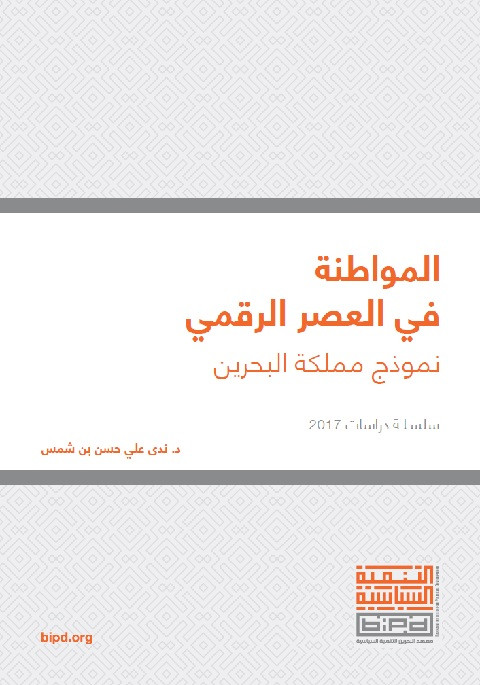 Citizenship in the Digital Age: The Model of the Kingdom of Bahrain Année de publication: 2017 Auteur: ندى علي حسن بن شمس Auteur institutionnel: معهد البحرين للتنمية السياسية The research answers the following main question: What is the effectiveness of a proposed program based on the global network for developing citizenship values for students of the University of Bahrain in light of the requirements of the digital age? The main question of the research is divided into the following sub-questions: 1- What is the list of citizenship values required for a student at the University of Bahrain in light of the requirements of the digital age? 2- What is the image of the proposed program based on the global network (with dialogue activities - without the dialogue activities) to develop citizenship values for students of the University of Bahrain in light of the requirements of the digital age? 3 - What is the effectiveness of the proposed program based on the global network in its two forms (with dialogue activities - without the dialogue activities) to develop Citizenship values for a University of Bahrain student in light of the requirements of the digital age?
 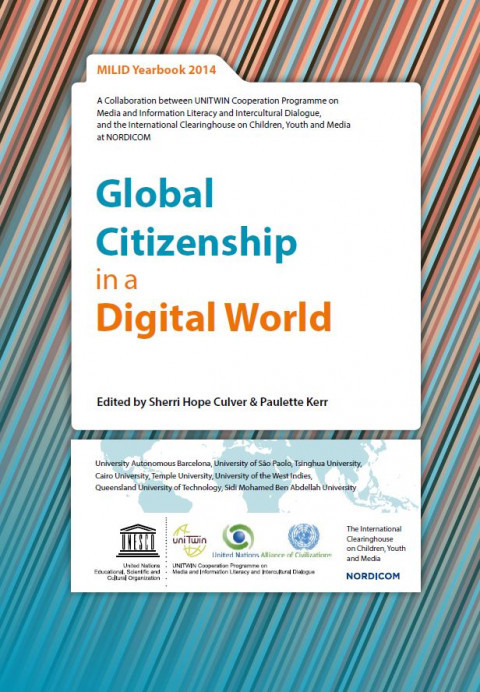 Global Citizenship in a Digital World (The MILID Yearbook, 2014) Année de publication: 2014 Auteur: Sherri Hope Culver | Paulette Kerr Auteur institutionnel: International Clearinghouse on Children, Youth and Media (Sweden) | NORDICOM | University of Gothenburg The theme of the 2014 Yearbook is Global Citizenship in a Digital World. Global citizenship assumes ease of participation in global spaces in which persons are media and information literate and are equipped with competencies and attitudes to deal with the multi-faceted nature of a mediated world in which information is no longer bound by space or time. The unprecedented access to and use of media and Internet technologies for communication and collaboration especially among youth, suggest that effective strategies must be found to enable active critical inquiry and effective media production. The proliferation of mediated spaces throughout education environments, as well as personal and professional environments, does not in itself guarantee that citizens will consider their role as global citizens as they create and consume media. This awareness must be cultivated, encouraged and taught.The 2014 MILID Yearbook brings together a range of reviewed articles, which articulate the theme of global citizenship from varied perspectives and regions of the world. The articles represent different expressions on media and information literacy from researchers and practitioners who offer bold new strategies, share research findings and best practices, and share musings and reflections.
 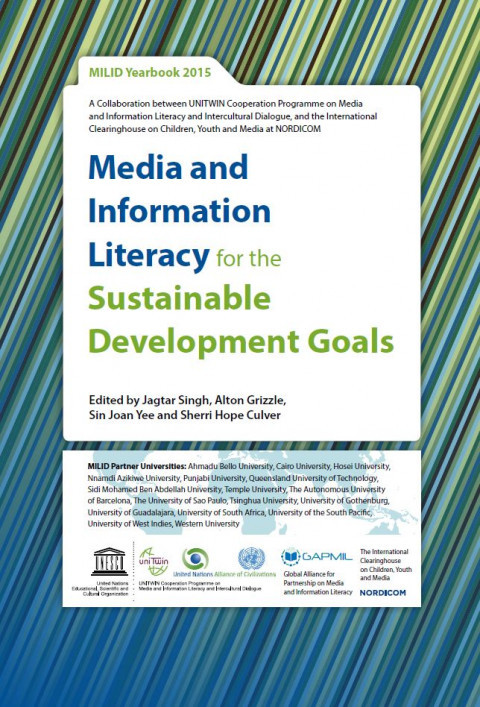 Media and Information Literacy for the Sustainable Development Goals (The MILID Yearbook 2015) Année de publication: 2015 Auteur: Jagtar Singh | Alton Grizzle | Sin Joan Yee | Sherri Hope Culver Auteur institutionnel: International Clearinghouse on Children, Youth and Media (Sweden) In the year 2000, governments and development partners all over the world agreed on eight global development targets called the Millennium Development Goals (MDGs). The year 2015 is a pivotal year as it marks the end of the period during which the MDGs were to be reached and the year in which new global development targets are to be set. These new targets are referred to as the Post-2015 Sustainable Development Goals (SDGs). This process is in its highest gear with ongoing debates and consultative meetings/initiatives globally both online and offline. While much progress has been made, achievement of the MDGs has been mixed across countries. The centrality of information and communication to development is irrefutable. The MILID Yearbook provides a case for media and information literacy (MIL) as a tool for open and inclusive sustainable development.The 2015 edition of the MILID Yearbook displays how media and information literacy can be helpful in facilitating progress and achievement of the sustainable development goals. It is sincerely hoped that the articles in this yearbook will go a long way to sensitize the stakeholders about the role and value of MIL in sustainable development of one and all across frontiers.
 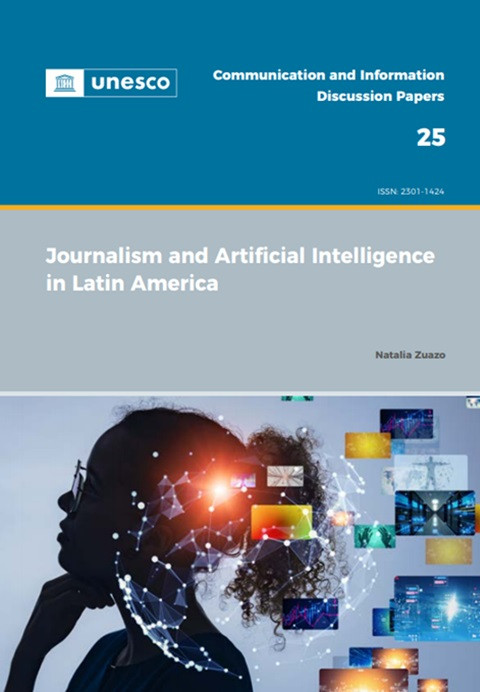 Periodismo e inteligencia artificial en América Latina Année de publication: 2023 Auteur: Natalia Zuazo Auteur institutionnel: UNESCO Montevideo En un contexto de crecimiento exponencial de la inteligencia artificial (IA) y predominancia tecnológica en todas las esferas de la vida –económica, social, cultural, ambiental y política-, este Cuaderno explora el impacto de la IA en el periodismo desde una perspectiva crítica y ética, con especial atención a América Latina. Se abordan desigualdades y desafíos inherentes a la implementación de la IA en la región. Con ello, se busca ofrecer una herramienta útil en la formación continua de estudiantes y profesionales de medios de comunicación.
  Disinformation and Peacebuilding in Sub-Saharan Africa : Security Implications of AI-Altered Information Environments : Research Report Année de publication: 2024 Auteur: Eduardo Albrecht | Eleonore Fournier-Tombs | Rebecca Brubake Auteur institutionnel: United Nations University This report aims to further explore the way in which AI technologies as they currently stand impact peace and conflict, and what methods might be used to mitigate their adverse effects - through the development of better tools and the inclusion of peace and conflict considerations in AI governance frameworks. The report proposes the following recommendations: 1. More funding and support should be provided to civil society organization efforts to expand media literacy and fact-checking initiatives using AI tools to enhance capabilities. 2. Governments need to work with civil society to develop and implement comprehensive, transparent legal frameworks combating disinformation. These legislative measures need to support digital and media literacy campaigns and fact-checking organizations. 3. Social media companies need to expand investment and research into understanding local information environments, so they can better identify and respond to instances of disinformation in all contexts in which they operate and enhance transparency. 4. Peacebuilding organizations need to carefully consider local media ecosystems and information environments when conducting conflict analyses, and factor these dynamics into their projects' frameworks. Journalism and Artificial Intelligence in Latin America Année de publication: 2023 Auteur: Natalia Zuazo Auteur institutionnel: UNESCO Montevideo In a context of exponential growth of artificial intelligence (AI) and technological dominance in all spheres of life — economic, social, cultural, environmental, and political —, this Paper explores the impact of AI on journalism from a critical and ethical perspective, with special attention to Latin America. It addresses inequalities and challenges inherent in the implementation of AI in the region. The aim is to offer an useful tool in the continuous training of students and media professionals.
  Les politiques des grandes plateformes sur le discours de haine pendant la COVID-19 Année de publication: 2021 Auteur institutionnel: UNESCO Montevideo Ce document fait état d’une augmentation des messages considérés comme des discours de haine sur Facebook, Twitter et YouTube, depuis l’avènement de la pandémie de COVID-19. Bien qu’inégale, cette augmentation peut être établie à partir des rapports de transparence des différentes plateformes et de la croissance enregistrée dans la modération de ces contenus à partir de mars 2020. Étant donné qu’au cours de la même période, et en conséquence des mesures d’isolement prises dans la plupart des pays du monde, les plateformes ont décidé d’accroître l’utilisation d’outils d’intelligence artificielle dans leurs processus de modération, il n’est pas possible d’être certain que cette croissance est due à une augmentation de la création et de la publication de messages ou à un changement dans les systèmes de détection qui a affecté les résultats d’une année à l’autre.
  Global Digital Citizenship: Quick Start Guide Auteur institutionnel: Global Digital Citizen Foundation What does it mean to be a Global Digital Citizen? Who is this person and what do they stand for? What makes them true global leaders and creators? The journey to understanding begins here, with the Global Digital Citizen Quickstart Guide.This is the final book in the GDCF's Fluency Quickstart series. This guide explores the skills and practices that make an exemplary Global Digital Citizen.With this Quickstart Guide you can: Explore the tenets of global citizenship Develop unique skills and mindsets Measure student progress Create challenging PBL lessons Become a great global digital citizen
  Socialisations concurrentes et appropriation des héritages historiques par les collégiens français minoritaires et majoritaires Année de publication: 2016 Auteur: Francine Nyambek Kanga-Mebenga Nnana Auteur institutionnel: Alterstice Considérant l’histoire scolaire comme un lieu de confrontation de discours et savoirs issus d’espaces de socialisation en concurrence (l’école, la famille, les médias), nous nous intéressons au travail d’éducation à la citoyenneté et aux défis que lui posent ces socialisations plurielles. Dans un contexte d’importante médiatisation des débats sur la reconnaissance des mémoires de minorités en France et de leur entrée dans les programmes scolaires du collège en 2008, comment les élèves s’approprient-ils les « questions socialement vives » de l’immigration, la colonisation, et la décolonisation ? En outre, comment s’effectue dans ce contexte l’apprentissage de la citoyenneté et du principe politique qui la fonde dans la tradition scolaire républicaine ? À partir de l’analyse de contenu d’un corpus composé d’une centaine d’entretiens semi-directifs menés entre 2007 et 2010 auprès de collégiens de 3e (fin du premier cycle du secondaire et de la scolarisation obligatoire), nous analysons et mettons en évidence des interprétations contrastées de ces héritages par les élèves majoritaires et les élèves minoritaires, respectivement alimentées par les catégories du débat public et les récits familiaux. Nous montrons, à la suite des travaux relevant de la sociologie des programmes scolaires, que l’apprentissage de la citoyenneté à la lumière de ces héritages historiques résulte de la confrontation des élèves aux discours et savoirs issus des différents espaces auxquels ils prennent part. Mais il est surtout le produit de leur prise de position face à ces héritages historiques, selon leurs expériences sociales et le rôle qu’ils confèrent à ces histoires dans la construction d’une identité et une appartenance communes.
  Media Education and Citizenship: An analysis of the Quebec Preschool and Elementary Education Program Année de publication: 2018 Auteur: Normand Landry | Chantal Roussel Auteur institutionnel: Revue Lien social et Politiques In Canada, the limited level of knowledge on media education content that is conveyed by academic curricula hinders its critical evaluation. This article presents the ways in which media education is introduced in the Quebec Education Program (QEP) at the preschool and elementary level. More specifically, it highlights the connections at work between media education, childhood and citizenship in the program. Our method tracks and extracts a set of statements related to information and communications technologies (ICTs) and the media, then conducts their automated classification into four principal categories: speech, verbs used that reflect the actions undertaken by categories of actors (school, pupils, teachers), learning objectives and suggestions. A subsequent classification allows for the emergence of verbs and learning objectives associated to the notion of citizenship. The latter are then subject to speech analysis. Our analysis intends to demonstrate the message conveyed by the QEP on media and ICTs. It highlights the roles, tasks and responsibilities of its various actors in relation to the acquisition of knowledge and skill development. In addition, it features the actions taken by these actors to operationalize the academic goals of the program. Our conclusion indicates a low subject implementation of the statements associated to media education and citizenship, relevant content, although thematically limited, along with the conception of students as capable of a reflection and critical thinking process.