
Ressources
Explorez une large gamme de ressources sur le GCED afin d’approfondir votre compréhension et de renforcer vos activités de recherche, de plaidoyer, d’enseignement et d’apprentissage.
2,781 résultats trouvés
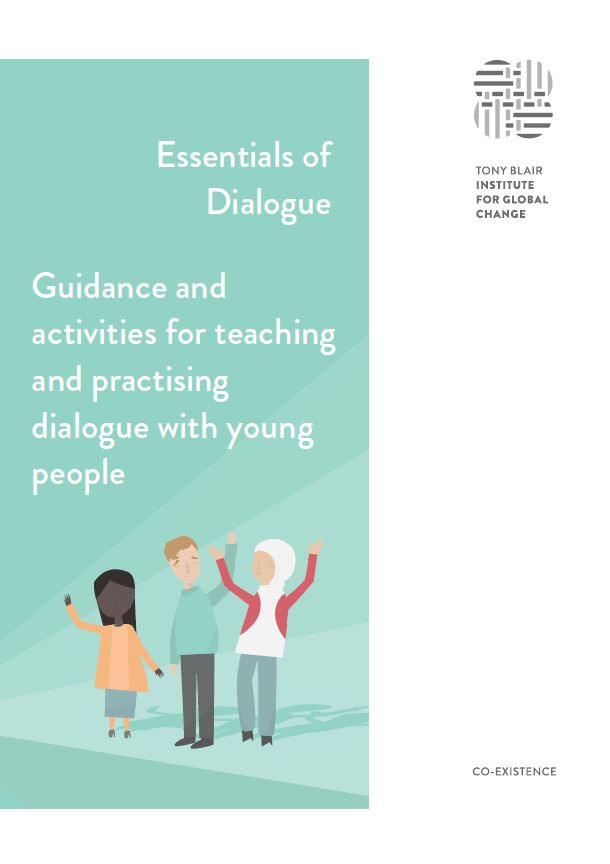 أساسيّات الحوار: مورد لمنح الطلاب الشباب من حول العالم مهارات وتجربة الحوار Année de publication: 2016 Auteur institutionnel: Tony Blair Institute for Global Change يزود "أساسيات الحوار" المعلمين بمقدمة للتعلم القائم على الحوار ويوفر أنشطة مهمة لبناء المهارات الأساسية لبناء مهارات الحوار، سواء كان ذلك شخصيًا أو عن بُعد.يقدم هذا الدليل دروسًا قابلة للتكيف ويركز على المهارات الخمسة الأساسية للحوار، والملاحظات الموجزة، وخطوات إعداد الشباب للانخراط في الحوار بين الثقافات عبر الإنترنت لدعم تنمية المواطنة العالمية.
  The Ultimate Dialogue Adventure: An Online Global Citizenship Game for Students Ages 13-17 Auteur institutionnel: Generation Global An interactive online platform that leads young people ages 13-17, through a game to learn the skills of intercultural dialogue and participate in forums focused on a variety of global topics and issues. The Ultimate Dialogue Adventure can be used as a self-directed learning journey for young people, or as an in-class companion for teachers, to support rigorous dialogue about a global topic or provide a place of practice when using our offline materials.
  Rethinking Pedagogy: Exploring the Potential Of Digital Technology In Achieving Quality Education Année de publication: 2019 Auteur: Lorena Alemán de la Garza | Alessandra Anichini | Péter Antal | Aurélie Beaune | Éric Bruillard | Diane Burke | Pedro Henrique Cacique Braga | Ruma Chakravarti | Sriya Chakravarti | Deng Chen | Lidiya Chikalova | Helen Crompton | Ilana De Almeida Souza Concilio | William Cope | Lorenz Denks | Matthew Farber | Giovanni Fonseca | Pintér Gergely | Marcela Georgina Gómez Zermeño | Russell Hazard | Laura Hosman | Mary Kalantzis | Kojanitz László | Xavier Levoin | Kristen Linzy | Arnab Mandal | Yoko Mochizuki | Ariam Mogos | Tünde-Lengyel Molnár | Matthew Montebello | Sadaqat Mulla | Sandra Gudiño Paredes | Christelle Pauty-Combemore | Boyka Parfitt | Réka Racsko | Irais Monserrat Santillán Rosas | Khitam Shraim | Jisoo Song | Avgoustos Tsinakos Auteur institutionnel: Mahatma Gandhi Institute of Education for Peace and Sustainable Development (MGIEP) With the exponential growth of digitally mediated communication, digital media and gaming, the landscape of what we understand as learning environments is changing significantly. Today the use of digital technology in education is attracting considerable public and policy attention as
well as private investment. With a rise in discourses both heralding and cautioning against the use of digital technology in education, there is a need to pool the expertise and experience on the use of technology in education from around the world to advance public debate and evidence-informed policymaking. Based on the literature review, mapping of digital education resources in circulation, and examples of implementation of digital education initiatives from around the world, this report aims to provide insights that would help lead to the wise, innovative and ethical use of digital technology in education as a new dimension in achieving SDG 4 — inclusive and equitable quality education and lifelong learning opportunities for all. By so doing, it also attempts to contribute to a rethink of teaching and learning in the face of enormous opportunities and challenges brought about by digital technology in the times of change and turmoil.
Rethinking Pedagogy: Exploring the Potential Of Digital Technology In Achieving Quality Education Année de publication: 2019 Auteur: Lorena Alemán de la Garza | Alessandra Anichini | Péter Antal | Aurélie Beaune | Éric Bruillard | Diane Burke | Pedro Henrique Cacique Braga | Ruma Chakravarti | Sriya Chakravarti | Deng Chen | Lidiya Chikalova | Helen Crompton | Ilana De Almeida Souza Concilio | William Cope | Lorenz Denks | Matthew Farber | Giovanni Fonseca | Pintér Gergely | Marcela Georgina Gómez Zermeño | Russell Hazard | Laura Hosman | Mary Kalantzis | Kojanitz László | Xavier Levoin | Kristen Linzy | Arnab Mandal | Yoko Mochizuki | Ariam Mogos | Tünde-Lengyel Molnár | Matthew Montebello | Sadaqat Mulla | Sandra Gudiño Paredes | Christelle Pauty-Combemore | Boyka Parfitt | Réka Racsko | Irais Monserrat Santillán Rosas | Khitam Shraim | Jisoo Song | Avgoustos Tsinakos Auteur institutionnel: Mahatma Gandhi Institute of Education for Peace and Sustainable Development (MGIEP) With the exponential growth of digitally mediated communication, digital media and gaming, the landscape of what we understand as learning environments is changing significantly. Today the use of digital technology in education is attracting considerable public and policy attention as
well as private investment. With a rise in discourses both heralding and cautioning against the use of digital technology in education, there is a need to pool the expertise and experience on the use of technology in education from around the world to advance public debate and evidence-informed policymaking. Based on the literature review, mapping of digital education resources in circulation, and examples of implementation of digital education initiatives from around the world, this report aims to provide insights that would help lead to the wise, innovative and ethical use of digital technology in education as a new dimension in achieving SDG 4 — inclusive and equitable quality education and lifelong learning opportunities for all. By so doing, it also attempts to contribute to a rethink of teaching and learning in the face of enormous opportunities and challenges brought about by digital technology in the times of change and turmoil. 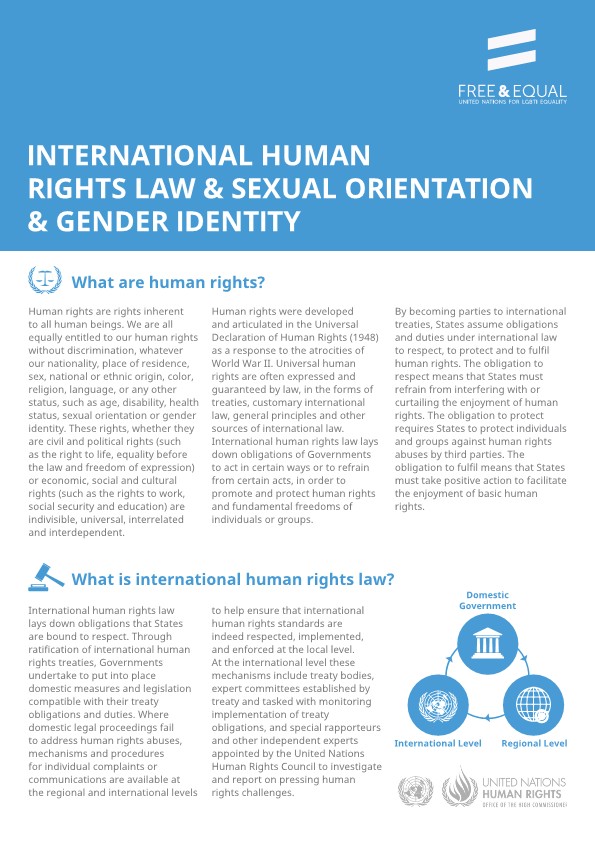 International Human Rights Law & Sexual Orientation & Gender Identity Année de publication: 2017 Auteur institutionnel: UN. Office of the United Nations High Commissioner for Human Rights (UN. OHCHR) | United Nations Free & Equal What are human rights?Human rights are rights inherent to all human beings. We are all equally entitled to our human rights without discrimination, whatever our nationality, place of residence, sex, national or ethnic origin, color, religion, language, or any other status, such as age, disability, health status, sexual orientation or gender identity. These rights, whether they are civil and political rights (such as the right to life, equality before the law and freedom of expression) or economic, social and cultural rights (such as the rights to work, social security and education) are indivisible, universal, interrelated and interdependent.Human rights were developed and articulated in the Universal Declaration of Human Rights (1948) as a response to the atrocities of World War II. Universal human rights are often expressed and guaranteed by law, in the forms of treaties, customary international law, general principles and other sources of international law. International human rights law lays down obligations of Governments to act in certain ways or to refrain from certain acts, in order to promote and protect human rights and fundamental freedoms of individuals or groups.By becoming parties to international treaties, States assume obligations and duties under international law to respect, to protect and to fulfil human rights. The obligation to respect means that States must refrain from interfering with or curtailing the enjoyment of human rights. The obligation to protect requires States to protect individuals and groups against human rights abuses by third parties. The obligation to fulfil means that States must take positive action to facilitate the enjoyment of basic human rights.What is international human rights law? International human rights law lays down obligations that States are bound to respect. Through ratification of international human rights treaties, Governments undertake to put into place domestic measures and legislation compatible with their treaty obligations and duties. Where domestic legal proceedings fail to address human rights abuses, mechanisms and procedures for individual complaints or communications are available at the regional and international levels to help ensure that international human rights standards are indeed respected, implemented, and enforced at the local level. At the international level these mechanisms include treaty bodies, expert committees established by treaty and tasked with monitoring implementation of treaty obligations, and special rapporteurs and other independent experts appointed by the United Nations Human Rights Council to investigate and report on pressing human rights challenges.Is it ever legal to discriminate against lesbian, gay, bisexual, transgender or intersex people?No. The right to equality and non-discrimination are core principles of human rights, enshrined in the United Nations Charter, The Universal Declaration of Human Rights (UDHR) and human rights treaties. The opening words of the Universal Declaration of Human Rights are unequivocal: “All human beings are born free and equal in dignity and rights.”The equality and non-discrimination guarantee provided by international human rights law applies to all people, regardless of sex, sexual orientation and gender identity or “other status.” There is no fine print, no hidden exemption clause, in any of our human rights treaties that might allow a State to guarantee full rights to some but withhold them from others purely on the basis of sexual orientation and gender identity.Moreover, United Nations human rights treaty bodies have confirmed that sexual orientation and gender identity are included among prohibited grounds of discrimination under international human rights law. This means that it is unlawful to make any distinction of people’s rights based on the fact that they are lesbian, gay, bisexual or transgender (LGBT), just as it is unlawful to do so based on skin color, race, sex, religion or any other status. This position has been confirmed repeatedly in decisions and general guidance issued by several treaty bodies, such as the United Nations Human Rights Committee, the Committee on Economic, Social and Cultural Rights, the Committee on the Rights of the Child, the Committee against Torture, and the Committee on the Elimination of Discrimination against Women.What are some of the most common forms of human rights violations affecting LGBT people? The UN human rights office has documented a wide range of human rights violations committed against individuals on the basis of their sexual orientation and gender identity.These include:Violent attacks, ranging from aggressive verbal abuse and psychological bullying to physical assault, beatings, torture, kidnapping and targeted killings.Discriminatory criminal laws, often used to harass and punish LGBT people, including laws criminalizing consensual same-sex relationships, which violate rights to privacy and to freedom from discrimination.Discriminatory curbs on free speech and related restrictions on the exercise of rights to freedom of association and assembly, including laws banning dissemination of information on same-sex sexuality under the guise of restricting the spread of so-called LGBT “propaganda.”Discriminatory treatment, which can take place in a range of everyday settings, including workplaces, schools, family homes and hospitals. Without national laws prohibiting discrimination by third parties on grounds of sexual orientation and gender identity, such discriminatory treatment continues unchecked, leaving little recourse to those affected. In this context, lack of legal recognition of same-sex relationships or of a person’s gender identity can also have a discriminatory impact on many LGBT individuals. What have the UN General Assembly and Human Rights Council said on this subject?The United Nations General Assembly, in a series of resolutions, has called on States to ensure the protection of the right to life of all persons under their jurisdiction and to investigate promptly and thoroughly all killings including those motivated by the victim’s sexual orientation and gender identity (see, for example, resolution A/RES/67/168).In June 2011, the United Nations Human Rights Council became the first UN intergovernmental body to adopt a wide-ranging resolution on human rights, sexual orientation and gender identity. Resolution 17/19 expressed the Council’s “grave concern” at violence and discrimination against individuals based on their sexual orientation and gender identity, and commissioned a study on the scope and extent of these violations and the measures needed to address them.The requested study, prepared by the Office of the High Commissioner for Human Rights, was released in December 2011. It pointed to a pattern of violence and discrimination directed at individuals because of their sexual orientation and gender identity. Its findings and recommendations formed the basis of a panel discussion that took place at the Council in March 2012 – the first time a formal intergovernmental debate on the subject had been taken place at the United Nations.
 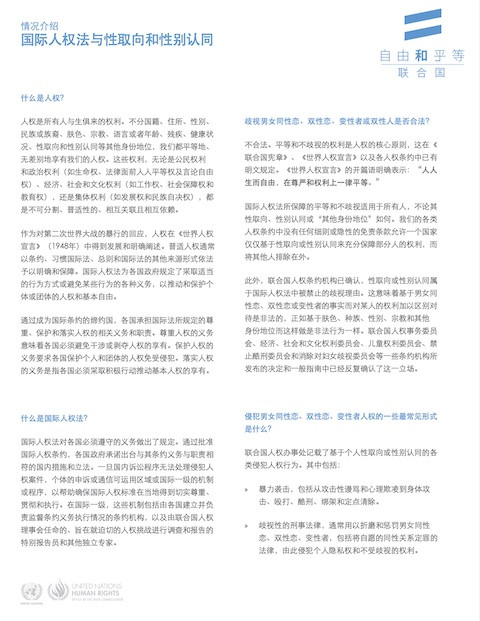 国际人权法与性取向和性别认同 Année de publication: 2017 Auteur institutionnel: UN. Office of the United Nations High Commissioner for Human Rights (UN. OHCHR) | United Nations Free & Equal 什么是人权?什么是国际人权法?歧视男女同性恋、双性恋、变性者或双性人是否合法?侵犯男女同性恋、双性恋、变性者人权的一些最常见形式是什么?联合国大会及人权事务委员会对该主题有何表述?各国在尊重男女同性恋、双性恋和变性者方面有哪些法律义务?
  Global Citizenship Education in Southern Africa: Learning to Live Together - the Role of Teachers; Report of a Networking Meeting Année de publication: 2019 Auteur institutionnel: UNESCO Harare | APCEIU This is a report on the second GCED networking meeting held from 28 to 29 October 2019 in Johannesburg, South Africa. It took stock of GCED in the region and discussed how GCED is and could be integrated in curricula and teacher education in the Southern African context to strengthen and expand the existing networks of GCED stakeholders and partners.
 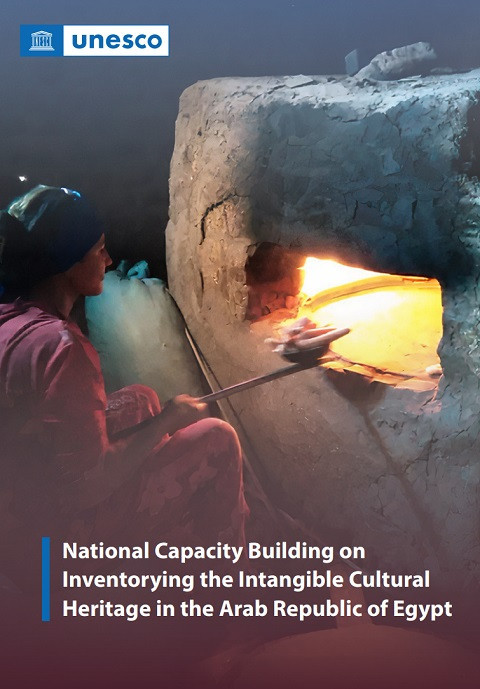 National Capacity Building on Inventorying the Intangible Cultural Heritage in the Arab Republic of Egypt Année de publication: 2024 Auteur: Ahmed Bahi El Din | Haitham Younes Auteur institutionnel: UNESCO | UNESCO Cairo Communities in Egypt are inventorying their living heritage Egypt is famed for its rich civilization and long history. Egyptian identity is presented not only through archaeological sites and Ancient Egyptian civilization, but also through Egypt’s diverse living heritage. More than simply showing who they are today, this living heritage tells the story of how the Egyptians arrived at this point over the generations.To celebrate this identity and strengthen national capacities to safeguard it, UNESCO, alongside the Egyptian government and civil society, implemented the project Strengthening National Capacities for Safeguarding Intangible Cultural Heritage in Egypt for Sustainable Development, which ran from June 2018 to June 2021.The project focused on community-based inventorying of living heritage. This involved training workshops and a pilot community-based inventorying exercise, which took place in six different locations throughout Egypt (Cairo, Fayoum, Gharbeya, Aswan, Assuit, and Marsa Matrouh). Thanks to the project, participating community practitioners and heritage bearers are now equipped to inventory their own living heritage. • This pilot was Egypt’s first step to establishing a national inventory of Intangible Cultural Heritage (ICH) under the Ministry of Culture, in collaboration with community practitioners. • This publication provides recommendations on how to further enhance national capabilities for ICH safeguarding and how to advance community engagement in the inventorying processes in Egypt.
  2023년 한국어학급 관리자 다문화 역량 강화 워크숍: 초중등 Année de publication: 2023 Auteur institutionnel: 국가평생교육진흥원 | 중앙다문화교육센터 교육부, 17개 시도교육청, 국가평생교육진흥원, 중앙다문화교육센터 주최로 2023년 4월 25일(화)에 개최되었던 '2023년 한국어학급 관리자 다문화 역량 강화 워크숍'의 초중등용 자료집입니다. 중앙다문화교육센터 홈페이지 자료실(https://www.edu4mc.or.kr/edu/list.html)에서 제목으로 검색하시면 다운받으실 수 있습니다.
 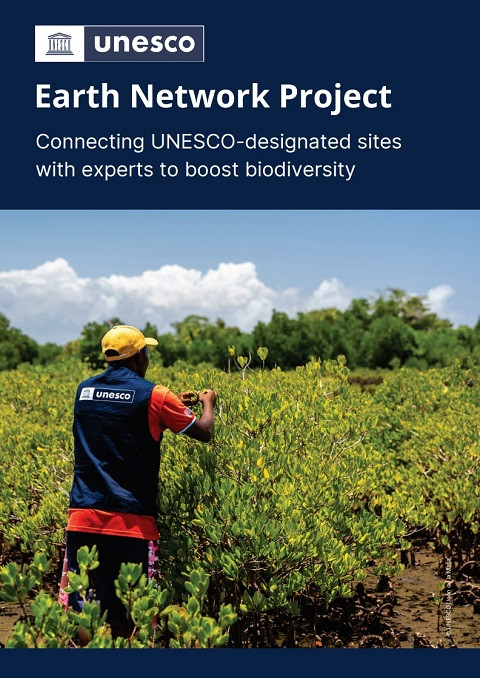 Earth Network Project: Connecting UNESCO-Designated Sites With Experts to Boost Biodiversity Année de publication: 2024 Auteur institutionnel: UNESCO The Earth Network project was launched in 2021 with the support of the Government of Italy. It brings together over 380 experts from more than 60 countries, encompassing diverse biodiversity-related fields that include land restoration, environmental management and environmental law. The specialists volunteer to put their unique skillsets and knowledge at the disposal of sites designated by UNESCO which request their assistance. The Earth Network covers all scientific domains and proudly combines different forms of knowledge: scientific, practitioner, local and indigenous. On the ground, these experts provide technical advice, collect data, build partnerships, and provide training tailored to the specific needs and priorities of each UNESCO-designated site.
  Education 2030: Incheon declaration and framework for action towards inclusive and equitable quality education and lifelong learning for all Année de publication: 2015 Auteur institutionnel: UNESCO | United Nations Development Programme (UNDP) | United Nations Population Fund (UNFPA) | UN. Office of the United Nations High Commissioner for Refugees (UNHCR) | United Nations Children's Fund (UNICEF) | United Nations Entity for Gender Equality and the Empowerment of Women (UN Women) | World Bank This framework — painstakingly drafted over many months with input from governments, international agencies, civil society and experts — provides guidance for implementing the education commitments made in the 2030 Agenda for Sustainable Development at a national, regional and global level. In particular: it aims at mobilizing all countries and partners around Sustainable Education Goal 4 and its targets;it proposes ways of implementing, coordinating, financing and monitoring the new commitments; andit proposes indicative strategies which countries may wish to draw upon in developing their plans, taking into account different national realities, capacities and levels of development and respecting national policies and priorities.