
Ressources
Explorez une large gamme de ressources sur le GCED afin d’approfondir votre compréhension et de renforcer vos activités de recherche, de plaidoyer, d’enseignement et d’apprentissage.
3,790 résultats trouvés
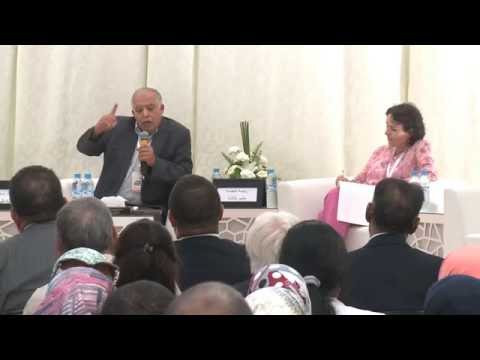 Education and Citizenship: Summer University 2016 Année de publication: 2016 Auteur: Abdullah Saaf Auteur institutionnel: General Delegation for Prison Administration and Reintegration (DGAPR) This video is a lecture given to women prisoners in Morocco, and it is a rehabilitation program. The lecture by Dr. Abdullah Sa`f talks about citizenship and inclusion in society, and discusses the relationship between education and citizenship. التعليم والمواطنة: الجامعة الصيفية 2016 Année de publication: 2016 Auteur: Abdullah Saaf Auteur institutionnel: General Delegation for Prison Administration and Reintegration (DGAPR) الفيديو عبارة عن محاضرة القت للسجينات في المغرب، وهو برنامج لاعادة التأهيل. المحاضرة للدكتور عبدالله ساعف يتحدث فيها عن المواطنة، والاندماج في المجتمع، ويناقش علاقة التعليم بالمواطنة.
  Democracy in the Educational Institution: Between the Qualification of Schooling and the Rooting of Training Année de publication: 2017 Auteur: Abdel Karim Belhadj | Abd al-Ilah Shrayat Auteur institutionnel: Supreme Council for Education, Training, and Scientific Research This paper discusses the relationship between school and democracy. It shows the intersection between them. Then the paper turns on how to educate for democracy. The paper concludes with a vision for global citizenship education. الديمقراطية بالمؤسسة التعليمية : بين تأهيل التمدرس وتأصيل التمرس Année de publication: 2017 Auteur: Abdel Karim Belhadj | Abd al-Ilah Shrayat Auteur institutionnel: Supreme Council for Education, Training, and Scientific Research تناقش الورقة العلاقة بين المدرسة والديمقراطية. وتوضح التقاطع بينهما. ثم تعرج الورقة علي كيفية التربية من أجل الديمقراطية. تنتهي الورقة بوضع تصور للتربية من أجل المواطنة العالمية.
  NISSEM Global Briefs (Volume II): Educating for the Social, the Emotional and the Sustainable; Pedagogy, Practice and Materials Année de publication: 2020 Auteur: Andy Smart | Margaret Sinclair Auteur institutionnel: Networking to Integrate SDG Target 4.7 and SEL skills into Educational Materials (NISSEM) The timeframe for achieving the Sustainable Development Goals (SDGs) is tight, and the world also faces the consequences of Covid-19. NISSEM Global Briefs aim to show how SDG Target 4.7 themes and social and emotional learning (SEL) can be embedded in education policies, programs, curricula, materials, and practice, to help make progress towards sustainable development.
  Découvrir le monde, apprendre la solidarité : Éducation à la citoyenneté mondiale et solidaire dans l’enseignement (ECMS) ; 2020-2022 Année de publication: 2020 Auteur institutionnel: Fédération Francophone et Germanophone des Associations de Coopération au Developpement (ACODEV) | Annoncer la Couleur (ALC) | Îles de Paix Cette publication explique ce qu’est l’ECMS et sa plus-value dans la formation de vos élèves, comment s’en emparer dans vos (futures) classes et présente les différents types d’appui que vous pouvez attendre des ONG et d’Annoncer la Couleur.
 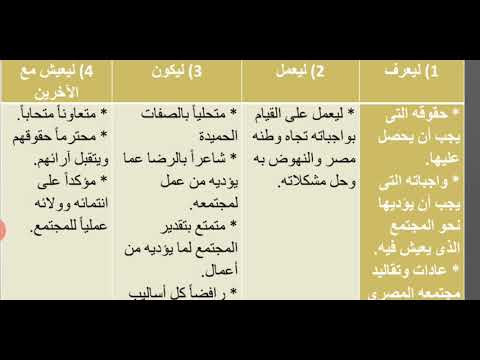 How to be a Good Citizen Année de publication: 2020 Auteur institutionnel: Helalia Language School This video is an educational lesson for the first year of middle school. The lesson focuses on what a good citizen is and how a student can be a good citizen. كيف تكون مواطن صالح Année de publication: 2020 Auteur institutionnel: Helalia Language School الفيديو عبارة عن درس تعليمي للصف الأول الاعدادي. ويركز الدرس على ماهية المواطن الصالح وكيف يمكن أن يكون الطالب مواطنا صالحا.
 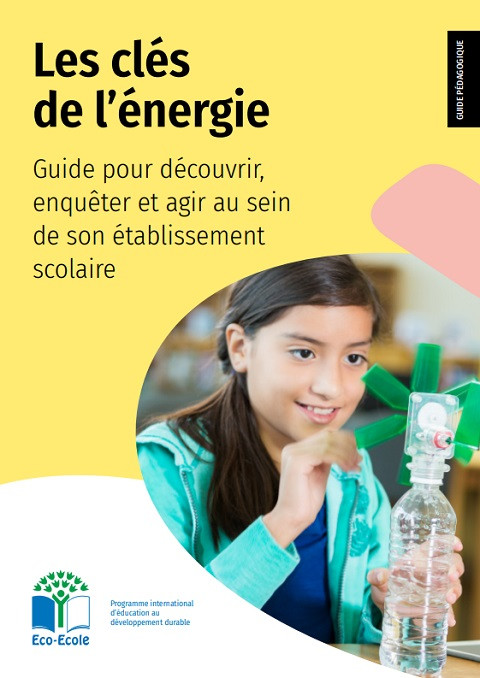 Les clés de l’énergie: Guide pour découvrir, enquêter et agir au sein de son établissement scolaire Année de publication: 2020 Auteur institutionnel: Eco-Ecole L’énergie est présente dans toutes les sphères de notre quotidien et favoriser sa gestion durable et responsable est un enjeu majeur dans la lutte contre le réchauffement climatique ! Afin d’aider les communautés éducatives à s’approprier ce sujet, le programme Eco-Ecole, en partenariat avec le Conseil Départemental de Seine-Saint-Denis et l’ADEME, dévoile son nouvel outil : Les clés de l’énergie : Guide pour découvrir, enquêter et agir au sein de son établissement.En abordant l’énergie à travers le bâti, l’alimentation, le numérique et les déplacements, ce guide permet aux enseignant.e.s et à leurs élèves de se questionner sur les enjeux environnementaux liés à cette thématique et de réfléchir à des solutions à mettre en place à leur échelle.Destiné principalement à être utilisé dans le secondaire, cet outil contient :• des éléments de contexte et des clés de compréhension sur le thème de l’énergie ;• des pistes d’enquête concrètes pour réaliser un diagnostic ;• des déroulés d’ateliers pour découvrir la thématique et faire émerger des idées d’actions dans son établissement ;• des supports d’activités (à photocopier, découper ou reproduire) disponibles dans le corps du guide et dans les annexes.
  Becoming Citizens in a Changing World: IEA International Civic and Citizenship Education Study 2016 International Report Année de publication: 2017 Auteur: Wolfram Schulz, John Ainley, Julian Fraillon, Bruno Losito, Gabriella Agrusti, Tim Friedman Auteur institutionnel: International Association for the Evaluation of Educational Achievement (IEA) The International Civic and Citizenship Education Study 2016 (ICCS 2016) investigated the ways in which young people are prepared to undertake their roles as citizens in a range of countries in the second decade of the 21st century. It studied students’ knowledge and understanding of civics and citizenship as well as students’ attitudes, perceptions, and activities related to civics and citizenship. Based on nationally representative samples of students, the study also examined differences among countries in relation to these outcomes of civic and citizenship education, and explored how cross-national differences relate to student characteristics, school and community contexts, and national characteristics. As the second cycle of this study, ICCS 2016 is a continuation and an extension of ICCS 2009.