
Ressources
Explorez une large gamme de ressources sur le GCED afin d’approfondir votre compréhension et de renforcer vos activités de recherche, de plaidoyer, d’enseignement et d’apprentissage.
1,725 résultats trouvés
 La situation des droits humains dans le monde: Avril 2024 Année de publication: 2024 Auteur institutionnel: Amnesty International Le Rapport d’Amnesty International décrit la situation des droits humains dans le monde en 2023 dans 155 pays différents. Les équipes de journalistes et d’enquêteurs de l'ONG peignent un portrait plutôt sombre, avec notamment un recul du droit des femmes, les conséquences dramatiques du réchauffement climatique sur les populations les plus vulnérables, le recul du droit de manifester, ou encore la prolifération de la haine en ligne dans le monde. La multiplication des conflits armés et le choc du 7 octobre ont également eu des conséquences dramatiques. Cependant, quelques bonnes nouvelles sont aussi à noter, avec des avancées pour les droits des personnes LGBTI par exemple. Amnesty International Report describes the human rights situation worldwide in 2023 in 155 different countries. TheNGO's teams of journalists and investigators paint a rather gloomy picture, with, in particular, a decline in women's rights, the dramatic consequences of global warming on the most vulnerable populations, a decline in the right to protest, and the proliferation of online hate around the world. The multiplication of armed conflicts and the shock of October 7 have also had dramatic consequences. However, there is some good news too, with advances in LGBTI rights for example. La situación de los derechos humanos en el mundo: abril de 2024 Année de publication: 2024 Auteur institutionnel: Amnesty International Le Rapport d’Amnesty International décrit la situation des droits humains dans le monde en 2023 dans 155 pays différents. Les équipes de journalistes et d’enquêteurs de l'ONG peignent un portrait plutôt sombre, avec notamment un recul du droit des femmes, les conséquences dramatiques du réchauffement climatique sur les populations les plus vulnérables, le recul du droit de manifester, ou encore la prolifération de la haine en ligne dans le monde. La multiplication des conflits armés et le choc du 7 octobre ont également eu des conséquences dramatiques. Cependant, quelques bonnes nouvelles sont aussi à noter, avec des avancées pour les droits des personnes LGBTI par exemple. Amnesty International Report describes the human rights situation worldwide in 2023 in 155 different countries. TheNGO's teams of journalists and investigators paint a rather gloomy picture, with, in particular, a decline in women's rights, the dramatic consequences of global warming on the most vulnerable populations, a decline in the right to protest, and the proliferation of online hate around the world. The multiplication of armed conflicts and the shock of October 7 have also had dramatic consequences. However, there is some good news too, with advances in LGBTI rights for example.
  Foundations for Building Forward Better: An Education Reform Path for Lebanon Année de publication: 2021 Auteur institutionnel: World Bank Human capital development is a critical determinant of economic growth, equity, and prosperity, but outcomes in this domain are worryingly low inLebanon, risking the future of generations of children. Lebanese children lag behind their peers in human capital development—measured accordingto the World Bank (2020c) Human Capital Index—suggesting that the future productivity of the labor force and the country’s trajectory for equitablegrowth is at risk (World Bank 2020b). The Human Capital Index indicates that children born in Lebanon today will reach, on average, only 52 percentof their potential productivity when they grow up. This is lower than the average estimates for the Middle East and North Africa (MENA) region(57 percent) and upper-middle-income countries (56 percent). Lebanon’s poor performance on the Human Capital Index is largely attributed to theeducation outcomes calculated for the index. If actual years of schooling, which average approximately 10.2 years in Lebanon, are adjusted for actual learning, effective years of schooling are 40 percent less—on average, only 6.3 years of actual learning (World Bank 2020b). The most recent school closures were due to the COVID-19 pandemic, with schools being closed over 75 percent of the school year between January 2020 and February 2021.1 This will likely lead to a further and significant decrease in learning: effectively, students are facing a lost year of learning (Azevedo et al. 2021).
  Education Sector Analysis: Methodological Guidelines (Vol. 3) Année de publication: 2021 Auteur institutionnel: UNESCO International Institute for Educational Planning (IIEP) | United Nations Children's Fund (UNICEF) | Global Partnership for Education (GPE) | Foreign, Commonwealth & Development Office (UK) This present volume is the third in a series of education sector analysis (ESA) guidelines following two volumes published in 2014. The series provides methodologies and applied examples for diagnosing education systems and informing national education policies and plans. This volume proposes guidelines to strengthen national capacities in analyzing education systems in four areas: inclusive education system for children with disabilities, risk analysis for resilient education systems, functioning and effectiveness of the educational administration, and stakeholder mapping and problem-driven analysis (governance and political economy).
 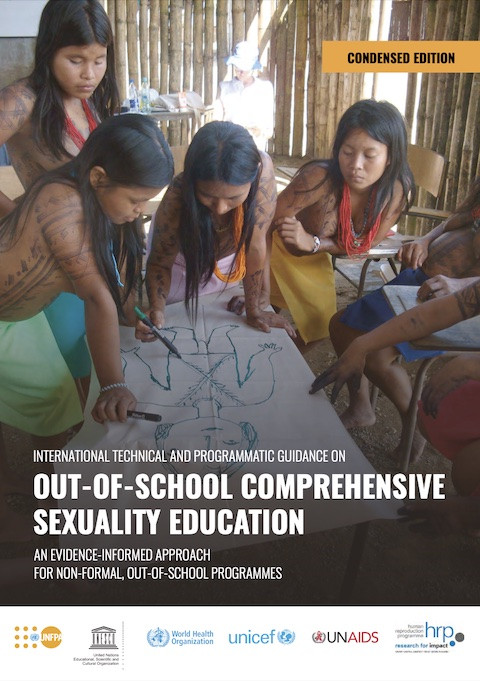 International Technical and Programmatic Guidance on Out-of-School Comprehensive Sexuality Education: An Evidence-Informed Approach for Non-Formal, Out-of-School Programmes Année de publication: 2020 Auteur institutionnel: United Nations Population Fund (UNFPA) This Guidance complements and refers to the International Technical Guidance on Sexuality Education published in 2018. Informed by evidence and grounded in a human-rights approach, this out-of-school edition provides concrete guidelines and recommendations to ensure that the most vulnerable young people receive information that enables them to develop the knowledge and skills they need to make informed choices about their sexual and reproductive health. Orientaciones técnicas y programáticas internacionales sobre educación integral en sexualidad fuera de la escuela: Un enfoque basado en evidencia para programas extraescolares Année de publication: 2020 Auteur institutionnel: United Nations Population Fund (UNFPA) Estas Orientaciones complementan y hacen referencia a las Orientaciones Técnicas Internacionales sobre Educación en Sexualidad publicadas en 2018. Elaborada a partir de evidencia y basada en un enfoque de derechos humanos, esta edición extraescolar proporciona orientaciones y recomendaciones concretas para asegurarnos de que las y los jóvenes más vulnerables reciban información que les permita desarrollar los conocimientos y las habilidades que necesitan para tomar decisiones informadas relacionadas con su salud sexual y reproductiva. Международное техническое и программное руководство по внешкольному комплексному сексуальному образованию: Информационно-доказательный подход для неформальных внешкольных программ Année de publication: 2020 Auteur institutionnel: United Nations Population Fund (UNFPA) Данное Руководство дополняет «Международное техническое руководство по сексуальному образо- ванию», опубликованное в 2018 году, и разработано на его основе. В данном издании для внешкольных программ, которое опирается на факты и использует правозащитный подход, даны конкретные инструкции и рекомендации, которые помогут наиболее уязвимым категориям молодых людей расширить свои знания и навыки, необходимые для принятия взвешенных решений, касающихся сексуального и репродуктивного здоровья.
 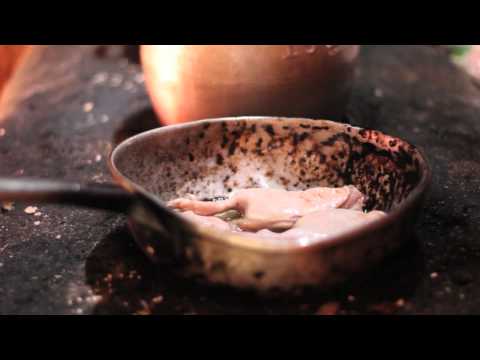 Guinea Pig VF (S. Prijot) Année de publication: 2015 Auteur institutionnel: Îles de Paix In Peru, the guinea pig is bred for its protein-rich flesh. For a long time, they grew up within the family itself, without any particular precaution in terms of hygiene and the care to be provided to them. Thanks to the intervention of Iles de Paix, a hundred women were trained in the breeding of these animals, thus making it possible to improve the quality and the quantity of the production. Through this action, many families have seen their food enriched considerably and for some, their income improved. Cochon d'Inde VF (S. Prijot) Année de publication: 2015 Auteur institutionnel: Îles de Paix Au Pérou, le cochon d'Inde est élevé pour sa chair riche en protéines. Longtemps, ceux-ci grandissaient au sein même de la famille, sans aucune précaution particulière au niveau de l'hygiène et des soins à leur prodiguer. Grâce à l'intervention d'Iles de Paix, une centaine de femmes a été formée à l'élevage de ces animaux, permettant ainsi d'améliorer la qualité et la quantité de la production. À travers cette action, beaucoup de familles ont vu leur alimentation s'enrichir considérablement et pour certaines, leurs revenus s'améliorer.
  Discourses and Strategies for Solving Environmental Issues in Central Asia Année de publication: 2020 Auteur: Muslimbek Buriev Auteur institutionnel: Central Asian Bureau for Analytical Reporting (CABAR) | Institute for War and Peace Reporting (IWPR) The representative office of the Institute for War and Peace Reporting (IWPR) in Central Asia and CABAR.asia present an analytical note entitled “Discourses and Strategies for Solving Environmental Issues in Central Asia”. This work is an effort to outline the most significant environmental issues in the region and to analyze measures to solve them. In addition, it attempts to highlight cases of successful practice as well as to identify existing programs with significant shortcomings.The work is meant for young experts and consultants, researchers, decision-makers, as well as a wide range of readers interested in environmental issues and governance in Central Asia.