
Ressources
Explorez une large gamme de ressources sur le GCED afin d’approfondir votre compréhension et de renforcer vos activités de recherche, de plaidoyer, d’enseignement et d’apprentissage.
3,790 résultats trouvés
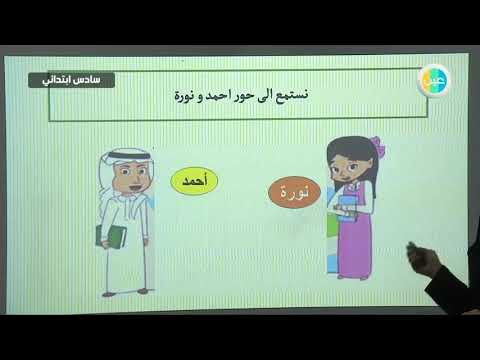 دروس عين الدراسات الاجتماعية والمواطنة– برنامج تعزيز الشخصية - سادس ابتدائي Année de publication: 2020 Auteur: Fawzia Alghamdi Auteur institutionnel: iEN National Education Portal تقوم المعلمة بشرح درس للصف السادس الابتدائي في تنمية وتعزيز الشخصية. الدرس لطلاب المملكة العربية السعودية في مقرر الدراسات الاجتماعية. لقد ظهرت الدروس التي تشرح عبر المنصات مع جائحة كورونا.
  Educación para la ciudadanía y la convivencia: sintiendo y pensando; ciclo uno (primero y segundo) Année de publication: 2014 Auteur institutionnel: Secretaría de Educación del Distrito (SED) | Fe y Alegría These twelve modules make reference to a series of activities that focus on how children from all the educative grades understand and live citizenship, strengthening and facilitating the learning processes based on autonomy. This educative materials, which are aimed at being implemented inside the classrooms, attempt to serve as input resources for educators and other agents that work on or are interested in working with citizenship education and coexistence. The overall objective is to provide quality education. Educación para la ciudadanía y convivencia: aprendiendo a vivir juntas y juntos, base para construir cultura de paz; ciclo uno (primero y segundo) Année de publication: 2015 Auteur institutionnel: Secretaría de Educación del Distrito (SED) | Fe y Alegría These twelve modules make reference to a series of activities that focus on how children from all the educative grades understand and live citizenship, strengthening and facilitating the learning processes based on autonomy. This educative materials, which are aimed at being implemented inside the classrooms, attempt to serve as input resources for educators and other agents that work on or are interested in working with citizenship education and coexistence. The overall objective is to provide quality education. Educación para la ciudadanía y convivencia: aprendiendo a vivir en dignidad y armonía. Compartiendo la vida; ciclo dos (tercero y cuarto) Année de publication: 2014 Auteur institutionnel: Secretaría de Educación del Distrito (SED) | Fe y Alegría These twelve modules make reference to a series of activities that focus on how children from all the educative grades understand and live citizenship, strengthening and facilitating the learning processes based on autonomy. This educative materials, which are aimed at being implemented inside the classrooms, attempt to serve as input resources for educators and other agents that work on or are interested in working with citizenship education and coexistence. The overall objective is to provide quality education. Educación para la ciudadanía y convivencia: somos promotores de paz, aprendiendo a actuar con justicia; ciclo dos (tercero y cuarto) Année de publication: 2015 Auteur institutionnel: Secretaría de Educación del Distrito (SED) | Fe y Alegría These twelve modules make reference to a series of activities that focus on how children from all the educative grades understand and live citizenship, strengthening and facilitating the learning processes based on autonomy. This educative materials, which are aimed at being implemented inside the classrooms, attempt to serve as input resources for educators and other agents that work on or are interested in working with citizenship education and coexistence. The overall objective is to provide quality education.
  Holocaust education in the primary school: Some reflections on an emergent debate Recent years have witnessed the beginnings of a debate over whether the Holocaust should be taught in primary schools. In this article the claims advanced in favour of the proposal are shown to be plausible but lacking in empirical support, while the counter-claims are considered either peripheral, contentious or contrary to established research. It is argued that some key omissions in the debate, such as the way primary school pupils conceptualize Jewish culture and identity, significantly strengthen the case against introducing young children to the Holocaust. (By the author) Feature or footnote ? Teacher's attitudes toward the teaching of the Holocaust in primary schools in Scotland The question of teaching controversial and difficult issues in primary schools remains itself controversial. This article discusses the area of teaching the Holocaust in primary schools in Scotland by examining its relevance to the primary curriculum and reporting on survey and interview research amongst a sample of primary teachers in Scotland. Based on limited research, this paper suggests that the Holocaust is appropriate for primary pupils, provides insight into the reactions of parents and colleagues and shows that Holocaust history in Scottish primary schools is set firmly within the contexts of Anne Frank and World War Two. We find that there are significant barriers to its teaching, yet most of these can be successfully overcome. (By the author) Promoting sustainable development in Nigeria: via civic education (Journal of education and practice, vol. 5, no 34) Année de publication: 2014 Auteur: Ajibola A. Lukman | Habida Audu Auteur institutionnel: International Institute for Science, Technology and Education Nothing in this world is so powerful as an idea whose time has come. In the face of ethical knowledge, skill disposition and sustainable development in Nigeria, civic education assumed central position. Idea of civic education in Nigerian curriculum is so powerful to the extent that each young Nigerian deserves its knowledge. On this basis, this paper describes civic education as an underpinning factor for individual and social development of our nation. The paper analyzes the fabric between civic education and social development towards blending and interfacing local wisdom with global knowledge, values and skills, which will develop the young Nigerian to become a citizen of this country as well as a citizen of the global village. The paper points to the fact that civic education is central to shaping attitudes and social interaction and both are critical to addressing issues surrounding sustainable development. To this end, the paper concludes that sustainable development requires civic knowledge, civic skills and civic disposition. It is therefore recommended that civic education should be seen as an engine for development in which states, individuals, communities, and businesses partake in providing sustainable development. Promouvoir le développement durable au Nigéria: via l'éducation civique (Revue d'éducation et de pratique, vol. 5, n ° 34) Année de publication: 2014 Auteur: Ajibola A. Lukman | Habida Audu Auteur institutionnel: International Institute for Science, Technology and Education Rien dans ce monde n'est aussi puissant qu'une idée dont le temps est venu. Face à la connaissance éthique, la disposition des compétences et le développement durable au Nigeria, l'éducation civique a pris une position centrale. Idée de l'éducation civique dans le curriculum nigérian est si puissant dans la mesure où chaque jeune nigérian mérite ses connaissances. Sur cette base, cet article décrit l'éducation civique comme un facteur de base pour le développement individuel et social de notre nation. Le papier analyse le tissu entre l'éducation civique et le développement social vers le mélange et l'interfaçage de la sagesse locale avec le monde des connaissances, des valeurs et des compétences, qui développera le jeune Nigérian pour devenir un citoyen de ce pays ainsi qu'un citoyen du village global. Le document souligne que l'éducation civique est essentielle pour façonner les attitudes et les interactions sociales et que les deux sont essentiels pour aborder les questions entourant le développement durable. À cette fin, le document conclut que le développement durable exige des connaissances civiques, des compétences civiques et une disposition civique. Il est donc recommandé que l'éducation civique soit considérée comme un moteur du développement dans lequel les États, les individus, les collectivités et les entreprises participent au développement durable. Educación para la ciudadanía y convivencia: manual de ciudadanía y convivencia desde la construcción colectiva de sentidos y redes; ambiente Année de publication: 2015 Auteur institutionnel: Centro de Investigación y Educación Popular (CINEP) | Secretaría de Educación del Distrito (SED) Environment is one of the main themes related to education for citizenship and coexistence. For that reason, this manual identifies three areas of reflection: 1) My first territory: selfcare, caring for others, 2) Environmental territories and their cultural dimension, 3) regional and worldwide territory. Each one of these areas is accompanied by didactic tools that allow to deepening into the contents through the dialogue between the characters that have been created, proposing theoretical and practical fundamental elements, which could be useful in the pedagogical process leaded by the participants of the project.