
Ressources
Explorez une large gamme de ressources sur le GCED afin d’approfondir votre compréhension et de renforcer vos activités de recherche, de plaidoyer, d’enseignement et d’apprentissage.
2,657 résultats trouvés
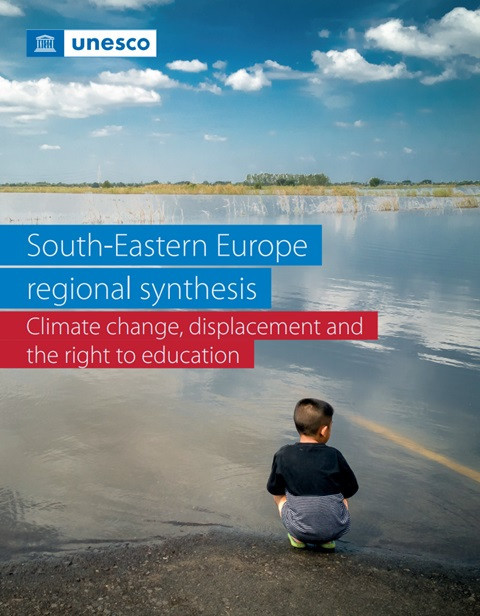 South-Eastern Europe regional synthesis: climate change, displacement and the right to education Année de publication: 2023 Auteur institutionnel: UNESCO In 2021 alone, 23.7 million people were displaced in 137 countries and territories due to natural disasters, which the scientific community has recognized have become more frequent and intense due to climate change. Climate change and displacement is currently taking place in Europe, with particularly disastrous consequences in South-Eastern Europe due to regional specificities. Comparative country case studies were carried out in Bosnia and Herzegovina, the Republic of Moldova, and Serbia, as they exemplify clear, present patterns of climate displacement, to examine the impacts of climate change on the right to education in the region. The case studies show that climate change directly threatens education through the destruction of schools and property. It also indirectly puts learning in peril by leading people across borders where their legal residency nor right to education is ensured. This publication aims to guide policy-makers by providing recommendations on how to ensure the protection of the right to education in South-Eastern Europe in the face of climate change and displacement. It is one of four regional reports that will lead to the development of a global report providing global policy guidance.
 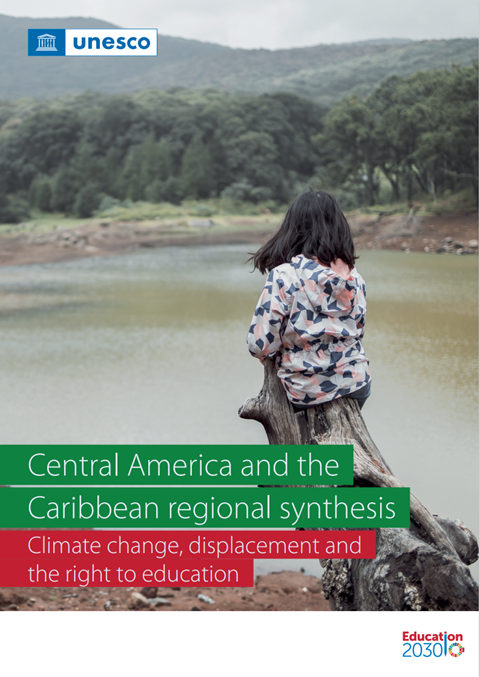 Central America and the Caribbean regional synthesis: climate change, displacement and the right to education Année de publication: 2023 Auteur institutionnel: UNESCO From rising sea level to drought and increasingly frequent natural disasters - the effects of climate change are well-known today. However, its effect on human mobility is just coming to the forefront of the political discussion. In 2020 alone, 30.7 million people globally were displaced by natural disasters. Central America and the Caribbean region is prone to the effects of climate change and displacement due to its socioeconomic characteristics and geographic location. Country case studies were carried out in the Bahamas, Cuba, the Dominican Republic, Guatemala, and Jamaica to examine the impacts on the right to education in the region. The research shows that climate change directly threatens education through the destruction of schools and property. It also leads people across borders where their legal residency and right to education are not guaranteed. This report aims to guide policy-makers on how to ensure education is protected in the face of climate change and displacement. The report is one of four being developed and will contribute to UNESCO’s global initiative on climate change, displacement and the right to education. It will inform the development of a Global Report with policy recommendations.
  Kit de herramientas global sobre IA y el estado de derecho para el poder judicial Année de publication: 2023 Auteur: Miriam Stankovich | Ivana Feldfeber | Yasmín Quiroga | Marianela Ciolfi Felice | Vukosi Marivate Auteur institutionnel: UNESCO ¿Qué es la Inteligencia artificial (IA)? ¿Cómo funciona? Y lo que es más importante, ¿cómo se abre camino en el contexto judicial? Tecnologías como la IA han existido durante décadas, pero solo recientemente han comenzado a usarse en una variedad de entornos de justicia y aplicación de la ley. Si bien la IA tiene un inmenso potencial para el sistema de justicia, ya que ayuda a los jueces a tomar mejores decisiones, mejora la eficiencia, aumenta el acceso y ayuda a detectar y prevenir el delito, también existen algunas cuestiones importantes que las partes interesadas en la justicia deben tener en cuenta mientras se preparan para un futuro en el que la IA se utiliza cada vez más en los sistemas de justicia. En 2022, la UNESCO lanzó dos evaluaciones de necesidades. En primer lugar, a través de la Encuesta de evaluación de necesidades de inteligencia artificial de la UNESCO en África, el 90 % de los 32 países encuestados solicitaron apoyo para el desarrollo de capacidades para el poder judicial en materia de IA. Al mismo tiempo, una segunda encuesta mundialde actores judiciales en 100 países subrayó la necesidad de comprender mejor el uso de la IA en la administración de justicia y sus repercusiones jurídicas más amplias en las sociedades. El “Kit de herramientas mundial sobre la IA y el Estado de derecho” para el Poder Judicial responde a estas necesidades y proporciona a los actores judiciales (jueces, fiscales, fiscales estatales, abogados públicos, universidades de derecho e instituciones de formación judicial) el conocimiento y las herramientas necesarias para comprender los beneficios y riesgos de la IA en su trabajo. El kit de herramientas ayudará a los actores judiciales a mitigar los posibles riesgos de la IA para los derechos humanos al brindar orientación sobre las leyes, principios, normas y jurisprudencia internacional de derechos humanos relevantes que sustentan el uso ético de la IA.
 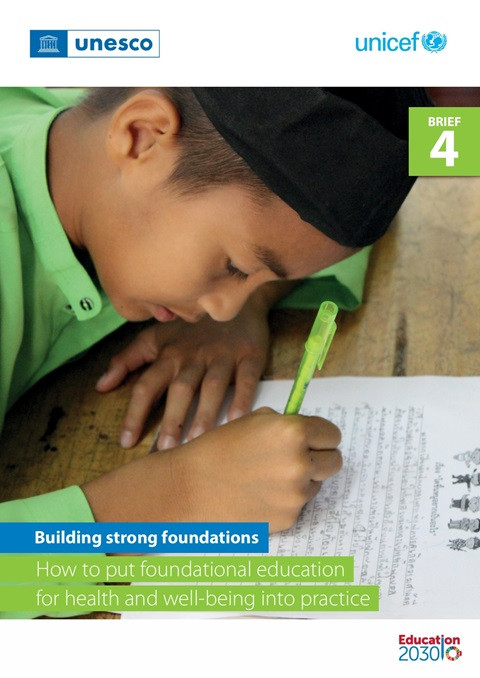 Building Strong Foundations: How to Put Foundational Education for Health and Well-being into Practice (Building Strong Foundations Brief; 4) Année de publication: 2024 Auteur institutionnel: UNESCO | United Nations Children's Fund (UNICEF) The African Union’s designation of 2024 as the Year of Education highlights the critical importance of education for equipping young Africans with the skills essential for their own and for the continent’s development. It is also a recognition of the multiple challenges ahead before every child can complete primary school having acquire the foundational skills that open the door for lifelong learning. Currently the out-of-school population is rising, one in five children do not complete primary school and, of those who do, only about one in five achieve minimum proficiency in reading and mathematics. African countries have set targets on primary completion and foundational learning but to effectively translate their ambitions into results, the 2024 Spotlight continental report emphasizes the importance of coherence between their curricula, textbooks, teacher guides and assessments. It evaluates the alignment of these policy documents with each other but also with a global standard of what students are expected to know and by when. It also assesses how these key documents are used in classrooms and what the implications are for children’s opportunities to learn. This report is the second in a series of three envisaged between 2022 and 2025, each covering some 12 countries of which a selection is examined in depth, in dialogue with education ministries and national stakeholders. The focus countries for this second Spotlight report cycle were Mauritania, Niger, South Africa, Uganda, and Zambia. The statistics and analysis presented in this publication aim to feed into the policy dialogue mechanism under the auspices of the African Union and its Continental Education Strategy for Africa. In particular, the Spotlight series aims to spark debate on foundational learning among African countries and encourage them to identify areas for joined action, given that they share a lot of policy challenges.
  3rd Global Forum Against Racism and Discrimination: Final Document Année de publication: 2024 Auteur institutionnel: UNESCO The third edition of the Global Forum against Racism and Discrimination with the theme “Race to the top: putting racial equity and justice at the forefront of development agendas” was held in São Paulo, Brazil, on 29 November 2023 and 1 December 2023. At the invitation of Brazil, in partnership with the Ford Foundation, the Open Society Foundations, the Mover Foundation, Instituto Ibirapitanga, the Global Forum highlighted the importance of placing racial issues at the core of development and implementation strategies, with a view to socioeconomic development. The Global Forum welcomed Ministers, high-ranking officials of national bodies responsible for combating discrimination and promoting equality, mayors of the International Coalition of Inclusive and Sustainable Cities - ICCAR, academics, scientists, civil society actors, NGOs, artists and digital influencers to share good practices, strengthen commitments and discuss effective strategies to combat racism and various forms of discriminations, including recommendations on how to proceed. The Global Forum’s agenda covered several topics, such as co-creating inclusive policies with impacted communities’ inputs; increasing awareness-raising on historical systems such as transatlantic enslavement to better comprehend and dismantle their contemporary legacies such as racism; progress towards gender equality; enhancing the capacities of civil society to be an agent of change; addressing artificial intelligence and its role in perpetuating racism; protecting the rights of indigenous peoples; establishing legal and policy frameworks prioritizing anti-racism and anti-discrimination on a local and global scale; strengthening the roles of cities, civic spaces, artistic and academic communities; enhancing the importance of informed data baseline on equality for governments; and promoting social philanthropy to address racial inequality. The 2023 edition was also marked by the launch of new initiatives. One of the main outcomes of the Global Forum is the establishment of the UNESCO Network of Anti-Racism and Anti-Discrimination Officials aiming to strengthen the development of innovative and inclusive policy solutions for peace, equity and non-discrimination. UNESCO has launched the new UNESCO Anti-Racism Toolkit, the Gender-Based Resilience Framework, the ‘Let’s Talk‘ project with Harvard University to combat prejudice against migrants, and the development of a new joint OECD-UNESCO briefing on combating discrimination against migrants. Volume X of the UNESCO General History of Africa, entitled Africa and its Diasporas, was also launched during the Global Forum. The publication offers a mapping of African diasporas throughout the world, valorizing their contributions to modern societies.
 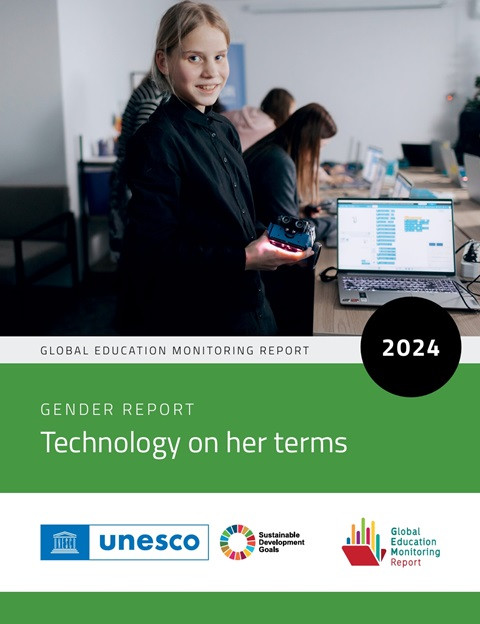 Global Education Monitoring Report 2024: Gender Report; Technology on Her Terms Année de publication: 2024 Auteur institutionnel: UNESCO | Global Education Monitoring Report Team The 2024 Gender Report tells the increasingly positive story of girls’ education access, attainment and achievement, which is helping reverse decades of discrimination. But there is much more to say on gender equality in and through education. A companion to the 2023 GEM Report, this report looks at the interaction between education and technology with a gender lens. First, it looks at the impact of technology on girls’ education opportunities and outcomes. Although many instances are seen of radio, television and mobile phones providing a learning lifeline for girls, particularly in crisis contexts, gender divides exist globally in both access to technology and in digital skills, although the latter are smaller among youth compared to among adults. Biased social and cultural norms inhibit equitable access to and engagement with technology in and outside of school, with girls always left on the wrong side of the divide. While technology offers many girls opportunities to access important education content in safe environments, for instance on comprehensive sexuality education, technology in practice often exacerbates negative gender norms or stereotypes. Social media usage impacts learners’ and particularly girls’ well-being and self-esteem. The ease with which cyberbullying can be magnified through the use of online devices in the school environment is a cause of concern, as is the biased design of artificial intelligence algorithms. Second, the report looks into the role of education on the shape of future technological development. It shows that women struggle to pursue STEM careers, which manifests from an early age in the form of anxiety in mathematics and develops into a reluctance to study STEM subjects, ultimately resulting in a lack of women in the technology workforce. Women make up only 35% STEM graduates, and hold only a quarter of science, engineering and ICT jobs. Ensuring women participate on equal terms in shaping the world’s ongoing digital transformation will ensure that technology works for everyone and takes into consideration the needs of all humanity.
  Guidelines for the governance of digital platforms: safeguarding freedom of expression and access to information through a multi-stakeholder approach Année de publication: 2023 Auteur institutionnel: UNESCO Guidelines for an Internet for TrustSafeguarding freedom of expression and the right to information while dealing with dis- and misinformation, hate speech, and conspiracy theories requires a multistakeholder approach. This is the reason why UNESCO, the leading UN agency for the promotion and protection of freedom of expression and to information, is launching Guidelines for the Governance of Digital Platforms. The Guidelines outline a set of duties, responsibilities and roles for States, digital platforms, intergovernmental organizations, civil society, media, academia, the technical community and other stakeholders to enable the environment where freedom of expression and information are in the core of digital platforms governance processes. The Guidelines were produced through a multi-stakeholder consultation that gathered more than 10,000 comments from 134 countries. These global-scale consultations fostered inclusive participation, ensuring a diversity of voices to be heard, including those from groups in situation of marginalization and vulnerability. Cultivating an Internet of Trust is a shared responsibility among all stakeholders. It calls upon us all to sustain an enabling environment for freedom of expression and the right to information.