
Ressources
Explorez une large gamme de ressources sur le GCED afin d’approfondir votre compréhension et de renforcer vos activités de recherche, de plaidoyer, d’enseignement et d’apprentissage.
3,790 résultats trouvés
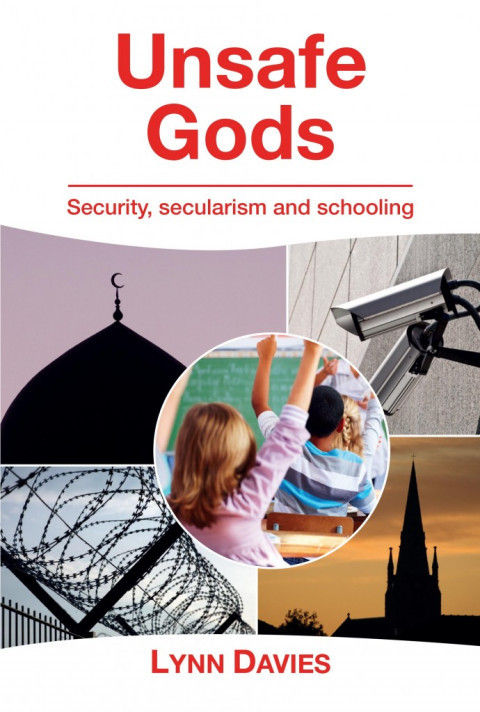 Unsafe Gods: Security, secularism and schooling Année de publication: 2014 Auteur: Lynn Davies Ce livre avance l'idée forte que la religion étant un facteur de conflictualité, une sécularisation plus poussée est vitale pour renforcer la sécurité. En mobilisant une approche inspirée des sciences de la complexité, il montre comment une sécularisation dynamique peut être appliquée à des systèmes politiques du monde entier afin de permettre la cohabitation de plusieurs religions et croyances. L'analyse des effets de l'interaction entre la religion et l'éducation en matière de sécurité et des dispositifs "safe schools" permet de comprendre la façon dont les religions s'adaptent, ou au contraire restent figées, empêchant les sociétés de s’adapter aux changements. Le livre montre que la conflictualité croissante souligne la nécessité de mettre en place une éducation centrée autour d'un regard critique, même à l'égard des textes religieux fondateurs, et qui reconnaisse l'intérêt de la satire et de l'humour.
  Breaking Historical Silence through Cross-cultural collaboration: Latvian curriculum writers and United States Holocaust Memorial Museum fellows In response to the need for Holocaust curricula in Latvia, Latvians and Americans worked collaboratively to overcome the historical silence surrounding this event. During their project, Latvian curriculum writers worked with teachers and scholars at the United States Holocaust Memorial Museum. This descriptive analysis of the Latvians' experience with Museum Fellows revealed opportunities to learn from each other the complexities of teaching the Holocaust in a country viewed by some as collaborators and still somewhat anti-Semitic. Findings included depth of guidance, values, and limits of innovative teaching methods, cross-cultural benefits, and continued collaboration. Recommendations for future efforts by post-Communist countries and American partners to develop curriculum on teaching a most complex and contentious aspect of history such as the Holocaust conclude the study. (By the author)
  Israeli Youth Pilgrimages to Poland. Rationale and Polemics The article, based on material collected as part of a project evaluating the pilgrimage trips to Poland by Israeli adolescents as part of the Holocaust curriculum, attempts to provide the reader with the background for these trips. In this context, the authors discuss the evolving national agenda in Israel, and the transition from experiencing independence to experiencing the Holocaust. The authors of the article stress that in the wake of the profound social changes that took place in Israeli society, the memory of the Holocaust gained new significance among the country’s national priorities. While a policy known as “the great silence” regarding the Holocaust prevailed among the first generation after statehood, the Holocaust has now become a factor that shaped the national ethos. In 1979, for the first time, the Ministry of Education commissioned two curricula dealing exclusively with the Holocaust. The article notes that the Holocaust and its lessons can be examined from three different perspectives: The first focuses on presenting the universal significance of the Holocaust and perceiving it as parallel to other cases of genocide. The second focuses on presenting the national significance of the Holocaust as a unique and unparalleled case of the Jewish People. The perception held by this approach is actually “the whole world is against us.” The third perspective is a synthesis of these two approaches. In this article, the authors note that the longstanding debate in Israeli society over the various methods for instilling the Holocaust and the journeys to Poland by adolescents expresses these three perspectives. (By the author) "Nobody Told Us about What Happened": The Current State of Holocaust Education in Romania This research study sought to understand the current state of Holocaust education in Romanian classrooms and how sociocultural and institutional forces influence its treatment. By identifying the obstacles, challenges, and successes of Holocaust education in Romania, this study can both disseminate the techniques and conditions that bring about meaningful Holocaust education and provide a generative knowledge base for curriculum proposals, symposia and other initiatives that seek to disrupt reticence on this topic. Given their recent accession to the European Union, this is a timely study that also examines Romania's educational efforts concerning the development of democratic skills and dispositions, many of which often result from addressing controversial topics and closed areas, including the Holocaust in Romania. Holocaust education is a relatively new phenomenon in Romania and studying its inception can offer insights for other societies and cultures that are working to introduce Holocaust or controversial issues into their middle and high school curricula. As more post-Soviet and post-communist states attempt to build pluralistic, tolerant, and open-minded societies their treatment of historical silences and the renegotiation of their past become critical features for the development of democratic citizens. Holocaust education is well-qualified to meet the demands of citizenship education as it helps to promote tolerant societies free from prejudice, racism and bigotry, while simultaneously promoting the inclusivity of others, justice-oriented dispositions and commitments to peace (Salmons, 2003). (By the author) Repositioning and reconceptualizing the curriculum for the effective realization of Sustainable Development Goal Four, for holistic development and sustainable ways of living Année de publication: 2015 Auteur institutionnel: UNESCO International Bureau of Education (IBE) The purpose of this discussion paper is two-fold, it is to reposition curriculum at the center of the national and the global development dialogue and to highlight its power to give effect to national and to global aspirational statements on the role of education in holistic development. When well designed and effectively enacted, curriculum determines the quality, inclusiveness and development-relevance of education.Second, is to reconceptualize curriculum as a fundamental force of integration of education systems and as an operational tool for giving effect to policies on lifelong learning. Curriculum leads all core aspects of education that are known to determine quality, inclusion, and relevance such as content, learning, teaching, assessment and the teaching and learning environments among others. Its horizontal and vertical articulation, as well as its articulation across learning settings is what gives effect to lifelong learning policies.This paper therefore seeks to reposition curriculum as an indispensable tool for giving effect to SDG Goal 4. Repositionnement et reconceptualiser le programme d'études pour l'utilisation Efficace du Développement Durable Objectif Quatre, pour le développement holistique et modes de vie durables Année de publication: 2015 Auteur institutionnel: UNESCO International Bureau of Education (IBE) Le but de ce document de travail est double, il est de repositionner curriculum au centre national et le dialogue mondial du développement et de mettre en évidence son pouvoir pour donner effet aux nationaux et aux états ambitieux mondiaux sur le rôle de l'éducation dans le développement holistique . Quand bien conçu et efficacement adopté, le curriculum détermine la qualité, l'inclusion et le développement-pertinence de l'éducation. Deuxièmement, il faut reconceptualiser programme comme une force fondamentale de l'intégration des systèmes d'éducation et comme un outil opérationnel pour donner effet aux politiques sur l'apprentissage continu. Curriculum conduit tous les aspects essentiels de l'éducation qui sont connus pour déterminer la qualité, l'inclusion et la pertinence tels que le contenu, l'apprentissage, l'enseignement, l'évaluation et l'enseignement et des environnements d'apprentissage entre autres. Son articulation horizontale et verticale, ainsi que son articulation dans tous les milieux d'apprentissage est ce qui donne effet aux politiques d'apprentissage continu. Ce document vise donc à repositionner programme comme un outil indispensable pour donner effet à ODD Objectif 4. Global citizenship: abstraction or framework for action Année de publication: 2006 Auteur: Lynn Davies Auteur institutionnel: Educational Review This paper explores whether the notion of ‘global citizenship’ is too abstract to be valuable in driving curriculum policy and active citizenship for students. The paper looks firstly at three of the key aspects of an active role: a concern for social justice; rights; and culture and cultural conflict. It then examines actual curricula and programmes of study for global citizenship, and compares the conceptual frameworks, progression routes and emphases within these curricula. It moves on to review the research on teachers’ practices and orientations in teaching global citizenship, finding some variation and problems, particularly in areas such as teaching controversial issues. Factors in successful impact of global citizenship education are outlined, such as various forms of democratic decision-making and community service. Constraints are nonetheless identified of curriculum overload, resources, time and confidence. The paper then describes existing research on the needs and wishes of learners within global citizenship. The conclusion confirms the consensus on the importance of global citizenship and argues that it can be turned into a more radical and politicised curriculum area; however, more research is needed on impact of the learning, including research by students themselves. Global citizenship: abstraction or framework for action Année de publication: 2006 Auteur: Lynn Davies Auteur institutionnel: Educational Review Cet article examine si la notion de ‘citoyenneté mondiale’ est trop abstraite pour être utile dans la conduite de la politique des programmes et la citoyenneté active pour les étudiants. Le document examine tout d'abord à trois des aspects clés d'un rôle actif: un souci de justice sociale; droits; et de la culture et de conflits culturels. Il examine ensuite les programmes et les programmes d'études à la citoyenneté mondiale réelle, et compare les cadres conceptuels, des voies de progression et emphases au sein de ces programmes. Il se déplace en revue les recherches sur les pratiques et les orientations des enseignants dans l'enseignement de la citoyenneté mondiale, de trouver une certaine variation et des problèmes, en particulier dans des domaines tels que l'enseignement des questions controversées. Facteurs de succès de l 'éducation à la citoyenneté mondiale sont exposés, tels que les diverses formes de prise de décision démocratique et le service communautaire. Les contraintes sont néanmoins identifiées de la surcharge des programmes, les ressources, le temps et la confiance. Le document décrit ensuite les recherches existantes sur les besoins et les souhaits des apprenants au sein de la citoyenneté mondiale. La conclusion confirme le consensus sur l'importance de la citoyenneté mondiale et fait valoir qu'il peut être transformé en une zone de curriculum plus radicale et politisée; cependant, plus de recherche est nécessaire sur l'impact de l'apprentissage, y compris la recherche par les étudiants eux-mêmes. Currículos escolares y sus orientaciones sobre historia, sociedad y política: significados para la cohesión social en Latinoamérica Année de publication: 2009 Auteur: Cristián Cox | Robinson Lira | Renato Gazmuri Auteur institutionnel: Uqbar Editores | Elsevier The purpose of this work is to analyse the results of the curricula reform that took place from 1999 to 2000 in regards to the role of schools in providing a model for social integration or cohesion among all groups and social strata. The analysis and critical reflection is based on the assessment done on the curricula for citizenship formation in primary and secondary education in seven countries: Argentina, Brazil, Colombia, Chile, Guatemala, Mexico, and Peru. The main question being answered whether the patterns observed in the different curricula contribute to social cohesion. Les programmes scolaires et des conseils sur l'histoire, la société et la politique: significations pour la cohésion sociale en Amérique latine Année de publication: 2009 Auteur: Cristián Cox | Robinson Lira | Renato Gazmuri Auteur institutionnel: Uqbar Editores | Elsevier Le but de ce travail est d'analyser les résultats de la réforme des programmes d'études qui a eu lieu de 1999 à 2000 en ce qui concerne le rôle des écoles dans la fourniture d'un modèle d'intégration sociale ou la cohésion entre tous les groupes et les couches sociales. L'analyse et la réflexion critique est basée sur l'évaluation faite sur les programmes d'études pour la formation de la citoyenneté dans l'enseignement primaire et secondaire dans sept pays: l'Argentine, le Brésil, la Colombie, le Chili, le Guatemala, le Mexique et le Pérou. La question principale étant répondu si les tendances observées dans les différents programmes contribuent à la cohésion sociale.