
Ressources
Explorez une large gamme de ressources sur le GCED afin d’approfondir votre compréhension et de renforcer vos activités de recherche, de plaidoyer, d’enseignement et d’apprentissage.
3,385 résultats trouvés
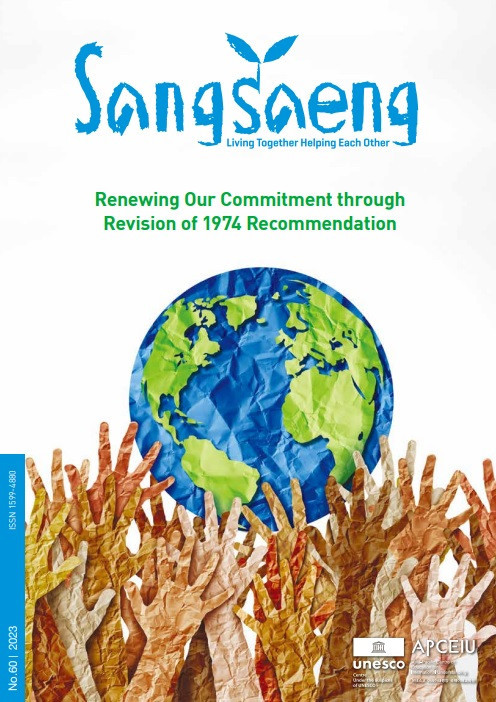 Renewing Our Commitment through Revision of 1974 Recommendation (SangSaeng no.60, 2023) Année de publication: 2023 Auteur institutionnel: APCEIU After nearly 50 years, UNESCO is in the process of revising “the 1974 Recommendation”. The revision aims to ensure the sustained relevance of the Recommendation within the evolving global and educational landscape in the face of contemporary and future threats to peace, and notably included the concept of ‘global citizenship’. Recognising its profound significance, SangSaeng No. 60 focuses on the theme of “Renewing. Our Commitment through the Revision of the 1974 Recommendation” to delve into the intrinsic value and significance underpinning the revision of this normative instrument. Contents 03 Editor's Note 04 Special Column Peace Educators Reflect on Revision of 1974 Recommendation / Betty Reardon & Tony Jenkins Renewing Our Commitment to Build a Culture of Peace through Education / Toh Swee-Hin 12 FOCUS: Renewing Our Commitment through Revision of the 1974 Recommendation Highly Capable, Profoundly Human / Elisa Guerra Revisiting UNESCO 1974 Recommendation / Bert J. Tuga & Edward Shiener S. Landoy Creatively Innovative Thinking for 21st Century / Patrice Ssembirige Observations on Revision of 1974 Recommendation / Rilli Lappalainen 26 Special Report What You Need to Know about Revision of 1974 Recommendation / UNESCO and APCEIU 28 Best Practices Tell Me About My Planet / Elvira Sarsenova Crucial Strategy to Mainstream GCED in Education / Rebecca Rosario Bercasio 36 Story Time Bringing GCED to Life Through the Power of Social Impact Films / Virginia Pittaro 40 Understanding the Asia-Pacific Region Mosaic of Sri Lankan Cultural Life / Nirmal Ranjith Dewasiri 44 GCED YOUTH NETWORK Youth Addressing Pressing Social Issues / Umair Mushtaq & Anna Susarenco 48 Letter Butterfly Effect of Embracing Opportunities / Khalifa Affnan 50 APCEIU in Action
 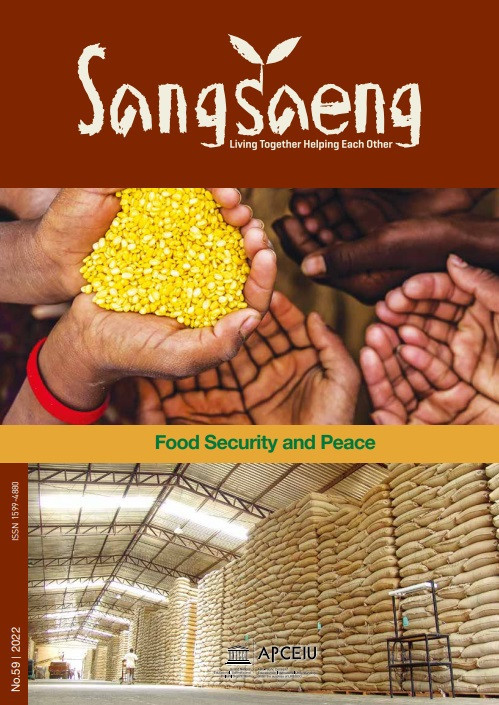 Food Security and Peace (SangSaeng no.59, 2022) Année de publication: 2023 Auteur institutionnel: APCEIU The food security issue is vital in pursuing the United Nations’ Sustainable Development Goals, which specifically include a goal of zero hunger. Hunger is both a cause and a result of conflicts. In this perspective, SangSaeng No. 59 focuses on the issue of “food security and peace” in order to examine the impacts of food insecurity and food crises and to explore possible alternatives or solutions to prevent conflicts and secure peace. Contents 03 Editor’s Note 04 Special ColumnRepositioning Youth for Responsible Citizenship / Michael Boakye-Yiadom and Raymond Chegedua Tangonyire, SJ. 08 FOCUS: Food Security and Peace 08 Conflict of Securing Food – ‘Food Insecurity is in Effect Creating an Existential Threat to Human Existence’ / Gavin E L Hall 12 Prioritizing Food Justice – Thinking About Water/Food Nexus for Latin America / Mayari Castillo 16 Feeding the Planet’s Survival – Climate Crisis and Food Security are Paramount Issues for Students to Connect with Nature / Simon Klein 21 Best Practices 21 Archipelagos of Certainty and Inclusion – Identifying Diverse Strategies to Make Learning Effective for Disabled / Eduardo Esteban Perez Leon 25 Adventure Education in Youth Work – Using Rick to Connect People and Nature to Unlearn Unhealthy Behaviours / Tina Trdin 30 InterviewRoad to Peace and Hope in Times of Crisis – Lee Chul Soo’s Works on Peace and Living Beings / APCEIU 36 Story TimeMessage of a Warlus / Marisol Bock 40 Peace in My MemoryPeace at Home / Ivy Joshia 44 Understanding the Asia and the PacificRenaissance of Traditional Archery in Asia / Lee Seunghwan 48 LetterMaking History with the EIU Photo Class Programme / Fanny Amalia Surya Tantular 50 APCEIU in Action
 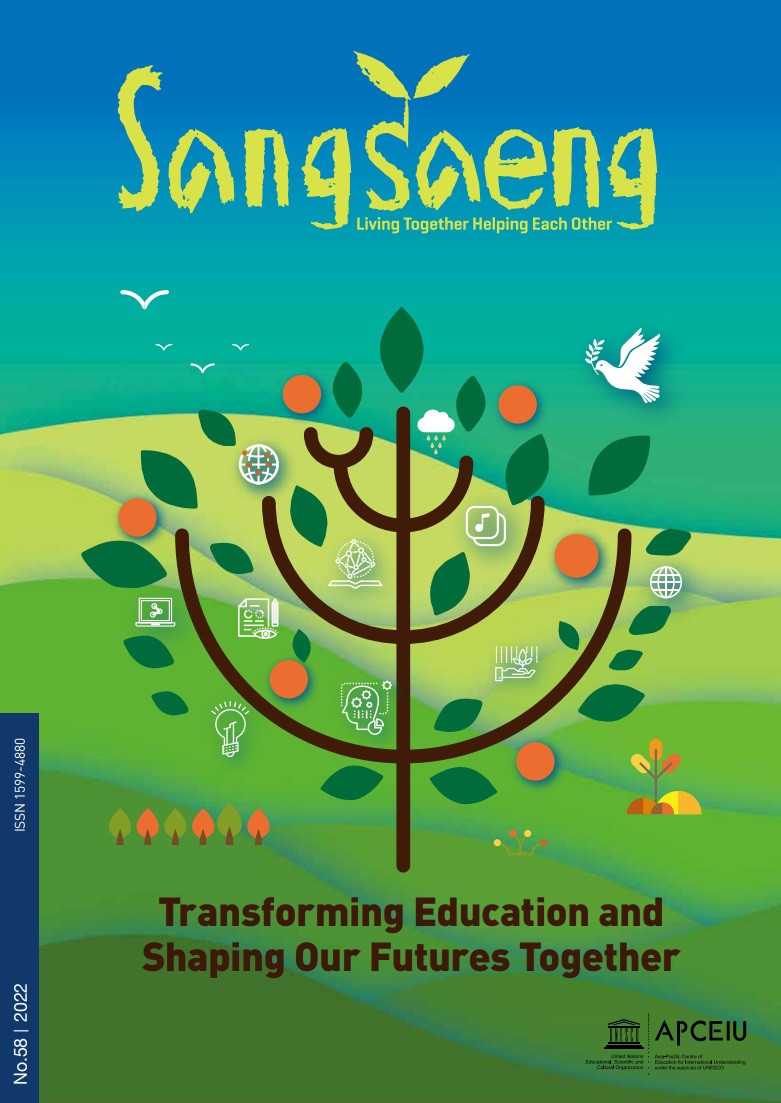 Transforming Education and Shaping Our Futures Together (SangSaeng no.58, 2022) Auteur institutionnel: APCEIU As humanity is facing unprecedented social, economic and environmental challenges, positive changes are necessary. And education plays a key role in adapting and responding to a changing world as it can be the most reliable tool to shape our future into a more inclusive, sustainable, and just world. In this context, SangSaeng No. 58 focuses on “Transforming Education and Shaping Our Futures Together” with the goal of exploring possible alternatives to educational systems and practices. Contents 03 Editor’s Note 04 Special ColumnTransformative Education for Learning to Live Together / Lim Hyun Mook 08 FOCUS: Transforming Education and Shaping Our Futures Together 08 Global Movement to Educate for Peace – Develop Hope by Focusing on an Educational Renaissance that’s Deliberate / Fernando M. Reimers 12 University as the Foundation of Education – Effective Education System Discovers Attributes that Help to Excel / Madhav Das Nalapat 15 Vision for a Feminist, Decolonized Education – Develop Two-accountability Education that Furthers Today’s Standard / Shamah Bulangis 19 Best Practices 19 Best of Both Worlds – Collaborative Approach to Transforming Education / Dailess Banda-Zulu and Sibylle Freiermuth 23 Leading Impactful Transformation in Local Community – Grassroots Level Educational Innovation that Inspires Future Action / IniOluwa Odekunle 26 Special Report 26 Asia-Pacific Education Ministers Call for Responsive Covid-19 Learning Recovery, Transformation of Education Systems – Highlights of the Second Asia-Pacific Regional Education Minister’s Conference (APREMC-II) / Jenelle Babb, Worapot Yodpet, Seek Ling Tan 29 Transforming Education: A Call to Action – Education Stakeholders Gather to Reimagine Education and Revitalize Commitments at the Transforming Education Pre-Summit / Transforming Education Summit Secretariat 32 Story TimeMy Role Model Teacher / Joseph Sandamira 34 Letter OneCambodian Approach Toward Educational Development for Better Future Connectedness, Readiness / Mok Sarom 36 Peace in My MemoryLost and Found Peace in War Times – Defining Secret Puzzle of Peace in War-torn Ukraine / Valeria Moroz 40 Understanding the Asia and the PacificBringing Living Heritage to Asia-Pacific Classrooms – Contextualizing School Activities with Living Heritage Supports Teachers, Improves Learning Outcomes, Safeguards Living Heritage / Duong Bich Hanh and Vanessa Achilles 44 GCED Youth Network Shapers for Today and Tomorrow’s Education – Youth Tackle Educational Topics to Further Develop, Improve, Transform / Diego Manrique 47 Letter TwoSupporting Global Citizenship Education in Kenya / Jane Nyaga 49 APCEIU in Action
 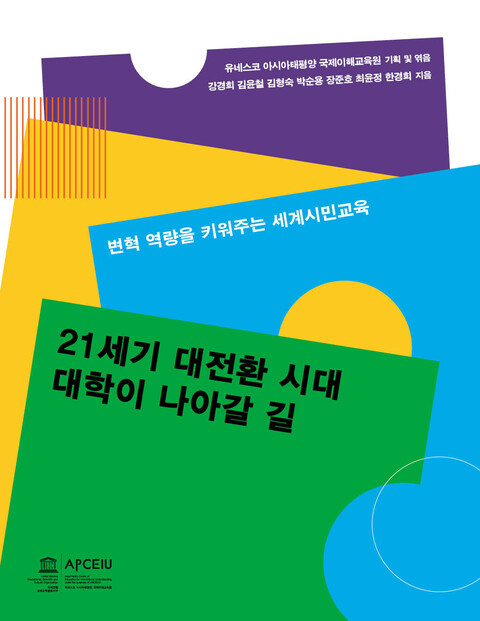 21세기 대전환 시대 대학이 나아갈 길: 변혁 역량을 키워주는 세계시민교육 Année de publication: 2023 Auteur: 강경희 | 김윤철 | 김형숙 | 박순용 | 장준호 | 최윤정 | 한경희 Auteur institutionnel: 유네스코 아시아태평양 국제이해교육원 이 책은 대학에서 세계시민교육을 계획하거나 실행하고 있는 교수자가 참고할 만한 내용을 담고 있다. 전공 분야 별로 세계시민교육 수업을 어떻게 설계하고 진행할 수 있는지 등을 포함해 대학 세계시민교육의 방향과 내용에 관한 제안을 실천 사례를 바탕으로 제시하고 있다. 목차:펴내는 글1장. 대학 세계시민교육의 의의와 방향2장. 교양대학의 세계시민교육3장. 대학 사회과학분야의 세계시민교육4장. 대학 공학분야의 세계시민교육5장. 대학 미술분야의 세계시민교육6장. 초등 교사교육의 세계시민교육7장. 중등 교사교육의 세계시민교육: 사회과를 중심으로부록참고문헌
 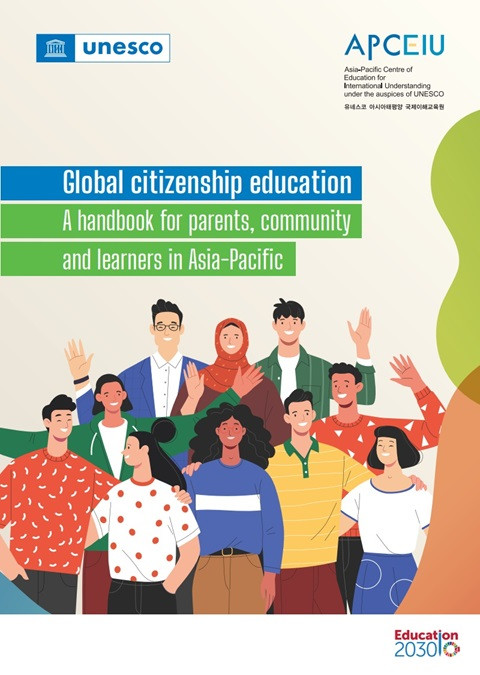 Global Citizenship Education: A Handbook for Parents, Community and Learners in Asia-Pacific Année de publication: 2023 Auteur: Darla K. Deardorff | Seek Ling Tan Auteur institutionnel: UNESCO Bangkok | APCEIU This handbook aspires to engage and involve parents, caregivers and the community to join the mission of developing every learner into a global citizen. To achieve this, parents, caregivers and the community will need to be empowered with the necessary GCED knowledge and skills too. In this handbook, GCED related concepts are introduced, alongside adaptable step-by-step action plans and best practices collected across the Asia-Pacific region to support parents and the community to take action in developing GCED competences in learners.
  Roundtable of the Group of Friends for Solidarity and Inclusion with GCED: "Art Education Fostering Global Citizenship" Année de publication: 2023 Auteur: Hyunmook Lim Auteur institutionnel: APCEIU This report shares the overview of the Roundtable of the Group of Friends for Solidarity and Inclusion with GCED: “Art Education Fostering Global Citizenship”, held on Friday, 16 June 2023. The event was co-organized by the Permanent Delegation of the Republic of Korea to UNESCO and the Asia-Pacific Centre of Education for International Understanding (APCEIU) in partnership with the Group of Friends for Solidarity and Inclusion with GCED (Afghanistan, Armenia, Austria, Bangladesh, Canada, Colombia, Italy, Jordan, Kenya, Kuwait, Philippines, Republic of Korea, Saudi Arabia, Senegal, Serbia, Nigeria and Oman). This report shares the summary of the event, particularly the presentations on GCED activities through arts education by experts from Finland, Lebanon, the Republic of Korea and Nigeria to promote the values and initiatives of GCED through arts education.
  평생교육 내 세계시민교육 이행현황 연구 Année de publication: 2019 Auteur institutionnel: 유네스코 아시아태평양 국제이해교육원 유네스코 아태교육원은 “국내 평생교육 내 세계시민교육 이행현황 연구” 보고서를 발간하였다. 동 교육원은 국내 세계시민교육의 효과적이고 체계적인 이행을 위해서는 이행현황 분석연구가 필요함을 인식하여, 2018년에는 유ㆍ초중등학교 교육과정에 담긴 세계시민교육의 국내 이행현황을 연구하였다. 본 연구보고서는 이 작업에 대한 후속 연구로서 성인을 대상으로 하는 평생교육 영역에서의 시민교육 실천양상 및 그 안에서 나타나는 세계시민교육의 형성, 현황 및 이행과정을 검토하고 잠재적 활성화 가능성에 대해 탐색한다.
  Establishing a Monitoring System for Global Citizenship Education in South Korea: A Preliminary Study with a Focus on Policy Area Année de publication: 2019 Auteur institutionnel: APCEIU The Asia-Pacific Centre of Education for International Understanding published a report titled "Establishing a Monitoring System for Global Citizenship Education in South Korea: A Preliminary Study with a Focus on Policy Area." The purpose of this research report is to provide implications for the development of indicators for Global Citizenship Education (GCED) which is the target 4.7 of the Sustainable Development Goals (SDGs) and the establishment of a Korean monitoring system for data accumulation. It is difficult for GCED to set up common indicators to monitor the implementation of each country, as it comprehensively deals with the direction and contents of education, whereas other targets of SDG4 are relatively clear targets and goals such as guaranteeing educational opportunities and improving educational conditions. For this reason, this study proposed Korean indicators based on domestic and international trends and analysis of issues concerning the development of SDG4.7.1 indicators and reviewed the domestic status in implementation based on them, thereby contributing to the development and consolidation of global indicators development and monitoring systems in the future. 세계시민교육 지표 개발 및 데이터 축적을 위한 모니터링 체제 구축 연구 Année de publication: 2019 Auteur institutionnel: 유네스코 아시아태평양 국제이해교육원 유네스코 아태교육원은 “세계시민교육 지표 개발 및 데이터 축적을 위한 모니터링 체제 구축 연구” 보고서를 발간하였다. 본 연구보고서는 지속가능발전목표(SDGs)의 4번 교육 목표 중 7번째 세부목표(SDG4.7)인 세계시민교육의 지표 개발과 데이터 축적을 위한 국내 모니터링 체제 구축을 위한 시사점을 제공하는데 목적이 있다. SDG4.7이 추구하는 세계시민교육은 교육기회의 보장이나 교육여건 개선 등 비교적 대상과 목표가 명확한 다른 SDG4의 세부목표와 달리 교육의 방향성과 내용을 포괄적으로 다루기 때문에, 국가별로 이행 여부를 모니터링하기 위한 공동의 지표 설정에 어려움이 있다. 이와 같은 이유로, 본 연구에서는 SDG4.7.1 지표 개발에 대한 국내외 동향과 쟁점 분석을 토대로 국내 지표를 제안하고 이를 바탕으로 국내 이행 수준을 검토함으로써, 향후 글로벌 지표 개발과 모니터링 체제를 발전 및 공고화하는데 기여하고자 하였다.
 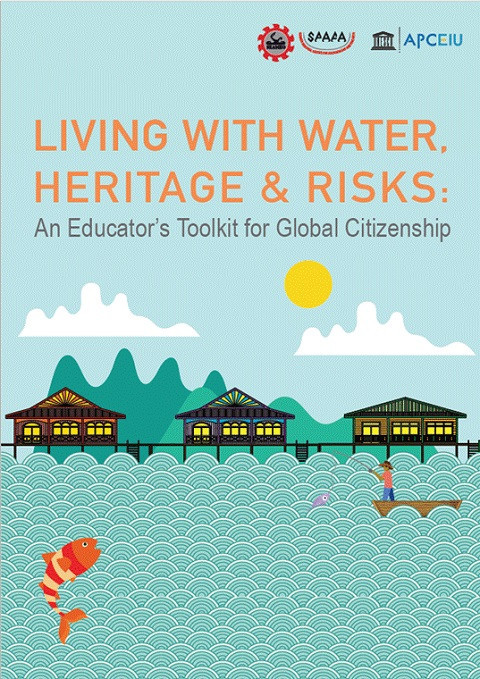 Living with Water, Heritage & Risks: An Educator’s Toolkit for Global Citizenship Année de publication: 2019 Auteur institutionnel: APCEIU | SEAMEO. Regional Centre for Archeology and Fine Arts (SPAFA) Designed to help young global citizens gain an awareness of the culture-nature connection in heritage conservation, this toolkit provides visual learning aids and ideas to explore water heritage in Southeast Asia. It is composed of an Educator's Booklet, Activity Sheets, and Inquiry-Based and Self-Learning Photocards. Learners are encouraged to THINK, SHARE and ACT in ways that will enable them to become critical thinkers who can make compassionate and ethical decisions.