
Ressources
Explorez une large gamme de ressources sur le GCED afin d’approfondir votre compréhension et de renforcer vos activités de recherche, de plaidoyer, d’enseignement et d’apprentissage.
1,407 résultats trouvés
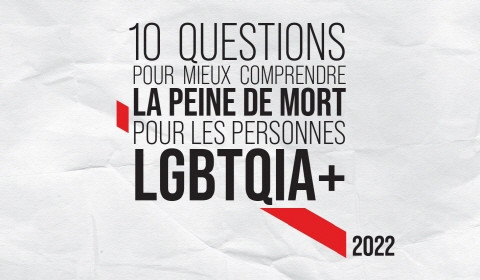 10 questions pour mieux comprendre la peine de mort pour les personnes LGBTQIA+ Année de publication: 2022 Auteur: Céline Martin Auteur institutionnel: Ensemble contre la Peine de Mort (ECPM) Ensemble Contre la Peine de Mort (ECPM) présente dans ce rapport l’état de la peine de mort dans le monde pour les LGBTQUIA+. Le rapport interroge les liens entre le genre, l’orientation sexuelle et la peine de mort pour explorer les discriminations subies par les personnes faisant partie de minorités sexuelles sous un angle juridique.Ce dossier permet au grand public d’analyser les législations complexes des pays appliquant la peine de mort suite à des relations sexuelles consenties entre personnes de même sexe, qui revêtent des particularités historiques, religieuses ou fondées sur la moralité imposée par le gouvernement au pouvoir. Ensemble Contre la Peine de Mort (ECPM) presents in this report the state of the death penalty worldwide for LGBTQIA+ people. The report questions the links between gender, sexual orientation and the death penalty, exploring the discrimination suffered by people belonging to sexual minorities from a legal angle.This publication enables the general public to analyze the complex legislation of countries applying the death penalty for consented sexual relations between people of the same sex, which take on historical, religious or morality-based particularities imposed by the government in power.
 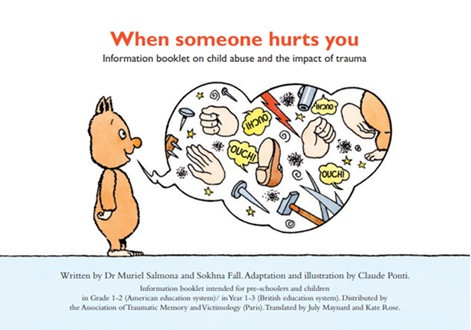 When Someone Hurts You: Information Booklet on Child Abuse and the Impact of Trauma Année de publication: 2022 Auteur: Muriel Salmona | Sokhna Fall Auteur institutionnel: UNICEF France | French Association for Traumatic Memory and Victimology This educational booklet is designed to help young children from kindergarten to Third grade to identify their feelings of unease following a situation of violence or threat of violence (physical, moral or sexual), understand the causes and consequences, and give advice on how to protect themselves and seek help. Quand on te fait du mal: Information sur les violences et leurs conséquences Année de publication: 2022 Auteur: Muriel Salmona | Sokhna Fall Auteur institutionnel: UNICEF France | French Association for Traumatic Memory and Victimology Ce livret pédagogique permet d’aider les plus petits de la maternelle au CE2, à identifier leur mal-être suite à une situation de violence ou menaces de violences (physiques, morales, sexuelles…), en comprendre les causes et les conséquences et donne des conseils pour apprendre à se protéger et demander de l’aide.
  À l'école des droits de l'enfant Année de publication: 2020 Auteur institutionnel: Asmae Association Soeur Emnanuelle Basée sur la même pédagogie que le "projet Yalla ! Pour les droits de l’enfant", nous retrouvons un ensemble d’outils pédagogiques clés en mains, évolutifs et interactifs. Les enfants pourront apprendre en s’amusant avec : des vidéos, des jeux, des quizz, des défis à relever. Une surprise se cache également dans les leçons …. le parrain de notre projet, Joan Faggianelli, anime les vidéos pédagogiques. La plateforme est utilisable en classe par l’enseignant.e ou à la maison. L’objectif de cet outil est de maximiser l’impact de notre action avec plus d’enfants sensibilisés, étant à même de comprendre leurs droits, dénoncer des situations de danger et devenir acteurs de la solidarité. Based on the same pedagogy as the Yalla! Pour les droits de l'enfant (Children's Rights) project, we offer a set of turnkey, scalable and interactive teaching tools. Children can learn while having fun with videos, games, quizzes and challenges. A surprise is also hidden in the lessons .... Our project sponsor, Joan Faggianelli, animates the teaching videos. The platform can be used in class by the teacher or at home with parents. The aim of this tool is to maximize the impact of our action, with more children aware of their rights, able to denounce dangerous situations and become actors in solidarity.
  Centre Hubertine Auclert Année de publication: 2010 Auteur: Marie-Pierre Badré Auteur institutionnel: Centre Hubertine Auclert (CHA) L'Égalithèque est une banque de donnée unique en France recensant des milliers de guides, expositions, ouvrages, affiches, vidéos, spectacles vivants, diaporamas, formations, quiz, etc. sur l'égalité femmes-hommes et la lutte contre les violences de genre. Elle propose à la fois les ressources créées par le Centre Hubertine Auclert - publications, campagnes de sensibilisation, malles virtuelles et expositions - ainsi que de nombreuses autres ressources créées par des structures oeuvrant pour l'égalité. Enrichie et actualisée régulièrement par l'équipe du Centre, l'Égalithèque sera très prochainement participative : les membres du Centre pourront soumettre un outil qui sera contrôlé avant d'être référencé. The Égalithèque is a database unique in France, containing thousands of guides, exhibitions, books, posters, videos, live shows, slide shows, training courses, quizzes, etc. on gender equality and the fight against gender violence. It includes resources created by the Centre Hubertine Auclert - publications, awareness-raising campaigns, virtual trunks and exhibitions - as well as many other resources created by structures working for equality. Enriched and updated on a regular basis by the Centre's team, the Égalithèque will soon be participative: Centre members will be able to submit a tool, which will be checked before being referenced.
 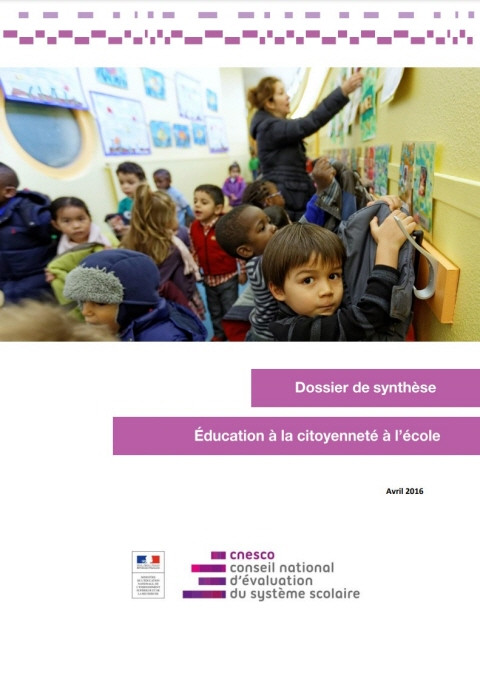 Citizenship Education in Schools: Summary Report Année de publication: 2016 Auteur institutionnel: National Center for the Study of School Systems (CNESCO) This report explores the evolution of citizenship education in French schools in response to contemporary challenges. It highlights the key principles of this education and its impact on students, supported by recent research and surveys. The report also compares international practices and presents innovative examples, offering insights to enhance citizenship teaching in France. Éducation à la citoyenneté à l'école : Dossier de synthèse Année de publication: 2016 Auteur institutionnel: National Center for the Study of School Systems (CNESCO) Ce dossier explore l'évolution de l'éducation à la citoyenneté dans les écoles françaises face aux défis contemporains. Il met en avant les principes clés de cette éducation et son impact sur les élèves, soutenu par des recherches et des sondages récents. Le rapport compare les pratiques internationales et présente des exemples innovants, offrant des perspectives pour améliorer l'enseignement de la citoyenneté en France.
  Bibliography: Citizenship Education Année de publication: 2021 Auteur institutionnel: France Education International Prepared at the request of the French Institute of the Netherlands, this selection of freely accessible digital resources is aimed at French as a Foreign Language (FLE) teachers who wish to educate their students about citizenship. Focused on secularism and the values of the French Republic, it includes international reports, articles and podcasts, didactic and pedagogical resources, as well as presentations of European projects and French academic and school projects that can be adapted to various contexts. Bibliographie: Éducation à la citoyenneté Année de publication: 2021 Auteur institutionnel: France Education International Réalisée à la demande de l’Institut français des Pays-Bas, cette sélection de ressources numériques en accès libre s’adresse aux enseignants de FLE désireux d’éduquer leurs élèves à la citoyenneté. Centrée sur la laïcité et les valeurs de la République française, elle comprend des rapports internationaux, des articles et des podcasts, des ressources didactiques et pédagogiques ainsi qu’une présentation de projets européens et de projetsacadémiques et d’établissement français, transposables en différents contextes.
 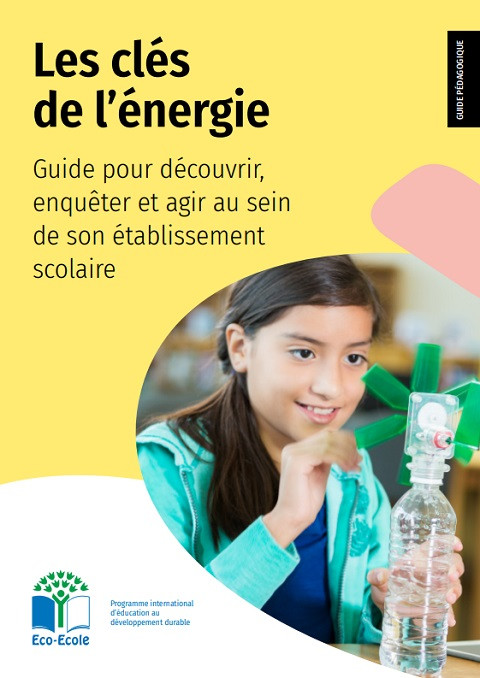 Les clés de l’énergie: Guide pour découvrir, enquêter et agir au sein de son établissement scolaire Année de publication: 2020 Auteur institutionnel: Eco-Ecole L’énergie est présente dans toutes les sphères de notre quotidien et favoriser sa gestion durable et responsable est un enjeu majeur dans la lutte contre le réchauffement climatique ! Afin d’aider les communautés éducatives à s’approprier ce sujet, le programme Eco-Ecole, en partenariat avec le Conseil Départemental de Seine-Saint-Denis et l’ADEME, dévoile son nouvel outil : Les clés de l’énergie : Guide pour découvrir, enquêter et agir au sein de son établissement.En abordant l’énergie à travers le bâti, l’alimentation, le numérique et les déplacements, ce guide permet aux enseignant.e.s et à leurs élèves de se questionner sur les enjeux environnementaux liés à cette thématique et de réfléchir à des solutions à mettre en place à leur échelle.Destiné principalement à être utilisé dans le secondaire, cet outil contient :• des éléments de contexte et des clés de compréhension sur le thème de l’énergie ;• des pistes d’enquête concrètes pour réaliser un diagnostic ;• des déroulés d’ateliers pour découvrir la thématique et faire émerger des idées d’actions dans son établissement ;• des supports d’activités (à photocopier, découper ou reproduire) disponibles dans le corps du guide et dans les annexes.