
Ressources
Explorez une large gamme de ressources sur le GCED afin d’approfondir votre compréhension et de renforcer vos activités de recherche, de plaidoyer, d’enseignement et d’apprentissage.
3,435 résultats trouvés
 Annual Report 2019: UNESCO Institute for Lifelong Learning Année de publication: 2020 Auteur institutionnel: UNESCO Institute for Lifelong Learning (UIL) This report shows how, in 2019, UIL worked to fulfil its mission, with a focus on youth and adults and a special emphasis on UNESCO’s priority areas of Africa and gender equality. UIL’s vision is for all children, young people and adults to benefit from quality lifelong learning opportunities, within the framework of sustainable development and peace. We promote lifelong learning as the leading educational paradigm for inclusive and sustainable learning societies in the context of the United Nations’ 2030 Agenda for Sustainable Development, which provides an ambitious set of goals and targets for Member States that together form a coherent, universal framework of reference for our activities. Working to this framework, and recognizing lifelong learning’s important transversal role not only with respect to Sustainable Development Goal (SDG) 4 on education but across all 17 SDGs, UIL has made an impact across a range of fronts, including in the areas of policy advice, capacity development, research, monitoring, and networking and advocacy. Rapport annuel 2019: Institut de l’UNESCO pour l’apprentissage tout au long de la vie Année de publication: 2020 Auteur institutionnel: Institut de l’UNESCO pour l’apprentissage tout au long de la vie (UIL) Ce rapport décrit la façon dont l’Institut a opéré en 2019 pour remplir sa mission en concentrant ses activités sur les jeunes et les adultes, et en mettant particulièrement l’accent sur les domaines prioritaires de l’UNESCO que sont l’Afrique et l’égalité des genres. L’UIL nourrit la vision d’un monde où tous les enfants, tous les jeunes et tous les adultes bénéficient d’offres d’apprentissage de qualité tout au long de leur vie, dans le cadre d’un développement durable et dans un monde en paix. Nous assurons la promotion de l’apprentissage tout au long de la vie en tant que paradigme éducatif majeur de sociétés apprenantes inclusives et durables dans le contexte du Programme de développement durable des Nations unies à l’horizon 2030. Ce programme fournit aux États membres une série d’objectifs et de cibles ambitieux qui, dans leur ensemble, constituent un cadre de référence universel et cohérent pour nos activités. Œuvrant à la réalisation de ce cadre et reconnaissant le rôle important de l’apprentissage tout au long de la vie, non seulement dans l’optique de l’Objectif de développement durable 4 (ODD 4) sur l’éducation, mais aussi, de façon plus générale pour réaliser les 17 ODD, l’UIL s’est engagé sur différents terrains tels que la formulation des politiques et leur mise en œuvre, le développement des capacités, la recherche, le pilotage et suivi ainsi que la mise en réseau et le plaidoyer.
  Curriculum globALE: Рамка компетенций преподавателей для взрослых Année de publication: 2021 Auteur institutionnel: DVV International | German Institute for Adult Education, Leibniz Centre for Lifelong Learning | International Council for Adult Education | UNESCO Institute for Lifelong Learning (UIL) В этой публикации представлена Curriculum globALE, базовая система компетенций для подготовки педагогов для взрослых во всем мире. Предлагая модульную структуру, основанную на компетенциях, и междисциплинарный подход, Curriculum globALE уникален своей целью сделать обучение и образование взрослых (ALE) профессиональным в международном масштабе с помощью компетенций, которые помогают преподавателям для взрослых работать в любой образовательной среде, поле или форма. Он стремится обеспечить, чтобы знания, компетенции, навыки и отношение педагогов соответствовали профессиональному стандарту. Curriculum globALE подходит для различных контекстов, а его характер и структура позволяют включать его в различные национальные системы образования. Учебный план globALE направлен на: повышать профессионализацию ООВ путем предоставления общей справочной системы для программ обучения взрослых и предлагаемого стандарта компетенций для преподавателей для взрослых оказывать поддержку провайдерам ООВ в разработке и реализации программ «обучения инструкторов» способствовать обмену знаниями и взаимопониманию между педагогами для взрослых во всем мире.
  Третий Глобальный доклад по обучению и образованию взрослых (ООВ) ий Влияние образования взрослых на здоровье и благополучие, занятость и рынок труда, социальную, гражданскую и общественную жизнь Année de publication: 2016 Auteur institutionnel: UNESCO Institute for Lifelong Learning (UIL) Данный доклад является результатом деятельности международного сообщества и связан с разработкой повестки дня в области устойчивого развития 2030 года, а также справочными и информационными документами, предоставляющими информацию для аналитиков и политиков, и напоминают государствам-членам об их обязательстве. Здесь политические деятели найдут веские доказательства в поддержку политики, стратегий и бюджетов. Заинтересованные стороны найдут убедительные аргументы того, как обучение и образование взрослых способствует устойчивому развитию, здоровому обществу, улучшению рабочих мест и более активной гражданской позиции. Исследователи найдут возможности и идеи для будущих исследований.
  Recognition, Validation and Accreditation of Youth and Adult Basic Education as a Foundation of Lifelong Learning Année de publication: 2018 Auteur institutionnel: UNESCO Institute for Lifelong Learning (UIL) Since its 2005 General Conference, UNESCO has supported the recognition, validation and accreditation (RVA) of the outcomes of nonformal and informal learning for youth and adults and acknowledged the importance of RVA in the development of lifelong learning systems. More recently, the UNESCO Institute for Lifelong Learning, in partnership with UNESCO’s Section of Partnerships, Cooperation and Research, has undertaken a number of comprehensive analyses of policy and practice in this area. These studies have highlighted the need to focus on the RVA of non-formal basic education.Globally, the scale of need is enormous. There are significant challenges in integrating the recognition, validation and accreditation of the outcomes of non-formal and informal learning at the basic education level into existing RVA systems and in enabling young people and adults without basic education to complete such processes successfully.This report summarizes the research and policy dialogue of an international expert group invited by UNESCO to three meetings in 2016. It focuses on three themes – principles, policy and practice – and provides examples of how the issue is being approached across the world. It offers 12 conclusions, based on the evidence considered by the expert group, and proposes a number of key messages for stakeholders in Member States, including policy-makers and the research community.
  Рекомендация об обучении и образовании взрослых Année de publication: 2016 Auteur institutionnel: Организация Объединенных Наций по вопросам образования, науки и культуры (UNESCO) | UNESCO Institute for Lifelong Learning (UIL) Рекомендация об обучении и образовании взрослых была принята на 38-й сессии Гене-ральной конференции ЮНЕСКО в ноябре 2015 г. Данная рекомендация направлена на поддержку осуществления рамочной программы действий «Образование-2030», она учитывает глобальные тенденции и будет способствовать трансформации обучения и образования взрослых и расширению равных возможностей в этой области.Рекомендация 2015 г. подходит к ООВ комплексно и системно и определяет три основные области обучения и приобретения навыков: грамотность и базовые навыки, непрерывное повышение образовательных и профессиональных навыков и либеральное, народное и общинное образование и гражданские навыки. В ней также описываются пять сквозных направлений деятельности: политика, управление, финансирование, участие, инклюзивность и равенство, а также качество. Данные области деятельности уже представлялись международному сообществу в Беленских рамках действий, принятых на КОНФИНТЕА в 2009 г. в качестве инструмента для содействия государствам-членам в совершенствовании ООВ. Такой комплексный и согласованный подход к ООВ поможет государствам-членам обеспечить всеохватное и справедливое качественное образование и поощрение возможности обучения на протяжении всей жизни для всех (цель 4 в области устойчивого развития).
  CONFINTEA VI Mid-Term Review: Report of the Conference Année de publication: 2017 Auteur: Clinton Robinson Auteur institutionnel: UNESCO Institute for Lifelong Learning (UIL) The Sixth International Conference on Adult Education (CONFINTEA VI), held in Brazil in 2009, closed with the adoption of the Belem Framework for Action (BFA), which recorded the commitments of Member States and presented a strategic guide for the global development of adult learning and education. The third Global Report on Adult Learning and Education (GRALE 3), published in 2016, drew on survey data to evaluate progress made by countries in fulfilling the commitments made in Brazil.The CONFINTEA VI Mid-Term Review, held in Suwon, Republic of Korea, in October 2017, took stock of progress made by Member States in the past eight years, looking ahead to GRALE 4 in 2019 and CONFINTEA VII in 2021.This report summarizes the discussions that animated the Mid-Term Review conference and gives readers a brief survey of the key issues concerning progress against the BFA, across all world regions.
 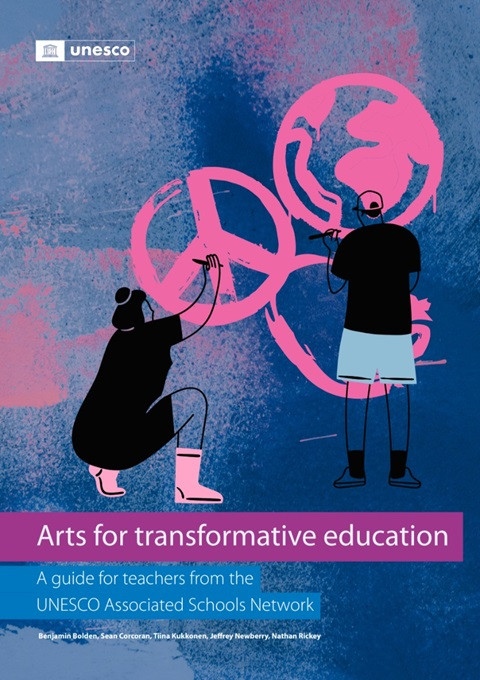 Arts for Transformative Education: A Guide for Teachers from the UNESCO Associated Schools Network Année de publication: 2024 Auteur: Benjamin Bolden | Sean Corcoran | Tiina Kukkonen | Jeffrey Newberry | Nathan Rickey Auteur institutionnel: UNESCO | Canadian Commission for UNESCO UNESCO’s vision of transformative education involves building learners’ capacities and empowering them to take action for a more peaceful and sustainable world. The arts offer tremendous potential for supporting learning that transforms individuals and communities. To fully realize that potential, teachers need to structure and support educational experiences that optimize what students will take away from them. This guide presents the research-informed Arts for Transformative Education model, a pioneering approach and thinking tool for teachers. The model was developed from data provided by over 600 teachers of the UNESCO Associated Schools network from 39 countries. The publication presents Learning Experience Descriptions and Snapshots illustrating how the model functions in real-world projects from around the globe, as well as Guidelines for Teachers outlining a step-by-step process for activating arts learning to empower transformative education.
 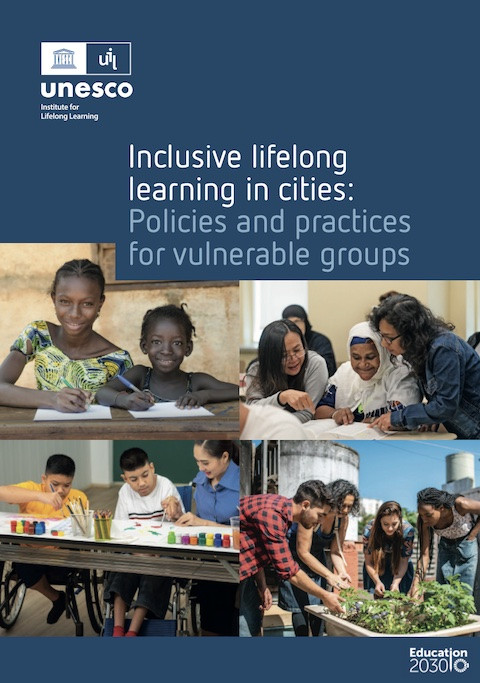 Inclusive Lifelong Learning in Cities: Policies and Practices for Vulnerable Groups Année de publication: 2021 Auteur institutionnel: UNESCO Institute for Lifelong Learning (UIL) This publication features chapters on learning cities’ endeavours to promote inclusive lifelong learning for vulnerable groups. It is based on research papers prepared for the fourth International Conference on Learning Cities, which took place in 2019 in Medellín, Colombia, under the theme ‘Inclusion – A principle for lifelong learning and sustainable cities’ and hence marks a transition between the learning city conferences of 2019 and 2021.
  From Emergency to Resilience: Building Healthy and Resilient Cities Through Learning; Fifth International Conference on Learning Cities, Yeonsu, Republic of Korea, 27 to 30 October 2021 Année de publication: 2022 Auteur institutionnel: UNESCO Institute for Lifelong Learning (UIL) Responding to and recovering from the COVID-19 pandemic remains an enormous challenge for cities worldwide. Lifelong learning lays the foundation for healthy and resilient cities. Hence, these municipalities are working hard to promote learning for health, and to build long-term resilience among their local populations so that they can deal both with the pandemic and with future emergencies, including those caused by climate change.The fifth International Conference on Learning Cities (ICLC 5) was hosted by UIL in collaboration with Yeonsu City, Republic of Korea, and took place from 27 to 30 October 2021. Entitled ‘From emergency to resilience: Building healthy and resilient cities through learning’, the conference attracted over 2,000 participants, who attended either online or in-person. This was an opportunity for cities to come together and share their responses to the COvID-19 pandemic.