
Ressources
Explorez une large gamme de ressources sur le GCED afin d’approfondir votre compréhension et de renforcer vos activités de recherche, de plaidoyer, d’enseignement et d’apprentissage.
3,385 résultats trouvés
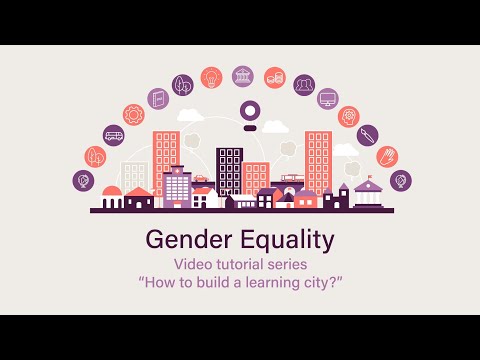 How to Build a Learning City? Make Gender Equality a Priority Année de publication: 2020 Auteur institutionnel: UNESCO Institute for Lifelong Learning (UIL) This video tutorial explains how gender equality must be prioritized in learning cities to empower women through learning, eliminate gender-based discrimination and foster equitable, inclusive, resilient and sustainable cities. Comment créer une ville apprenante: Égalité des genres Année de publication: 2020 Auteur institutionnel: Institut de l’UNESCO pour l’apprentissage tout au long de la vie (UIL) Ce tutoriel vidéo explique comment développer une compréhension commune de l’égalité des genres dans l'éducation et l'apprentissage, identifier les défis que rencontre la ville apprenante, impliquer les parties prenantes concernées, renforcer les capacités et encourager une programmation inclusive, consolider les politiques d'éducation et d'apprentissage, mener des recherches et sensibiliser.
 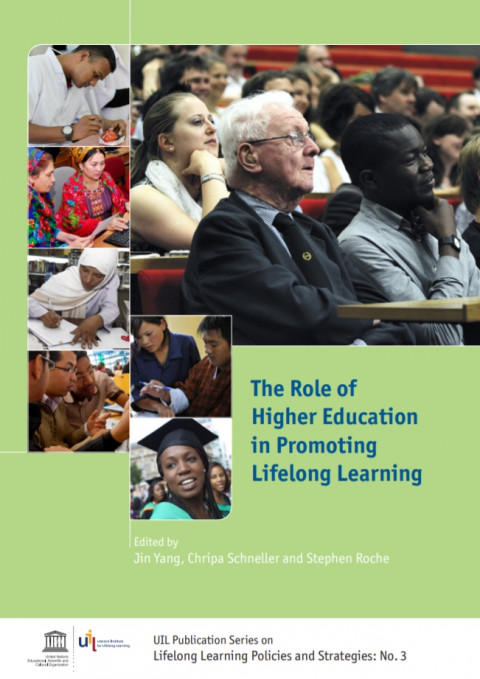 The Role of Higher Education in Promoting Lifelong Learning Année de publication: 2015 Auteur: Yang Jin, Schneller.Chripa, Roche.Stephen Auteur institutionnel: UNESCO Institute for Lifelong Learning (UIL) UNESCO’s vision of lifelong learning encompasses all contexts (formal, non-formal and informal) and ages (‘from cradle to grave’) of learning. The UNESCO Institute for Lifelong Learning and its predecessor, the UNESCO Institute for Education, have promoted policy and practice in this field for more than four decades. The decision to produce this volume was prompted by an observation that lifelong learning – both as a concept and in its many practical manifestations – is becoming a staple of education policy discourse around the globe. At the same time, we noted that understandings of lifelong learning differ widely, not only between countries, but also across the sub-sectors of education systems.This book, which emerged from a seminar held in 2012 to mark the 60th anniversary of the UNESCO Institute for Lifelong Learning, addresses various ways that higher education can promote lifelong learning, paying due consideration to regional disparities and specificities. These include responses to the learning needs of senior citizens in China, the challenge of implementing recurrent education in Japan, European efforts to develop a common approach to life-long learning at university, and how a lifelong learning approach is put into practice in higher education in Australia. It is hoped that this book will help the reader gain a better understanding of the theoretical frameworks and practical implementation of lifelong learning in higher education, both within their own region and globally.
  CONFINTEA VI Mid-Term Review 2017: The Status of Adult Learning and Education in Sub-Saharan Africa; Regional Report Année de publication: 2017 Auteur: John Aitchison Auteur institutionnel: UNESCO Institute for Lifelong Learning (UIL) The Sustainable Development Goals include educational targets which are entirely congruent with the existing focuses of ALE in African countries – to ‘ensure that all youth and a substantial proportion of adults, both men and women, achieve literacy and numeracy’ (4.6), to ‘substantially increase the number of youth and adults who have relevant skills, including technical and vocational skills, for employment, decent jobs and entrepreneurship’ (4.4) and to ‘ensure that all learners acquire the knowledge and skills needed to promote sustainable development, including, among others, through education for sustainable development and sustainable lifestyles, human rights, gender equality, promotion of a culture of peace and non-violence, global citizenship and appreciation of cultural diversity and of culture’s contribution to sustainable development’ (4.7). National targets and the criteria for success in reaching those targets will need to be developed. Undoubtedly, international cooperation and international support can help this gearing-up process.
  CONFINTEA VI Mid-term Review 2017: The Status of Adult Learning and Education in Asia and the Pacific; Regional Report Année de publication: 2017 Auteur: Govinda, Rangachar Auteur institutionnel: UNESCO Institute for Lifelong Learning (UIL) Adult learning and education policies and practices should be closely aligned with developments in school education. A quick survey of the state of education in the region reveals that significant progress has been made in providing basic education to all children. However, the achievements are noticeably uneven across sub-regions. For example, around 16 million primary-school-aged children and around 34 million lower-secondary-aged adolescents in the Asia-Pacific region are not in school; two-thirds of these are in South Asia (UIS, 2015). Outof-school children are an important concern as, barring special intervention, they are likely to remain non-literate as they grow into adulthood.
 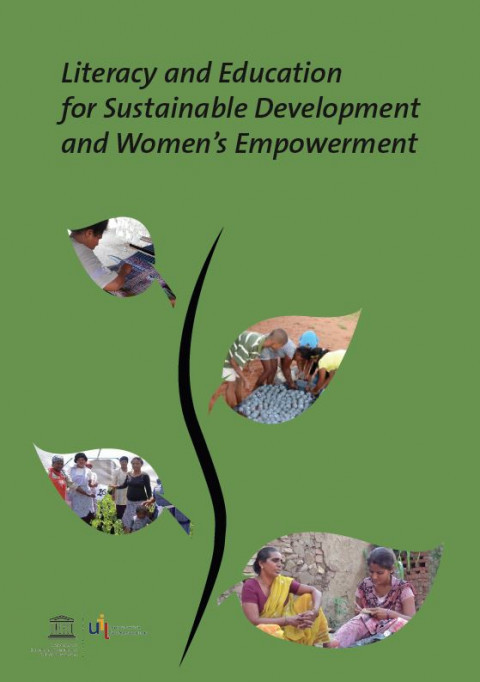 Literacy and education for sustainable development and women's empowerment Année de publication: 2014 Auteur: Anna Robinson-Pant Auteur institutionnel: UNESCO Institute for Lifelong Learning (UIL) The fact that women constitute two-thirds of the world’s non-literate population has been a cause for concern for several decades now. Despite a number of high-profile literacy interventions specifically targeting women – including UNESCO’s LIFE initiative – the disparity between male and female literacy rates persists in many countries of the world (UIL, 2013). This starting point for thinking about women’s literacy has however often led to a narrow focus on literacy access and outcomes. Whilst educational policy makers and planners have attempted to identify and overcome barriers to women’s participation, researchers have directed their attention to measuring the social and economic benefits of women’s literacy (see Robinson-Pant, 2004). Statistical correlations have been presented as evidence of the impact of women’s literacy: for instance, in Pakistan, women with a high level of literacy earned 95% more than women with no literacy skills yet there was only a 33% differential amongst men (UNESCO 2012: 196).Barriers to participation have been analysed in terms of structural (timing, location, women-only versus mixed gender) and social (marriage, poverty, language hierarchies) factors (see Ballara 1991). Within such analysis however, little attention has been given to the social processes associated with literacy learning and development. By contrast, this paper sets out to take a wider lens on literacy in order to explore not only ‘what works’ in practical terms of encouraging women to participate programmes, but also to look at how and why literacy programmes can contribute to sustainable development and processes of empowerment. Taking this perspective on women’s literacy involves asking alternative questions from the more usual ‘how can we make more women literate?’ Approaching literacy through the lens of sustainable development and women’s empowerment means that we develop a more nuanced understanding of how different kinds of literacy emerge from or support different development approaches and how women engage with such processes of change.How is literacy related to sustainable development programmes? What does empowerment mean to different women in different situations? What kind of research evidence and knowledge are literacy programmes and policy building on? How can adult learning facilitate economic, social and environmental change? These larger questions will guide the conceptual exploration of sustainable development, women’s empowerment and literacy, as well as the review of literacy programmes presented in this paper. The starting assumption is that only by looking in depth at the processes of literacy learning and development practice can we begin to address the challenge of narrowing the gender gap in literacy attainment.
  Literacy and the Promotion of Citizenship: discourses and effective practices Année de publication: 2008 Auteur institutionnel: UNESCO Institute for Lifelong Learning (UIL) The UNESCO Institute for Lifelong Learning and its partners, the Agence Nationale de Lutte Contre L’Illettrisme (ANLCI) and the UNESCO French National Commission, organized a Regional Meeting on “Literacy and the Promotion of Citizenship: The Challenge of Learning” from 2-5 April 2005 in Lyon, France. Participants from 38 countries of what UNESCO considers to be the European Region (i.e. Europe, Canada, Israel and the United States of America) reviewed pertinent policies and shared good practices.By focusing on the theme of citizenship, the meeting sought to establish a link between literacy and the empowerment of citizens. This publication brings together the main presentations from that meeting, and as such documents the diversity of literacy-related thinking and practice in the region.
 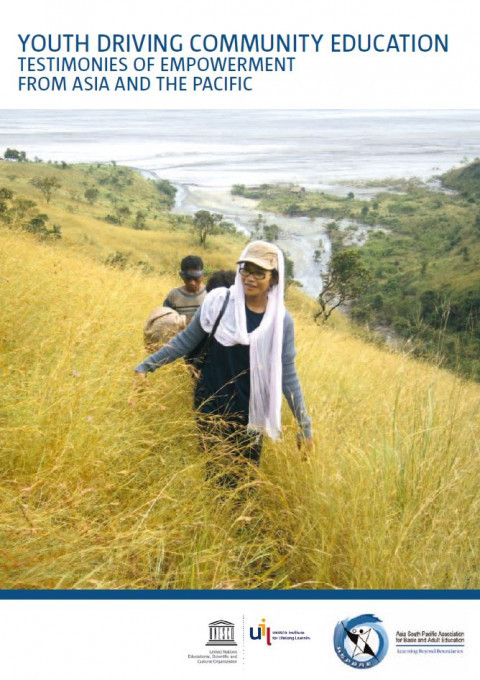 Youth Driving Community Education: Testimonies of Empowerment from Asia and the Pacific Année de publication: 2014 Auteur institutionnel: UNESCO Institute for Lifelong Learning (UIL) | Asia South Pacific Association for Basic and Adult Education (ASPBAE) This publication presents a collection of testimonies from young women and men from vulnerable backgrounds who have transformed their lives through community education and development activities. Their testimonies describe the challenges they faced in pursuing an education, how they benefited from community education programmes, and the active roles they now play in community education and development.The publication will meet its objectives if it inspires young people and their partners to take action to:> Improve educational and learning environments for young men and women;> Improve the participation of young women in community building and democratic processes; and> Engage young men and women as active citizens working towards peace, democracy and sustainable development.
  Alfabetización para el desarrollo sostenible y el empoderamiento de las mujeres Année de publication: 2014 Auteur: Anna Robinson-Pant Auteur institutionnel: UNESCO Institute for Lifelong Learning (UIL) The fact that women constitute two-thirds of the world’s non-literate population has been a cause for concern for several decades now. Despite a number of high-profile literacy interventions specifically targeting women – including UNESCO’s LIFE initiative – the disparity between male and female literacy rates persists in many countries of the world (UIL, 2013). This starting point for thinking about women’s literacy has however often led to a narrow focus on literacy access and outcomes. Whilst educational policy makers and planners have attempted to identify and overcome barriers to women’s participation, researchers have directed their attention to measuring the social and economic benefits of women’s literacy (see Robinson-Pant, 2004). Statistical correlations have been presented as evidence of the impact of women’s literacy: for instance, in Pakistan, women with a high level of literacy earned 95% more than women with no literacy skills yet there was only a 33% differential amongst men (UNESCO 2012: 196). Barriers to participation have been analysed in terms of structural (timing, location, women-only versus mixed gender) and social (marriage, poverty, language hierarchies) factors (see Ballara 1991). Within such analysis however, little attention has been given to the social processes associated with literacy learning and development. By contrast, this paper sets out to take a wider lens on literacy in order to explore not only ‘what works’ in practical terms of encouraging women to participate programmes, but also to look at how and why literacy programmes can contribute to sustainable development and processes of empowerment. Taking this perspective on women’s literacy involves asking alternative questions from the more usual ‘how can we make more women literate?’ Approaching literacy through the lens of sustainable development and women’s empowerment means that we develop a more nuanced understanding of how different kinds of literacy emerge from or support different development approaches and how women engage with such processes of change. How is literacy related to sustainable development programmes? What does empowerment mean to different women in different situations? What kind of research evidence and knowledge are literacy programmes and policy building on? How can adult learning facilitate economic, social and environmental change? These larger questions will guide the conceptual exploration of sustainable development, women’s empowerment and literacy, as well as the review of literacy programmes presented in this paper. The starting assumption is that only by looking in depth at the processes of literacy learning and development practice can we begin to address the challenge of narrowing the gender gap in literacy attainment. Alphabétisation et éducation pour le développement durable et l'autonomisation des femmes Année de publication: 2014 Auteur: Anna Robinson-Pant Auteur institutionnel: Institut de l’UNESCO pour l’apprentissage tout au long de la vie (UIL) The fact that women constitute two-thirds of the world’s non-literate population has been a cause for concern for several decades now. Despite a number of high-profile literacy interventions specifically targeting women – including UNESCO’s LIFE initiative – the disparity between male and female literacy rates persists in many countries of the world (UIL, 2013). This starting point for thinking about women’s literacy has however often led to a narrow focus on literacy access and outcomes. Whilst educational policy makers and planners have attempted to identify and overcome barriers to women’s participation, researchers have directed their attention to measuring the social and economic benefits of women’s literacy (see Robinson-Pant, 2004). Statistical correlations have been presented as evidence of the impact of women’s literacy: for instance, in Pakistan, women with a high level of literacy earned 95% more than women with no literacy skills yet there was only a 33% differential amongst men (UNESCO 2012: 196). Barriers to participation have been analysed in terms of structural (timing, location, women-only versus mixed gender) and social (marriage, poverty, language hierarchies) factors (see Ballara 1991). Within such analysis however, little attention has been given to the social processes associated with literacy learning and development. By contrast, this paper sets out to take a wider lens on literacy in order to explore not only ‘what works’ in practical terms of encouraging women to participate programmes, but also to look at how and why literacy programmes can contribute to sustainable development and processes of empowerment. Taking this perspective on women’s literacy involves asking alternative questions from the more usual ‘how can we make more women literate?’ Approaching literacy through the lens of sustainable development and women’s empowerment means that we develop a more nuanced understanding of how different kinds of literacy emerge from or support different development approaches and how women engage with such processes of change. How is literacy related to sustainable development programmes? What does empowerment mean to different women in different situations? What kind of research evidence and knowledge are literacy programmes and policy building on? How can adult learning facilitate economic, social and environmental change? These larger questions will guide the conceptual exploration of sustainable development, women’s empowerment and literacy, as well as the review of literacy programmes presented in this paper. The starting assumption is that only by looking in depth at the processes of literacy learning and development practice can we begin to address the challenge of narrowing the gender gap in literacy attainment.