
Ressources
Explorez une large gamme de ressources sur le GCED afin d’approfondir votre compréhension et de renforcer vos activités de recherche, de plaidoyer, d’enseignement et d’apprentissage.
1,322 résultats trouvés
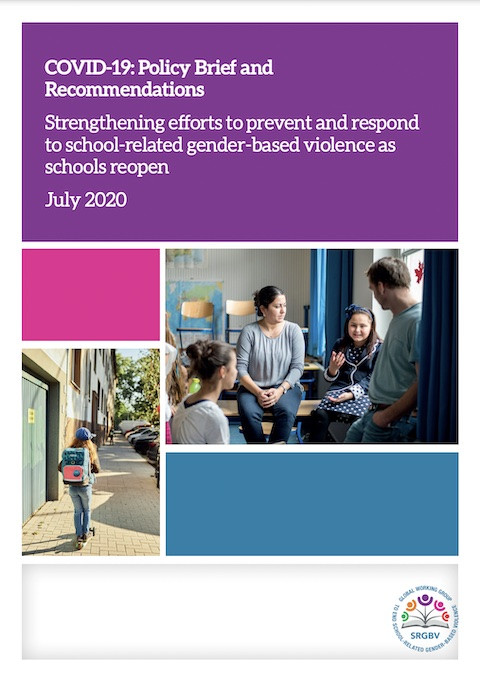 COVID-19: Policy Brief and Recommendations; Strengthening Efforts to Prevent and Respond to School-Related Gender-Based Violence as Schools Reopen Année de publication: 2020 Auteur institutionnel: United Nations Girls' Education Initiative (UNGEI) This policy brief is targeted at policymakers and practitioners working in gender, education and child protection fields. It draws from emerging evidence on the gendered implications of COVID-19 on violence as well as research from previous health emergencies regarding the impacts of school closures on gender-based violence. Working on the principle of ‘Build Back Better’, this brief may be used to advocate for improved attention to school- related gender-based violence (SRGBV).
 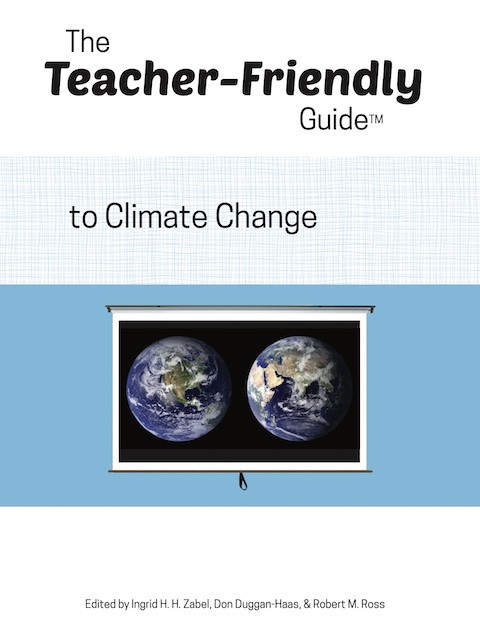 The Teacher-Friendly Guide to Climate Change Année de publication: 2017 Auteur: Ingrid H. H. Zabel | Don Duggan-Haas | Robert M. Ross Auteur institutionnel: Paleontological Research Institution This book includes both the basics of climate change science and perspectives on teaching a subject that has become socially and politically polarized. The focus audience is high school Earth science and environmental science teachers, and it is written with an eye toward the kind of information and graphics that a secondary school teacher might need in the classroom. It is the tenth book in our Teacher-Friendly Guide series.
 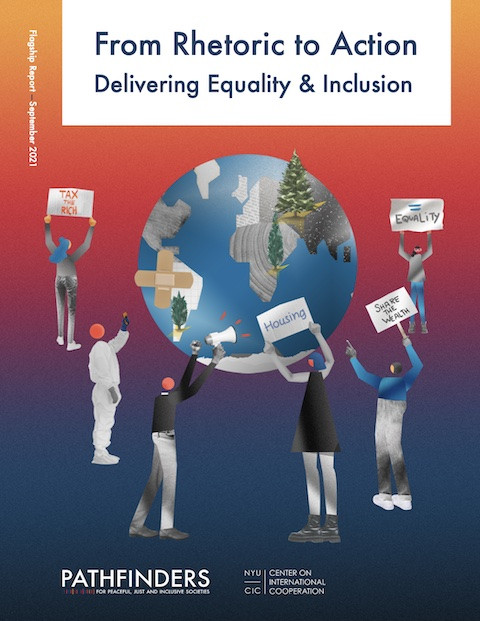 From Rhetoric to Action: Delivering Equality & Inclusion Année de publication: 2021 Auteur: Faiza Shaheen | Alexander Bossakov | Avner Cohen | Amanda Lenhardt | Nendirmwa Noel | Paula Sevilla Núñez | Paul von Chamier Auteur institutionnel: Pathfinders for Peaceful, Just and Inclusive Societies, NYU. Center on International Cooperation This flagship report of the Pathfinders Grand Challenge on Inequality and Exclusion is about the solutions that will deliver equality and inclusion.The report constructs a bridge between the rhetoric of “build back better” and action: a bridge between promise and progress. It underlines the need for renewed social contracts between citizens, civil society, the private sector, and governments, as well as between high and low- and middle-income countries. These social contracts must be built to serve future generations, to guard against climate breakdown and pandemics while delivering respect, opportunity, and justice for all.This report should serve as a practical handbook for policymakers and influencers; as a source of possibility for the public; and, as a call to all political leaders to act.
  ARC8 Outlook Report 2030: Inclusive and Diverse Higher Education in Asia and Europe Année de publication: 2021 Auteur institutionnel: Asia-Europe Foundation (ASEF) The ARC8 Outlook Report 2030 on ʻInclusive and Diverse Higher Education in Asia and Europe’ was initiated with the objective of better understanding the current state, policies and practices of inclusion in higher education and identifying actions that could accelerate greater inclusion in a post-pandemic era.The ARC8 Outlook Report outlines emerging issues that could grow into major challenges and/ or opportunities in the coming 10 years related to inclusion in higher education. Inputs for the report came from an in-depth consultation process and from previous research done by Asian and European stakeholders. The Report consists of 4 chapters which analyse the future of inclusion from different perspectives: Inclusive Learning and Teaching in a Digital World Inclusive and Flexible Lifelong Learning Pathways Inclusive International Mobility of People and Knowledge Equitable Access and Success in Higher Education
 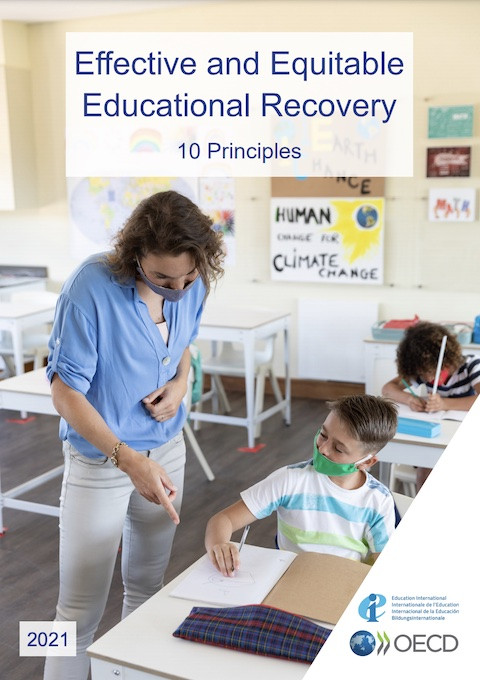 Effective and Equitable Educational Recovery: 10 Principles Année de publication: 2021 Auteur institutionnel: Education International (EI) | Organisation for Economic Co-operation and Development (OECD) The COVID-19 pandemic has led to the frequent closure of school buildings in most countries in the world and has interrupted the school attendance of at least 1.2 billion students in 2020 and 2021. Although many education systems have been able to adapt in varying degrees, the pandemic has shown that countries’ current learning infrastructures are highly vulnerable to external shocks.While schools have shown great resilience in trying to compensate for the crisis, they need to be better prepared for similar challenges. Education systems must ensure the continuity of learning which must be the centrepiece of all considerations.Acknowledging the disruption that the health crisis has brought about and its likely impact on educational quality and equity, the OECD Secretariat and Education International have, based on their respective work during the pandemic, jointly established 10 principles that can facilitate the collaboration of education authorities, the teaching profession and their organisations to navigate the crisis effectively and reshape education systems after the pandemic to reach greater levels of educational quality and equity.Education systems around the world have been facing similar challenges but generated diverse approaches and experiences. The intention is also for these principles to contribute to a framework for international cooperation and peer learning.
 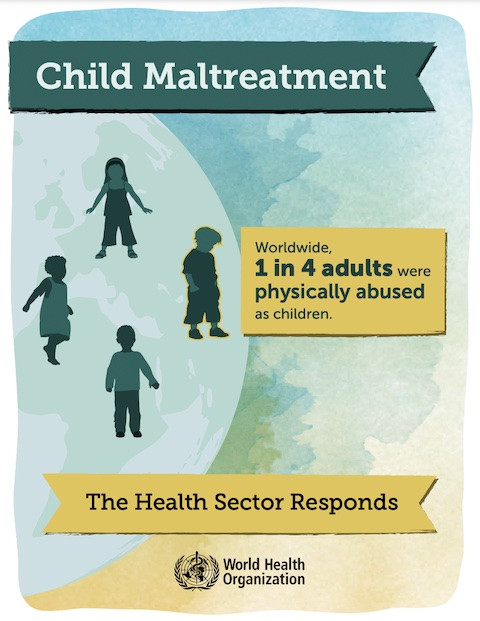 Child Abuse: The Health Sector Responds Année de publication: 2017 Auteur institutionnel: World Health Organization (WHO) This document presents a review on child abuse, which is presented in five ways, physical, sexual, psychological and neglect, each causing adverse effects on the health of children. Child abuse is widespread worldwide. It has immediate and long-term effects that can last a lifetime. It presents the factors involved in child abuse, as well as the strategies that can help prevent it. Maltrato infantil: El sector de la salud responde Année de publication: 2017 Auteur institutionnel: World Health Organization (WHO) Este documento presenta un revisión sobre el matrato infantil, el cual se presenta de cinco maneras, físico, sexual, psicológico y negligencia, cada uno provocando efectos adversos para salud de los niños. El maltratro infantil se encuentra muy extendido a nivel mundial. Tiene efectos inmediatos y de largo plazo que pueden durar toda la vida. Presenta los factores que se involucran en el maltrato infanti,así como las estrategias que pueden ayudar a prevenirlo.
 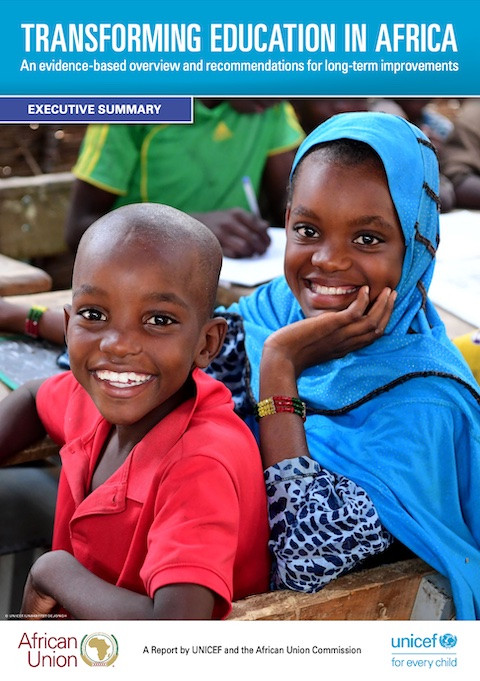 [Summary] Transforming Education in Africa: An Evidence-Based Overview and Recommendations for Long-Term Improvements Année de publication: 2021 Auteur: Nicolas Reuge | Lukman Olawale Jaji | Nicholas Ouma | Adoumtar Noubatour | Hambani Masheleni | Noguebzanga Jean Luc Yameogo | Achila Imchen | Alassane Ouedraogo | Beifith Kouak Tiyab | Yacouba Djibo Abdou | Erin Euiryeong Jeong Auteur institutionnel: United Nations Children's Fund (UNICEF) | African Union Commission This report is the result of a successful collaboration between UNICEF and the African Union Commission. The report intends to contribute to the facilitation of high-level policy discussions between national education authorities, regional and continental bodies on possible strategic shifts and interventions to boost access to education and improve the quality of teaching and learning in Africa. The report provides evidence-based analysis of the situation of education in Africa while putting into perspective the Sustainable Development Goals and the objectives of the Continental Education Strategy for Africa (CESA 16–25) in line with the African Union Agenda 2063. It highlights the progress made in the continent’s education sector over the past decade (2010–2020) while pointing out the challenges that remain, particularly in the area of equity. [Résumé] Transformer l’éducation en afrique: Un aperçu base sur des données probantes et des recommandations pour des améliorations à long terme Année de publication: 2021 Auteur: Nicolas Reuge | Lukman Olawale Jaji | Nicholas Ouma | Adoumtar Noubatour | Hambani Masheleni | Noguebzanga Jean Luc Yameogo | Achila Imchen | Alassane Ouedraogo | Beifith Kouak Tiyab | Yacouba Djibo Abdou | Erin Euiryeong Jeong Auteur institutionnel: United Nations Children's Fund (UNICEF) | African Union Commission Le présent rapport est le fruit d’une collaboration entre l’UNICEF et la Commission de l’Union africaine. Il entend contribuer à faciliter la tenue de débats politiques de haut niveau entre les autorités nationales chargées de l’éducation et les organismes régionaux et continentaux dans l’optique de déterminer les interventions et les changements stratégiques envisageables pour améliorer l’accès à l’éducation et la qualité de l’enseignement et de l’apprentissage en Afrique. Le rapport présente une analyse fondée sur des données probantes de la situation de l’éducation en Afrique, en mettant en perspective les objectifs de développement durable ainsi que les objectifs de la Stratégie continentale de l’éducation pour l’Afrique (CESA 2016-2025) conformes à l’Agenda 2063 de l’Union africaine. Il souligne les progrès accomplis sur le continent dans le secteur de l’éducation au cours de la dernière décennie (2010-2020) et met en évidence les défis qui restent à relever, notamment en matière d’équité.
 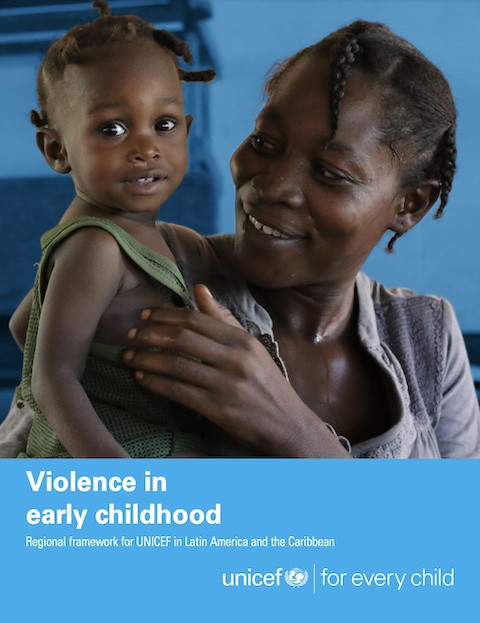 Violence in Early Childhood Année de publication: 2017 Auteur: Cecilie Modovar | Maria Elena Ubeda Auteur institutionnel: United Nations Children's Fund (UNICEF) It presents a comprehensive, multi-sectorial framework that aims to provide guidance to UNICEF country offices on how to improve programme interventions and synergies between programme areas in order to enhance young children’s development potential by reducing their exposure to violence. While early childhood is understood as the period from conception until age 8, the framework emphasizes the critical period from age 0-3.