
Ressources
Explorez une large gamme de ressources sur le GCED afin d’approfondir votre compréhension et de renforcer vos activités de recherche, de plaidoyer, d’enseignement et d’apprentissage.
3,435 résultats trouvés
 ПЕРЕОСМЫСЛИМ НАШЕ БУДУЩЕЕ Année de publication: 2021 Auteur institutionnel: International Commission on the Futures of Education | UNESCO Наше человечество, наша планета находятся в опасности, пандемия лишь подтвердила нашу хрупкость и взаимозависимость, чтобы изменить ход вещей и переосмыслить наше будущее, необходимы неотложные совместные действия; в этом докладе Международной комиссии по перспективам образования подтверждается способность образования к осуществлению коренных изменений. Перед нами стоит двойная задача – выполнить невыполненное обещание обеспечить право на качественное образование для каждого ребёнка, молодого человека и взрослого и полностью реализовать преобразующий потенциал образования, способного проложить путь к устойчивому коллективному будущему. Для этого нам нужен новый общественный договор в области образования, который сможет устранять проявления несправедливости, преобразуя будущее.Этот новый общественный договор должен основываться на принципах прав человека, недопущения дискриминации, социальной справедливости, уважения жизни, человеческого достоинства и культурного разнообразия. Он должен включать в себя этику заботы о людях, взаимности и солидарности. Он должен укреплять позиции образования как общественного дела и общего блага.Этот доклад, который готовился два года на основе глобального процесса консультаций с участием миллиона человек, предлагает правительствам, учреждениям, организациям и гражданам всего мира разработать новый общественный договор в области образования, который поможет нам построить мирное, справедливое и устойчивое будущее, отвечающее всеобщим интересам.Представленные здесь концепции, принципы и предложения являются лишь отправной точкой. Их воплощение в практику в конкретных условиях – это коллективная работа. Уже есть много положительных моментов, и в настоящем докладе предпринята попытка их отразить и развить. Это не инструкция и не план, а начало жизненно важного разговора.
  Metodología de evaluación del estadio de preparación: una herramienta de la Recomendación sobre la Ética de la Inteligencia Artificial Année de publication: 2023 Auteur institutionnel: UNESCO En noviembre de 2021, los 193 Estados Miembros de la UNESCO aprobaron la Recomendación sobre la Ética de la Inteligencia Artificial, primer instrumento normativo mundial en este ámbito. Esta Recomendación constituye un marco completo y práctico para el desarrollo y el uso éticos de la IA, abarcando todo el espectro de los derechos humanos. Para ello, toma en cuenta todas las etapas del ciclo de vida de los sistemas de IA. Más allá de elaborar los valores y principios que deben guiar el diseño, desarrollo y uso ético de la inteligencia artificial, la recomendación establece las acciones requeridas por los Estados miembros para garantizar el cumplimiento de dichos valores y principios, a través de la promoción de una regulación efectiva y la provisión de recomendaciones en varias áreas políticas esenciales, como el género, el medio ambiente y la comunicación e información. Teniendo en cuenta estos valores, principios y ámbitos políticos, la Secretaría de la UNESCO elaboró un programa para la aplicación de la Recomendación, con el objetivo principal de crear capacidades nacionales para llevar a cabo las actuaciones definidas en la Recomendación y reforzar los marcos regulatorios. Las recomendaciones exigieron el desarrollo de las herramientas clave: la Metodología de Evaluación del Estadio de Preparación (RAM, por sus siglas en inglés) y la Evaluación de Impacto Ético (EIA, por sus siglas en inglés), que constituyen los pilares fundamentales de la implementación. Estas herramientas tienen como objeto evaluar y promover la resistencia de las leyes, las políticas y las instituciones existentes para a la aplicación de la IA en el país, así como la conformidad de los sistemas de inteligencia artificial con los valores y principios establecidos en la Recomendación. El presente documento tiene por objeto proporcionar más información acerca de la metodología de evaluación del estadio de preparación, exponer sus diversas dimensiones y detallar el plan de trabajo para los países implementadores, incluyendo el tipo de entidades que deben participar, las responsabilidades de cada una de ellas y la división del trabajo entre la UNESCO y el país ejecutante. Méthode d’évaluation de l’état de préparation : un outil de la Recommandation sur l’éthique de l’intelligence artificielle Année de publication: 2023 Auteur institutionnel: Organisation des Nations Unies pour l'éducation, la science et la culture (UNESCO) En novembre 2021, les 193 États membres de l’UNESCO ont signé la Recommandation sur l’éthique de l’intelligence artificielle, premier instrument normatif de portée internationale consacré à cette question. La Recommandation établit un cadre opérationnel complet et fondé sur l’ensemble des droits de l’homme en vue du développement et de l’utilisation éthiques de l’IA. Elle accorde à cette fin une attention particulière à tous les stades du cycle de vie du système de l’IA. Au-delà de l'élaboration des valeurs et des principes qui devraient guider la conception, le développement et l'utilisation éthiques de l'IA, la Recommandation indique aux États membres les mesures à prendre pour garantir le respect de ces valeurs et principes en préconisant une réglementation efficace et en formulant des recommandations dans divers domaines stratégiques clés tels que le genre, l’environnement, la communication et l’information. Guidé par ces valeurs, principes et domaines stratégiques, le Secrétariat de l’UNESCO a conçu un programme de mise en œuvre de la Recommandation en s’attachant avant tout à renforcer les capacités nationales nécessaires pour donner suite aux mesures énoncées dans la Recommandation et renforcer les cadres réglementaires. Les Recommandation demande le développement de deux outils clés qui sont les principaux fondements sur lesquels repose la mise en œuvre : la méthode d’évaluation de l’état de préparation et l’évaluation de l’impact éthique. Ces outils visent tous deux à évaluer et à renforcer la résilience des lois, politiques et institutions en vigueur en vue de la mise en œuvre de l’IA dans le pays mais aussi à rendre les systèmes d’IA conformes aux valeurs et aux principes énoncés dans la Recommandation. Ce document a pour objet d’expliquer plus clairement la méthode d’évaluation de l’état de préparation, de présenter ses différentes dimensions et d’exposer en détail le plan de travail à l’intention des pays concernés, en précisant notamment le type d’entités appelées à intervenir, les responsabilités de chacune d’entre elles et le partage des tâches entre l’UNESCO et les pays participants.
  Ethical Impact Assessment: A Tool of the Recommendation on the Ethics of Artificial Intelligence Année de publication: 2023 Auteur institutionnel: UNESCO As stated in article 50 of UNESCO’s Recommendation on the Ethics of Artificial Intelligence (UNESCO, 2021), the goal of this instrument is to “identify and assess benefits, concerns and risks of AI systems, as well as appropriate risk prevention, mitigation, redressal and monitoring measures, among other assurance mechanisms. Such assessments should identify the impacts on human rights and fundamental freedoms, in particular but not limited to the rights of people in vulnerable and precarious situations, labour rights, the environment and ecosystems and ethical and social implications, and facilitate citizen participation in line with the values and principles set forth in this Recommendation”. This instrument is primarily designed to help government officials (individuals and teams) involved in the procurement of AI systems. The goal of the methodology is to equip procurement officers with the set of questions to ask in order to ensure that the AI systems they are purchasing are aligned with the ethical standards set out in the UNESCO Recommendation on the Ethics of AI.
  لتوصية الخاصة بأخلاقيات الذكاء الاصطناعي Année de publication: 2022 Auteur institutionnel: UNESCO تتناول هذه التوصية ما يندرج في نطاق مهمة اليونسكو من القضايا األخالقية المتعلقة بمجال الذكاء االصطناعي. ً ً معياريا وتبحث التوصية أخالقيات الذكاء االصطناعي بحثا ً يقوم على إطار كلي شامل ومتعدد الثقافات ومتغير منهجيا ِلقيم ومبادئ وإجراءات مترابطة يمكن أن ترشد المجتمعات فيما يخص التصدي بطريقة مسؤولة للعواقب المعروفة وغير المعروفة لوسائل تكنولوجيا الذكاء االصطناعي على البشر والمجتمعات البشرية، وكذلك على البيئة والنُظم اإليكولوجية؛ وترسي التوصية بالتالي األسس الالزمة التي يستطيع البشر االستناد إليها للحكم على وسائل تكنولوجيا الذكاء االصطناعي وقبولها أو رفضها. وتعتبر ً مرنة للتقييم المعياري والتوجيه ُسسا التوصية األخالقيات أ المعياري لوسائل تكنولوجيا الذكاء االصطناعي، وتستند إلى وجوب صون كرامة اإلنسان ووجوب ضمان السالمة والرفاهية ووجوب درء الضرر باعتبارها البوصلة التي يجب االسترشاد بها، وباعتبارها مبادئ راسخة في أخالقيات العلوم والتكنولوجيا.
 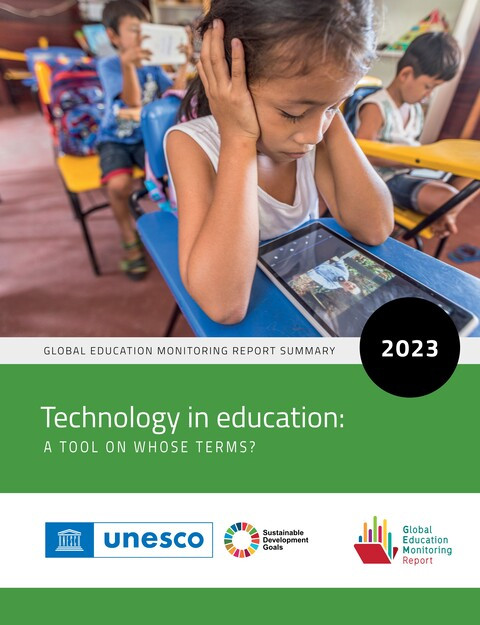 [Résumé] Résumé du rapport mondial de suivi sur l’éducation 2023 : les technologies dans l’éducation; qui est aux commandes? Année de publication: 2023 Auteur institutionnel: UNESCO | Global Education Monitoring Report Team Le rôle de la technologie dans l’éducation suscite depuis longtemps un débat intense. Est-ce qu’elle démocratise le savoir ou menace la démocratie en permettant à quelques-uns de contrôler l’information? Offre-t-elle des opportunités sans limite ou mène-t-elle vers un avenir dépendant de la technologie sans retour en arrière possible ? Est-ce qu’elle égalise les chances ou aggrave les inégalités? Devrait-elle être utilisée pour enseigner aux jeunes enfants ou présente-t-elle des risques pour leur développement? Ce débat a été alimenté par les fermetures d’écoles dues à la COVID-19 et l’émergence de l’intelligence artificielle générative. Mais comme les développeurs sont souvent en avance sur les décideurs, la recherche sur la technologie éducative est complexe. Les preuves solides et impartiales sont rares. Les sociétés posent-elles même les bonnes questions sur l’éducation avant de se tourner vers la technologie comme solution? Reconnaissent-elles ses risques tout en cherchant ses avantages? Les technologies de l’information et de la communication ont le potentiel de favoriser l’équité et l’inclusion en permettant d’atteindre les apprenants défavorisés et de diffuser plus de connaissances dans des formats attrayants et abordables. Dans certains contextes et pour certains types d’apprentissage, elles peuvent améliorer la qualité de l’enseignement et l’apprentissage des compétences de base. De toute évidence, les compétences numériques font désormais partie des compétences de base. La technologie numérique peut également soutenir la gestion et accroître l’efficacité en aidant à traiter de plus grands volumes de données éducatives. Mais la technologie peut également exclure, être inappropriée et pesante, voire carrément nuisible. Les gouvernements doivent veiller à créer les bonnes conditions pour assurer un accès équitable à l’éducation pour tous, réguler l’utilisation de la technologie afin de protéger les apprenants de ses influences négatives, et former les enseignants. Ce rapport recommande que la technologie soit introduite dans l’éducation sur la base de preuves montrant qu’elle serait appropriée, équitable, évolutive et durable. En d’autres termes, son utilisation devrait être dans l’intérêt des apprenants et compléter l’interaction en face-à-face avec les enseignants. Elle devrait être considérée comme un outil à utiliser dans ces conditions. À mi-parcours de l’échéance, le Rapport mondial de suivi sur l'éducation 2023 évalue la distance qu’il reste à parcourir pour atteindre les objectifs éducatifs de 2030. L’éducation est la clé pour débloquer la réalisation d’autres objectifs de développement, notamment le progrès technologique.
  نحو عقد اجتماعي جديد للتربية والتعليم: الأخذ بترابط العلاقات نموذجاً فكرياً Année de publication: 2023 Auteur: Elena Toukan Auteur institutionnel: UNESCO إىل إبرام »عقد اجتماعي جديد للرتبية والتعليم« وذلك بمنظار تتناول هذه املقالة الدعوات الصادرة مؤخرا العالقات الوجودية بني البرش والكوكب الحي، وتفحص من خالل التحليل النقدي لنظرية العقد االجتماعي ً إىل إحداث تحول أعمق عىل مستوى النموذج الفكري عند تناول كيف يمكن أن توفر تلك الدعوات مدخال مسألة العدالة والتنظيم االجتماعي والتعليم بحد ذاته. وتقرتح املقالة التحول من نموذج املعامالت القائمة عىل قواعد محددة إىل نموذج قائم عىل العالقات يرتكز عىل إدراك عالقات الرتابط والتداخل وتقديرها حق ً للبرشية والكوكب، ال بد للعقد االجتماعي الجديد للرتبية ً واستدامة ً إىل بناء مستقبل أكثر عدال قدرها. وسعيا والتعليم من تجاوز الديناميات االجتماعية الفردية الذرية والقائمة عىل املعامالت والصدام، بل أن ينتظم حول ترابط العالقات املتشابكة. A New Social Contract for Education: Advancing a Paradigm of Relational Interconnectedness Année de publication: 2023 Auteur: Elena Toukan Auteur institutionnel: UNESCO This paper looks at recent calls for “a new social contract for education” through the lens of a relational ontology for humanity and a living planet. Through a critical view of social contract theory, the paper looks at how this call can be an entry point to a deeper paradigmatic shift in framing questions of justice, social organization, and education itself. It proposes a shift from a rules-based transactional model to a relationship-based model grounded in understanding and appreciation of interdependence and interconnectedness. In order to shape more just and sustainable futures for humanity and the planet, a new social contract for education will need to transcend atomistic, transactional, and adversarial social dynamics and instead be organized around relational interconnectedness. Un nuevo contrato social para la educación: promover un paradigma de interconexión relacional y los conocimientos Année de publication: 2023 Auteur: Elena Toukan Auteur institutionnel: UNESCO En el presente artículo se examinan los recientes llamamientos a “un nuevo contrato social para la educación” a través de la lente de una ontología relacional para la humanidad y un planeta vivo. Mediante una visión crítica de la teoría del contrato social, el artículo examina cómo este llamamiento puede ser un punto de partida hacia un cambio paradigmático más profundo a la hora de enmarcar cuestiones de justicia, organización social y la propia educación. Propone pasar de un modelo transaccional basado en normas a un modelo basado en relaciones y fundamentado en la comprensión y la apreciación de la interdependencia y la interconexión. Con miras a forjar futuros más justos y sostenibles para la humanidad y el planeta, el nuevo contrato social para la educación deberá trascender las dinámicas sociales atomistas, transaccionales y de confrontación y organizarse en torno a la interconexión relacional. Un nouveau contrat social pour l’éducation : promouvoir un paradigme d’interconnexion relationnelle Année de publication: 2023 Auteur: Elena Toukan Auteur institutionnel: UNESCO Le présent article examine les récents appels en faveur d’un « nouveau contrat social pour l’éducation » à travers le prisme d’une ontologie relationnelle au service de l’humanité et d’une planète vivante. Il se penche, en portant un regard critique sur la théorie du contrat social, sur la façon dont ces appels peuvent amorcer un changement de paradigme plus profond en ce qui concerne la façon d’aborder les questions de justice, d’organisation sociale et d’éducation. Il propose de passer d’un modèle transactionnel fondé sur les règles à un modèle relationnel qui repose sur la compréhension et la valorisation de l’interdépendance et de l’interconnexion. Afin de façonner des futurs plus justes et plus durables pour l’humanité et la planète, le nouveau contrat social pour l’éducation devra dépasser les dynamiques sociales atomistes, transactionnelles et antagonistes et se structurer autour de l’interconnexion relationnelle.