
Ressources
Explorez une large gamme de ressources sur le GCED afin d’approfondir votre compréhension et de renforcer vos activités de recherche, de plaidoyer, d’enseignement et d’apprentissage.
3,446 résultats trouvés
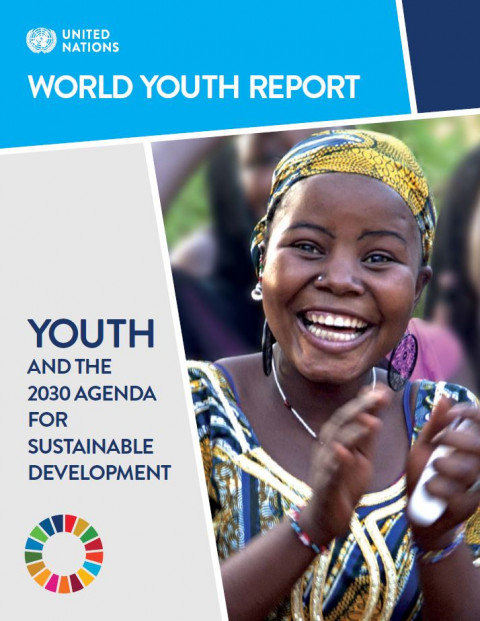 세계청소년보고서: 청소년과 2030 지속가능발전 의제 Année de publication: 2018 Auteur institutionnel: United Nations (UN) UN 경제사회국이 작성한 『세계청소년보고서: 청소년과 2030 지속가능발전 의제(World Youth Report: Youth and the 2030 Agenda for Sustainable Development)』는 청소년 개발에 대한 현재의 노력과 새로운 의제 간의 상호 보완적인 역할을 다루고 있습니다. UN 경제사회국은 경제, 사회 및 환경 분야 글로벌 정책과 국가적 실천 사이의 연결고리를 제공하고 있습니다. 2년마다 발간되는 본 보고서는 회원국 및 기타 이해관계자들이 청소년 문제 해결에 대한 진전 사항을 파악하고, 정책과 현실의 격차를 평가하고, 가능한 정책 대안을 마련하기 위한 정보와 분석 결과를 제공합니다.본 보고서는 2030 지속가능발전 의제 및 관련 프레임워크 이행의 맥락, 특히 제3차 개발재원총회 아디스아바바 행동의제 (Ababa Action Agenda of the Third International Conference on Financing for Development) 및 세계청소년행동계획 (World Programme of Action for Youth) 의 이행과 관련하여 지속가능발전을 위한 청소년의 역할에 대한 통찰을 제시합니다. 2030 의제는 청소년개발 노력을 증진하고 증거기반(evidence ― based) 청소년정책이 청소년 목표 증진에 이바지하는 바를 검토하는 데 있어 중요한 역할을 할 수 있습니다. 본 보고서는 이를 통해 모든 수준에서의 지속가능발전 이행에 있어 결정적으로 중요한 청소년의 역할을 살펴봅니다.
 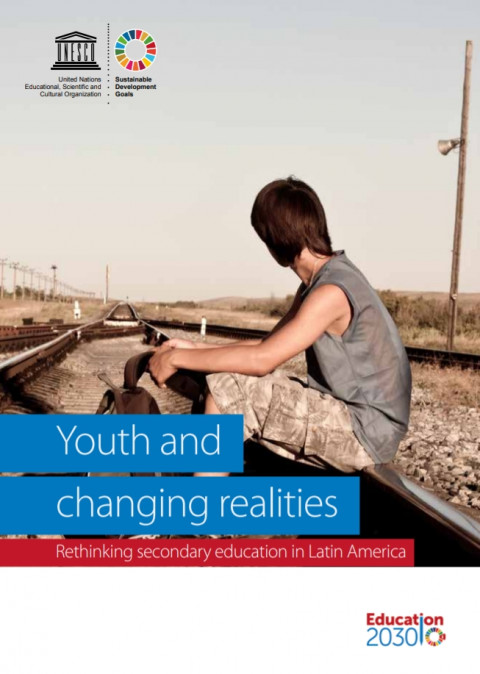 Youth and changing realities: rethinking secondary education in Latin America Année de publication: 2017 Auteur: López.Néstor, Opertti.Renato, Vargas Tamez.Carlos Auteur institutionnel: UNESCO International Bureau of Education (IBE) | UNESCO IIEP Office for Latin America and the Caribbean Youth are central to UNESCO’s mandate. The more than one billion youth and adolescents in the world today hold the key to our shared future and to global sustainable development. With a focus on Latin America, this publication addresses the need to regain young learners’ trust in education and to arrive at more positive social constructions of youth among educators, parents and education authorities. In so doing, this study looks at educational experiences as meaning makers that shape youth cultures and identities as well as their attitudes toward education and its potential to improve individual and collective well-being. Adolescentes y jóvenes en realidades cambiantes: notas para repensar la educación secundaria en América Latina Année de publication: 2017 Auteur: López.Néstor, Opertti.Renato, Vargas Tamez.Carlos Auteur institutionnel: UNESCO International Bureau of Education (IBE) | UNESCO IIEP Oficina para América Latina y el Caribe La juventud es un tema central dentro del mandato de la UNESCO. Más de mil millones de jóvenes y adolescentes en el mundo actual tienen la llave de nuestro futuro en común y del desarrollo sostenible, justo e inclusivo a nivel mundial. Con el foco puesto en América Latina, la publicación aborda la necesidad de recuperar la confianza de las y los jóvenes y adolescentes en la educación y de llegar a construcciones sociales de la juventud más completas y positivas entre las y los educadores, los padres y madres, las comunidades y las autoridades educativas. De este modo, el estudio analiza las experiencias educativas en cuanto productoras de significado que configuran las culturas e identidades de la juventud, al igual que sus actitudes hacia la educación y su potencial para mejorar y sostener el bienestar individual y colectivo.
 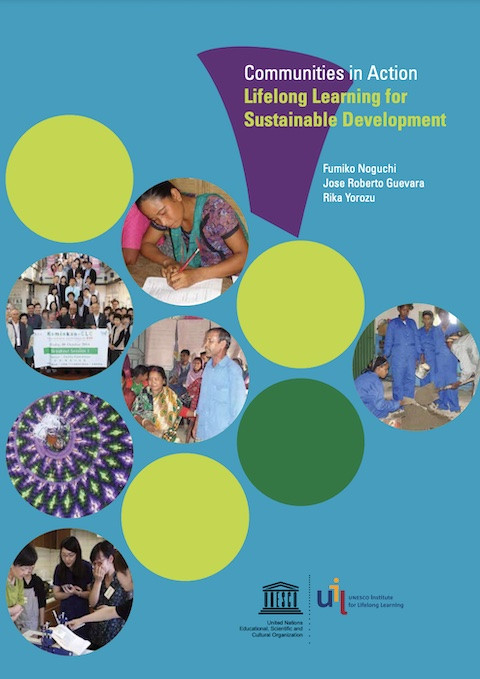 Communities in Action: Lifelong Learning for Sustainable Development Année de publication: 2015 Auteur: Fumiko Noguchi | Jose Roberto Guevara | Rika Yorozu Auteur institutionnel: UNESCO Institute for Lifelong Learning (UIL) This handbook identifies principles and policy mechanisms to advance communitybased learning for sustainable development, based on the commitments endorsed by the participants of the Kominkan-CLC International Conference on Education for Sustainable Development, which was held in Okayama City, Japan, in October 2014. To inform policymakers and practitioners new to this field, the handbook clarifies the international vision and goals for sustainable development and Education for Sustainable Development (ESD), and identifies the potential contributions of community-based learning centres and organizations. It documents both policy and practice from different regions and concludes with a summary of principles and policy support mechanisms. Communautés en action: Apprendre tout au long de la vie pour le développement durable Année de publication: 2015 Auteur: Fumiko Noguchi | Jose Roberto Guevara | Rika Yorozu Auteur institutionnel: Institut de l’UNESCO pour l’apprentissage tout au long de la vie (UIL) Ce manuel identifie les principes et les mécanismes politiques de promotion de l’apprentissage communautaire en faveur du développement durable basés sur les engagements pris par les participants à la Conférence internationale des CCA Kominkan sur l’éducation pour le développement durable, accueillie en octobre 2014 par la ville d’Okayama au Japon. Ce manuel clarifie à l’intention des décideurs et des acteurs encore peu familiarisés avec ces problématiques la vision et les objectifs internationaux pour le développement durable et pour l’éducation au développement durable (EDD), et identifie les potentielles contributions des centres et des organisations d’apprentissage communautaire. Il donne des informations à la fois sur les politiques et sur les pratiques des différentes régions et se conclut sur un résumé des principes et mécanismes de soutien politique. Comunidades en acción: Aprendizaje a lo largo de toda la vida para el desarrollo sostenible Année de publication: 2015 Auteur: Fumiko Noguchi | Jose Roberto Guevara | Rika Yorozu Auteur institutionnel: UNESCO Institute for Lifelong Learning (UIL) En este manual se identifican los principios y los mecanismos asociados a políticas destinados a promover el aprendizaje comunitario para el desarrollo sostenible, sobre la base de los compromisos suscritos por los participantes en la Conferencia Internacional Kominkan-CAC sobre Educación para el Desarrollo Sostenible, celebrada en Okinawa, Japón, en octubre de 2014. Como una manera de poner en antecedentes a los diseñadores de políticas y a los profesionales que se están iniciando en esta área, en el manual se exponen con claridad la visión y los objetivos internacionales respecto del desarrollo sostenible y la educación para el desarrollo sostenible (EDS), y asimismo se identifican las potenciales contribuciones de los centros y las organizaciones de aprendizaje comunitario. El documento entrega información sobre las políticas y las prácticas de distintas regiones, y concluye con un resumen de los principios y los mecanismos de apoyo basados en políticas.
  Citizenship Education for Democratic and Sustainable Communities Année de publication: 2021 Auteur: Dimitris Deligiannis | Kleoniki Tsiougou | Vicky Goutha | Antonis Moutselos | Ted Fleming Auteur institutionnel: UNESCO Institute for Lifelong Learning (UIL) | City of Larissa (Greece) | City of Yeonsu-Gu (Republic of Korea) This publication aims to make readers aware of the importance of citizenship education (CE) in local communities within the framework of lifelong learning. It supports cities and citizens in advancing their work on this critical aspect of formal and non-formal education, and in striving for progress in the provision of CE for youth and adult learners. It is mainly based on information from the 2020 survey of cluster members, as well as on case studies and inputs from the conference, ‘Strengthening citizenship education at local level’, which was held virtually on 12 and 13 November 2020. 민주적이고 지속가능한 지역사회를 위한 시민성 교육 Année de publication: 2021 Auteur: Dimitris Deligiannis | Kleoniki Tsiougou | Vicky Goutha | Antonis Moutselos | Ted Fleming Auteur institutionnel: UNESCO Institute for Lifelong Learning (UIL) | City of Larissa (Greece) | City of Yeonsu-Gu (Republic of Korea) 본 책자는 독자들이 평생학습체계 안에서 지역사회에서 이루어지는 시민성교육의 중요성을 인식하도록 돕기 위해 발간되었다. 또한, 본 책자는 도시와 시민들이 정규 및 비형식교육의 중요한 영역에서 자신들의 활동을 발전시키고, 청소년과 성인 대상의 시민성교육을 더욱 효과적으로 제공하기 위해 노력하는 것을 지원한다. 책자의 내용은 2020년에 세계시민성교육 클러스터 회원도시를 대상으로 진행된 설문조사의 결과와 ‘지역사회에서의 시민성교육 강화’라는 주제로 지난 2020년 11월 12일부터 13일, 양일에 걸쳐 온라인으로 개최된 세계시민성교육 클러스터 국제회의에서 다룬 도시별 사례 연구와 참여 전문가들의 기조연설 및 의견을 바탕으로 작성되었다.
 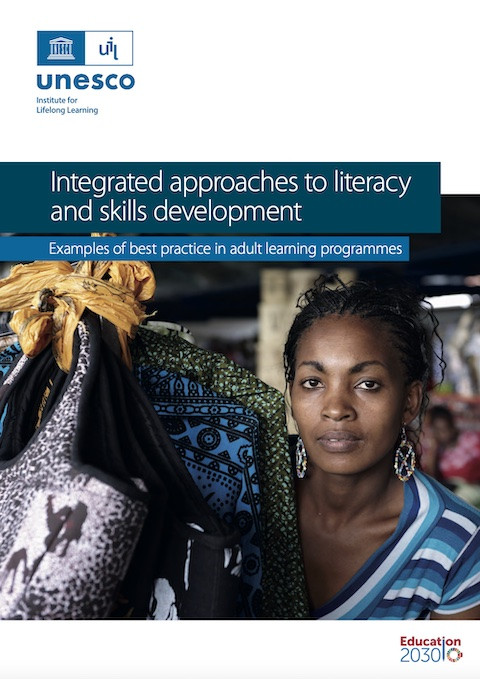 Integrated Approaches to Literacy and Skills Development: Examples of Best Practice in Adult Learning Programmes Année de publication: 2021 Auteur institutionnel: UNESCO Institute for Lifelong Learning (UIL) Since the first coronavirus case was reported to the World Health Organization in December 2019, millions of youth and adults around the globe – especially those with low literacy skills – have faced increased challenges to securing meaningful work and safeguarding their livelihoods. A more integrated approach to youth and adult learning and education, combining basic literacy, vocational and life skills, is needed now more than ever.This publication showcases selected examples of integrated youth and adult learning and education programmes featured in the UNESCO Effective Literacy and Numeracy Practices Database, also known as LitBase. Implemented in various social, cultural and economic contexts around the world, the programmes featured herein reveal not only the transformative potential that enhancing the quality of youth and adult learning and education can have, but also lay bare the hurdles and potential pathways to consider when planning effective integrated programmes.Integrated approaches to literacy and skills development: Examples of Best Practice in Adult Learning Programmes is useful not only for policy-makers, providers and educators who plan to implement integrated adult education programmes but also for those trying to help the most vulnerable groups reach their highest potential.
 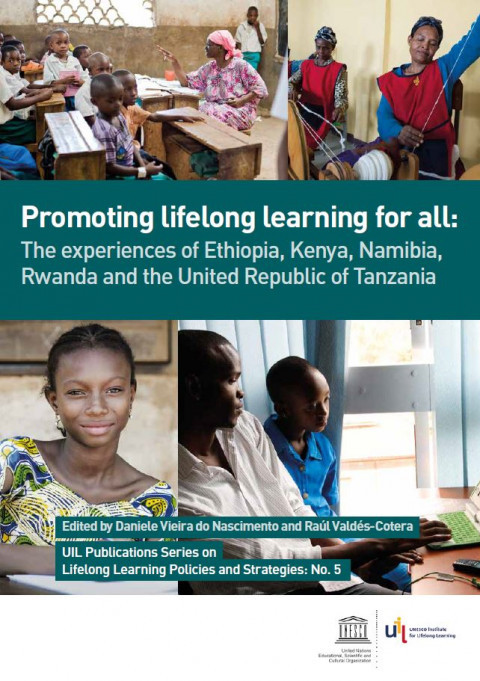 Promoting Lifelong Learning for All: The Experiences of Ethiopia, Kenya, Namibia, Rwanda and the United Republic of Tanzania Année de publication: 2018 Auteur institutionnel: UNESCO Institute for Lifelong Learning (UIL) This report is an outcome of a project supporting the promotion of lifelong learning for all in selected African countries. The project aims to increase the capacity of policy-makers and researchers to develop national policies and strategies that will establish lifelong learning systems in Africa, ultimately contributing to the 2030 Agenda for Sustainable Development.This publication showcases the advancements made by five African countries in promoting and implementing lifelong learning as per the recommendations outlined in Key Issues and Policy Considerations in Promoting Lifelong Learning in Selected African Countries: Ethiopia, Kenya, Namibia, Rwanda and Tanzania (UIL, 2014). This continuous assessment and review of the countries’ progress can help monitor the reforms and developments taking place, and can contribute to the sharing of promising practices. The four main sections of the report include an introduction with the background to and methodology of the study; the origin, essence and benefits of lifelong learning; a compendium of good practices in promoting lifelong learning for all; and a conclusion comprising reflections on how progress can be accelerated in the region as well as potential collaboration opportunities with the UNESCO Institute for Lifelong Learning (UIL).Attempts to implement lifelong learning concepts in the five African countries has seen mixed results, but advancements are being made. It is hoped that this synthesis report will help foster the exchange of successful practices among the countries and the further development of lifelong learning policies and strategies across the African continent.