
Ressources
Explorez une large gamme de ressources sur le GCED afin d’approfondir votre compréhension et de renforcer vos activités de recherche, de plaidoyer, d’enseignement et d’apprentissage.
3,229 résultats trouvés
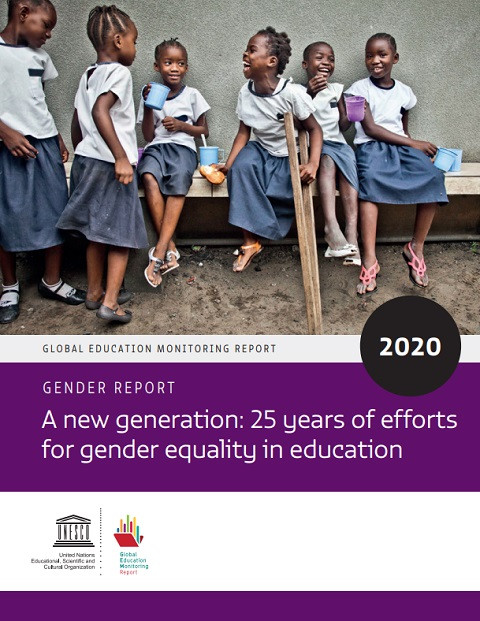 Gender Report 2020: A New Generation; 25 Years of Efforts for Gender Equality in Education (Global Education Monitoring Report) Année de publication: 2020 Auteur institutionnel: UNESCO | Global Education Monitoring Report Team Building on the 2020 Global Education Monitoring Report, this report investigates how inclusion in education can advance gender equality in and through education, which is critical to make progress towards gender equality in society. The goal of gender equality is, of course, not new. It was enshrined in the 1979 Convention on the Elimination of All Forms of Discrimination Against Women and was at the core of the 1995 Beijing Declaration and Platform for Action, whose 25th anniversary is marked in 2020.
  The Digital Transformation of Education: Connecting Schools, Empowering Learners Année de publication: 2020 Auteur: Ana Sepúlveda | Doreen Bogdan-Martin | Alex Wong | Chris Fabian | Borhene Chakroun | Anna Polomska | Samantha O’Riordan | Miguel Alcaine | Istvan Bozsoki | Vladimir Daigele | Jose Maria Diaz Batanero | Hani Eskandar | Aminata Amadou Garba | John Garrity | Farid Nakhli | Sylvia Poll Ahrens | Martin Schaaper | Christine Sund | Nancy Sundberg | Sandeep Taxali | Cleveland Thomas | Frank McCosker | James Lo | Fengchun Miao | Jaime Archundia | Janice Dean | Sophia Farrar | Sunita Grote | Aditi Poddar | Naroa Zurutuza | Nanjira Sambuli | Kavita Gupta Auteur institutionnel: International Telecommunication Union (ITU) | UNESCO | United Nations Children's Fund (UNICEF) This report looks into school connectivity and introduces a methodology and framework for mapping and connecting primary and secondary schools to the Internet. It aims to help governments, their partners and interested stakeholders to develop more holistic school connectivity plans. The analysis of this report provides a better understanding of the school connectivity landscape and requirements, to evaluate the benefits of different technologies for different environments, and to analyze business and financial models, as well as suitable content articulating connectivity with quality, safe, and inclusive learning.
  Balancing Act: Countering Digital Disinformation While Respecting Freedom of Expression Année de publication: 2020 Auteur: Kalina Bontcheva | Julie Posetti Auteur institutionnel: UNESCO | Broadband Commission for Sustainable Development. Working Group on AI Capacity Building | International Telecommunication Union (ITU) This report provides stakeholders with a rich suite of sector-specific recommendations, as well as a helpful 23-point framework that can be used for assessing any particular response to disinformation in the context of freedom of expression challenges. This research will help the widest range of key actors to better understand this phenomenon, and especially the way the world is responding to it, and where the gaps are.At the heart of this knowledge product is the need to balance responses to disinformation with respect for freedom of expression. The research shows us that this can be done.
 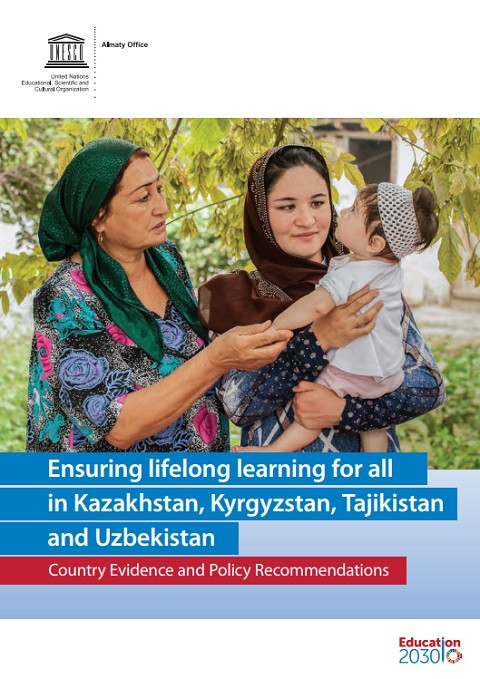 Ensuring Lifelong Learning for All in Kazakhstan, Kyrgyzstan, Tajikistan and Uzbekistan: Country Evidence and Policy Recommendations Année de publication: 2020 Auteur: Arne Carlsen Auteur institutionnel: UNESCO Lifelong Learning is at the heart of the 2030 Agenda for Sustainable Development and its 17 goals. More speci¬cally, Sustainable Development Goal 4 is devoted to ensuring quality education and lifelong learning opportunities for all. As the lead agency for education, UNESCO is mandated to support Member States in implementing SDG 4 through the Education 2030 Framework for Action. Central Asian countries – Kazakhstan, Kyrgyzstan, Tajikistan and Uzbekistan – have all shown their commitment to achieving the SDGs by 2030, including SDG 4, and have taken several actions in this regard. This sub-regional study aims to provide a broader picture of lifelong learning in Central Asia, supported by evidence and policy recommendations in order to propose a systemic approach for future education reforms. Обеспечение возможности обучения на протяжении всей жизни для всех в Казахстане, Кыргызстане, Таджикистане и Узбекистане: Опыт отдельных стран и рекомендации по вопросам политики Année de publication: 2020 Auteur: Arne Carlsen Auteur institutionnel: Организация Объединенных Наций по вопросам образования, науки и культуры (UNESCO) Обучение на протяжении всей жизни лежит в основе Глобальной программы устойчивого развития, состоящей из 17 целей. Суть Цели 4 в области устойчивого развития заключается в «Обеспечении всеохватного и справедливого качественного образования и поощрение возможности обучения на протяжении всей жизни для всех». ЮНЕСКО, как специализированному учреждению ООН по вопросам образования, было поручено оказывать государствам-членам содействие в достижении ЦУР 4 через выполнение Рамочной программы действий в области образования до 2030 года.Страны Центральной Азии – Казахстан, Кыргызстан, Таджикистан и Узбекистан – выразили заинтересованность в достижении к 2030 году всех ЦУР, включая ЦУР 4, и уже предприняли ряд действий в этом направлении. Цель настоящего субрегионального исследования состоит в предоставлении более точной картины положения дел в области обучения на протяжении всей жизни в Центральной Азии, подкрепленной фактическим материалом и рекомендациями по вопросам политики, для подготовки предложений по системному подходу к будущим реформам образования.
 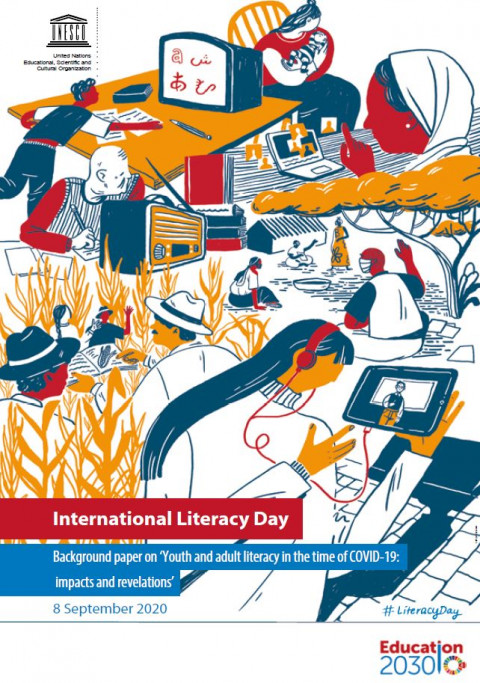 International Literacy Day: Background Paper on 'Youth and Adult Literacy in the Time of COVID-19; Impacts and Revelations' Année de publication: 2020 Auteur institutionnel: UNESCO Specially prepared on the occasion of International Literacy Day 2020, this background paper illustrates the impact of the COVID-19 crisis on youth and adult literacy, based on the limited information that is currently available. It provides five regional snapshots and identifies preliminary lessons learned thus far, while aiming to inspire continued reflection and subsequent action. It also makes the case for the ongoing importance of advancing youth and adult literacy, a priority that was already neglected even before the pandemic but which deserves all our attention. ILD 2020 thus seeks to trigger reimaginations of literacy teaching and learning in the COVID-19 crisis and beyond, with a particular focus on the role of educators.
 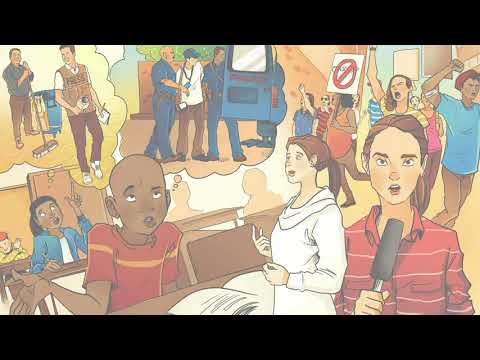 What Does the Rule of Law Have to Do With Me? Année de publication: 2020 Auteur institutionnel: UNESCO Using fun, interactive pedagogical tools and a classroom setting, this video explains to young people the basic concept of the rule of law and how they can engage in building a society on just laws which protect the fundamental rights of the individual and promote citizenship (https://en.unesco.org/themes/gced).In simple engaging language with real life examples and interaction with pupils, it explains 'accountability', 'freedom of expression', the characteristics of good law and equality before the law.The video describes the UNESCO-UNODC partnership on education for the rule of law (https://en.unesco.org/themes/gced/rul...) which works to bridge the gap between education and justice and supports Sustainable Development Goals 4 (in particular target 4.7) and 16. The partnership has developed interactive handbooks for schools and guidance for policy-makers.
  Multi-Stakeholder Approaches to Education for Sustainable Development in Local Communities: Towards Achieving the Sustainable Development Goals in Asia Année de publication: 2020 Auteur institutionnel: UNESCO The idea for this publication first emerged from the ‘10th Asia-Pacific RCE Regional Meeting and Symposium on the Sustainable Development Goals: From Goals to Action’, held from 2 to 4 November 2017 at the India Habitat Centre in New Delhi, India. The case studies presented at the symposium became the basis for this publication.The cases presented in this publication show how RCEs create solutions that enable sustainable development practices in local communities by utilizing education, innovative learning methods and multi-stakeholder partnerships. Local stakeholders take ownership of the sustainability processes, consistently address the targeted SDGs, and demonstrate RCE contributions to the ESD for 2030 priority action areas – policy, education and training settings, educators, youth and community.
 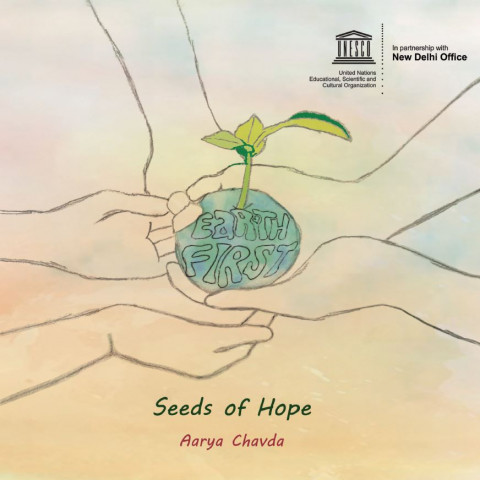 Seeds of Hope Année de publication: 2020 Auteur: Aarya Chavda Auteur institutionnel: UNESCO At an age of 10, author and illustrator of her 3 books, Aarya Chavda extends her support by donating her art proceeds to fundraise for the welfare of underpriviledge Cancer patients.Through her campaign on 'Preservation of Cultural Heritage', She also demonstrates her commitment and contributes in spreading awareness through her programs at government and private institutions.In this series of narrative illustrations, she portrays that climate change will not occur at some point in the distance future - "It is happening her and now". She urges everyone to treasure this thought of saving our planet for the future generation.
 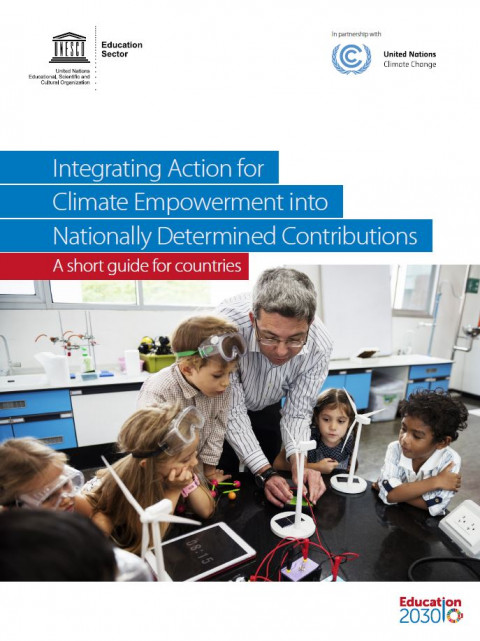 Integrating Action for Climate Empowerment into Nationally Determined Contributions: A Short Guide for Countries Année de publication: 2020 Auteur institutionnel: UNESCO In the framework of the 2020 review of Nationally Determined Contributions (NDCs) under the Paris Agreement, this guide aims to provide countries with advice on how to enhance ambition and address the six elements of ‘Action for Climate Empowerment’ (ACE) – Education, Training, Public Awareness, Public Access to Information, Public Participation and International Cooperation – in their respective NDCs.In five simple questions and answers, it provides suggestions for elements that can be integrated into the NDCs in order to make ACE an integral part of countries’ climate responses. The guide also shows why ACE is key to achieve the goals of the Paris Agreement and its greenhouse gas emission targets.