
Ressources
Explorez une large gamme de ressources sur le GCED afin d’approfondir votre compréhension et de renforcer vos activités de recherche, de plaidoyer, d’enseignement et d’apprentissage.
106 résultats trouvés
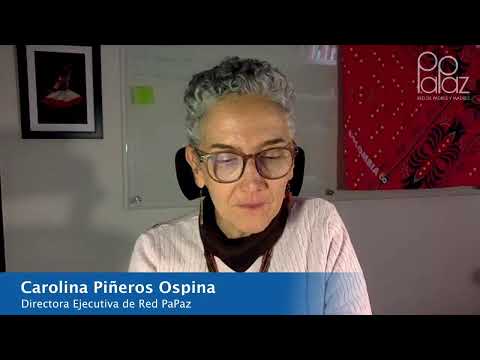 The Urgency of Talking About Sexuality in Early Childhood Année de publication: 2021 Auteur institutionnel: Red Papaz This virtual meeting seeks to build a scenario for public discussion to guide and contribute to the strengthening of protective environments for children and adolescents. The psychologists María Clara González and Claudia Sánchez Salamanca talk about the importance of sex education in early childhood. La urgencia de hablar de sobre sexualidad en primera infacia Année de publication: 2021 Auteur institutionnel: Red Papaz En este encuentro virtual se busca construir un escenario de discusión pública para orientar y contribuir al fortalecimiento de entornos protectores para la niñez y la adolescencia. Las psicólogas María Clara González y Claudia Sánchez Salamanca hablan sobre la importancia de la educación en sexualidad en la primera infancia.
 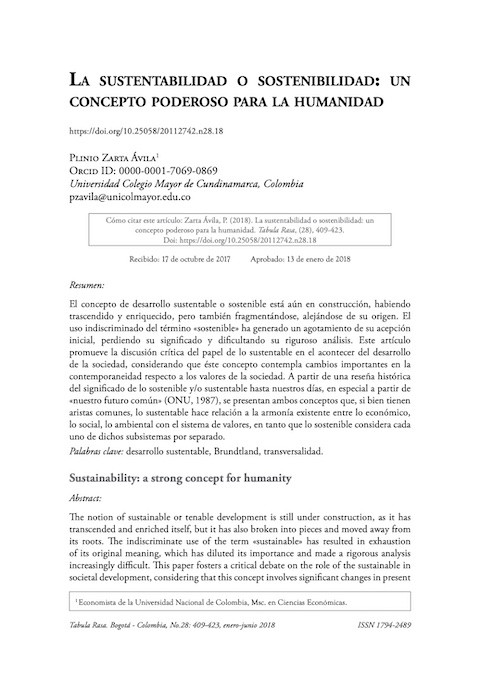 Sustainability: A Strong Concept for Humanity (Tabula Rasa; no. 28) Année de publication: 2018 Auteur: Plinio Zarta Ávila Auteur institutionnel: University College of Cundinamarca The concept of sustainable development is still under construction, having transcended and being enriched, but also fragmenting, moving away from its origin. The indiscriminate use of the term "sustainable" has generated an exhaustion of its initial meaning, losing its meaning and hindering its rigorous analysis. This article promotes a critical discussion of the role of sustainability in the development of society, considering that this concept contemplates important changes in contemporaneity with respect to the values of society. La sustentabilidad o sostenibilidad: Un concepto poderoso para la humanidad (Tabula Rasa; no. 28) Année de publication: 2018 Auteur: Plinio Zarta Ávila Auteur institutionnel: University College of Cundinamarca El concepto de desarrollo sustentable o sostenible está aún en construcción, habiendo trascendido y siendo enriquecido, pero también fragmentándose, alejándose de su origen. El uso indiscriminado del término «sostenible» ha generado un agotamiento de su acepción inicial, perdiendo su significado y dificultando su riguroso análisis. Este artículo promueve la discusión crítica del papel de lo sustentable en el acontecer del desarrollo de la sociedad, considerando que éste concepto contempla cambios importantes en la contemporaneidad respecto a los valores de la sociedad.
 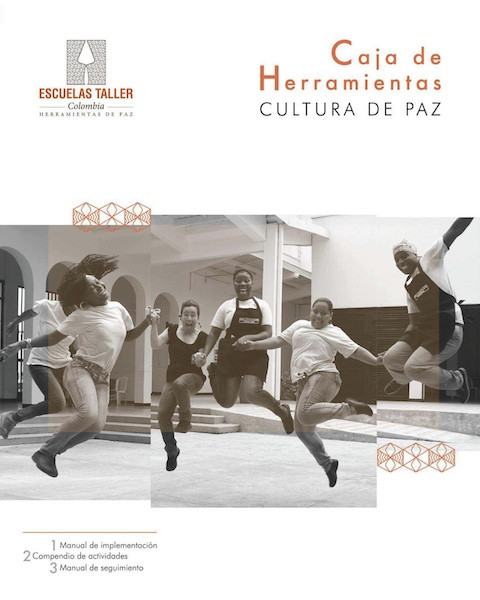 Culture of Peace Toolbox Année de publication: 2016 Auteur institutionnel: National Workshop Schools Program (Colombia) | Spanish Agency for International Development Cooperation (AECID) The Workshop Schools with the support of the Ministry of Culture and the Spanish Agency for International Development Cooperation (AECID), take the initiative to promote a Culture of Peace that arises from the ethical principles that define the Workshop School and that allows its protagonists themselves (administrators, instructors, apprentices and parents) assume positions, beliefs and attitudes that promote a Culture of Peace as a way of life. For this, a Tool Box has been designed, the objective of which is to strengthen the apprentices of the Workshop School as citizens who develop personal and social capacities to live healthily with others and generate harmonious environments, while proposing tools to serve as agents of change in society. At a general level, the Toolbox is made up of three large sections: the first contains the Implementation Manual, the second the Compendium of Activities and the third the Follow-up and Monitoring Manual. Caja de herrameintas: Cultura de paz Année de publication: 2016 Auteur institutionnel: National Workshop Schools Program (Colombia) | Spanish Agency for International Development Cooperation (AECID) Las Escuelas Taller, con el apoyo del Ministerio de Cultura y la Agencia Española de Cooperación Internacional para el Desarrollo (AECID), toman la iniciativa de promover una Cultura de Paz que surja desde los principios éticos que definen a la Escuela Taller y que permita que sus propios protagonistas (administrativos, instructores, aprendices y padres de familia) asuman posturas, creencias y actitudes que promuevan una Cultura de Paz como una forma de vida. Para ello se ha diseñado una Caja de Herramientas, cuyo objetivo es fortalecer a los aprendices de la Escuela Taller como ciudadanos que desarrollan capacidades personales y sociales para convivir sanamente con otros y generar entornos armónicos, a la vez que proponen herramientas para servir como agentes de cambio en la sociedad. A nivel general, la Caja de Herramientas se encuentra conformada por tres grandes secciones: la primera contiene el Manual de Implementación, la segunda el Compendio de Actividades y la tercera el Manual de Seguimiento y Monitoreo.
  Justicia para la paz: Crímenes atroces, derecho a la justicia y paz negociada Année de publication: 2014 Auteur: Rodrigo Uprimny Yepes | Luz maría Sánchez Duque | Nelson Camilo Sánchez León Auteur institutionnel: Centro de Estudios de Derecho, Justicia y Sociedad, Dejusticia, Reino de los Países Bajos La investigación que se presenta en este libro así como las intervenciones judiciales en las que se partició con ocasión del proceso sobre la constitucionalidad del Marco Jurídico para la Paz, fueron realizados gracias al apoyo de la embajada del Reino de los Países Bajos en Colombia. La guerra ha cambiado pues se ha degradado y se ha tornado cada vez más cruel como bien se señala en estas páginas.
  A Tree to Bloom Année de publication: 2023 Auteur institutionnel: Center for Memory, Peace and Reconciliation The Camino a Casa room of the Memory, Peace and Reconciliation Center is committed to memory processes that recognize children as active subjects with the full capacity to reflect and dialogue about the recent past of violence and struggles for the construction of democracy and peace. This document is written under the metaphor of a tree: it is proposed that change and movement become a possibility for continued growth, therefore the role of adults is related to being the nutrients of the tree. In so far as their daily work can contribute to other axes, which would be the branches. And finally, children play the role of caretakers of memory - they are the tree - based on their authenticity and creativity. Un árbol para florecer Année de publication: 2023 Auteur institutionnel: Center for Memory, Peace and Reconciliation La sala Camino a Casa del Centro de Memoria, Paz y Reconciliación apuesta por procesos de memoria que reconozcan en los niños y las niñas sujetos activos con capacidad plena para reflexionar y dialogar en torno al pasado reciente de violencias y luchas por la construcción de democracia y paz. Este documento está escrito bajo la metáfora de un árbol: se propone que el cambio y el movimiento se convierta en una posibilidad para que siga creciendo, por ello el papel de las personas adultas está relacionado con ser los nutrientes del árbol. En tanto su labor cotidiana pueden aportar a otros ejes, que vendrían siendo las ramas. Y por último, los niños y niñas cumplen el rol de cuidadores de la memoria -ellos son el árbol- a partir de su autenticidad y creatividad.
  School Coexistence Toolkit: Prevention of Xenophobia Auteur institutionnel: Ministry of Education of Colombia The infographics guide the actions that should be developed in the school environment in the face of situations that incite or configure acts of xenophobia, exclusion or stigmatization against migrant girls, boys and adolescents. This message aims to have a positive impact on those who, beyond any nationality and any other migratory origin, should be welcomed and their rights guaranteed.