
Ressources
Explorez une large gamme de ressources sur le GCED afin d’approfondir votre compréhension et de renforcer vos activités de recherche, de plaidoyer, d’enseignement et d’apprentissage.
1,322 résultats trouvés
 L'éducation au service du développement: La vision de la Banque mondiale, de l'OCDE et de l'UNESCO (L’Education en débats: analyse comparée; no. 8) Année de publication: 2016 Auteur: Thibaut Lauwerier Auteur institutionnel: Université de Genève Dans ce présent article, nous nous intéressons aux liens entre éducation et développement du point de vue de la Banque mondiale, l’OCDE et l’UNESCO, organisations internationales majeures dans le secteur éducatif au niveau mondial. Après avoir présenté le contexte de la recherche, à savoir les caractéristiques majeures des trois organisations étudiées et la méthodologie utilisée, nous montrons comment le concept du développement est perçu par ces institutions. Ensuite, nous traitons des implications de ces visions du développement pour l’éducation. En conclusion, tout en analysant les récentes évolutions des discours des organisations internationales, nous discutons de la nécessité d’aller au-delà d’une vision étriquée du développement et donc de l’éducation.
  The Neuroscience of Emotions Année de publication: 2021 Auteur institutionnel: BBVA Aprendemos Juntos The psychiatrist and writer Marian Rojas-Estapé speaks in this video about neuroscience and emotional intelligence, stating there are no shortcuts or magic formulas to be happy. She talks about how society has substituted self-destructive habits for the meaning of life and identifies the ability we have to be happy even in the midst of difficult situations. La neurociencia de las emociones Année de publication: 2021 Auteur institutionnel: BBVA Aprendemos Juntos La psiquiatra y escritora Marian Rojas-Estapé habla en este video sobre neurociencia e inteligencia emocional, asegurando que no hay atajos ni fórmulas mágicas para poder ser felices. Habla sobre cómo la sociedad ha sustituido el sentido de la vida por hábitos autodestructivos e identifica la capacidad que tenemos de ser felices incluso en medio de las situaciones difíciles. El antídoto para el sufrimiento es el amor, sentirse querido, sentir que no estás solo.
 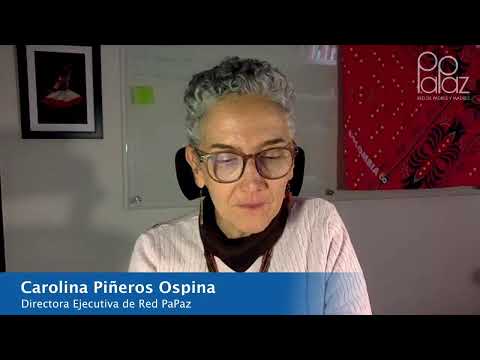 The Urgency of Talking About Sexuality in Early Childhood Année de publication: 2021 Auteur institutionnel: Red Papaz This virtual meeting seeks to build a scenario for public discussion to guide and contribute to the strengthening of protective environments for children and adolescents. The psychologists María Clara González and Claudia Sánchez Salamanca talk about the importance of sex education in early childhood. La urgencia de hablar de sobre sexualidad en primera infacia Année de publication: 2021 Auteur institutionnel: Red Papaz En este encuentro virtual se busca construir un escenario de discusión pública para orientar y contribuir al fortalecimiento de entornos protectores para la niñez y la adolescencia. Las psicólogas María Clara González y Claudia Sánchez Salamanca hablan sobre la importancia de la educación en sexualidad en la primera infancia.
 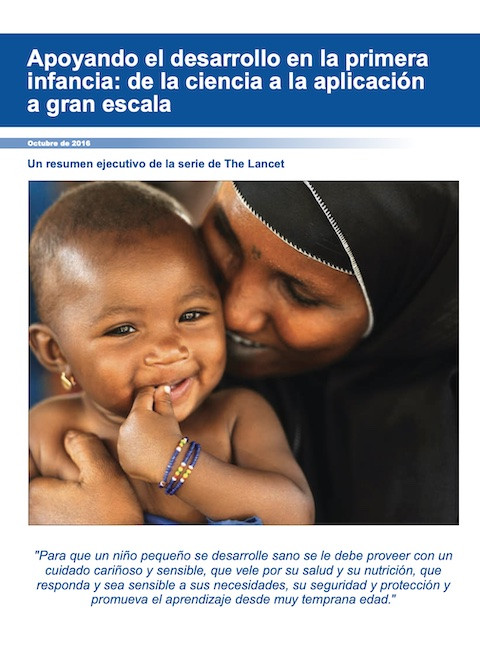 Supporting Early Childhood Development: From Science to Large-Scale Application Année de publication: 2016 Auteur: The Lancet Auteur institutionnel: United Nations Children's Fund (UNICEF) | World Bank | World Health Organization (WHO) This document summarizes the series of articles on Early Childhood Development published by The Lancet in 2016. It presents new scientific evidence that supports interventions and proposes measures to be applied in large-scale child development programs. The series emphasizes "loving care sensitive to the needs of the child", especially up to three years of age, as well as multisectoral interventions that, taking the health sector as a starting point, allow reaching many families and young children through health and nutrition. Apoyando el desarrollo en la primera infancia: De la ciencia a la aplicación a gran escala Année de publication: 2016 Auteur: The Lancet Auteur institutionnel: United Nations Children's Fund (UNICEF) | World Bank | World Health Organization (WHO) Este documento resume la serie de artículos sobre Desarrollo en la primera infancia que publicó The Lancet en 2016. Presenta nueva evidencia científica que fundamenta intervenciones y propone medidas a ser aplicadas en programas de desarrollo infantil a gran escala. La serie hace hincapié en el “cuidado cariñoso y sensible a las necesidades del niño”, sobre todo hasta los tres años de edad, así como en las intervenciones multisectoriales que, tomando el sector salud como punto de partida, permiten llegar a muchas familias y niños pequeños a través de la salud y la nutrición.
 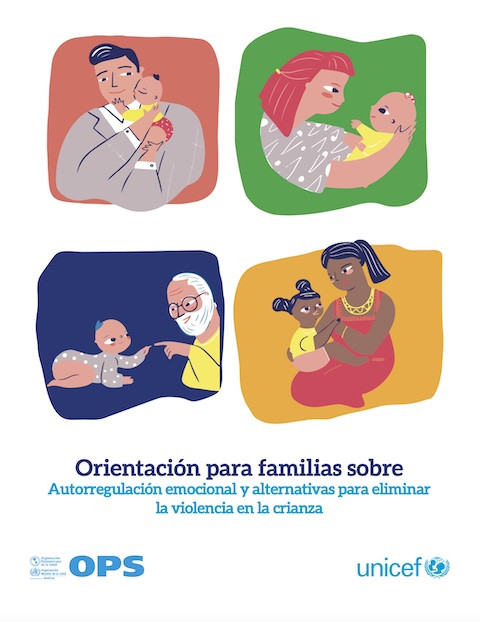 Guidance for Families on Emotional Self-Regulation and Alternatives to Eliminate Violence in Parenting Année de publication: 2020 Auteur: Maite Onochie Auteur institutionnel: United Nations Children's Fund (UNICEF) | Pan American Health Organization (PAHO) This material seeks to guide families in the role of caregivers. It proposes important recommendations in the first three years of life. It gives alternatives on how to calm young children, how to handle self-care by caregivers, how to handle crying, and promote emotional regulation and containment. Orientación para familias sobre: Autorregulación emocional y alternativas para eliminar la violencia en la crianza Année de publication: 2020 Auteur: Maite Onochie Auteur institutionnel: United Nations Children's Fund (UNICEF) | Pan American Health Organization (PAHO) Este material busca guiar a las familias en el papel de cuidadores. Propone recomendaciones importantes en los tres primeros años de vida. Da alternativas sobre como calmar a los niños pequeños, cómo manejar el autociodado por parte de los cuidadores, como manejar el llanto y promover la regulación y contención emocional.
  Human Dignity: Contemporary Pattern and Traditional Patterns (Revista Brasileira de Direito; vol. 11, no. 2) Année de publication: 2015 Auteur: Antonio Pelé Auteur institutionnel: Faculdade Meridional-IMED The concept of human dignity refers to the intrinsic and absolute value of human beings and repre- sents the grounding human rights. Those features are usually studied as if they were the results, in the history of Western thought, of the progressive recognition of the human moral value. Our work aims to show precisely the contrary, showing some clear differencies between the current paradigm of human dignity and the previous and traditional patterns of dignity. Thus, the basic features of each (current and previous) pattern are analyzed in order to show that the contemporary paradigm of human dignity as little in common with the previous paradigms of dignity.