
Ressources
Explorez une large gamme de ressources sur le GCED afin d’approfondir votre compréhension et de renforcer vos activités de recherche, de plaidoyer, d’enseignement et d’apprentissage.
3,385 résultats trouvés
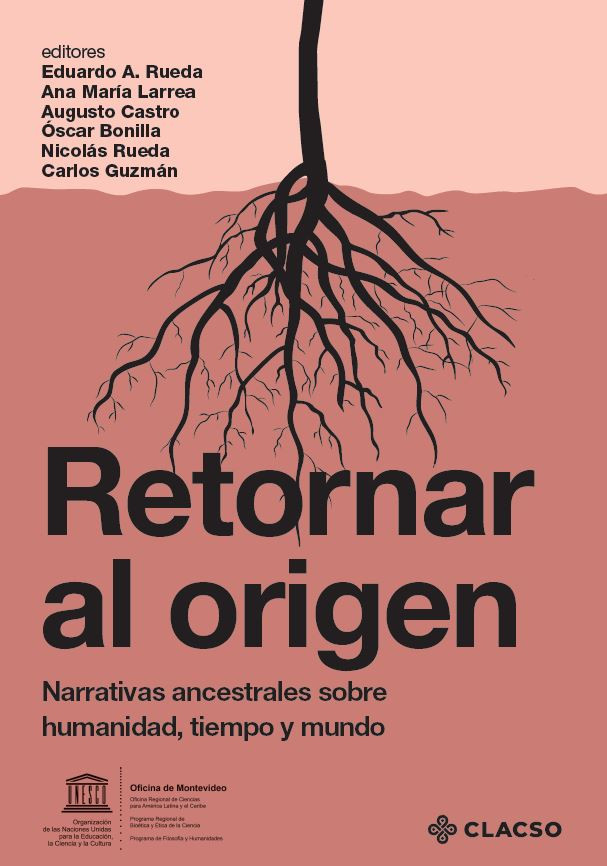 Return to the Origin: Ancient Narratives about Humanity, Time and the World Année de publication: 2022 Auteur: Eduardo A. Rueda | Ana María Larrea | Augusto Castro | Óscar Bonilla | Nicolás Rueda | Carlos Guzmán Auteur institutionnel: Latin American Council of Social Sciences (CLACSO) | UNESCO In this brief reflection, only in an introductory way, two questions are addressed. The first has to do with the relevance or impertinence of a program to record the narratives of our original peoples about the origins and trajectories of humanity. In relation to this first point, they are interested in proposing the bases for an emancipatory approach, that is, counter-hegemonic, of the original narratives. The second question asks about the consequences that it has, for the self-understanding of the crises and tensions of current societies, to highlight non-Western conceptions of human origins and trajectories. Retornar al origen: Narrativas ancestrales sobre humanidad, tiempo y mundo Année de publication: 2022 Auteur: Eduardo A. Rueda | Ana María Larrea | Augusto Castro | Óscar Bonilla | Nicolás Rueda | Carlos Guzmán Auteur institutionnel: Latin American Council of Social Sciences (CLACSO) | Organización de las Naciones Unidas para la Educación, la Ciencia y la Cultura (UNESCO) En esta breve reflexión se abordan, apenas de modo introductorio, dos cuestiones. La primera tiene que ver con la pertinencia o impertinencia de un programa de registro de las narrativas de nuestros pueblos originarios sobre los orígenes y trayectorias de la humanidad. Les interesa, en relación con este primer punto, proponer las bases para un abordaje emancipatorio, es decir, contrahegemónico, de las narrativas originarias. La segunda cuestión se interroga por las consecuencias que tiene, para la autocomprensión de las crisis y tensiones de las sociedades actuales, poner en evidencia concepciones no occidentales de los orígenes y las trayectorias humanas.
  Revised Recommendation Concerning Education for International Understanding, Co-operation and Peace and Education Relating to Human Rights and Fundamental Freedoms ('1974 Recommendation') Année de publication: 2022 Auteur institutionnel: UNESCO The revision of the 1974 Recommendation provides the international community with the opportunity to strengthen the instrument so that it can support the design and implementation of effective educational policies and programmes, which can put the world on a pathway to lasting peace and sustainable development for all, in line with the requirements of the 2030 Agenda and the body of international legal norms adopted since 1974. Recommandation révisée sur l’éducation pour la compréhension, la coopération et la paix internationales et l’éducation relative aux droits de l’homme et aux libertés fondamentales (« Recommandation de 1974 ») Année de publication: 2022 Auteur institutionnel: Organisation des Nations Unies pour l'éducation, la science et la culture (UNESCO) La révision de la Recommandation de 1974 offre à la communauté internationale l'occasion de renforcer l'instrument afin qu'il puisse soutenir la conception et la mise en œuvre de politiques et de programmes éducatifs efficaces, susceptibles de mettre le monde sur la voie d'une paix durable et du développement durable pour tous, conformément aux exigences de l'Agenda 2030 et à l'ensemble des normes juridiques internationales adoptées depuis 1974.
 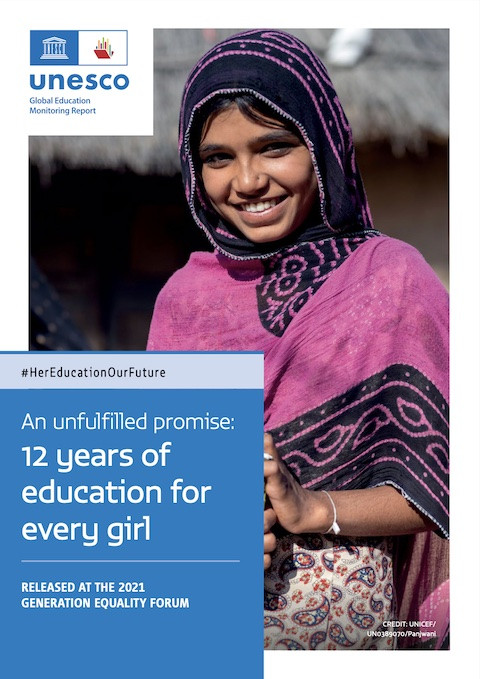 Une promesse non tenue: 12 années d’enseignement pour toutes les filles Année de publication: 2021 Auteur institutionnel: Organisation des Nations Unies pour l'éducation, la science et la culture (UNESCO) | Global Education Monitoring Report Team En 1995, il y a un peu plus de 25 ans, 189 gouvernements ont adopté la Déclaration et le Programme d’action de Beijing – un programme visionnaire en faveur de l’autonomisation des femmes et le cadre stratégique mondial le plus complet à ce jour pour promouvoir l’égalité des genres. Le document faisait de l’éducation et de la formation des filles et des femmes l’un des 12 domaines clés dans lesquels il était urgent d’agir pour assurer une plus grande égalité.Depuis Beijing, la communauté internationale a mis l’accent sur le pouvoir transformateur de l’éducation des filles et des femmes, et sur ses avantages – non seulement pour les filles et les femmes, mais aussi pour des sociétés entières et même pour les générations futures. Dans le Programme de développement durable à l’horizon 2030, l’objectif de développement durable (ODD) 4, relatif à l’accès de tous à une éducation de qualité sur un pied d’égalité et à l’apprentissage tout au long de la vie, définit des cibles ambitieuses pour garantir l’égalité des chances – notamment une cible visant à faire en sorte, d’ici à 2030, que toutes les filles et tous les garçons suivent un cyclede 12 années d’enseignement.Ce bref document étudie l’évolution des taux d’achèvement des études primaires et secondaires des filles et des garçons depuis 1995, et appelle à agir pour que nous tenions notre engagement de ne laisser personne de côté.
 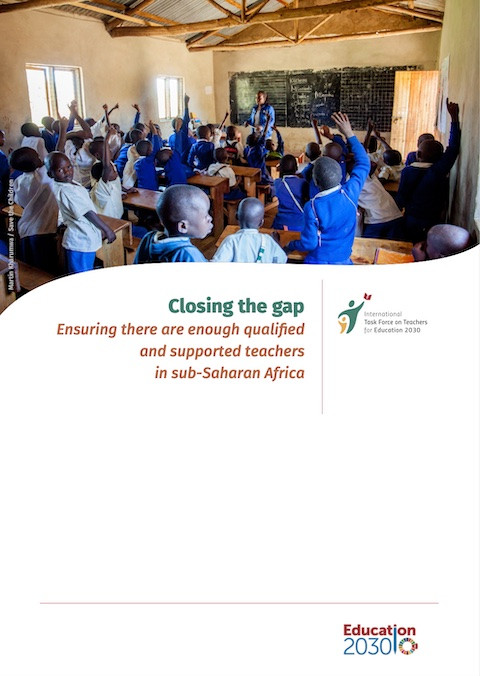 Closing the Gap: Ensuring There Are Enough Qualified and Supported Teachers in Sub-Saharan Africa Année de publication: 2021 Auteur institutionnel: International Task Force on Teachers for Education 2030 | UNESCO The fourth Sustainable Development Goal (SDG 4) aims to ensure better learning opportunities and outcomes and more equitable and inclusive education for all. SDG target 4.c calls for an increase in the supply of qualified teachers, particularly in low-income countries. To achieve this ambitious target, the international community needs to pay renewed attention to teacher support and preparation.This advocacy brief considers what it will take to increase the supply of qualified teachers in sub-Saharan Africa, the region where the teacher shortage is most acute. It analyses the causes for teacher shortages, looks at trends affecting the region and describes the scale of the shortages. It examines the fiscal pressures on low-income countries to cover salary costs and the costs of initial teacher education and continuing professional development, and it proposes some recommendations for governments and the international community to achieve the essential target of substantially increasing the supply of well qualified teachers.
 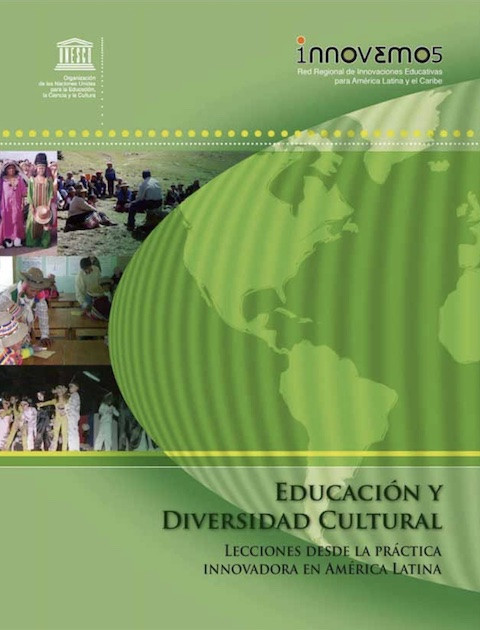 Educación y diversidad cultural: Lecciones desde la práctica innovadora en América Latina Année de publication: 2008 Auteur: Carolina Hirmas R. Auteur institutionnel: Organización de las Naciones Unidas para la Educación, la Ciencia y la Cultura (UNESCO) Esta publicación, que constituye el segundo volumen de la colección, es el resultado del análisis y la reflexión acerca de un conjunto experiencias educati- vas innovadoras de varios países de Latinoamérica, que responden con pertinen- cia pedagógica al contexto cultural de los estudiantes y ofrecen una educación orientada al conocimiento, comprensión y diálogo entre personas de diferentes culturas. El aporte significativo de las experiencias referidas, reside en el reco- nocimiento y valoración de la diversidad étnica y cultural de sus estudiantes y comunidades, como punto de partida para el desarrollo de nuevos aprendizajes y afirmación de su identidad. A su vez, la vida en los centros educativos promueve relaciones interculturales de respeto y fraternidad en un contexto sociogeográfico local y subregional, caracterizado por la multiculturalidad.
  Strengthening Independent Media, One Case at a Time: A Handbook for Media Vability; Preview of a Forthcoming IPDC Knowledge Resource Année de publication: 2021 Auteur institutionnel: UNESCO “Strengthening Independent Media, One Case at a Time: A Handbook for Media Viability” will include case studies of innovative ideas from a wide variety of news media companies, mostly in the developing world, that are succeeding in difficult times and have lessons to share with others who are struggling. The handbook project was announced during the 65th meeting of the Bureau of the Intergovernmental Council of the International Programme for the Development of Communication (IPDC).This brochure includes highlights of some of the cases to be included, from community media in South Africa to a pure-play digital success in Indonesia, to a fact-checking network in Brazil to a covid response in Pakistan, and much more. The Handbook will be published in September 2021 and will be available for free on the website of the IPDC.
  노년층 미디어교육 활성화 방안 Année de publication: 2019 Auteur: 조재희 | 나은영 | 이혜선 Auteur institutionnel: 한국언론진흥재단 미디어 생태계가 급격히 변하고 있는 현대 사회에서 미디어 소수자들에 대한 디지털 격차는 여전히 확장되고 있다. 특히 환경의 변화에 유연하게 적응하기 어려운 노년층들은 이러한 미디어 생태계 변화에 적절히 대처하기 어려우며 이로 인해 디지털 격차를 겪게 된다. 이에 미디어 소수자로서의 노년층에 대한 미디어교육의 필요성이 강조되고 있고 정부와 지자체를 비롯한 다양한 기관에서 노년층을 대상으로 미디어교육을 실시하고 있다.본 연구는 다양한 방법론을 통해 노인 미디어교육을 활성화시키기 위한 방안을 다각도로 탐색해 보았다. 본 연구의 연구결과는 노년층에 특화된 미디어교육 프로그램을 개발하고 진행하기 위한 실질적인 제언을 줄 수 있으며 노인 미디어교육 활성화를 위한 정책 마련을 위해 고려해야 하는 구체적인 사항들을 제시한다.
 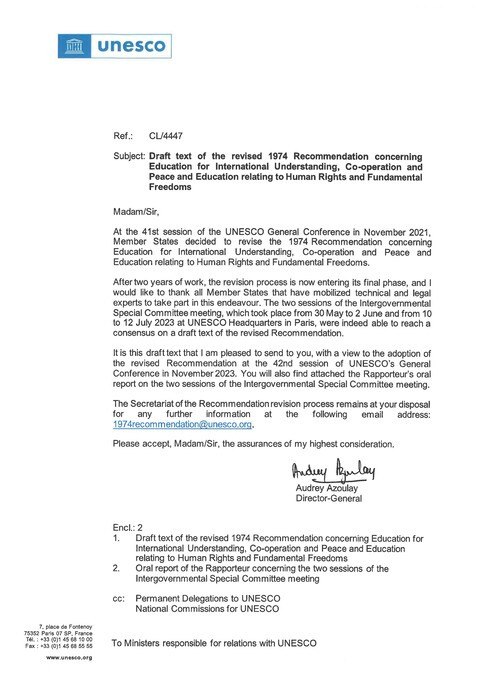 Draft Text of the Revised 1974 Recommendation Concerning Education for International Understanding, Co-Operation and Peace and Education Relating to Human Rights and Fundamental Freedoms Année de publication: 2023 Auteur institutionnel: UNESCO In accordance with the UNESCO Constitution and the Rules of Procedure concerning Recommendations to Member States and international conventions covered by the terms of Article IV, paragraph 4, of the Constitution, the draft text of the revised Recommendation concerning education for international understanding, co-operation and peace and education relating to human rights and fundamental freedoms, and the related preliminary report, were sent to UNESCO Member States through the circular letter CL/4401 (September 2022) for their written commentsand observations. On the basis of their comments, a second draft of the text was prepared. In circular letter CL/4433 (April 2023), the second draft together with the Definitive Report were submitted to Member States. The Special Committee meeting of experts designated by Member States took place from 30 May to 2 June 2023, as per the circular letter CL/4417 (November 2022), and from 10 to 12 July 2023, as per circular letter CL/4442 (June 2023).