
Ressources
Explorez une large gamme de ressources sur le GCED afin d’approfondir votre compréhension et de renforcer vos activités de recherche, de plaidoyer, d’enseignement et d’apprentissage.
3,229 résultats trouvés
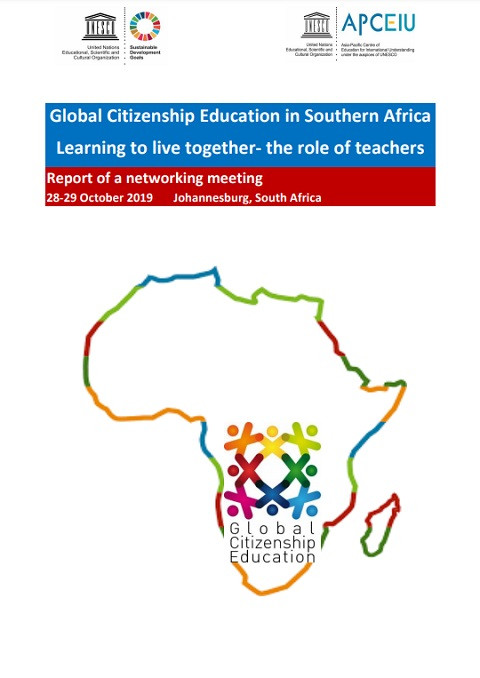 Global Citizenship Education in Southern Africa: Learning to Live Together - the Role of Teachers; Report of a Networking Meeting Année de publication: 2019 Auteur institutionnel: UNESCO Harare | APCEIU This is a report on the second GCED networking meeting held from 28 to 29 October 2019 in Johannesburg, South Africa. It took stock of GCED in the region and discussed how GCED is and could be integrated in curricula and teacher education in the Southern African context to strengthen and expand the existing networks of GCED stakeholders and partners.
 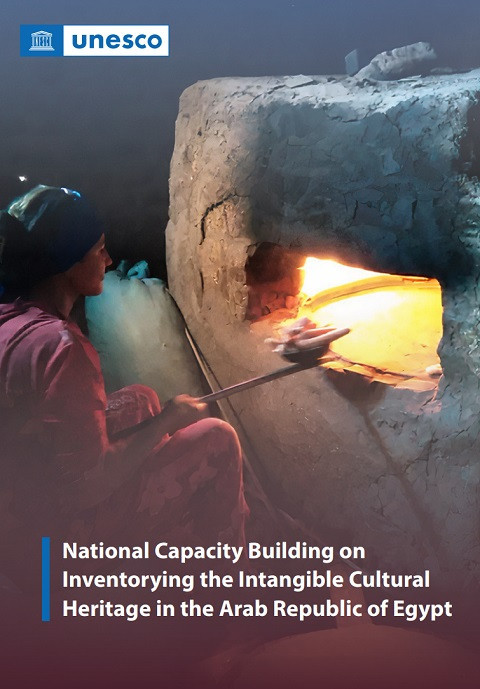 National Capacity Building on Inventorying the Intangible Cultural Heritage in the Arab Republic of Egypt Année de publication: 2024 Auteur: Ahmed Bahi El Din | Haitham Younes Auteur institutionnel: UNESCO | UNESCO Cairo Communities in Egypt are inventorying their living heritage Egypt is famed for its rich civilization and long history. Egyptian identity is presented not only through archaeological sites and Ancient Egyptian civilization, but also through Egypt’s diverse living heritage. More than simply showing who they are today, this living heritage tells the story of how the Egyptians arrived at this point over the generations.To celebrate this identity and strengthen national capacities to safeguard it, UNESCO, alongside the Egyptian government and civil society, implemented the project Strengthening National Capacities for Safeguarding Intangible Cultural Heritage in Egypt for Sustainable Development, which ran from June 2018 to June 2021.The project focused on community-based inventorying of living heritage. This involved training workshops and a pilot community-based inventorying exercise, which took place in six different locations throughout Egypt (Cairo, Fayoum, Gharbeya, Aswan, Assuit, and Marsa Matrouh). Thanks to the project, participating community practitioners and heritage bearers are now equipped to inventory their own living heritage. • This pilot was Egypt’s first step to establishing a national inventory of Intangible Cultural Heritage (ICH) under the Ministry of Culture, in collaboration with community practitioners. • This publication provides recommendations on how to further enhance national capabilities for ICH safeguarding and how to advance community engagement in the inventorying processes in Egypt.
 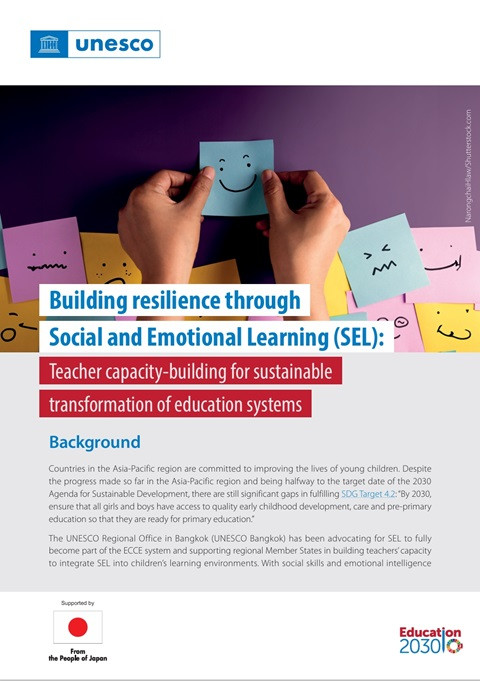 Building Resilience Through Social and Emotional Learning (SEL): Teacher Capacity-building for Sustainable Transformation of Education Systems Année de publication: 2024 Auteur institutionnel: UNESCO Bangkok Countries in the Asia-Pacific region are committed to improving the lives of young children. Despite the progress made so far in the Asia-Pacific region and being halfway to the target date of the 2030 Agenda for Sustainable Development, there are still significant gaps in fulfilling SDG Target 4.2: 'By 2030, ensure that all girls and boys have access to quality early childhood development, care and pre-primary education so that they are ready for primary education.' The UNESCO Regional Office in Bangkok (UNESCO Bangkok) has been advocating for SEL to fully become part of the ECCE system and supporting regional Member States in building teachers’ capacity to integrate SEL into children’s learning environments. With social skills and emotional intelligence taught in schools early, children will gain knowledge, skills, and attitudes to develop healthy identities, manage emotions, and achieve personal and collective goals. This can positively contribute to society and transformative resilience through enhancing civic engagement.
 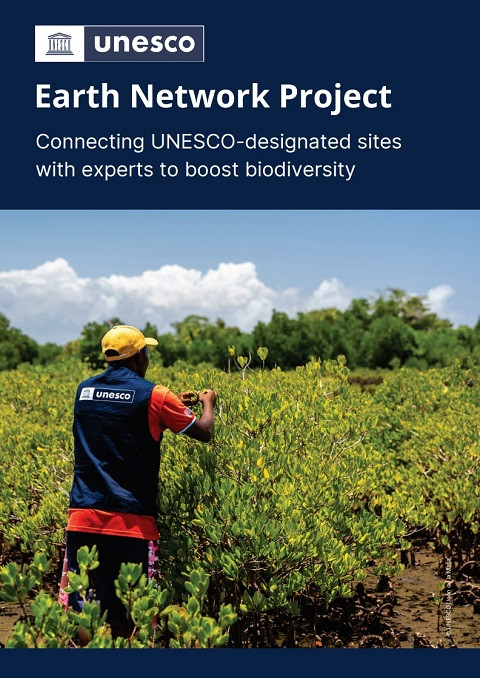 Earth Network Project: Connecting UNESCO-Designated Sites With Experts to Boost Biodiversity Année de publication: 2024 Auteur institutionnel: UNESCO The Earth Network project was launched in 2021 with the support of the Government of Italy. It brings together over 380 experts from more than 60 countries, encompassing diverse biodiversity-related fields that include land restoration, environmental management and environmental law. The specialists volunteer to put their unique skillsets and knowledge at the disposal of sites designated by UNESCO which request their assistance. The Earth Network covers all scientific domains and proudly combines different forms of knowledge: scientific, practitioner, local and indigenous. On the ground, these experts provide technical advice, collect data, build partnerships, and provide training tailored to the specific needs and priorities of each UNESCO-designated site.
  Advancing Innovation: UNESCO-UNEVOC in Action; Biennial Report 2018-2019 Année de publication: 2020 Auteur institutionnel: UNESCO International Centre for Technical and Vocational Education and Training (UNEVOC) In a rapidly evolving world filled with societal, environmental and economic disruptions, technical and vocational education and training (TVET) systems need to develop innovative strategies to tackle emerging challenges while simultaneously seizing the opportunities that have arisen from the advent of 21st century technology.This Biennial Report gives a comprehensive overview of UNESCO-UNEVOC's activities in technical and vocational education and training over the biennium 2018-2019.
 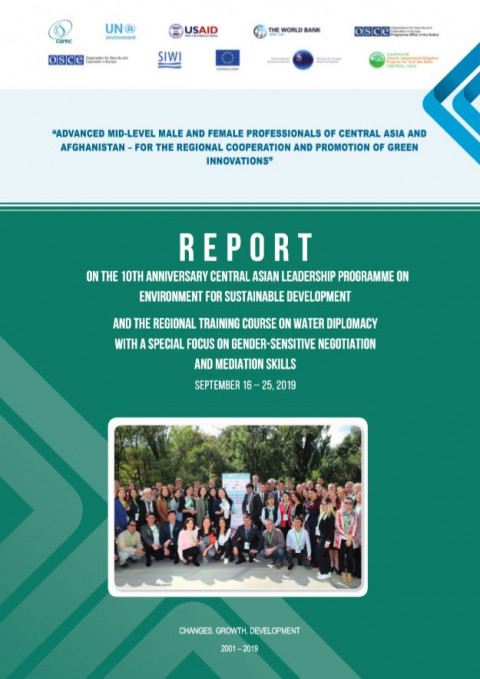 Report on the 10th Anniversary Central Asian Leadership Programme on Environment for Sustainable Development and the Regional Training Course on Water Diplomacy with a Special Focus on Gender-Sensitive Negotiation and Mediation Skills; September16–25,2019 Année de publication: 2019 Auteur institutionnel: Regional Environmental Centre for Central Asia (CAREC) The publication is a report on the 10th anniversary of the Central Asian Environment Leadership Program for Sustainable Development (September 16-22, 2019) and the OSCE regional water diplomacy training, with a special focus on gender-sensitive negotiation and mediation skills (23-25 September 2019), prepared by CAREC in cooperation with regional and international partners. Отчет о 10-й Юбилейной Центрально-Азиатской Программе Лидерства по окружающей среде для устойчивого развития;16-22 сентября 2019 года и Региональном тренинге ОБСЕ по водной дипломатии с особым акцентом на навыки ведения переговоров и медиацию с учетом ген Année de publication: 2019 Auteur institutionnel: Regional Environmental Centre for Central Asia (CAREC) Публикация является отчетом о 10-й юбилейной центральноазиатской программе лидерства по окружающей среде для устойчивого развития (16-22 сентября 2019 г.) и региональном тренинге ОБСЕ по водной дипломатии с особым акцентом на навыки ведения переговоров и медиацию с учетом гендерных факторов (23-25 сентября 2019 г.), подготовленной РЭЦЦА в сотрудничестве с региональными и международными партнерами.
  Guidance Note on Uzbekistan Green Taxonomy Année de publication: 2023 Auteur institutionnel: World Bank This Guidance Note serves to support the government of Uzbekistan in the design of a national Green Taxonomy. A green taxonomy sets out rules for classifying environmentally sustainable activities and can be instrumental inthe transition to a Green Economy by guiding policies and public resource flows, and influencing the private sector’s investment response. The Guidance Note discusses methodological choices for the taxonomy and their policy implications, reviews existing international practices, and recommends a model taxonomy and roadmap for further development of the taxonomy. A key message in the note is the importance of setting clear strategic goals that will inform the selection of the taxonomy’s environmental objectives and its other features. Also discussed are theinstitutional arrangements to coordinate the actions and inputs of multiple stakeholders during the development process of the taxonomy, and the importance of strong oversight and consistent enforcement of taxonomy rules by a competent regulatory body. Методические рекомендации по «зеленой» таксономии для Узбекистана Année de publication: 2023 Auteur institutionnel: World Bank Настоящие Методические рекомендации призваны оказать содействие правительству Узбекистана в разработке национальной «зеленой» таксономии. «Зеленая» таксономия устанавливает правила классификации экологически устойчивых видов деятельности и может сыграть важную роль в переходе к «зеленой» экономике, определяя политику и потоки государственных ресурсов, а также влияя на инвестиционную активность частного сектора. В Методических рекомендациях обсуждаются методологические варианты таксономии и их политические последствия, рассматривается существующая международная практика, а также даются рекомендации по модельной таксономии и «дорожной карте» ее дальнейшей разработки. Одним из ключевыхтезисов Рекомендаций является важность постановки четких стратегических целей, на основе которых будут определяться экологические цели таксономии и другие ее характеристики. Кроме того, рассматриваются институциональные механизмы координации действий и участия многочисленных заинтересованных сторон в процессе разработки таксономии, а также отмечается важность обеспечения компетентным регулирующиморганом надежного надзора и последовательного соблюдения правил таксономии.
  Education 2030: Incheon declaration and framework for action towards inclusive and equitable quality education and lifelong learning for all Année de publication: 2015 Auteur institutionnel: UNESCO | United Nations Development Programme (UNDP) | United Nations Population Fund (UNFPA) | UN. Office of the United Nations High Commissioner for Refugees (UNHCR) | United Nations Children's Fund (UNICEF) | United Nations Entity for Gender Equality and the Empowerment of Women (UN Women) | World Bank This framework — painstakingly drafted over many months with input from governments, international agencies, civil society and experts — provides guidance for implementing the education commitments made in the 2030 Agenda for Sustainable Development at a national, regional and global level. In particular: it aims at mobilizing all countries and partners around Sustainable Education Goal 4 and its targets;it proposes ways of implementing, coordinating, financing and monitoring the new commitments; andit proposes indicative strategies which countries may wish to draw upon in developing their plans, taking into account different national realities, capacities and levels of development and respecting national policies and priorities.