
Ressources
Explorez une large gamme de ressources sur le GCED afin d’approfondir votre compréhension et de renforcer vos activités de recherche, de plaidoyer, d’enseignement et d’apprentissage.
3,433 résultats trouvés
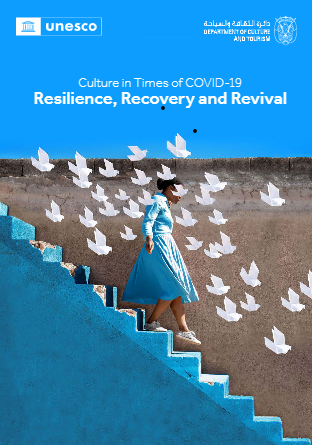 Culture in Times of COVID-19: Resilience, Recovery and Revival Année de publication: 2022 Auteur institutionnel: UNESCO | United Arab Emirates. Department of Culture and Tourism Culture in Times of COVID-19: Resilience, Recovery and Revival offers key insights on trends and structural transformations that can boost the culture sector as a cornerstone of an economy built on sustainability and well-being.A set of strategic development considerations are put forward for governments and their partners, in both the public and private sectors, to promote the value of culture as a public good, encourage cross-sector collaboration and holistically address the essential needs of the sector, while supporting cultural professionals in adapting to a changing world and providing equal access and opportunities across the culturalvalue chain.
 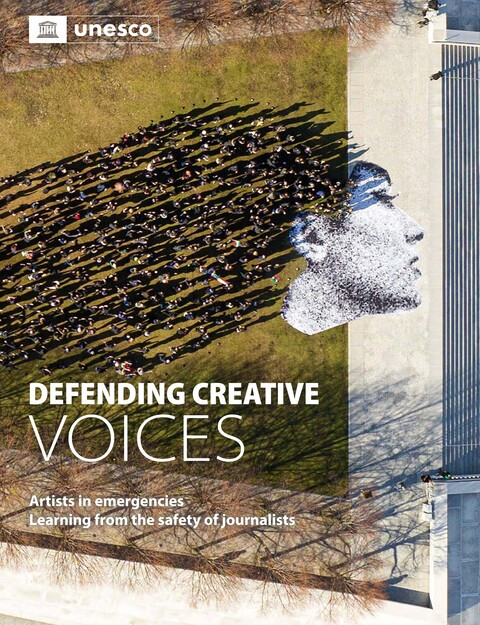 Defending Creative Voices: Artists in Emergencies, Learning from the Safety of Journalists Année de publication: 2023 Auteur: Rosario Soraide Auteur institutionnel: UNESCO Artists and cultural professionals often come across significant challenges to their freedom of expression, including violence and harassment – online and offline – legal persecution, detention, imprisonment and, in the worst of cases, murder. Emergency situations can result in additional risks for them, as many become increasingly targeted in connection to the visibility of their work and see their livelihoods impacted upon by income loss and unemployment in the cultural sector. While the attacks and threats that artists and cultural professionals face during emergencies are similar to those affecting journalists, they do not receive the same level of attention nor access to protection mechanisms and opportunities for assistance. Over the past decades, a strong framework has emerged to advance journalists’ safety at international, regional and national levels, including through legal and regulatory instruments, protection mechanisms, support networks and consistent collective mobilization for their rights. Despite growing awareness of the vulnerability of artists and cultural professionals in emergency contexts and increased efforts to safeguard their rights and ensure their safety, progress in this regard remains comparatively much more incipient. With the support of UNESCO’s Culture and Communication and Information Sector, and based on a comparative analysis, this study therefore aims to strengthen the protection of artists and cultural professionals during emergencies by drawing lessons from the experience, challenges, and achievements in the field of journalists’ safety. It presents actionable recommendations and identifies areas in which synergies between key stakeholders promoting, respectively, artistic and media freedom could serve to reinforce the protection of both at-risk artists and journalists.
 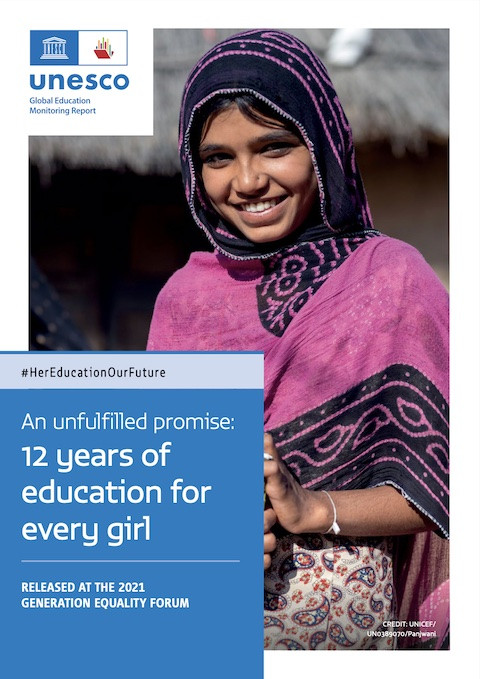 Une promesse non tenue: 12 années d’enseignement pour toutes les filles Année de publication: 2021 Auteur institutionnel: UNESCO | Global Education Monitoring Report Team En 1995, il y a un peu plus de 25 ans, 189 gouvernements ont adopté la Déclaration et le Programme d’action de Beijing – un programme visionnaire en faveur de l’autonomisation des femmes et le cadre stratégique mondial le plus complet à ce jour pour promouvoir l’égalité des genres. Le document faisait de l’éducation et de la formation des filles et des femmes l’un des 12 domaines clés dans lesquels il était urgent d’agir pour assurer une plus grande égalité.Depuis Beijing, la communauté internationale a mis l’accent sur le pouvoir transformateur de l’éducation des filles et des femmes, et sur ses avantages – non seulement pour les filles et les femmes, mais aussi pour des sociétés entières et même pour les générations futures. Dans le Programme de développement durable à l’horizon 2030, l’objectif de développement durable (ODD) 4, relatif à l’accès de tous à une éducation de qualité sur un pied d’égalité et à l’apprentissage tout au long de la vie, définit des cibles ambitieuses pour garantir l’égalité des chances – notamment une cible visant à faire en sorte, d’ici à 2030, que toutes les filles et tous les garçons suivent un cyclede 12 années d’enseignement.Ce bref document étudie l’évolution des taux d’achèvement des études primaires et secondaires des filles et des garçons depuis 1995, et appelle à agir pour que nous tenions notre engagement de ne laisser personne de côté.
 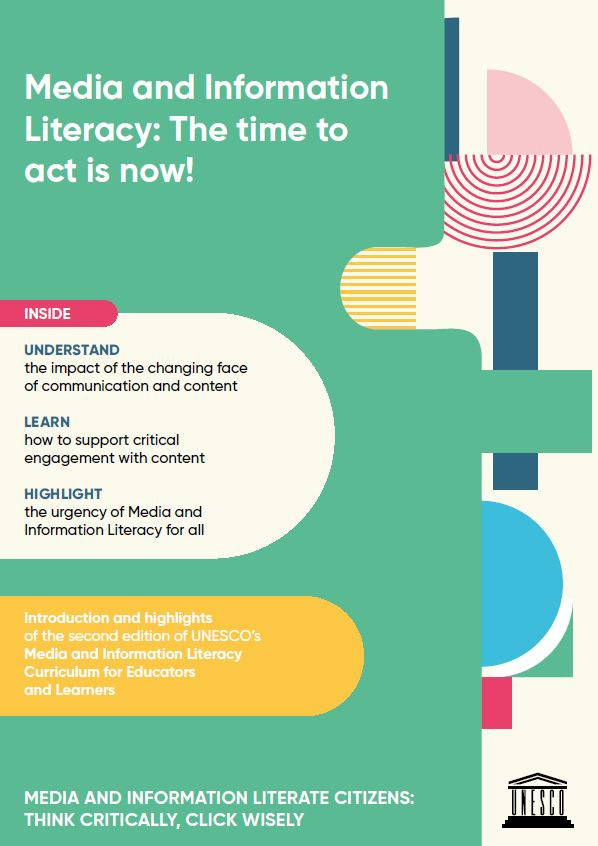 [Summary] Media and Information Literacy: The Time to Act is Now! Année de publication: 2021 Auteur institutionnel: UNESCO UNESCO has developed a comprehensive Curriculum which provides a framework for training teachers. But it is also a foundation that will also be of help to others: to learners, to content providers like internet companies and news media outlets, and to citizens of all ages as they consume, create and use content, including information.The second edition of the learning resource has been significantly expanded since the first publication in 2011. The MIL Curriculum reflects the changing nature of the information landscape. It now includes insight from a broader range of content providers than before, including libraries, archives, museums, media, and digital communications companies.The Curriculum is designed to empower educators and learners in general – from schoolteachers to those involved in training, the media and libraries, governments, and NGOs – to train people to spot misrepresentations and disinformation, and most importantly develop critical thinking competencies.
 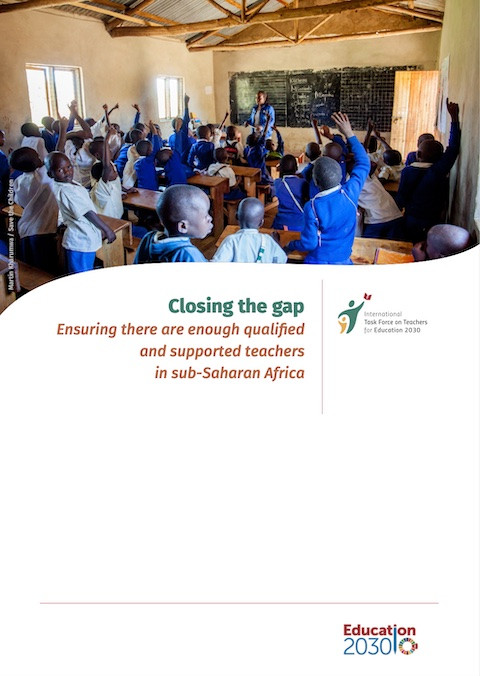 Closing the Gap: Ensuring There Are Enough Qualified and Supported Teachers in Sub-Saharan Africa Année de publication: 2021 Auteur institutionnel: International Task Force on Teachers for Education 2030 | UNESCO The fourth Sustainable Development Goal (SDG 4) aims to ensure better learning opportunities and outcomes and more equitable and inclusive education for all. SDG target 4.c calls for an increase in the supply of qualified teachers, particularly in low-income countries. To achieve this ambitious target, the international community needs to pay renewed attention to teacher support and preparation.This advocacy brief considers what it will take to increase the supply of qualified teachers in sub-Saharan Africa, the region where the teacher shortage is most acute. It analyses the causes for teacher shortages, looks at trends affecting the region and describes the scale of the shortages. It examines the fiscal pressures on low-income countries to cover salary costs and the costs of initial teacher education and continuing professional development, and it proposes some recommendations for governments and the international community to achieve the essential target of substantially increasing the supply of well qualified teachers.
 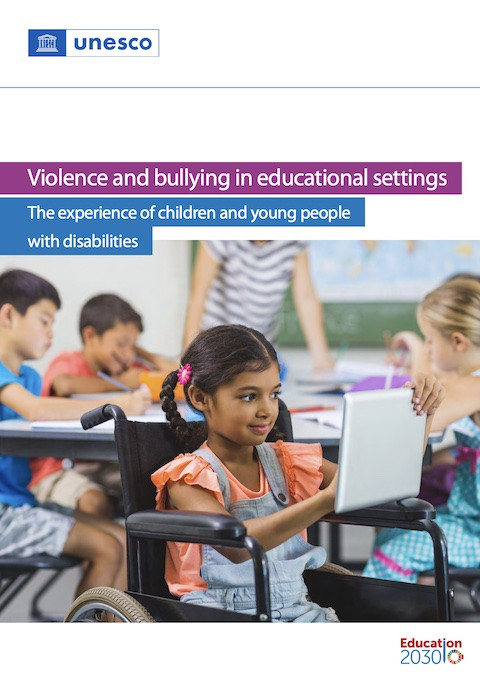 Violence and Bullying in Educational Settings: The Experience of Children and Young People With Disabilities Année de publication: 2021 Auteur institutionnel: UNESCO Learners with disabilities are disproportionately affected by school violence and bullying at all ages and in all learning settings. This has significant adverse impacts on their education, health and well-being. This document aims to raise awareness of the problem and encourage action to ensure that children and young people with disabilities have access to a safe learning environment.
  Liberté et créativité: défendre l'art, défendre la diversité; édition spéciale Année de publication: 2020 Auteur: Laurence Cuny Auteur institutionnel: Organisation des Nations Unies pour l'éducation, la science et la culture (UNESCO) En prévision de la troisième édition de Re|Penser les politiques culturelles, cette édition spéciale de la série des Rapports mondiaux, qui suit la mise en œuvre de la Convention de 2005 sur la protection et la promotion de la diversité des expressions culturelles, se concentre sur l'un des objectifs primordiaux de la Convention : la promotion des droits de l'homme et des libertés fondamentales et, en particulier, de la liberté artistique. La liberté d'expression, d'information et de communication, ainsi que la possibilité pour les individus de choisir les expressions culturelles sont des conditions préalables à la protection et à la promotion de la diversité des expressions culturelles.S'appuyant sur les recommandations formulées dans le Rapport mondial de 2018, cette édition spéciale offre un aperçu des avancées et des défis actuels en matière de protection juridique de la liberté artistique, de protection des droits sociaux et économiques des artistes et des professionnels de la culture et de suivi de la liberté artistique aux niveaux national, régional et international.En produisant de nouvelles données et des analyses approfondies, la série des Rapports mondiaux de la Convention 2005 se veut un outil de référence pour l'élaboration des politiques culturelles et la promotion de la créativité en faveur du développement.
 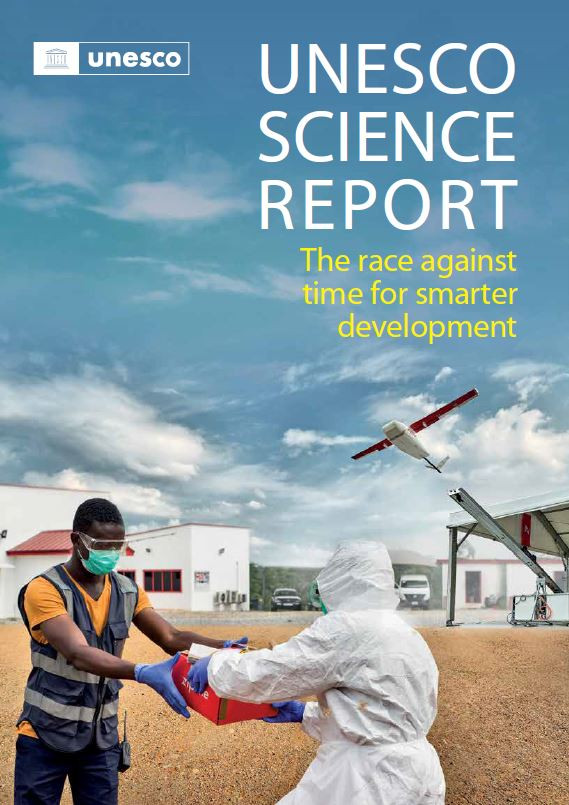 UNESCO Science Report: The Race Against Time for Smarter Development Année de publication: 2021 Auteur: Susan Schneegans | Tiffany Straza | Jake Lewis Auteur institutionnel: UNESCO This seventh edition of the report monitors the development path that countries have been following over the past five years from the perspective of science governance. It documents the rapid societal transformation under way, which offers new opportunities for social and economic experimentation but also risks exacerbating social inequalities, unless safeguards are put in place.The report concludes that countries will need to invest more in research and innovation, if they are to succeed in their dual digital and green transition. More than 30 countries have already raised their research spending since 2014, in line with their commitment to the Sustainable Development Goals. Despite this progress, eight out of ten countries still devote less than 1% of GDP to research, perpetuating their dependence on foreign technologies.
  Education for Global Citizenship as a Transformative Methodological Proposal: Reflections and Practical Proposals Année de publication: 2019 Auteur: Isarel García | Joan Gratacós | Desiderio De Paz | Mercè Gil | Assumta Zapata Auteur institutionnel: Oxfam International This publication, the result of the collaborative work of the Network of educators for global citizenship, is a proposal for reflection and practical examples regarding the transformative nature of Education for global citizenship, being essential that for this educational approach that its actions educational activities are aimed at promoting critical thinking, dialogue, collaboration, solidarity and commitment to transform inequalities and promote social justice, equity and sustainable development. The methodological approach, therefore, must also be transformative and the strategies that accompany processes, promote this social transformation. Transformative methodologies are inherent to Education for global citizenship and the methodological processes that contribute to the construction of schools for global citizenship, in our opinion, should be based on three different pillars: promote the transformative dimension of education to build another world possible and necessary, promote a socio-affective approach focused on solidarity and cosmopolitan empathy and promote the construction of a more participatory and integrated curriculum that generates meaning in teachers and students. La educación para la ciudadanía global como propuesta metodológica transformadora: Reflexiones y propuestas prácticas Année de publication: 2019 Auteur: Isarel García | Joan Gratacós | Desiderio De Paz | Mercè Gil | Assumta Zapata Auteur institutionnel: Oxfam Intermón Esta publicación, fruto del trabajo colaborativo de la Red de educadores y educadoras para una ciudadanía global, es una propuesta de reflexión y ejemplos prácticos en torno al carácter transformador de la Educación para la ciudadanía global, siendo esencial que para este enfoque educativo que sus acciones educativas vayan encaminadas a fomentar el pensamiento crítico, el diálogo, la colaboración, la solidaridad y el compromiso para la transformación de las desigualdades y la promoción de la justicia social, la equidad y el desarrollo sostenible. El enfoque metodológico, por lo tanto, debe ser también transformador y las estrategias que acompañen procesos, fomentar esta trasformación social. Las metodologías transformadoras son consustanciales a la Educación para la ciudadanía global y los procesos metodológicos que contribuyen a la construcción de escuelas para la ciudadanía global, a nuestro entender, deberían basarse en tres pilares distintos: promover la dimensión transformadora de la educación para construir otro mundo posible y necesario, promover un enfoque socio afectivo centrado en la solidaridad y la empatía cosmopolita y promover la construcción de un currículo más participativo e integrado que genero sentido en docentes y alumnado.