
Ressources
Explorez une large gamme de ressources sur le GCED afin d’approfondir votre compréhension et de renforcer vos activités de recherche, de plaidoyer, d’enseignement et d’apprentissage.
3,385 résultats trouvés
 [Résumé] Repenser nos futurs ensemble: Un nouveau contrat social pour l’éducation Année de publication: 2021 Auteur institutionnel: International Commission on the Futures of Education | Organisation des Nations Unies pour l'éducation, la science et la culture (UNESCO) Devant la menace qui pèse sur les futurs communs de l’humanité et de la planète Terre, il est devenu urgent d’entreprendre une action commune pour changer de cap et repenser nos futurs. Des responsabilités nouvelles, pressantes et importantes incombent notamment à l’éducation, un secteur qui a été et continue d’être un puissant vecteur de changement positif. Publié par la Commission internationale sur Les futurs de l’éducation, le présent rapport est le résultat d’une consultation mondiale qui a mobilisé près d’un million de personnes. Il invite les gouvernements, les institutions, les organisations et les citoyens à travers le monde à élaborer un nouveau contrat social pour l’éducation qui nous aidera à construire, ensemble et pour tous, des futurs pacifiques, justes et durables. À travers un examen approfondi de différentes questions ayant trait aux technologies numériques, au changement climatique, au recul démocratique, à la polarisation sociétale et à l’avenir incertain du marché du travail, ce rapport entend non seulement lancer un débat ouvert sur l’éducation pour susciter la réflexion, mais aussi inciter chacun d’entre nous à agir ; son argument central étant que grâce à des millions d’actes individuels et collectifs de courage, de leadership, de résistance, de créativité et d’intérêt pour autrui, nous parviendrons à changer de cap et à transformer l’éducation pour favoriser l’avènement de futurs justes, équitables et durables. [Резюм] Совместное переосмысление наших перспектив: Новый социальный договор в интересах образования Année de publication: 2021 Auteur institutionnel: International Commission on the Futures of Education | Организация Объединенных Наций по вопросам образования, науки и культуры (UNESCO) Все человечество и планета Земля находятся под угрозой. Для изменения ситуации и переосмысления будущего необходимы безотлагательные действия, предпринятые каждым из нас. Перед образованием, которое уже давно признано влиятельным фактором позитивных изменений, стоит новая, срочная и важная задача. Данный доклад Международной комиссии по Перспективам образования, основанный на глобальном процессе консультаций с участием около миллиона человек, предлагает правительствам, учреждениям, организациям и гражданам всего мира заключить новый общественный договор в области образования, который поможет нам построить мирные отношения, создавая справедливое и устойчивое будущее вместе и для каждого. В докладe подробно рассматриваются цифровые технологии, изменение климата, отсутствие успеха в достижении демократии и поляризация общества, а также неопределенные перспективы трудоустройства. Доклад направлен не только на то, чтобы стимулировать обсуждение о вопросах образования и побудить к размышлениям, но и на то, чтобы призвать каждого из нас к активным действиям. Основная его идея заключается в том, что только через миллионы индивидуальных и коллективных актов мужества, лидерства, сопротивления, творчества и заботы мы сможем изменить курс и преобразить систему образования для построения справедливого, равноправного и устойчивого будущего. [摘要] 一起重新构想我们的未来:为教育打造新的社会契约 Année de publication: 2021 Auteur institutionnel: International Commission on the Futures of Education | 联合国教科文组织 (UNESCO) 人类和地球正受到威胁。我们需要共同采取紧急行动,改变发展方向,重新构 想我们的未来。长期以来,教育都被认为是促进积极变革的强大力量,而现在教育 面临着全新的、紧迫的和重要的任务。“教育的未来”国际委员会的这份报告在约 百万人参与的全球协商进程的基础上,邀请世界各地的政府、机构、组织和公民出 谋划策,为教育缔结一项新的社会契约,齐心协力地建设一个面向所有人的和平、 公正和可持续的未来。 报告深入探讨了数字技术、气候变化、民主滑坡、社会两极分化以及不确定的 工作前景等问题,其目的不仅仅是让每个人参与教育对话,引发思考,而且要鞭策 我们每个人都采取行动。报告认为,只有通过数以百万计的个人和集体,凭借行动 力、领导力、抗压力、创造力和关爱力,我们才能改变发展方向,实现教育转型, 最终建设一个公正、公平和可持续的未来。
 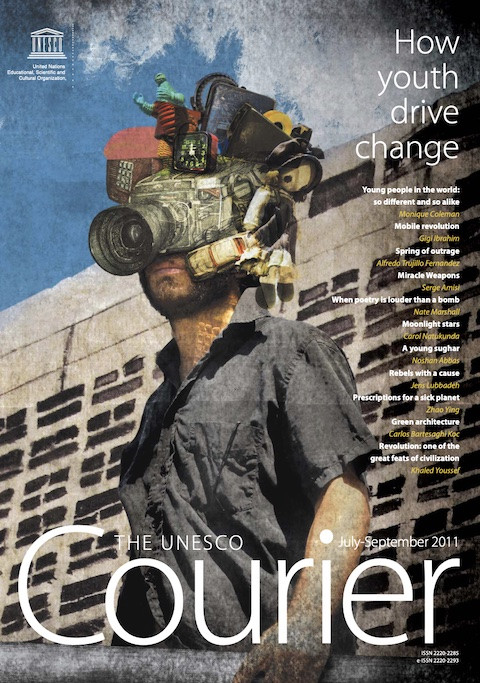 How Youth Drive Change (The UNESCO Courier no. 3; July-September 2011) Année de publication: 2011 Auteur institutionnel: UNESCO Considering school history as a place of confrontation of discourse and knowledge from competing socialization spaces (school, family, media), we are interested in citizenship education work and challenges posed by these plural socializations. In an important context media coverage of debates on the recognition of minority memories in France and their entry into the school programs of the college in 2008, how do students appropriate the ""socially vivid issues"" of immigration, colonization, and decolonization? Fromcontent analysis of a corpus made up of around a hundred interviews semi-structured conducted between 2007 and 2010 with 3rd year college students (end of lower secondary and compulsory education), we analyze and highlight contrasting interpretations of these heritages by majority students and minority students, respectively supplied by categories of public debate and family narratives. We show, following work relating to the sociology of school curricula, which learning citizenship in the light of these historical legacies results from the confrontation of the pupils with the discourses and knowledge different spaces in which they take part. But it is above all the product oftheir position in the face of these historical legacies, according to their experiences social and the role they give to these stories in building a common identity and belonging.
  عقد اجتماعي جديد للتربية والتعليم (The UNESCO Courier Special Edition; November 2021) Année de publication: 2021 Auteur institutionnel: منظمة الأمم المتحدة للتربية والعلم والثقافة (UNESCO) Reimagining Our Futures Together upholds the tradition of the major UNESCO reports that have already structured education policies throughout the world in the past. The Faure report, Learning to be, in 1972, and the Delors report, Learning: The Treasure Within, in 1996, have become benchmarks in the debate on learning. This third document presents a lucid assessment of the challenges confronting education today.Faced with the rapid changes in our environment, a change of direction is needed. We need to devote more importance to ecology; to provide students with the critical tools to detect misinformation, prejudices, and preconceived ideas; to strengthen teamwork, and to improve the professionalization of teachers. Beyond these imperatives, we must also rethink the multiple interdependencies, the links between generations and between cultures, and our relationship with living beings, to establish a new social contract for education. A New Social Contract for Education (The UNESCO Courier Special Edition; November 2021) Année de publication: 2021 Auteur institutionnel: UNESCO Reimagining Our Futures Together upholds the tradition of the major UNESCO reports that have already structured education policies throughout the world in the past. The Faure report, Learning to be, in 1972, and the Delors report, Learning: The Treasure Within, in 1996, have become benchmarks in the debate on learning. This third document presents a lucid assessment of the challenges confronting education today.Faced with the rapid changes in our environment, a change of direction is needed. We need to devote more importance to ecology; to provide students with the critical tools to detect misinformation, prejudices, and preconceived ideas; to strengthen teamwork, and to improve the professionalization of teachers. Beyond these imperatives, we must also rethink the multiple interdependencies, the links between generations and between cultures, and our relationship with living beings, to establish a new social contract for education.
 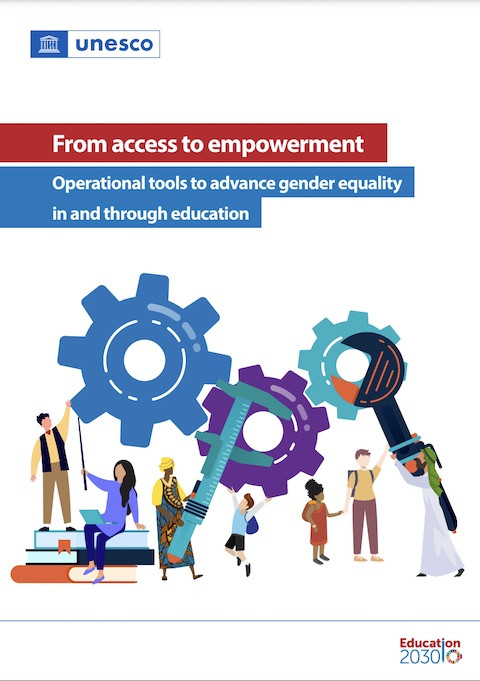 De l’accès à l’autonomisation: Outils opérationnels pour promouvoir l’égalité des genres dans et par l’éducation Année de publication: 2021 Auteur institutionnel: Organisation des Nations Unies pour l'éducation, la science et la culture (UNESCO) Ce guide a été conçu pour renforcer la capacité individuelle et institutionnelle à intégrer de manière efficace l’égalité des genres aux programmes éducatifs. Ce guide a été préparé pour l’ensemble du personnel du Secteur de l’éducation de l’UNESCO, notamment pour celles et ceux travaillant au Siège, dans les bureaux hors Siège/régionaux/multipays et dans les instituts, ainsi que pour les partenaires d’exécution. Ce guide fournit des outils d’orientation et opérationnels pour intégrer efficacement le genre à tous les programmes relatifs à l’éducation. La première partie est une présentation succincte des concepts clés de l’égalité des genres dans et par l’éducation, et un aperçu de la manière dont l’égalité des genres dans l’éducation s’inscrit dans la vision de l’UNESCO et dans les objectifs fixés au niveau international. La deuxième partie fournit des conseils pratiques sur la manière d’intégrer l’égalité des genres aux programmes éducatifs, d’élaborer des programmes transformateurs et, enfin, de suivre et d’évaluer les résultats en matière de genre dans les programmes éducatifs.
 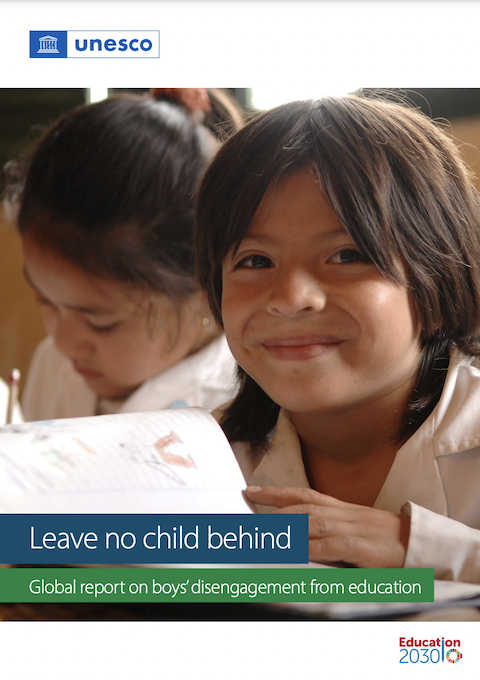 Leave No Child Behind: Global Report on Boys’ Disengagement From Education Année de publication: 2022 Auteur institutionnel: منظمة الأمم المتحدة للتربية والعلم والثقافة (UNESCO) The 2030 Agenda for Sustainable Development makes the promise to leave no one behind. While improving educational opportunities for girls globally continues to be of paramount importance to achieve gender equality in and through education, this focus on achieving gender parity and equality must not ignore boys. No less than 132 million boys of primary and secondary school age are out of school. To leave no child behind, UNESCO developed the first global report of this scope on boys’ disengagement from education, bringing together qualitative and quantitative evidence from over 140 countries. As this report shows, addressing boys’ disengagement from and disadvantage in education is not a zero-sum game. Supporting boys does not mean that girls lose out and vice versa. Addressing boys’ disengagement from and disadvantage in education not only benefits boys’ learning, employment opportunities, income and well-being, but it also benefits girls and the broader society.
 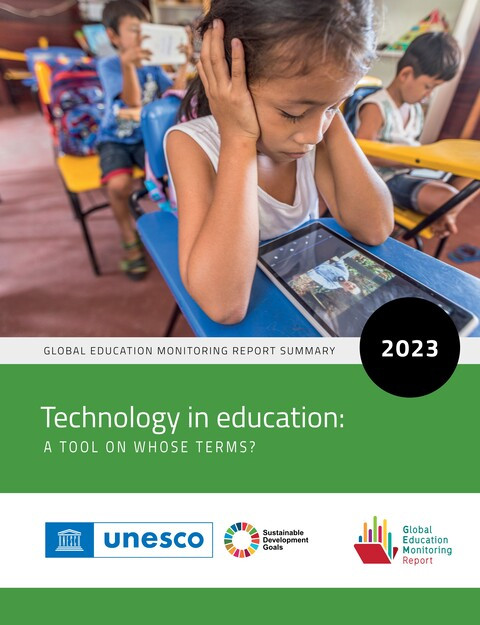 [요약본] 2023 세계 교육 현황 보고서 요약본: 교육 분야에서의 기술; 누구를 위한 도구인가? Année de publication: 2023 Auteur institutionnel: 유네스코 | 세계교육현황보고서팀 교육 분야에서 기술의 역할은 오랫동안 격렬한 논쟁을 불러일으켜 왔다. 기술은 지식을 민주화할 것인가, 선택된 소수가 정보를 통제함으로써 민주주의를 위협할 것인가? 기술은 무한한 기회를 제공할 것인가, 돌이킬 수 없이 기술에 종속되는 미래로 이끌 것인가? 기술은 공평한 경쟁의 장을 제공할 것인가, 불평등을 악화시킬 것인가? 기술은 아이들을 가르치는 데 사용되어야 할 것인가, 아이들의 발달에 위험 요소가 될 것인가? 이러한 논쟁은 코로나19로 인한 휴교와 생성형 인공지능의 등장으로 더욱 고조되고 있다. 하지만 개발자가 의사결정권자보다 한 발 앞서 있는 경우가 많기 때문에 교육 기술에 대한 연구는 복잡하다. 강력하고 공정한 증거가 부족하다. 사회는 기술을 해결책으로서 선택하기 전에 교육에 대해 올바른 질문을 던지고 있는가? 사회는 기술이 가져다줄 이익을 모색하는 동시에 기술의 위험을 인식하고 있는가 정보통신기술은 소외된 학습자에게 다가가고 더 많은 지식을 매력적이고 저렴한 포맷으로 보급한다는 측면에서 형평성과 포용성을 뒷받침할 잠재력을 갖고 있다. 특정한 상황과 일부 학습 유형에서 기술은 교수 및 학습의 기초 역량을 질적으로 향상시킬 수 있다. 어떤 경우에서든 디지털 역량은 기초 역량 패키지의 일부가 되었다. 또한 디지털 기술은 관리를 지원하고 효율성을 높여 더 많은 양의 교육 데이터를 처리하는 데 도움이 될 수 있다. 동시에 기술은 완전히 해롭지는 않더라도 일부를 배제하거나 일부에게 부적절하거나 부담을 줄 수도 있다. 따라서 정부는 모두를 위한 교육에 공평하게 접근할 수 있도록 적절한 환경을 보장하고, 학습자를 부정적인 영향으로부터 보호하기 위해 기술 사용을 규제하고 교사들을 준비시켜야 한다. 본 보고서는 적절하고 공평하며 측정 가능하고 지속 가능한 증거를 바탕으로 기술을 교육에 도입해야 한다고 권장하고 있다. 다시 말해, 기술 사용은 학습자의 최선의 이익을 고려해야 하며, 교사와의 대면적 상호작용을 보완해야 한다. 기술은 이러한 조건에 따라 사용되는 도구로 인식되어야 한다. [резюме] ВСЕМИРНЫЙ ДОКЛАД ПО МОНИТОРИНГУ ОБРАЗОВАНИЯ РЕЗЮМЕ 2023: Технологии в образовании; НА ЧЬИХ УСЛОВИЯХ? Année de publication: 2023 Auteur institutionnel: Организация Объединенных Наций по вопросам образования, науки и культуры (UNESCO) | Global Education Monitoring Report Team Вопрос о роли технологий в образовании уже давно вызывает бурные дискуссии. Способствуют ли они распространению знаний или же ставят под угрозу доступ к ним, позволяя избранному кругу лиц контролировать информацию? Открывают ли они безграничные возможности или же безвозвратно ведут нас к зависимому от технологий будущему? Уравнивают ли они возможности или же усугубляют неравенство? Следует ли использовать их при воспитании детей младшего возраста или же существуют риски для нормального развития детей? Закрытие школ в связи с пандемией COVID-19 и развитие генеративного искусственного интеллекта придали новый импульс обсуждению этих вопросов. Однако учитывая, что разработчики технологий зачастую идут на шаг впереди ответственных за принятие решений лиц, исследования в области образовательных технологий сопряжены с определенными трудностями. Надежных, объективных данных крайне мало. Задается ли общество правильными вопросами об образовании, прежде чем прибегнуть к помощи технологий? Информационно-коммуникационные технологии способны содействовать обеспечению справедливости и инклюзивности с точки зрения охвата находящихся в неблагоприятном положении учащихся и более широкого распространения знаний в удобных и доступных форматах. В определенных условиях и в рамках некоторых видов обучения они могут повышать качество преподавания и изучения базовых навыков. Так или иначе, цифровые компетенции становятся неотъемлемой частью набора базовых навыков. Цифровые технологии также могут способствовать управлению и повышению эффективности, помогая обрабатывать большие объемы данных об образовании. В то же время технологии могут приводить к изоляции, не соответствовать потребностям и быть обременительными, а иногда даже вредными. Правительства должны создавать надлежащие условия для обеспечения справедливого доступа к образованию для всех, регулировать использование технологий, с тем чтобы защитить учащихся от их негативного воздействия, и заниматься подготовкой учителей. В данном докладе рекомендуется внедрять технологии в образование на основании данных, подтверждающих их целесообразность, соответствие принципам справедливости, применимость и устойчивость. Иными словами, они должны использоваться с учетом интересов учащихся и в качестве дополнения к образованию, основанному на человеческом взаимодействии. Их следует рассматривать как инструмент, использование которого должно осуществляться на этих условиях. Во Всемирном докладе по мониторингу образования 2023 года приводится анализ того, что еще предстоит сделать для достижения к 2030 году целей в области образования, в то время, когда мир находится на полпути к установленному сроку. Образование играет не последнюю роль в технологическом прогрессе, однако оно также имеет решающее значение для достижения других целей в области развития.