
Ressources
Explorez une large gamme de ressources sur le GCED afin d’approfondir votre compréhension et de renforcer vos activités de recherche, de plaidoyer, d’enseignement et d’apprentissage.
3,433 résultats trouvés
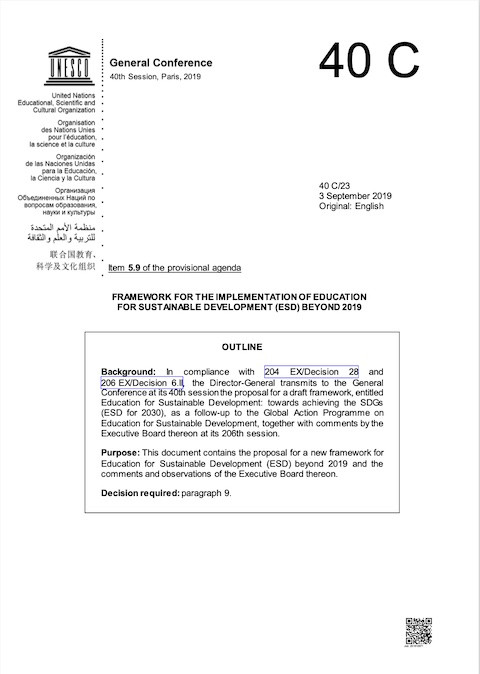 Cadre pour la mise en oeuvre de l'éducation en vue du développement durable (EDD) après 2019 Année de publication: 2019 Auteur institutionnel: Organisation des Nations Unies pour l'éducation, la science et la culture (UNESCO) Le présent document contient une proposition de cadre pour l’éducation en vue du développement durable (EDD) après 2019, ainsi que les commentaires et observations du Conseil exécutif à ce sujet. Рамочная основа деятельности в области образования в интересах устойчивого развития (ОУР)в период после 2019 г Année de publication: 2019 Auteur institutionnel: Организация Объединенных Наций по вопросам образования, науки и культуры (UNESCO) В настоящем документе содержатся предложение отно- сительно новой рамочной основы деятельности в области образования в интересах устойчивого развития (ОУР), а также комментарии и заме- чания Исполнительного совета.
 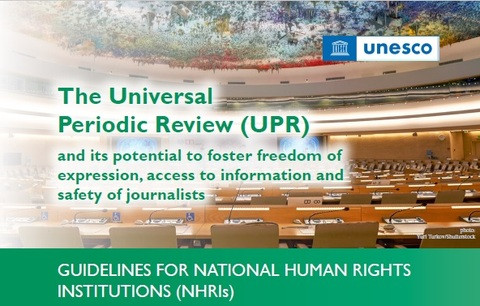 الاستعراض الدوري الشامل وقدرته على تعزيز حرية التعبير والنفاذ إلى المعلومة وسالمة الصحفيين Année de publication: 2022 Auteur: Hina Jilani Auteur institutionnel: UNESCO This document introduces The Universal Periodic Review (UPR), including its function, content and guideline for practice, and evaluates its positive contributions to global human rights. The Universal Periodic Review (UPR) and its Potential to Foster Freedom of Expression, Access to Information and Safety of Journalists: Guidelines for National Human Rights Institutions (NHRIs) Année de publication: 2022 Auteur: Hina Jilani Auteur institutionnel: UNESCO This document introduces The Universal Periodic Review (UPR), including its function, content and guideline for practice, and evaluates its positive contributions to global human rights. El examen Periódico Universal (EPU) y su capacidad para promover la libertad de expresión, el acceso a la información y la seguridad de los periodistas : directrices para las instituciones nacionales de derechos humanos (INDH) Année de publication: 2022 Auteur: Hina Jilani Auteur institutionnel: UNESCO This document introduces The Universal Periodic Review (UPR), including its function, content and guideline for practice, and evaluates its positive contributions to global human rights. ’Examen périodique universel (EPU) et son potentiel pour la liberté d’expression, l’accès à l’information et la sécurité des journalistes : directives à l’intention des institutions nationales des droits de l’homme (INDH) Année de publication: 2022 Auteur: Hina Jilani Auteur institutionnel: UNESCO This document introduces The Universal Periodic Review (UPR), including its function, content and guideline for practice, and evaluates its positive contributions to global human rights.
 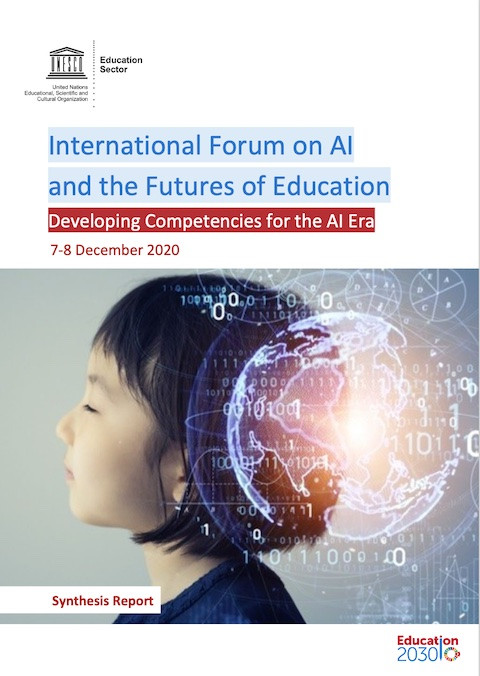 International Forum on AI and the Futures of Education: Developing Competencies for the AI Era Synthesis Report; 7-8 December 2020 Année de publication: 2021 Auteur: Fengchun Miao | Wayne Holmes Auteur institutionnel: UNESCO This synthesis report has been developed by the UNESCO Unit for Technology and Artificial Intelligence in Education within the Future of Learning and Innovation Team, drawing on the International Forum on AI and the Futures of Education held in Beijing and simultaneously online from 7 to 8 December 2020.The Forum underlined the importance of reviewing the very purpose of education, together with the opportunity for real transformation, and the role that AI might play. It is widely acknowledged that current educational practices and educational environment are very rigid, and that the future of education should be more flexible and responsive to changing circumstances and innovation. National education authorities should identify what skills young people need to enable them to live and thrive in the new realities of a constantly changing world, and what digital transformation makes possible in the national and international context. In short, new education models are needed to put students at the centre, to move away from a focus on memorizing content, to integrate the digital and the analogue, and to foster human cognitive, socioemotional and critical skills, all of which might – with foresight and careful attention – be enabled by AI and other digital technologies.
 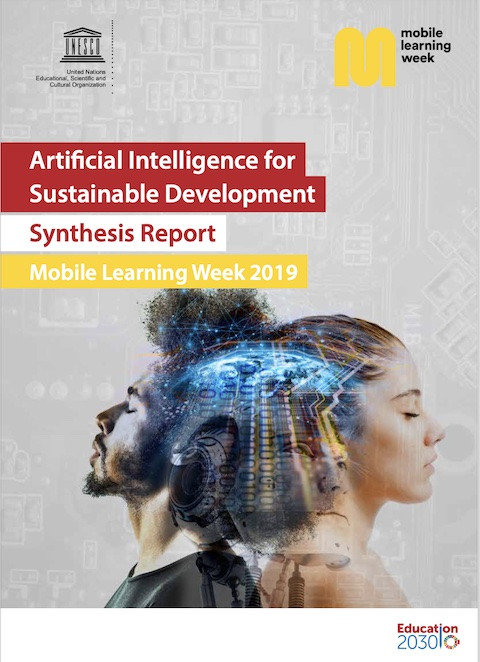 Artificial Intelligence for Sustainable Development: Synthesis Report; Mobile Learning Week 2019 Année de publication: 2019 Auteur institutionnel: UNESCO During the five-day event for Mobile Learning Week 2019, UNESCO gathered participants from around the world to share experiences, initiatives and plan joint actions with a view to harnessing artificial intelligence (AI) to achieve Sustainable Development Goal (SDG) 4. The report stems from the work that the speakers presented and the insights that all the participants shared at the event.
  AI and Education: Guidance for Policy-Makers Année de publication: 2021 Auteur: Fengchun Miao | Wayne Holmes | Ronghuai Huang | Hui Zhang Auteur institutionnel: UNESCO Artificial intelligence (AI) is envisioned as a new tool to accelerate the progress towards the achievement of SDG 4. Policies and strategies for using AI in education are central to maximizing AI’s benefits and mitigating its potential risks. Fostering AI-ready policy-makers is the starting point of the policy development process.This publication offers guidance to policy-makers in understanding AI and responding to the challenges and opportunities in education presented by AI. Specifically, it introduces the essentials of AI such as its definition, techniques, technologies, capacities and limitations. It also delineates the emerging practices and benefit-risk assessment on leveraging AI to enhance education and learning, and to ensure inclusion and equity, as well as the reciprocal role of education in preparing humans to live and work with AI.The publication summarizes three approaches to the policy responses from existing practices: independent approach, integrated approach and thematic approach. In a further step, it proposes more detailed recommendations and examples for planning AI and education policies, aligned with the recommendations made in the 2019 Beijing Consensus on AI and Education. 人工智能与教育: 政策制定者指南 Année de publication: 2021 Auteur: Fengchun Miao | Wayne Holmes | Ronghuai Huang | Hui Zhang Auteur institutionnel: UNESCO 该文件为政策制定者提供关于人工智能在教育领域内应用于发展的相关知识,包括其定义与技术一级对教学和教育的影响,并为政策制定者提供相关政策建议。