
Ressources
Explorez une large gamme de ressources sur le GCED afin d’approfondir votre compréhension et de renforcer vos activités de recherche, de plaidoyer, d’enseignement et d’apprentissage.
3,433 résultats trouvés
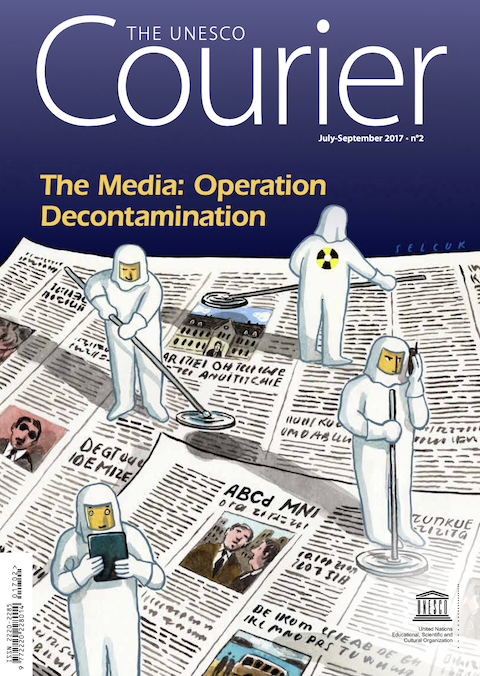 Médias: Opération décontamination (Le Courrier de l'UNESCO no. 2; Juillet-Septembre 2017) Année de publication: 2017 Auteur institutionnel: Organisation des Nations Unies pour l'éducation, la science et la culture (UNESCO) La pluralité d’opinions éclairées est une condition sine qua non du développement démocratique de nos sociétés. La qualité des informations diffusées par les médias – traditionnels et nouveaux – est déterminante dans la formation de l’opinion publique. C’est pourquoi l’UNESCO met un accent tout particulier à l’éducation aux médias et à l’information qu’elle considère comme une compétence citoyenne fondamentale du XXIe siècle.La liberté d’expression et la libre circulation des idées par les mots et l’image font partie des principes constitutifs de l’UNESCO et sont au cœur de l’Agenda 2030 pour le développement durable. L’UNESCO soutient le travail des journalistes et militants déterminés qui défendent ces libertés fondamentales, comme le journaliste Dawit Isaak, lauréat du Prix mondial de la liberté de la presse UNESCO/Guillermo Cano 2017, dont on peut découvrir le portrait dans ce numéro du Courrier de l’UNESCO.Au cours de cette dernière décennie, plus de 800 professionnels des médias ont été victimes de crimes visant à museler la libre expression. Seul un meurtre sur dix a donné lieu à un jugement. Cette impunité est inacceptable et alimente encore la spirale de la violence dans le futur. C’est pourquoi l’UNESCO s’engage de toutes ses forces pour y mettre un terme, sur tous les continents, comme une condition indispensable de sociétés pacifiques et d’autant plus robustes qu’elles sont mieux informées.À l’ère de la « post-vérité », le rôle de l’UNESCO est plus important que jamais, et ce nouveau numéro du Courrier est une belle occasion de renouveler notre engagement fondateur à soutenir l’information et la communication pour construire la paix dans l’esprit des hommes et des femmes.
 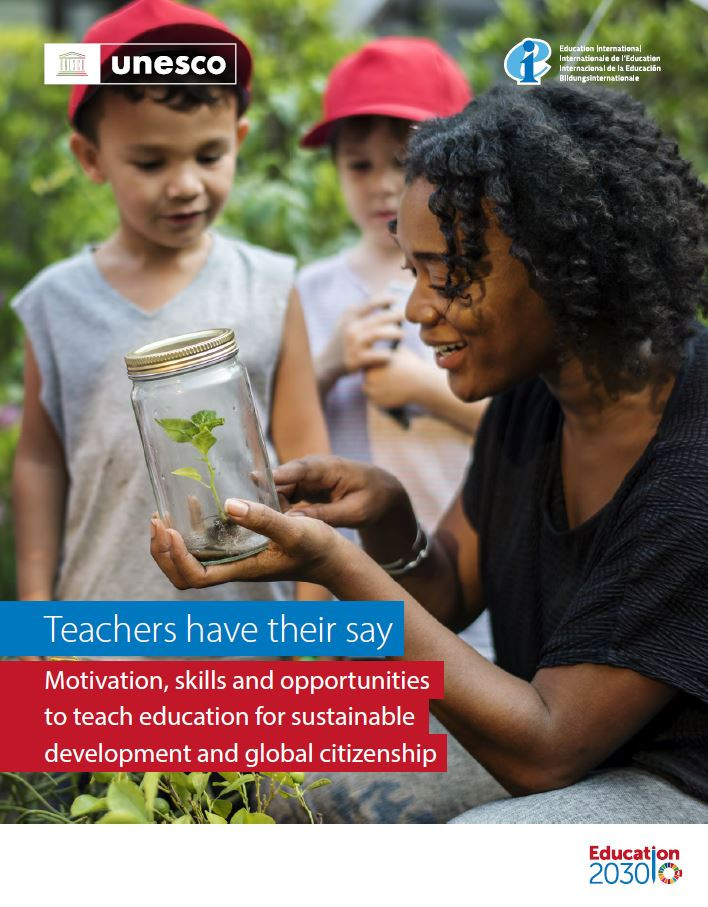 Teachers Have Their Say: Motivation, Skills and Opportunities to Teach Education for Sustainable Development and Global Citizenship Année de publication: 2021 Auteur institutionnel: منظمة الأمم المتحدة للتربية والعلم والثقافة (UNESCO) | Education International (EI) This report examines how ready teachers are to meet the promise of Sustainable Development Goal 4 on Education and Target 4.7, which calls on countries ‘to ensure that all learners acquire the knowledge and skills needed to promote sustainable development’.
 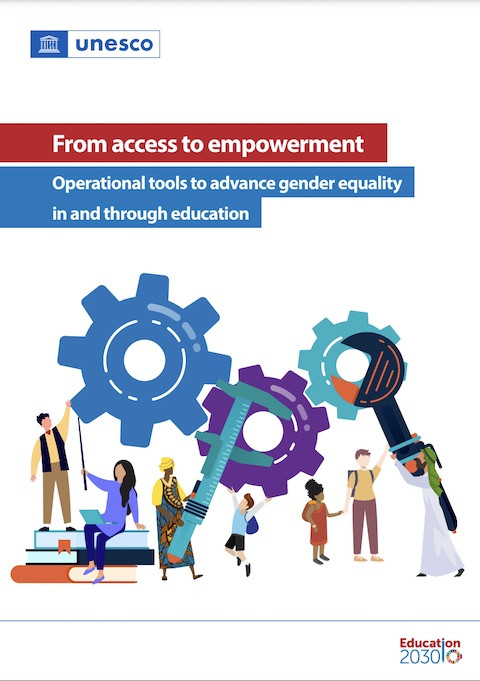 From Access to Empowerment: Operational Tools to Advance Gender Equality in and Through Education Année de publication: 2021 Auteur institutionnel: UNESCO This toolkit has been developed to strengthen individual and institutional capacity to integrate gender equality into education programmes in an effective manner. It has been prepared for all UNESCO Education Sector staff, including those at Headquarters, in Field/Regional/Cluster Offices and in Institutes as well as for implementing partners. This toolkit provides orientation and operational tools to meaningfully integrate gender into all education programmes. The first part provides a short introduction to key concepts on gender equality in and through education and an overview on how gender equality in education links to UNESCO’s vision and internationally agreed objectives. The second part provides practical guidance on how to mainstream gender equality into an education programme, how to design gender-transformative programmes and finally, how to monitor and evaluate gender results in education programmes. Del acceso al empoderamiento: Herramientas operativas para promover la igualdad de género en y a través de la educación Année de publication: 2021 Auteur institutionnel: UNESCO Esta guía se ha desarrollado para fortalecer la capacidad individual e institucional para integrar de forma efectiva la igualdad de género en los programas de educación. Fue elaborada para todo el personal del Sector de Educación de la UNESCO, incluyendo el personal ubicado en la Sede, en las Oficinas fuera de la Sede, regionales y multipaís, y en los Institutos, así como para los asociados en la ejecución de su trabajo. Esta guía ofrece herramientas orientativas y operativas para integrar de forma significativa la cuestión de género en todos los programas de educación. La primera parte ofrece una breve introducción a los conceptos clave de la igualdad de género en y a través de la educación y un resumen general de cómo la igualdad de género en la educación se vincula con la visión de la UNESCO y sus objetivos, aprobados a nivel internacional. La segunda parte ofrece una orientación práctica de cómo integrar la igualdad de género en los programas de educación, cómo elaborar programas transformadores en materia de género y, por último, cómo realizar el seguimiento y la evaluación de los resultados en materia de género en los programas de educación.
 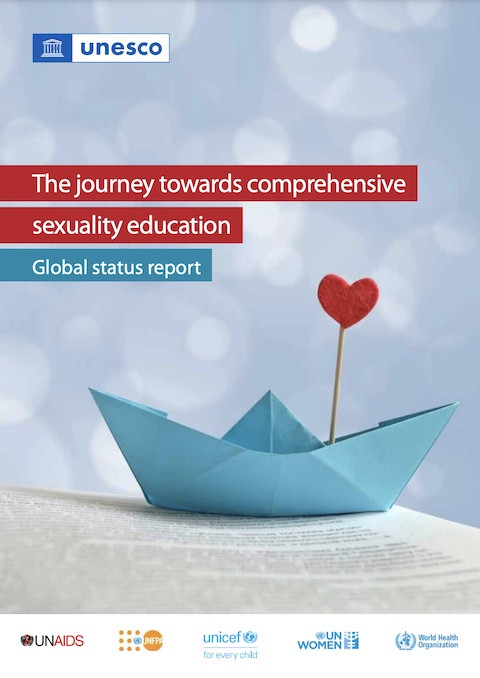 The Journey Towards Comprehensive Sexuality Education: Global Status Report Année de publication: 2021 Auteur institutionnel: UNESCO | Joint United Nations Programme on HIV/AIDS (UNAIDS) | United Nations Population Fund (UNFPA) | United Nations Children's Fund (UNICEF) | United Nations Entity for Gender Equality and the Empowerment of Women (UN Women) | World Health Organization (WHO) Comprehensive sexuality education (CSE) is central to children and young people’s well-being, equipping them with the knowledge and skills they need to make healthy and responsible choices in their lives. This report draws on multiple data sources to provide analysis of countries’ progress towards delivering good quality school-based CSE to all learners. 85 per cent of 155 countries surveyed have policies or laws relating to sexuality education, with considerably more countries reporting policies to mandate delivery at secondary education level than at primary level. However, the existence of policy and legal frameworks do not always equate to comprehensive content or strong implementation. Most countries report that they have some curricula in place but more detailed analysis suggests that it often lacks the breadth of topics needed to make sexuality education effective and relevant. Moreover, while efforts to scale-up teacher training are evident in a range of settings, research with teachers shows that many feel they lack confidence to deliver sexuality education. Surveys show that students frequently feel that they received information too late and would have preferred sexuality education to have started earlier in their schooling. There is evidence of opposition to CSE across a range of settings, often reflecting misinformation about the content, purpose or impact of such education. However, in many countries involvement of communities, including parents, school officials, religious leaders, media and young people themselves, has created a favourable environment for CSE. Recommendations to countries in this report include:Clear mandates and budgets to ensure implementation of policies and programmes that support the availability of good quality comprehensive sexuality education for all learners.Invest in quality curriculum reform and teacher training.Strengthen monitoring of the implementation of CSE.
 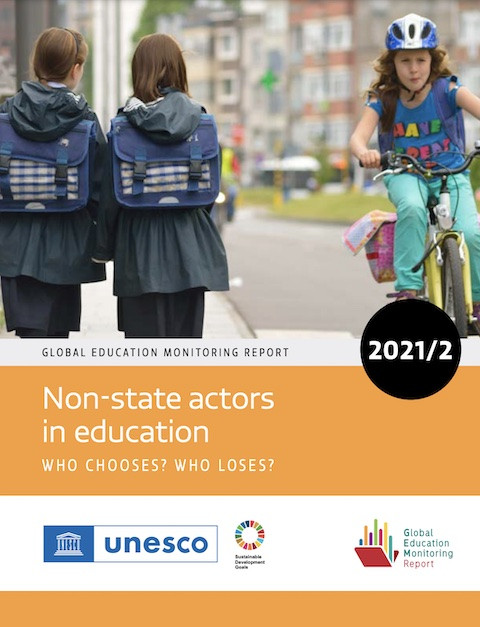 Global Education Monitoring Report 2021/2: Non-state Actors in Education; Who Chooses? Who Loses? Année de publication: 2021 Auteur institutionnel: UNESCO Non-state actors’ role extends beyond provision of schooling to interventions at various education levels and influence spheres. Alongside its review of progress towards SDG 4, including emerging evidence on the COVID-19 pandemic’s impact, the 2021/2 Global Education Monitoring Report urges governments to see all institutions, students and teachers as part of a single system. Standards, information, incentives and accountability should help governments protect, respect and fulfill the right to education of all, without turning their eyes away from privilege or exploitation. Publicly funded education does not have to be publicly provided but disparity in education processes, student outcomes and teacher working conditions must be addressed. Efficiency and innovation, rather than being commercial secrets, should be diffused and practiced by all. To that end, transparency and integrity in the public education policy process need to be maintained to block vested interests. The report’s rallying call – Who chooses? Who loses? – invites policymakers to question relationships with non-state actors in terms of fundamental choices: between equity and freedom of choice; between encouraging initiative and setting standards; between groups of varying means and needs; between immediate commitments under SDG 4 and those to be progressively realized (e.g. post-secondary education); and between education and other social sectors. 全球教育监测报告摘要, 2021/2年: 教育领域的非国家行为体:谁能主动选择?谁将错失机会? Année de publication: 2021 Auteur institutionnel: 联合国教科文组织 (UNESCO) 本文件是2021/2022年全球教育检测报告的摘要,主要聚焦教育领域的非国家行为体,包括私人办学、宗教办学等力量,并探讨了与非国家行为体对教育的影响与存在问题。
 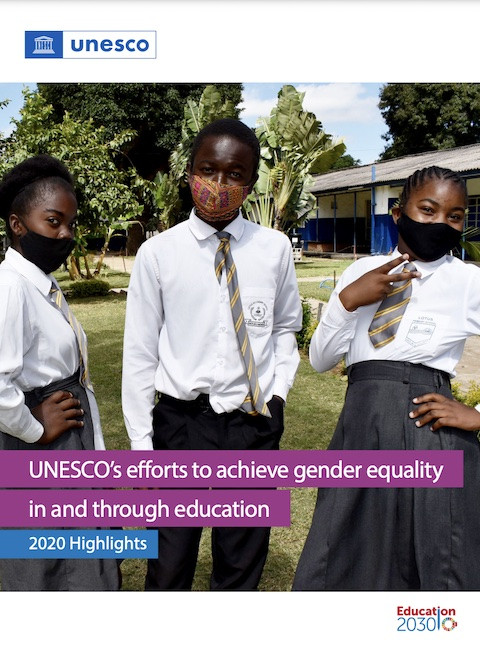 L’action de l’UNESCO en faveur de l’égalité des genres dans et par l’éducation: Points majeurs de l’année 2020 Année de publication: 2022 Auteur institutionnel: UNESCO Ce rapport présente les points majeurs de l’action menée en 2020 par l’UNESCO pour faire progresser l’égalité des genres dans et par l’éducation.L’action menée par l’UNESCO dans le domaine de l’éducation et du genre est ancrée dans la stratégie de l’UNESCO pour l’égalité des genres dans et par l’éducation 2019-2025. Cette stratégie repose aussi sur l’initiative Son éducation, notre avenir, lancée en parallèle afin de mobiliser les engagements politiques et financiers et de faciliterla coopération et l’action conjointe en faveur de l’éducation des filles et des femmes.
 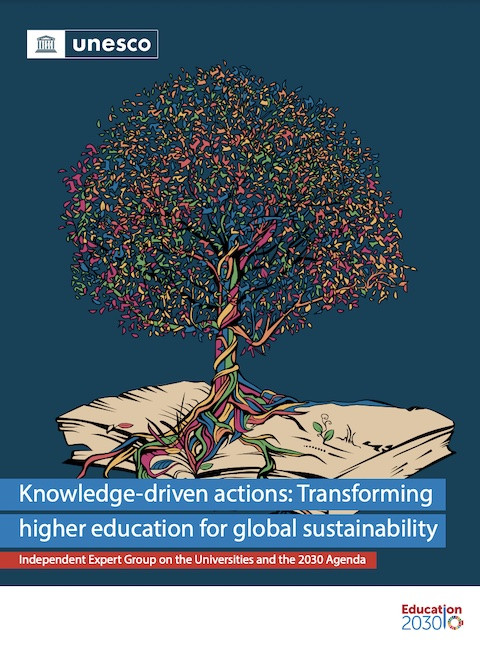 Knowledge-Driven Actions: Transforming Higher Education for Global Sustainability; Independent Expert Group on the Universities and the 2030 Agenda Année de publication: 2022 Auteur: Adrian Parr | Agnes Binagwaho | Andy Stirling | Anna Davies | Cheikh Mbow | Dag Olav Hessen | Helena Bonciani Nader | Jamil Salmi | Melody Brown Burkins | Seeram Ramakrishna | Sol Serrano | Sylvia Schmelkes | Tong Shijun | Tristan McCowan Auteur institutionnel: UNESCO With 2030 less than a decade away, it is paramount to think critically and act urgently if we are to achieve the Sustainable Development Goals.Higher education institutions are uniquely positioned to contribute to the social, economic and environmental transformations that are required to tackle the world’s most pressing issues.This report thoroughly discusses the role of higher education institutions in contributing to the 2030 Agenda, through a focus on three interrelated themes: the need to move towards inter- and transdisciplinary modes of producing and circulating knowledge; the imperative of becoming open institutions, fostering epistemic dialogue and integrating diverse ways of knowing; and the demand for a stronger presence in society through proactive engagement and partnering with other societal actors. The report directs attention to the systemic barriers that have inhibited transformations in these three areas so far, and provides advice and examples on how to achieve this. The report calls on higher education leaders and actors to push for transformations within their institutions, using the report’s recommendations to critically reflect and act on their role for achieving the 2030 Agenda.
 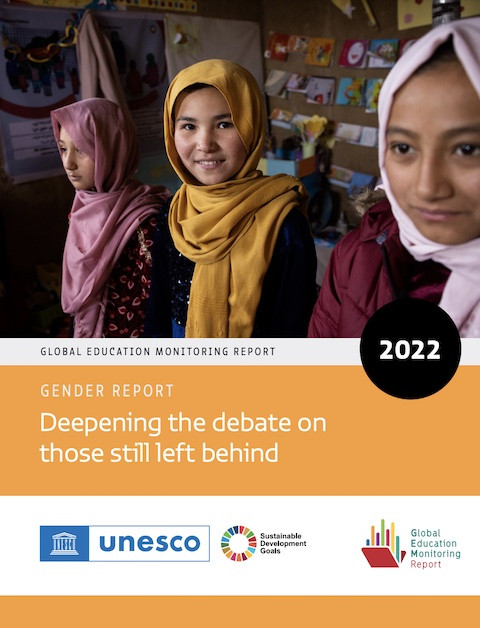 Global Education Monitoring Report 2022: Gender Report; Deepening the Debate on Those Still Left Behind Année de publication: 2022 Auteur institutionnel: Global Education Monitoring Report Team | UNESCO The 2022 Gender Report presents fresh insights on progress towards gender parity in education with respect to access, attainment and learning. It showcases the results of new models that provide coherent estimates, combining multiple sources of information, on out-of-school and completion rates. It also reviews the results of learning assessments released over the past 18 months, which present an almost global picture of the gender gap in reading, mathematics and science achievement in lower and upper primary and lower secondary grades. They provide a baseline against which to assess the impact of COVID-19 on inequality when post-pandemic data start being released next year.A companion to the 2021/2 GEM Report, it emphasizes the role of non-state actors in influencing gender inequality in and through education. Non-state actors have filled in provision gaps left by the public education system. The 2022 Gender Report presents evidence on gender gaps in the share of students enrolled in private institutions by sex and what drives these gaps in the various regions. It also provides case studies on the privatization of childcare in high-income countries, the impact of non-state faith-based schools in Asia on gender norms and the role of women’s universities around the world.Some non-state actors have pushed the gender equality agenda forward, while others have undermined progress in order to maintain the status quo. Some have been at the front line for girls’ education in emergencies. Some have lobbied against comprehensive sexuality education. Some champion inclusion of marginalized girls, while others maintain discriminatory gender norms. Depending on the context, it is important not to make assumptions but to look carefully at the data and work together to eliminate all forces that prevent anyone on the basis of gender from fulfilling their potential through education.