
Ressources
Explorez une large gamme de ressources sur le GCED afin d’approfondir votre compréhension et de renforcer vos activités de recherche, de plaidoyer, d’enseignement et d’apprentissage.
3,229 résultats trouvés
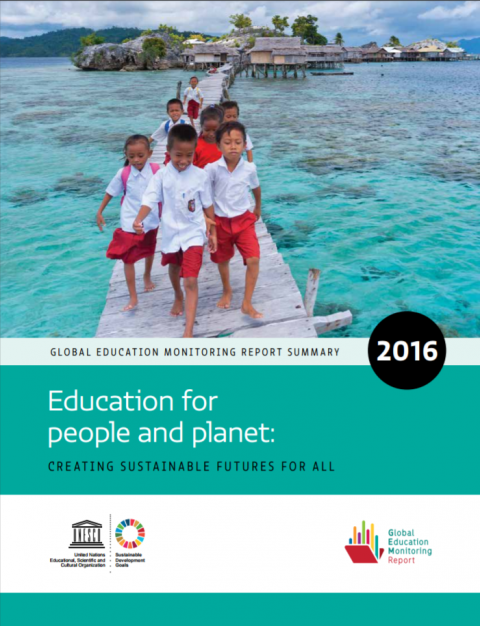 La Educación al servicio de los pueblos y el planeta: creación de futuros sostenibles para todos, resumen del informe de seguimiento de la educación en el mundo 2016; Année de publication: 2016 Auteur institutionnel: Organización de las Naciones Unidas para la Educación, la Ciencia y la Cultura (UNESCO) The GEM Report provides an authoritative account of how education is the most vital input for every dimension of sustainable development. Better education leads to greater prosperity, improved agriculture, better health outcomes, less violence, more gender equality, higher social capital and an improved natural environment. Education is key to helping people around the world understand why sustainable development is such a vital concept for our common future. Education gives us the key tools – economic, social, technological, even ethical – to take on the SDGs and to achieve them. These facts are spelled out in exquisite and unusual detail throughout the report. Yet the report also emphasizes the remarkable gaps between where the world stands today on education and where it has promised to arrive as of 2030. Образование в интересах людей и планеты: ПОСТОЕНИЕ УСТОЙЧИВОГО БУДУЩЕГО ДЛЯВСЕХ, РЕЗЮМЕ ВСЕМИРНОГО ДОКЛАДА ПО МОНИТОРИНГУ ОБРАЗОВАНИЯ, 2016 Année de publication: 2016 Auteur institutionnel: Организация Объединенных Наций по вопросам образования, науки и культуры (UNESCO) The GEM Report provides an authoritative account of how education is the most vital input for every dimension of sustainable development. Better education leads to greater prosperity, improved agriculture, better health outcomes, less violence, more gender equality, higher social capital and an improved natural environment. Education is key to helping people around the world understand why sustainable development is such a vital concept for our common future. Education gives us the key tools – economic, social, technological, even ethical – to take on the SDGs and to achieve them. These facts are spelled out in exquisite and unusual detail throughout the report. Yet the report also emphasizes the remarkable gaps between where the world stands today on education and where it has promised to arrive as of 2030. التعليم من أجل الناس والكوكب: بناء مستقبل مستدام للجميع Année de publication: 2016 Auteur institutionnel: منظمة الأمم المتحدة للتربية والعلم والثقافة (UNESCO) The GEM Report provides an authoritative account of how education is the most vital input for every dimension of sustainable development. Better education leads to greater prosperity, improved agriculture, better health outcomes, less violence, more gender equality, higher social capital and an improved natural environment. Education is key to helping people around the world understand why sustainable development is such a vital concept for our common future. Education gives us the key tools – economic, social, technological, even ethical – to take on the SDGs and to achieve them. These facts are spelled out in exquisite and unusual detail throughout the report. Yet the report also emphasizes the remarkable gaps between where the world stands today on education and where it has promised to arrive as of 2030. 教育造福 人类与地球:为全民创造可持续的未来, 2016 全球教育监测报告; 摘要 Année de publication: 2016 Auteur institutionnel: 联合国教科文组织 (UNESCO) The GEM Report provides an authoritative account of how education is the most vital input for every dimension of sustainable development. Better education leads to greater prosperity, improved agriculture, better health outcomes, less violence, more gender equality, higher social capital and an improved natural environment. Education is key to helping people around the world understand why sustainable development is such a vital concept for our common future. Education gives us the key tools – economic, social, technological, even ethical – to take on the SDGs and to achieve them. These facts are spelled out in exquisite and unusual detail throughout the report. Yet the report also emphasizes the remarkable gaps between where the world stands today on education and where it has promised to arrive as of 2030.
  Curriculum in the Education 2030 Agenda: Latin America and the Caribbean Année de publication: 2017 Auteur: Renato Opertti Auteur institutionnel: UNESCO International Bureau of Education (IBE) “Curriculum in the Education 2030 Agenda: Latin America and the Caribbean”1 discusses the importance of rethinking the curriculum in light of a transformational, humanistic and holistic vision of education. The Education 2030 Agenda, which emerged from the World Education Forum (WEF) 2015 held in Incheon, Republic of Korea, positions curriculum as a powerful education policy tool leading the way to effective, relevant and sustainable learning opportunities, processes and outcomes. Curricula have a positive effect as levers for the sustainable, inclusive, fair and cohesive development of a country. They reflect and help to construct the type of society envisioned. The article provides recommendations to strengthen the positioning of curriculum toward an inclusive and equitable quality education in Latin America and the Caribbean. It therefore addresses the following questions: 1) How is curriculum currently conceived?; 2) What role does it play in the reforms aimed at improving equity and quality of the learning processes?; 3) What are the main regional challenges in relation to curriculum development?; and 4) How could countries align their curricula with their development needs?
 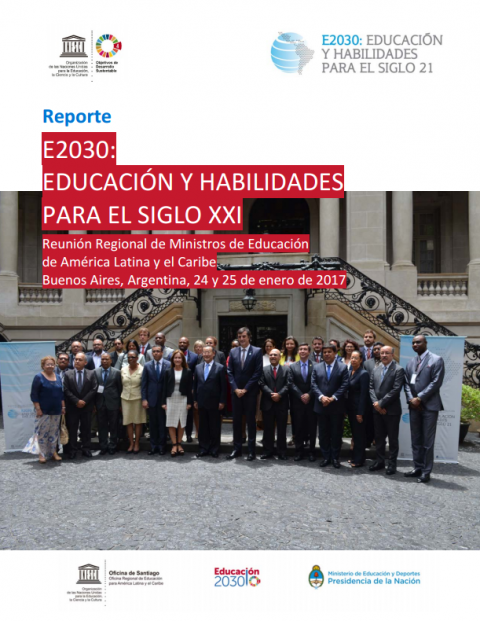 E2030: education and skills for the 21st century: Regional Meeting Année de publication: 2017 Auteur institutionnel: UNESCO Santiago This report provides a systematization of the discussions at the Regional Meeting of Ministers of Education of Latin America and the Caribbean “E2030: Education and skills for the 21st century” held 24‐25 January 2017 in Buenos Aires, Argentina. The objectives of the meeting were to: • adopt a Ministerial Declaration on a joint approach to achieve the SDG4-E2030 Agenda in the region, including means of implementation, technical instruments of support and follow-up mechanisms. • agree on a roadmap for the implementation of E2030, including a contextualized followup mechanism that responds to the region’s educational challenges and expectations. Reporte: Educación y habilidades para el siglo XXI; Reunión Regional de Ministros de Educación de América Latina y el Caribe, Buenos Aires, Argentina, 24 y 25 de enero 2017 Année de publication: 2017 Auteur institutionnel: UNESCO Santiago This report provides a systematization of the discussions at the Regional Meeting of Ministers of Education of Latin America and the Caribbean “E2030: Education and skills for the 21st century” held 24‐25 January 2017 in Buenos Aires, Argentina. The objectives of the meeting were to: • adopt a Ministerial Declaration on a joint approach to achieve the SDG4-E2030 Agenda in the region, including means of implementation, technical instruments of support and follow-up mechanisms. • agree on a roadmap for the implementation of E2030, including a contextualized followup mechanism that responds to the region’s educational challenges and expectations.
  Buenos Aires Recommendations Année de publication: 2007 Auteur institutionnel: PRELAC II Recognizing that education is a public good and is the key to building a more just and better world for all, the Second Intergovernmental Meeting of the Regional Education Project, PRELAC II, held in the city of Buenos Aires, on the 29th and March 30, 2007, agrees the following recommendations as criteria and lines of action for national policies and international cooperation. Recomendaciones de Buenos Aires Année de publication: 2007 Auteur institutionnel: PRELAC II Reconociendo que la educación es un bien público y es la llave para la construcción de un mundo más justo y mejor para todos, la Segunda Reunión Intergubernamental del Proyecto Regional de Educación, PRELAC II, reunida en la ciudad de Buenos Aires, los días 29 y 30 de marzo de 2007, acuerda las siguientes recomendaciones como criterios y líneas de acción para las políticas nacionales y la cooperación internacional.
 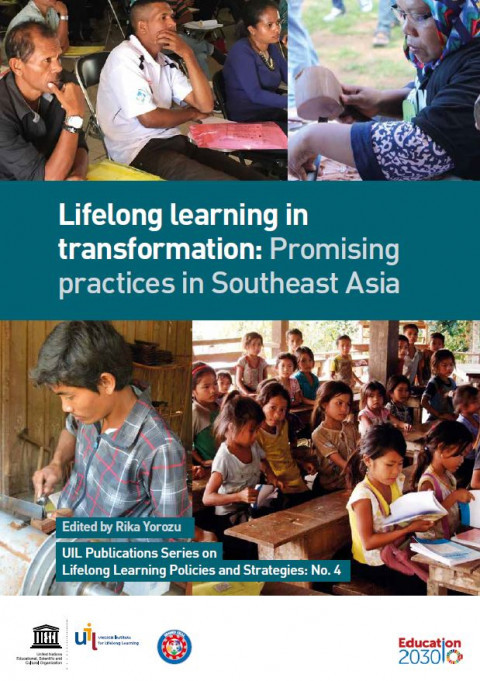 Lifelong Learning in Transformation: Promising Practices in Southeast Asia Année de publication: 2017 Auteur: Rika Yorozu Auteur institutionnel: UNESCO Institute for Lifelong Learning (UIL) This report is an outcome of a project on building a lifelong learning agenda in Southeast Asian countries, which aims to address the region’s remaining educational challenges in ensuring ‘inclusive and equitable quality education and promot[ing] lifelong learning opportunities for all’ (Goal 4 of the 2030 Agenda for Sustainable Development). By sharing promising policies and practices in implementing integrated lifelong learning from different perspectives, countries can learn from one another and move their visions for lifelong learning fully into practice. The publication documents a variety of promising practices from 11 countries, focusing particularly on the features critical to the promotion of lifelong learning for all; namely, inclusive and gender-responsive teaching and learning practices, recognition of learning outcomes from non-formal and informal learning, collaboration between social and economic development sectors and coherent national government policies and strategies. The report comprises three main sections: a reflection on lifelong learning in international and national documents, a collection of good practice drawn from their national reports, and a set of recommendations for policies and programmes promoting lifelong learning. It is hoped that these recommendations will stimulate discussion and new developments, in both policy and practice, in the region.