
Ressources
Explorez une large gamme de ressources sur le GCED afin d’approfondir votre compréhension et de renforcer vos activités de recherche, de plaidoyer, d’enseignement et d’apprentissage.
3,436 résultats trouvés
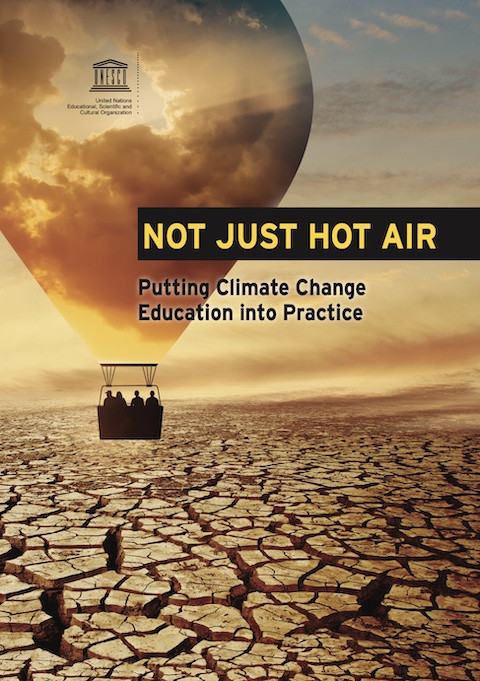 Not Just Hot Air: Putting Climate Change Education Into Practice Année de publication: 2015 Auteur institutionnel: UNESCO This publication presents UNESCO’s work on Climate Change Education for Sustainable Development in 2012/2013, and intends to serve as a reference for similar work in the future.It provides: National case studies on five CCESD country pilots conducted by UNESCO in 2012/2013 in: Dominican Republic, Guyana, Mauritius, South Africa and Tuvalu. The case studies include an analysis and assessment of the undertaken CCESD capacity-building work for policy makers and teacher educators, lessons learnt about the implementation of the programme, and conclusions. 16 short country profiles from around the world on policy development regarding ESD and Climate Change Education. Recommendations on Climate Change Education in the context of Education for Sustainable Development, developed by UNESCO in order to establish a common understanding of what needs to be done to enhance education responses to climate change. This publication is intended to provide policy makers and teacher educators with a compact source of information on how to mobilize education to address climate change.
 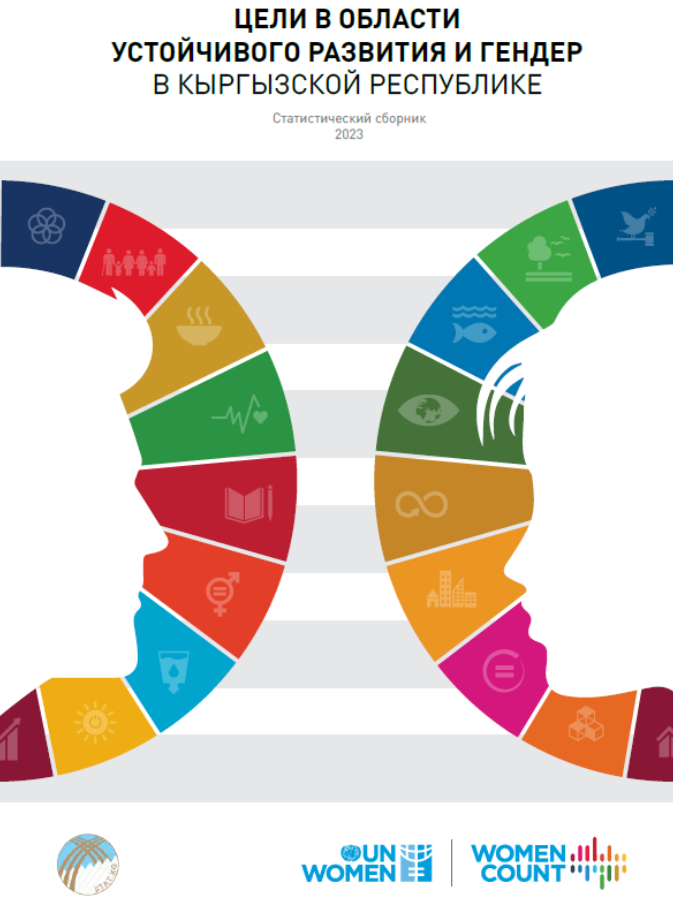 "Sustainable Development Goals and Gender in Kyrgyzstan" New Statistical Publication Année de publication: 2023 Auteur institutionnel: National Statistical Committee of the Kyrgyz Republic | United Nations Entity for Gender Equality and the Empowerment of Women (UN Women) This publication is intended to inform the public and government officials about the current status and progress towards achieving sustainable development in Kyrgyzstan, promote informed policy and management decisions, and help identify further priority steps to achieve the SDGs and women’s empowerment. Статистический сборник "Цели в области устойчивого развития и гендер в Кыргызской Республике" Année de publication: 2023 Auteur institutionnel: National Statistical Committee of the Kyrgyz Republic | United Nations Entity for Gender Equality and the Empowerment of Women (UN Women) Целью настоящего издания является информирование общественности и работников государственного управления о текущем состоянии и прогрессе в достижении устойчивого развития в Кыргызской Республике, а также для принятия обоснованных политических и управленческих решений и содействия в определении дальнейших приоритетных шагов для достижения успеха в реализации ЦУР и расширения прав и возможностей женщин.
 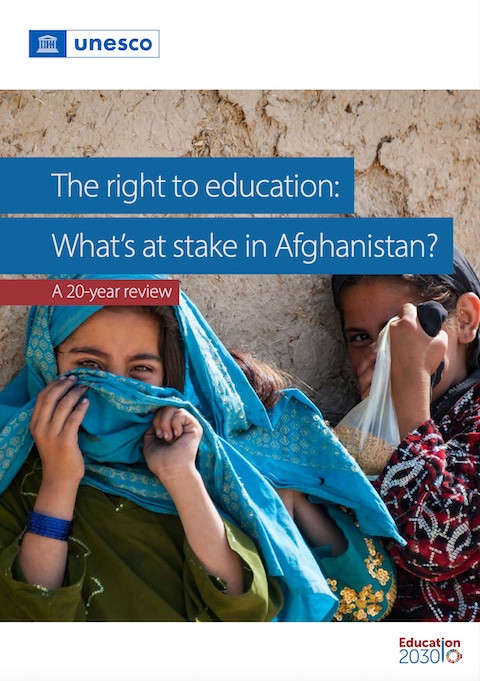 The Right to Education: What’s at Stake in Afghanistan?; A 20-Year Review Année de publication: 2021 Auteur institutionnel: UNESCO This report takes stock of the achievements in education made by Afghanistan over the past 20 years and sets out immediate action to safeguard the right to education for all learners following deep political change in the country in 2021.Although Afghanistan lags far behind countries across South and West Asia on most development indicators, it has made impressive progress in education over two decades. Enrolment has increased ten-fold, with substantial gains for girls and female literacy. Female teachers have been hired. Steady efforts have been made to expand the school network across the country.The country has ratified key international normative instruments relating to the right to education; enshrined this right in the Constitution and adopted a wide range of policy measures to increase access, improve education quality and reduce gender, socio- economic and rural/urban disparities.But the challenges remain colossal, with half the primary school-aged children not enrolled in school and very low learning outcomes. The country is highly dependent on external aid to sustain its education system. It needs to uphold state obligations on the right to education without any discrimination and continue removing barriers that impede progress towards the Sustainable Development Goal on education to build the country’s future.
  Inclusion in Early Childhood Care and Education in High-Income Countries Année de publication: 2021 Auteur institutionnel: Global Education Monitoring Report Team | UNESCO | Deloitte Access Economics This report reviews the international research and policy literature concerning approaches to inclusion in early childhood care and education (ECCE) in different high-income jurisdictions globally. Each chapter highlights examples of policies and practices which can foster inclusion in ECCE across the themes set out in the Global Education Monitoring (GEM) Report in 2020.As a critical period for children’s intellectual, emotional, social, physical and moral development, supporting inclusion in ECCE is of particular importance for supporting lifelong learning and equitable opportunities for all children. A number of key messages emerging from this review that are instructive to designing policies to promote inclusion in ECCE are summarised below. Inclusion in ECCE is fostered through complementary universal and targeted approaches to most aspects of ECCE governance, financing, policy and service delivery. The implementation of ECCE laws and policies is key to supporting inclusion. As the central actors delivering ECCE services, collaboration within the ECCE workforce is crucial to supporting a community of practice which leads and shares inclusion, while avoiding risks of specialisation. Finally, while many existing ECCE policies, resources and tools are grounded in a deficits-based approach to understanding need, inclusion may be better supported through an approach which focusses on child learning needs and strengths.
 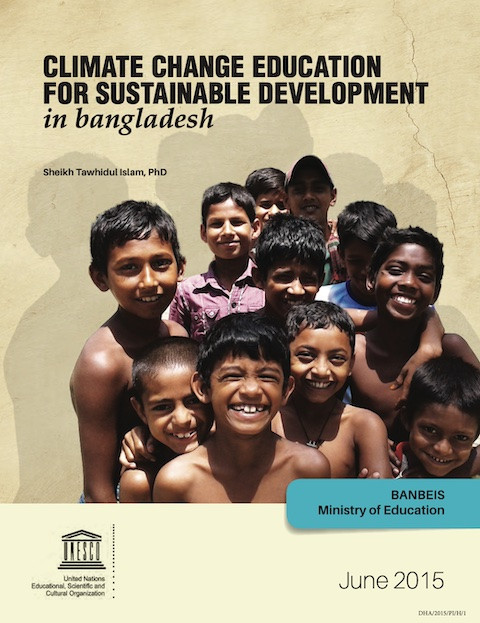 Climate Change Education for Sustainable Development in Bangladesh Année de publication: 2015 Auteur: Sheikh Tawhidul Islam Auteur institutionnel: UNESCO The CCESD pilot study contributes in developing a national baseline scenario regarding disaster and climate change impacts on education sector for the first time in Bangladesh. The information may help education planners and disaster and climate change professionals to act in line with national and international policy directives towards developing a strong and disaster and climate change impact resilient education system in Bangladesh.
 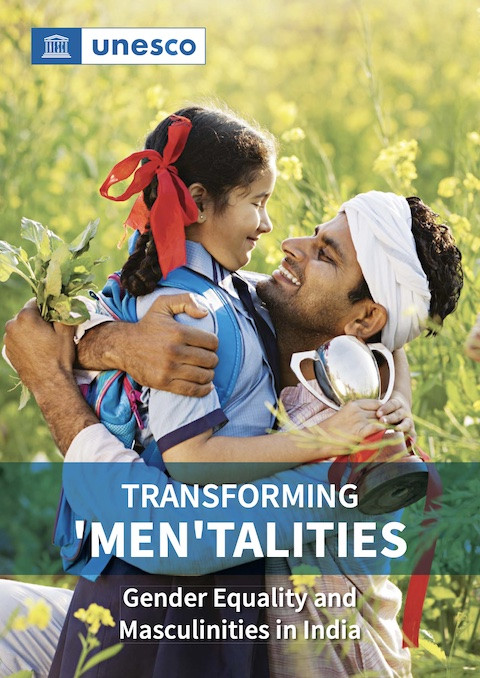 Transforming 'MEN'talities: Gender Equality and Masculinities in India; Roadmap and Scoping Report Année de publication: 2021 Auteur: Christopher Coley | Christie M. Gressel | Rao R. Bhavani Auteur institutionnel: UNESCO This Transforming ‘Men’talities Report is consolidated into a few key messages and crucial responsible parties who can potentially take up these key messages. These recommendations reflect broad areas of theoretical and social science research, policy and governance, and multi- stakeholder engagement. In essence, this report sought to lay a roadmap for how India might best engage men and boys in GEWE (Gender equality and women’s empowerment). Multiple arguments were made in terms of the efficacy of this approach for achieving SDG5; however, these arguments are based largely in theory, in small pilot findings, or in limited sectors. Until now, efforts to engage men and boys in GEWE have been sporadic and limited, given relatively low priority in terms of funding and national and international support, and generally far removed from public consciousness. A more unified and collaborative effort is required to properly understand how to make design effective strategies for engaging men and boys in GEWE.
 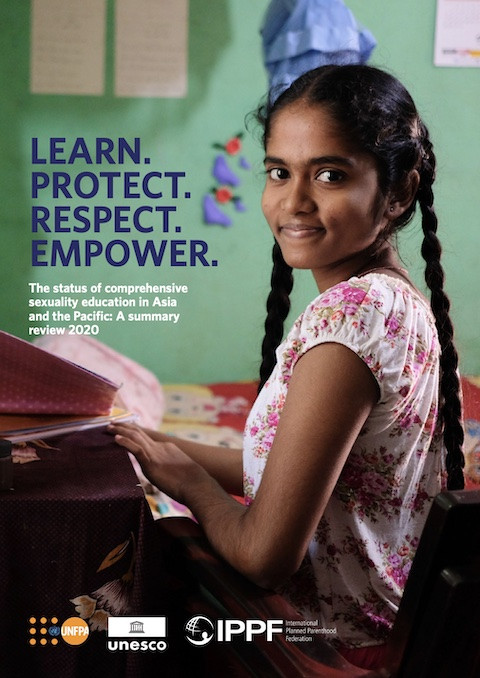 Learn, Protect, Respect, Empower: The Status of Comprehensive Sexuality Education in Asia and the Pacific; A Summary Review 2020 Année de publication: 2021 Auteur institutionnel: United Nations Population Fund (UNFPA) | UNESCO | International Planned Parenthood Federation (IPPF) More than half of the world’s 1.8 billion young people aged 10–24 live in the Asia and Pacific region1 and a majority of them live in low and middle-income countries. In spite of their diverse socio-economic contexts, young people across this vast region commonly face limited access to sexual and reproductive health and rights (SRHR) information and services, including age-appropriate comprehensive sexuality education. Of the 13 million adolescent girls globally with an unmet need for contraception, approximately half live in Asia-Pacific, leading to an estimated 3.7 million births to adolescent girls in the region annually. In addition, around 82,000 young people are infected with HIV each year in the region. As adolescents transition through to adulthood, it is crucial that they are equipped with the necessary knowledge, attitudes and skills to support their health and wellbeing, regardless of age, sex, marital status, socioeconomic status, ethnicity, sexual orientation or gender identity. School-based and age-appropriate comprehensive sexuality education (CSE) is an effective means of reaching a large population of children and young people, particularly where rates of school participation are high. This overview of the status of in-school CSE in Asia and the Pacific provides a strong evidence base on the reach and impact of this across the region. Importantly, post COVID-19 we need to build back CSE programmes that are better and stronger to meet the social and emotional needs of our young people.
  K-12 AI Curricula: A Mapping of Government-Endorsed AI Curricula Année de publication: 2022 Auteur institutionnel: UNESCO Regulations on their own are insufficient to ensure AI as a common good for education and for humanity. All citizens need to be equipped with some level of AI literacy covering the values, knowledge and skills relating to AI. This report features key findings and recommendations of UNESCO’s global survey on AI curricula for K-12. It reveals that only 11 countries have developed and endorsed K-12 AI curricula and another four countries have AI curricula in development. This is a strong call for Member States to develop AI curricula for K-12 students, and to build stronger mechanisms to validate non-governmental AI curricula offered to balance the private-driven approach. The report also reveals that the learning outcomes of AI curricula need to be more focused on fostering creativity in crafting AI technologies and on contextual ethics. Teacher training is key to ensure the implementation of AI curricula, and teachers need to be trained on designing and facilitating project-based learning which is the most commonly used pedagogical methodology in existing AI curricula. The report also advises an ‘agnostic approach’ towards AI brands and products when introducing domain-specific AI technologies.
  How Can People With Disabilities Find Employment in Uzbekistan? Année de publication: 2023 Auteur: Abror Kurbanmuratov As in most other Central Asian countries, it is difficult for people with disabilities in Uzbekistan to survive. In addition to problems with health and social adaptation, it is difficult for them to find employment and feel themselves needed by society. Despite the adopted state laws and support programs, most cities and districts lack mechanisms for their implementation, as well as adapted infrastructure, accessible environment and employment system.