
Ressources
Explorez une large gamme de ressources sur le GCED afin d’approfondir votre compréhension et de renforcer vos activités de recherche, de plaidoyer, d’enseignement et d’apprentissage.
3,435 résultats trouvés
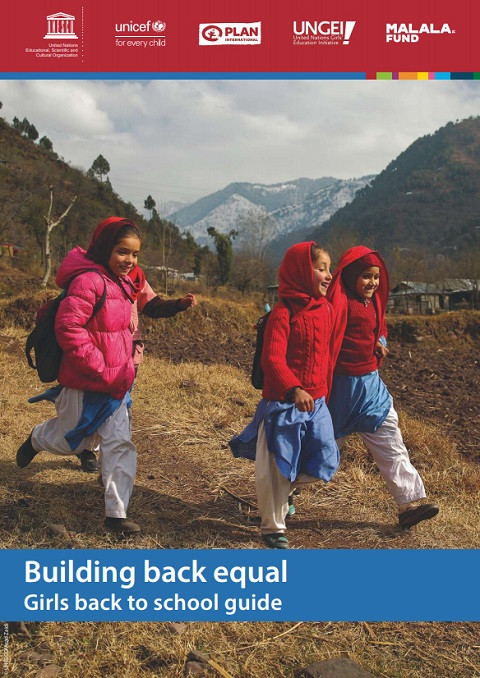 Reconstruire l’égalité: Guide de rescolarisation des filles Année de publication: 2020 Auteur institutionnel: UNESCO | United Nations Children's Fund (UNICEF) | Plan International | United Nations Girls' Education Initiative (UNGEI) | Malala Fund Le guide fournit des contributions ciblées pour assurer la continuité de l’apprentissage pendant les fermetures d’écoles ainsi que des plans complets et opportuns basés sur les données pour rouvrir les écoles de manière sûre, en tenant compte des questions de genre, ainsi qu’en répondant aux besoins des enfants et des filles les plus marginalisées. Ce guide met l’accent sur une approche visant à « reconstruire l’égalité », à travers des mesures tenant compte des questions de genre afin de transformer les systèmes éducatifs, de favoriser la résilience et de résoudre les principaux freins et obstacles à l’éducation des filles, dont : des données et des preuves tenant compte des questions de genre pour éclairer les actions, y compris des données ventilées par sexe et un suivi visant à identifier les pratiques prometteuses pour l’égalité des genres ; des politiques, des lois et des plans pour faire avancer les droits des filles, y compris l’élimination des pratiques discriminatoires qui entravent la participation des filles à l’éducation et leur capacité à mettre leur savoir en pratique ; des financements pérennes pour obtenir des résultats, qui protègent le financement de l’éducation des filles, ainsi que les initiatives en matière de santé, de protection sociale et de redressement économique sur un principe d’équité.
 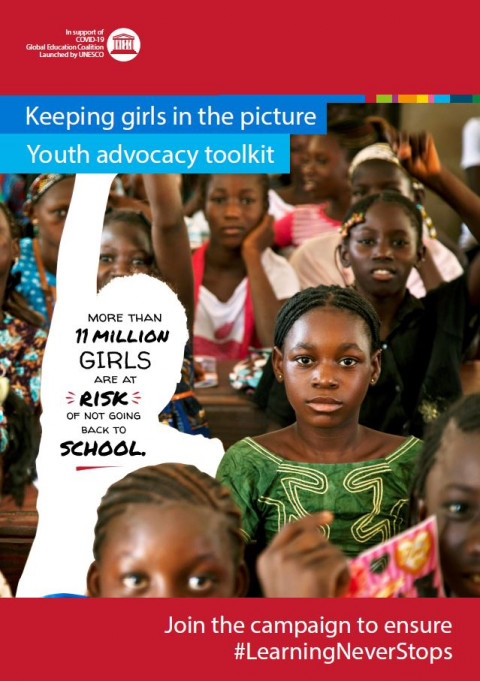 Keeping Girls in the Picture: Youth Advocacy Toolkit Année de publication: 2020 Auteur institutionnel: UNESCO | Global Education Coalition The COVID-19 pandemic has caused the largest school closures and education disruption in history, with more than 1.5 billion students affected at the height of the crisis. Over 767 million of these students were girls.Now, another major challenge is looming. Over 11 million girls – from pre-primary to tertiary education - may not return to school in 2020. This alarming number not only threatens decades of progress made towards gender equality, but also puts girls around the world at risk of adolescent pregnancy, early and forced marriage, and violence. For many girls, school is more than just a key to a better future. It’s a lifeline.This is why UNESCO and members of the Global Education Coalition’s Gender Flagship are launching a new #LearningNeverStops campaign focusing on ‘keeping girls in the picture.’The campaign calls for efforts to safeguard progress made on girls’ education, ensure girls’ learning continuity during school closures, and promote girls’ safe return to school once these reopen. It also sheds light on the 130 million girls who were already out of school before the pandemic, and calls on the international community to urgently work together to guarantee their right to education.
  Les femmes prennent la parole (Le Courrier de l’UNESCO no. 2, Juillet-septembre 2020) Année de publication: 2020 Auteur institutionnel: UNESCO Politologues, journalistes, sociologues, chercheuses, écrivaines ou enseignantes dessinent les contours de l’après-pandémie, qu’il s’agisse de l’avenir des musées, des mutations de l’école, des dérives de l’information ou encore des enjeux de la recherche.Ce numéro trace un portrait en creux de notre époque, souligne les lignes de fracture que la crise sanitaire a mises à nu et montre l’ampleur des défis à relever. Il souligne aussi le potentiel de coopération scientifique, culturelle, éducative que cet événement inédit a révélé. Si les réflexions, le désir de changement et les mouvements d’entraide qui se sont manifestés ne restent pas sans lendemain, le monde pourrait réellement devenir plus solidaire, plus durable et plus égalitaire.
  Teaching Journalism for Sustainble Development: New syllabi Année de publication: 2015 Auteur: Banda Fackson Auteur institutionnel: UNESCO This work aims to expand the curriculum of UNESCO in education in journalism and includes new curricula covering current topics in the field of journalism education around the world. The document was prepared on the basis of standard curricula, as well as additional UNESCO publications under the general title “Collection of new curricula” in order to effectively respond to new problems faced by specialists and teachers in the field of journalism. Обучение журналистике в целях устойчивого развития: Новые учебные планы Année de publication: 2015 Auteur: Banda Fackson Auteur institutionnel: UNESCO Данная работа направлена на расширение учебных программ ЮНЕСКО по образованию в области журналистики и включает новые учебные планы охватывающие актуальные темы в области журналистского образования во всем мире. Документ подготовлен на основе типовых учебных программ, а также дополнительных публикаций ЮНЕСКО под общим названием «Сборник новых учебных программ», чтобы эффективно реагировать на новые проблемы, стоящие перед специалистами и преподавателями в области журналистики.
 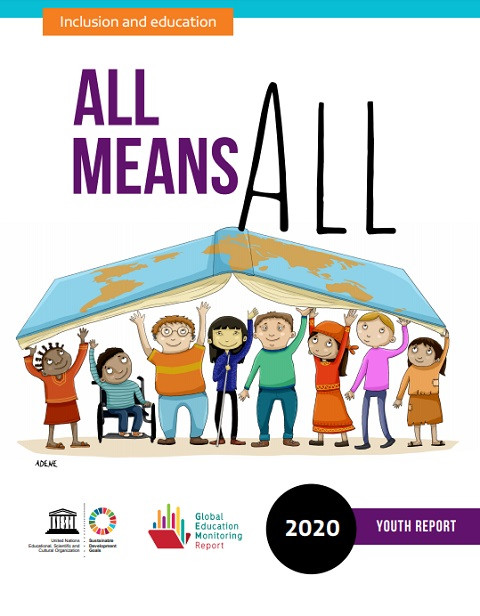 Youth Report 2020: Inclusion and Education; All Means All Année de publication: 2020 Auteur institutionnel: UNESCO | Global Education Monitoring Report Team This Youth Report is designed to help you learn about the social, economic and cultural factors that cause vulnerable children, youth and adults to be discriminated against and marginalized in education. It tells the stories of the people who fight to ensure that everyone is included in education, and of those who fought to uphold their own right to education. It brings to life the recommendations of the 2020 Global Education Monitoring Report: Inclusion and education: All means all and calls on youth and teachers to share and discuss the stories and messages, to use them in campaigns and as a teaching tool in class. An open letter to education ministers is included calling, for education systems to be built back more inclusive after the school closures during Covid-19.
  Local Knowledge, Global Goals Année de publication: 2017 Auteur: Douglas Nakashima | Jennifer Rubis | Peter Bates | Bárbara Ávila Auteur institutionnel: UNESCO Local and indigenous knowledge refers to the understandings, skills and philosophies developed by societies with long histories of interaction with their natural surroundings. For rural and indigenous peoples, local knowledge informs decision-making about fundamental aspects of day-to-day life. This knowledge is integral to a cultural complex that also encompasses language, systems of classification, resource use practices, social interactions, rituals and spirituality. These unique ways of knowing are important components of the world’s cultural diversity, and contribute to the achievement of Agenda 2030 and the Paris Agreement. Conocimientos locales, objetivos globales Année de publication: 2017 Auteur: Douglas Nakashima | Jennifer Rubis | Peter Bates | Bárbara Ávila Auteur institutionnel: UNESCO Los conocimientos locales e indígenas se refieren a las concepciones, habilidades y filosofías que las sociedades han desarrollado a lo largo de generaciones y de una larga interacción con su entorno natural. Para los pueblos rurales e indígenas, los conocimientos locales orientan la toma de decisiones sobre aspectos fundamentales de la vida cotidiana. Estos conocimientos forman parte integrante de un complejo cultural que incluye el idioma, los sistemas de clasificación, las prácticas relacionadas con el uso de los recursos, las interacciones sociales, los rituales y la espiritualidad. Estas formas de conocimiento excepcionales son elementos importantes de la diversidad cultural mundial, y contribuyen a la ejecución de la Agenda 2030 y el Acuerdo de París. Savoirs locaux, objectifs globaux Année de publication: 2017 Auteur: Douglas Nakashima | Jennifer Rubis | Peter Bates | Bárbara Ávila Auteur institutionnel: UNESCO Les savoirs locaux et autochtones font référence aux connaissances, compétences et philosophies développées par des sociétés interagissant depuis de multiples générations avec leur environnement naturel. Pour les populations rurales et autochtones, les savoirs locaux aident à la prise de décision autour d’aspects fondamentaux de la vie quotidienne. Ces savoirs font partie intégrante d’un complexe culturel qui comprend la langue, des systèmes de classification, des pratiques liées à l’utilisation des ressources, des interactions sociales, des rituels et la spiritualité. Ces modes de savoirs uniques sont des composantes importantes de la diversité culturelle mondiale, et contribuent à la réalisation de l’Agenda 2030 et l’Accord de Paris. A Whole New World, Reimagined by Women (The UNESCO Courier no. 2, July-September 2020) Année de publication: 2020 Auteur institutionnel: UNESCO In this issue, the UNESCO Courier gives women a voice. Political scientists, journalists, sociologists, researchers, writers, and teachers have drawn the contours of the post-pandemic era – whether it is the future of museums, changes in schools, the rise of disinformation, or the challenges of scientific research.This issue paints a sobering picture of our times – highlights the fault-lines exposed by the health crisis, and shows the magnitude of the challenges ahead. It also underlines the potential for scientific, cultural and educational co-operation that this unprecedented event has revealed. If the reflections, the desire for change, and the movements of mutual aid that have emerged are not short-lived, the world really could become a more united, more sustainable and more egalitarian place.