
Ressources
Explorez une large gamme de ressources sur le GCED afin d’approfondir votre compréhension et de renforcer vos activités de recherche, de plaidoyer, d’enseignement et d’apprentissage.
3,436 résultats trouvés
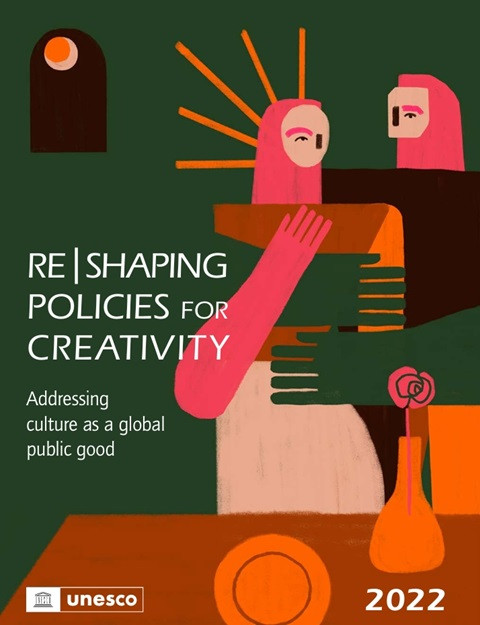 문화정책의 (재)구성: 전지구적 공공재로서의 문화를 바라보다, 2022 Année de publication: 2023 Auteur institutionnel: 유네스코 글로벌 리포트 시리즈는 각 국의 <2005 문화적 표현의 다양성 보호와 증진에 관한 협약> 이행상황과 문화·창의분야가 <UN 2030 지속가능한 개발 어젠다>에 어떻게 기여하고 있는지 그 진행 상황을 모니터링 하고 있다. 2015년과 2018년 발간된 보고서와 같이, 이번 제3판은 창의적 활동을 지원하기 위한 최근의 정책 개발 상황을 소개하고, 디지털 환경, 미디어 다양성, 지속가능발전, 예술가와 문화 분야 종사자의 이동성, 양성 평등 및 예술의 자유와 같은 분야의 현재와 미래의 과제를 조명한다. 2022년 발간되는 본 보고서에 소개되는 트렌드, 우수 사례, 국가 간 격차, 그리고 권고사항은 유네스코의 <문화 정책과 지속가능한 개발에 관한 세계 회의(MONDIACULT 2022)>의 정책 토론에서 다룰만한 중요한 자료를 제공하고 있다. 본 보고서는 <2030 어젠다>에 기여하고자 하는 사명을 가지고, 문화적 표현의 다양성에 영향을 미치는 요인을 분석하며, 공공정책 스펙트럼에서 더 넓게 문화와 창의성을 정착시킬 방안에 대해 더 나은 이해와 새로운 문화정책의 비전을 제시하고자 한다.
 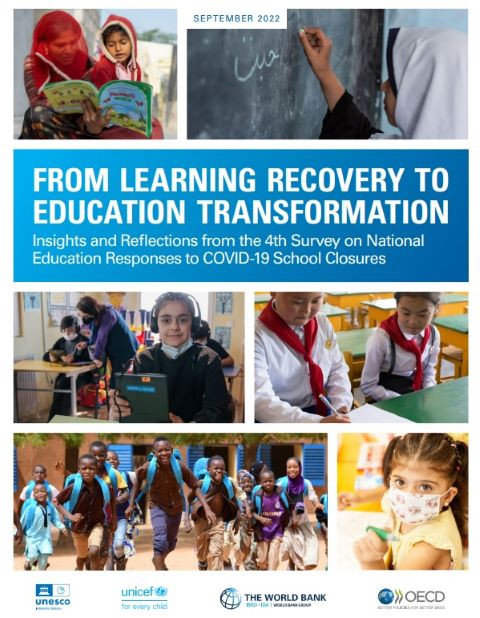 From Learning Recovery to Education Transformation: Insights and Reflections from the 4th Survey on National Education Responses to COVID-19 School Closures Année de publication: 2022 Auteur institutionnel: UNESCO | UNESCO Institute for Statistics (UIS) | United Nations Children's Fund (UNICEF) | World Bank | Organisation for Economic Co-operation and Development (OECD) From Learning Recovery to Education Transformation, a new joint report by UNESCO, UNESCO Institute for Statistics (UIS), UNICEF, The World Bank and The OECD, presents findings from the fourth round of the Survey on National Education Responses to COVID-19 School Closures, administered between April–July 2022 with responses from Ministries of Education in 93 countries. It explores how countries are progressing in the RAPID actions to recover learning: Reach every child and keep them in school; Assess learning levels regularly; Prioritize teaching the fundamentals; Increase the efficiency of instruction; and Develop psychosocial health and wellbeing.
  Artificial Intelligence and Digital Transformation: Competencies for Civil Servants Année de publication: 2022 Auteur institutionnel: UNESCO | Broadband Commission for Sustainable Development. Working Group on AI Capacity Building | International Telecommunication Union (ITU) This report presents a competency framework for civil servants on AI and digital transformation, and recommends ways to implement it to support related capacities in government. The research for this report was guided by the following question: What competencies need to be developed for public-sector officials to effectively design and implement digital and AI transformation initiatives in government, and to create an enabling environment for digital transformation in society?The report provides an overview of the major digital competencies for public sector officials when dealing with digital transformation. The competency framework provides guidance for civil servants, but also for international organisations and research centers to develop curricula and provide a basis for the development of action plans and strategies on digital competencies.
 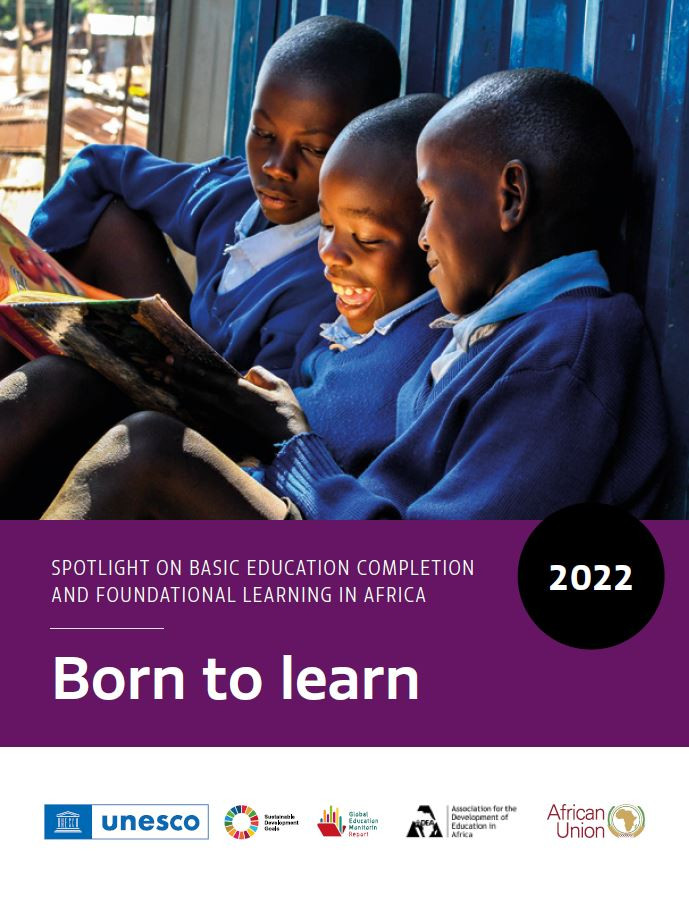 Spotlight on Basic Education Completion and Foundational Learning in Africa, 2022: Born to Learn Année de publication: 2022 Auteur institutionnel: UNESCO | Association for the Development of Education in Africa (ADEA) | African Union This publication is the first in a three-part Spotlight series. It is produced by a partnership between the Global Education Monitoring Report, the Association for the Development of Education in Africa and the African Union.The report focuses on why learning levels in the region are low. All children are born to learn yet only one in five children in Africa who reach the end of primary school achieve the minimum proficiency level required to continue their education and fulfil their potential. Combining completion and learning statistics, the report shows that children in Africa are at least five times less likely than children in the rest of the world to be prepared for the future.Given the historically low levels of learning on the continent, fresh thinking is needed to translate the CESA and SDG 4 commitments into focused, coordinated, well-informed and appropriately funded actions. The report contains eight policy-oriented recommendations for driving change.
 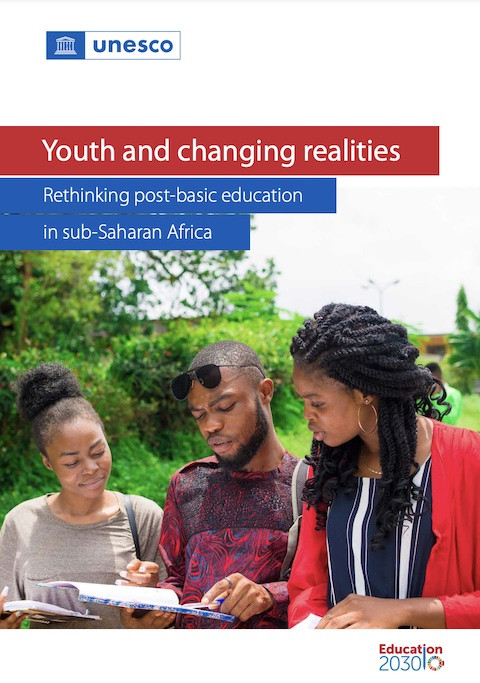 Youth and Changing Realities: Rethinking Post-basic Education in Sub-Saharan Africa Année de publication: 2022 Auteur institutionnel: Организация Объединенных Наций по вопросам образования, науки и культуры (UNESCO) Education should empower young people for full participation in their societies and education systems should be responsive to their voices, aspirations and actions. At this time of upheaval, it is more important than ever that youth voices are heard. This synthesis report analyses the perspectives of post-basic education of some young people from 20 countries in sub-Saharan Africa. Their voices express diverse experiences, aspirations and expectations. They describe ‘changing realities’ in which education and training opportunities often seem unable to meet their aspirations and new demands of the world of work and society. It focusses on four crucial themes for post-basic education, with reference to youth’s experiences: financing, socio-cultural barriers, skills for work and life, and educators’ capacities.The Education 2030 Framework for Action calls for youth, learners and their organizations to be full partners in the realization of SDG4; to encourage governments and other stakeholders to develop education programmes in consultation with young people; and to help shape policies for relevant and responsive education systems. This synthesis report makes an important contribution towards rethinking post-basic education in sub-Saharan Africa.
  Online Antisemitism: A Toolkit for Civil Society Année de publication: 2022 Auteur institutionnel: Institute for Strategic Dialogue (ISD) | B’nai B’rith International | UNESCO This guide looks to build literacy among Jewish professionals, lay leaders and community members at large – as well as wider allies from across civil society – to tackle antisemitism online. Recognising the enormous capacity for positive action that the digital space offers, it aims to consolidate knowledge and provide a wide range of policy and community avenues for action.The guide provides an assessment of the online antisemitism threat landscape, an overview of existing policy responses on an international and national level across a range of European countries, and, importantly, a broad set of recommendations for engagement with governments, platforms and within communities to address these issues.
 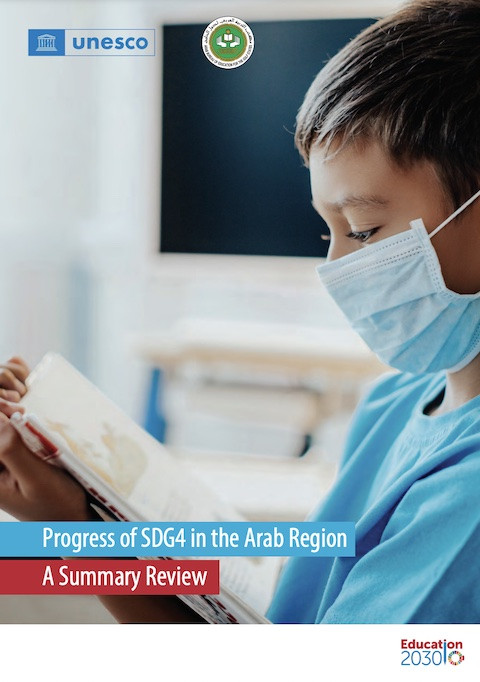 Progress of SDG4 in the Arab Region: A Summary Review Année de publication: 2022 Auteur institutionnel: UNESCO This report is a snapshot review of the progress of SDG 4 in the Arab region, based upon the national reports of the countries of the region and the valuable inputs from the regional education institutes of the region. In this review, SDG 4 is looked at as an essential part of an interconnected whole of all SDGs. However, it focuses on selected targets and indicators of SDG 4 because of difficulties of accessing consistent data pertaining to the region covering the period from 2010 to 2020. Therefore, internationally comparable data from various sources have been taken into consideration, highlighting at the same time the overall pictures as revealed by the country reports and flagging their selected best practices.
 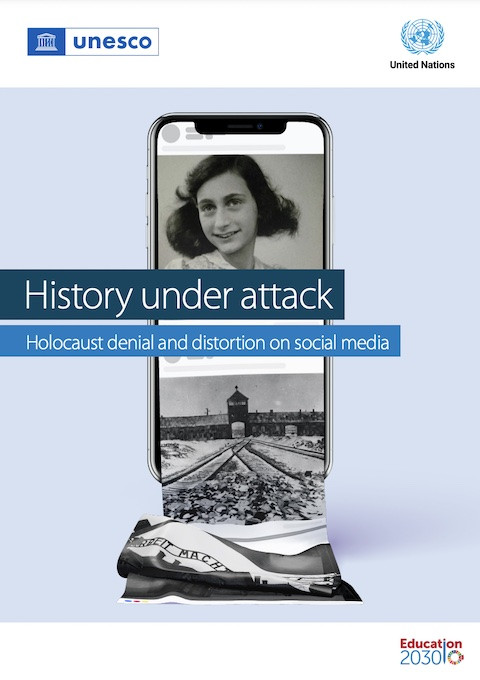 History Under Attack: Holocaust Denial and Distortion on Social Media Année de publication: 2022 Auteur institutionnel: Организация Объединенных Наций по вопросам образования, науки и культуры (UNESCO) | United Nations (UN) Holocaust denial and distortion are dangerous. It is an attack on truth and knowledge. It feeds on and spreads antisemitic tropes and prejudices, and threatens our understanding of one of the most tragic and violent histories: The genocide of six million Jews by Nazi Germany, its allies and collaborators. In countries across Europe, people became complicit in the persecution and murder of their neighbours. Holocaust denial and distortion can prevent society from reckoning with this past. It impedes our comprehension of the causes and warning signs of genocide, and that might strengthen efforts for genocide prevention. It is insulting to the victims and survivors of the Holocaust, and risks the rehabilitation of violent, antisemitic ideologies. At its most extreme, it celebrates and glorifies this history, inciting violence against Jews and calling for another genocide. The United Nations and UNESCO condemn the rise of Holocaust denial and distortion online as a dangerous form of hatred, and commissioned this report in partnership with the World Jewish Congress to raise awareness of the forms and functions of Holocaust denial and distortion on social media, and determine a series of policy and educational responses. This report is a data-driven investigation into the extent and nature of Holocaust denial and distortion on online platforms. It is based on a manual review of almost 4,000 pieces of content collected in June and July 2021 that related to Jews, the Holocaust, antisemitism and Holocaust denial and distortion from five major online platforms and messenger apps. It looks at content posted on Facebook, Instagram, Telegram, TikTok and Twitter: some of the world’s largest online platforms and collectively home to billions of users. It addresses content in four different languages: English, French, Spanish and German, with the aim of providing a wide-ranging review that addresses multiple countries and contexts. This report aims to answer four questions:How much Holocaust-related content on social media either denies the Holocaust or distorts key elements of history?What are the key narratives in contemporary Holocaust denial and distortion?How are Holocaust denial and distortion communicated, and how are they situated within wider discourses and frames?What can online platform companies, policy-makers, educators and organizations promoting Holocaust remembrance, education and research do to tackle the problem? Based on the findings of this report, it provides a series of recommended actions that online platforms, policy-makers, civil society, researchers and educators can implement to prevent and counter Holocaust denial and distortion online.
 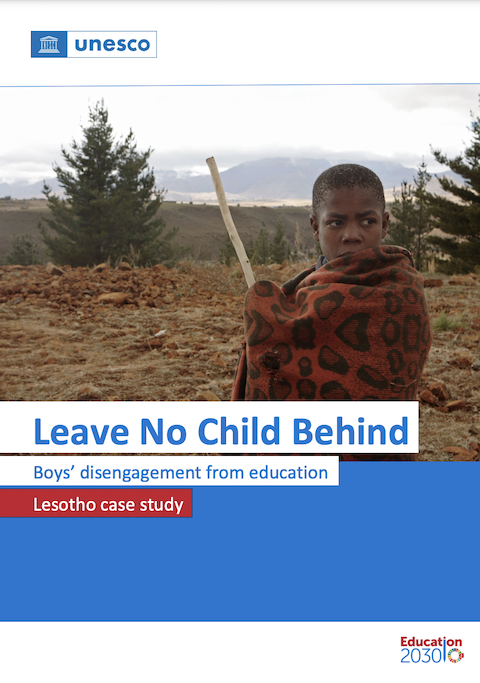 Leave No Child Behind: Boys’ Disengagement From Education; Lesotho Case Study Année de publication: 2022 Auteur: Paseka A. Mosia Auteur institutionnel: 유네스코 In the framework of its work gender equality in and through education better understand boys’ disengagement from education, UNESCO commissioned five country case studies to inform the publication “Leave no child behind: Global report on boys’ disengagement from education”. National research teams examined the situation in five countries – Fiji, Kuwait, Lesotho, Peru and the United Arab Emirates.This case study presents the results from Lesotho.
  School Violence and Bullying of Children With Disabilities in the Eastern and Southern African Region: A Needs Assessment Année de publication: 2022 Auteur: Thesandree Padayachee | Nithya Srinivasan | Mark Carew | Marcella Deluca | Amyn Lalji Auteur institutionnel: Leonard Cheshire (UK) | 联合国教科文组织 (UNESCO) This study looked at the robustness of policy and legal frameworks and the needs of teachers and learners with disabilities in regard to addressing school violence and bullying within the Eastern and Southern African region. The study comprised both a policy analysis and primary qualitative research within five countries in the Eastern and Southern African region (Botswana, Kenya, Lesotho, South Africa and Zambia).