
Ressources
Explorez une large gamme de ressources sur le GCED afin d’approfondir votre compréhension et de renforcer vos activités de recherche, de plaidoyer, d’enseignement et d’apprentissage.
2,660 résultats trouvés
 تفرير لجنة حقوق الطفل: الوثائق الرسمية الجمعية العامة الدورة الخامسة والستون الملحق رقم ٤١ Année de publication: 2010 Auteur institutionnel: UN. Committee on the Rights of the Child (UN. CRC) يستعرض التقرير جهود لجنة حقوق الطفل والمنشور في 2010. وبعتبر التقرير أداة لاستعرض اتفاقية حقوق الطفل وما تم من اعمال لتحقيقها.
  Domestic Violence Année de publication: 2013 Auteur: Sabha Ghora Auteur institutionnel: Naif Arab University for Security Sciences (NAUSS) This article deals with domestic violence and its forms and goes on to discuss hitting children as one of the types of domestic violence. And how hitting children leads to intertwining problems in a child's life. العنف الأسري Année de publication: 2013 Auteur: Sabha Ghora Auteur institutionnel: Naif Arab University for Security Sciences (NAUSS) يتطرق المقال للعنف الأسري وأشكاله. ويستطرد في نقاش ضرب الاطفال كأحد أنواع العنف الأسري. وكيف يقود ضرب الأطفال لمشاكل متداخلة في حياة الطفل.
  Learning About Human Rights in the Primary School Année de publication: 2013 Auteur institutionnel: Amnesty International UK This booklet provides a sample of our human rights education resources produced for primary schools. It helps provide pupils with an understanding of their own human rights and the values and attitudes that underpin them. It will help to foster attitudes of respect and an appreciation of the uniqueness of each individual. Pupils will also develop skills to enable them to take action to defend human rights.You will find a set of 10 interactive lessons for children – five for age 5+ (England and Northern Ireland: Key Stage 1; Wales: Foundation Phase; Scotland: Early and First Level) and five for age 7-11 (England, Nothern Ireland and Wales: Key Stage 2; Scotland: Second Level). Please photocopy and adapt these exercises for your own classroom use.All the activities are designed to encourage pupils to take a basic starting point, often based on something close to home or an event or situation they’ve experienced or can relate to, and then develop it. Pupils are then invited to expand their understanding beyond themselves and to begin to think outwards and towards others, whether locally, nationally or globally.The final activity, Taking action for human rights, explains how schools can sign up to the Junior Urgent Action Network. It’s an opportunity for children to become more actively involved with Amnesty International’s human rights work through our letter-writing campaign. In addition, you can download free resources on a range of human rights issues and order free posters for your school from www.amnesty.org.uk/resources-schools.
  Technical and Vocational Education and Training in Tajikistan and Other Central Asian countries. Main Results and Policy Directions Année de publication: 2021 Auteur institutionnel: Asian Development Bank (ADB) This publication is an analysis of the technical and vocational education and training (TVET) system and its effectiveness in Tajikistan and other Central Asian countries, with recommendations for policy makers and implementers. It shows the importance of TVET and the urgent need for its improvement in the context of labor market needs and responses to the Sustainable Development Goals. Техническое и профессиональное образование и обучение в Таджикистане и других странах Центральной Ази. Основные результаты и направления политики Année de publication: 2021 Auteur institutionnel: Asian Development Bank (ADB) Эта публикация представляет собой анализ системы технического и профессионального образования и обучения (ТПОО), их эффективности в Таджикистане и других странах Центральной Азии, содержит рекомендации для тех, кто разрабатывает политику в этой области и тех, кто ее внедряет. Она показывает важность ТПОО и острую необходимость в его совершенствовании в контексте потребностей рынка труда и реагирования на Цели устойчивого развития.
  Advancing a Just Energy Transition in Central Asia: Women’s Key Role in the Energy Sector Année de publication: 2024 Auteur institutionnel: Организация по безопасности и сотрудничеству в Европе (ОБСЕ) | Global Women’s Network for the Energy Transition (GWNET) The OSCE study analyzes the socio-economic benefits of the energy transition for the five OSCE participating States in the region. It provides specific considerations for the strategic development of an appropriately skilled labour force and also contains critical yet unpublished data on the job creation potential of renewable energy in each Central Asian country. На пути к справедливому энергетическому переходу в Центральной Азии : ключевая роль женщин в энергетике Année de publication: 2024 Auteur institutionnel: Организация по безопасности и сотрудничеству в Европе (ОБСЕ) | Глобальная женская сеть по энергетическому переходу (GWNET) Исследование ОБСЕ анализирует социально-экономические выгоды энергетического перехода для пяти государств-участников ОБСЕ в регионе. В нем представлены конкретные соображения по стратегическому развитию квалифицированной рабочей силы, а также содержатся важные, но неопубликованные данные о потенциале создания рабочих мест в области возобновляемых источников энергии в каждой стране Центральной Азии.
 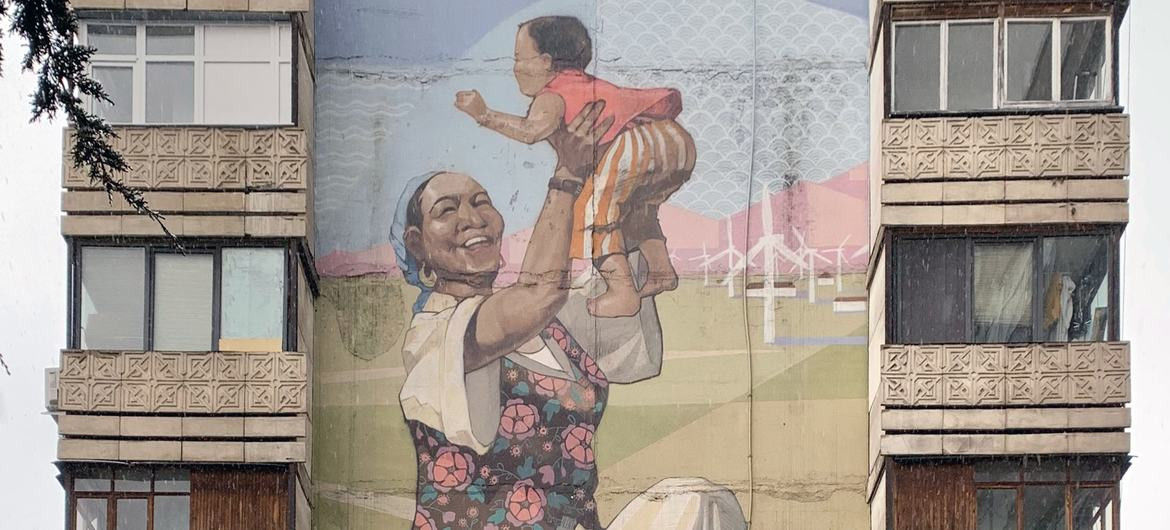 Gender Equality: A Large-Scale Study by the UN and the Government of Kazakhstan Année de publication: 2024 Auteur institutionnel: Организация Объединённых Наций (ООН) Women in Kazakhstan have enough rights and opportunities – 73% of the country's male population believes so. Among women, about 58 percent of participants in a large-scale sociological study on gender equality, which was recently conducted in Kazakhstan with the support of the UN Women structure and the UN Development Program. Гендерное равенство: масштабное исследование ООН и правительства Казахстана Année de publication: 2024 Auteur institutionnel: Организация Объединённых Наций (ООН) Женщины в Казахстане имеют достаточно прав и возможностей – так считает 73 процента мужского населения страны. Среди женщин такого мнения придерживаются около 58 процентов участниц масштабного социологического исследования о гендерном равенстве, которое было проведено недавно в Казахстане при поддержке структуры «ООН-женщины» и Программы развития ООН.