
Ressources
Explorez une large gamme de ressources sur le GCED afin d’approfondir votre compréhension et de renforcer vos activités de recherche, de plaidoyer, d’enseignement et d’apprentissage.
3,376 résultats trouvés
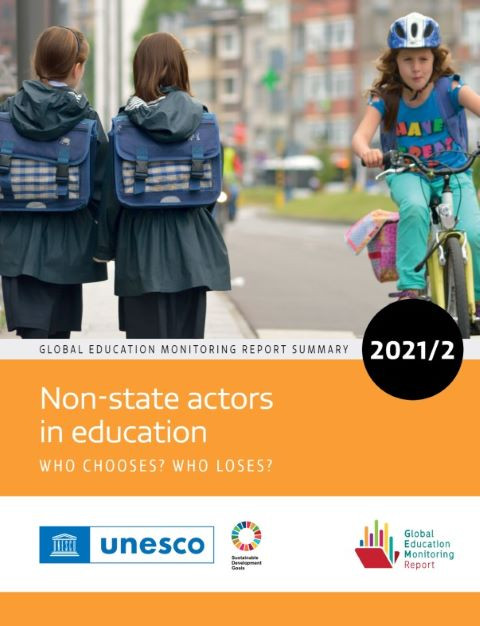 [Summary] Global Education Monitoring Report 2021/2: Non-state Actors in Education: Who Chooses? Who Loses? Année de publication: 2022 Auteur institutionnel: UNESCO Non-state actors’ role extends beyond provision of schooling to interventions at various education levels and influence spheres. Alongside its review of progress towards SDG 4, including emerging evidence on the COVID-19 pandemic’s impact, the 2021/2 Global Education Monitoring Report urges governments to see all institutions, students and teachers as part of a single system. Standards, information, incentives and accountability should help governments protect, respect and fulfill the right to education of all, without turning their eyes away from privilege or exploitation. Publicly funded education does not have to be publicly provided but disparity in education processes, student outcomes and teacher working conditions must be addressed. Efficiency and innovation, rather than being commercial secrets, should be diffused and practiced by all. To that end, transparency and integrity in the public education policy process need to be maintained to block vested interests. The report’s rallying call – Who chooses? Who loses? – invites policymakers to question relationships with non-state actors in terms of fundamental choices: between equity and freedom of choice; between encouraging initiative and setting standards; between groups of varying means and needs; between immediate commitments under SDG 4 and those to be progressively realized (e.g. post-secondary education); and between education and other social sectors.
  Technical Note on the Implementation of the Convention on the Rights of Persons with Disabilities in Uzbekistan Année de publication: 2023 Auteur institutionnel: World Bank This compilation of technical briefs lays out the key problems faced by persons with disabilities in Uzbekistan under all areas of life and formulates detailed recommendations, providing the evidence base for a Strategic Note that aims to guide Uzbekistan's next five-year National Action Plan (NAP) for implementing the United Nations Convention on the Rights of Persons with Disabilities (CRPD). Технические справки по имплементации Конвенции о правах инвалидов Année de publication: 2023 Auteur institutionnel: World Bank В этом сборнике девяти отраслевых технических справок очень подробно анализируются проблемы, с которыми сталкиваются лица с инвалидностью в Узбекистане во всех сферах жизни, и формулируются подробные рекомендации, обеспечивающие доказательную базу для Стратегической записки, которая призвана служить ориентиром для следующего пятилетнего Национального плана действий Узбекистана (НПД) по имплементации Конвенции Организации Объединенных Наций о правах инвалидов (КПИ) в стране.
  Return to the Origin: Ancient Narratives about Humanity, Time and the World Année de publication: 2022 Auteur: Eduardo A. Rueda | Ana María Larrea | Augusto Castro | Óscar Bonilla | Nicolás Rueda | Carlos Guzmán Auteur institutionnel: Latin American Council of Social Sciences (CLACSO) | UNESCO In this brief reflection, only in an introductory way, two questions are addressed. The first has to do with the relevance or impertinence of a program to record the narratives of our original peoples about the origins and trajectories of humanity. In relation to this first point, they are interested in proposing the bases for an emancipatory approach, that is, counter-hegemonic, of the original narratives. The second question asks about the consequences that it has, for the self-understanding of the crises and tensions of current societies, to highlight non-Western conceptions of human origins and trajectories. Retornar al origen: Narrativas ancestrales sobre humanidad, tiempo y mundo Année de publication: 2022 Auteur: Eduardo A. Rueda | Ana María Larrea | Augusto Castro | Óscar Bonilla | Nicolás Rueda | Carlos Guzmán Auteur institutionnel: Latin American Council of Social Sciences (CLACSO) | UNESCO En esta breve reflexión se abordan, apenas de modo introductorio, dos cuestiones. La primera tiene que ver con la pertinencia o impertinencia de un programa de registro de las narrativas de nuestros pueblos originarios sobre los orígenes y trayectorias de la humanidad. Les interesa, en relación con este primer punto, proponer las bases para un abordaje emancipatorio, es decir, contrahegemónico, de las narrativas originarias. La segunda cuestión se interroga por las consecuencias que tiene, para la autocomprensión de las crisis y tensiones de las sociedades actuales, poner en evidencia concepciones no occidentales de los orígenes y las trayectorias humanas.
  Revised Recommendation Concerning Education for International Understanding, Co-operation and Peace and Education Relating to Human Rights and Fundamental Freedoms ('1974 Recommendation') Année de publication: 2022 Auteur institutionnel: UNESCO The revision of the 1974 Recommendation provides the international community with the opportunity to strengthen the instrument so that it can support the design and implementation of effective educational policies and programmes, which can put the world on a pathway to lasting peace and sustainable development for all, in line with the requirements of the 2030 Agenda and the body of international legal norms adopted since 1974. Recommandation révisée sur l’éducation pour la compréhension, la coopération et la paix internationales et l’éducation relative aux droits de l’homme et aux libertés fondamentales (« Recommandation de 1974 ») Année de publication: 2022 Auteur institutionnel: UNESCO La révision de la Recommandation de 1974 offre à la communauté internationale l'occasion de renforcer l'instrument afin qu'il puisse soutenir la conception et la mise en œuvre de politiques et de programmes éducatifs efficaces, susceptibles de mettre le monde sur la voie d'une paix durable et du développement durable pour tous, conformément aux exigences de l'Agenda 2030 et à l'ensemble des normes juridiques internationales adoptées depuis 1974.
 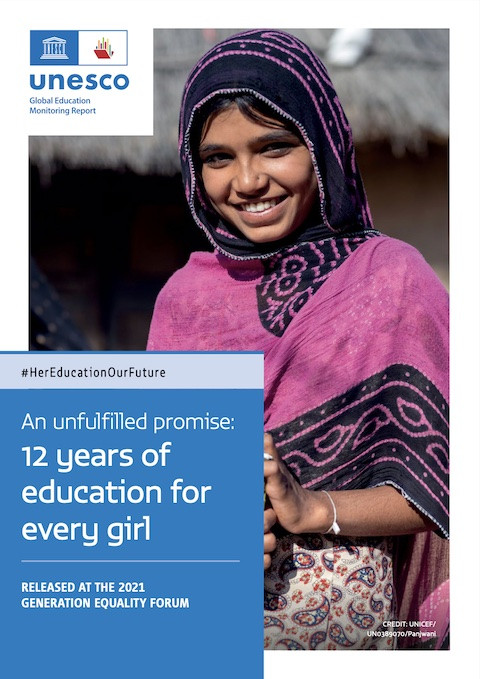 Une promesse non tenue: 12 années d’enseignement pour toutes les filles Année de publication: 2021 Auteur institutionnel: UNESCO | Global Education Monitoring Report Team En 1995, il y a un peu plus de 25 ans, 189 gouvernements ont adopté la Déclaration et le Programme d’action de Beijing – un programme visionnaire en faveur de l’autonomisation des femmes et le cadre stratégique mondial le plus complet à ce jour pour promouvoir l’égalité des genres. Le document faisait de l’éducation et de la formation des filles et des femmes l’un des 12 domaines clés dans lesquels il était urgent d’agir pour assurer une plus grande égalité.Depuis Beijing, la communauté internationale a mis l’accent sur le pouvoir transformateur de l’éducation des filles et des femmes, et sur ses avantages – non seulement pour les filles et les femmes, mais aussi pour des sociétés entières et même pour les générations futures. Dans le Programme de développement durable à l’horizon 2030, l’objectif de développement durable (ODD) 4, relatif à l’accès de tous à une éducation de qualité sur un pied d’égalité et à l’apprentissage tout au long de la vie, définit des cibles ambitieuses pour garantir l’égalité des chances – notamment une cible visant à faire en sorte, d’ici à 2030, que toutes les filles et tous les garçons suivent un cyclede 12 années d’enseignement.Ce bref document étudie l’évolution des taux d’achèvement des études primaires et secondaires des filles et des garçons depuis 1995, et appelle à agir pour que nous tenions notre engagement de ne laisser personne de côté.
 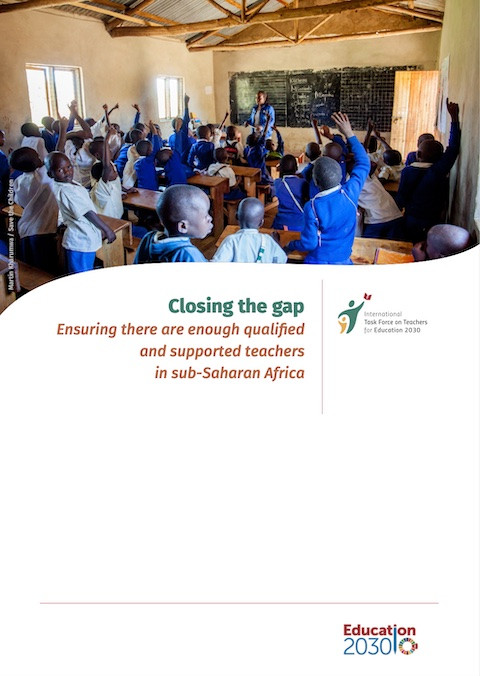 Closing the Gap: Ensuring There Are Enough Qualified and Supported Teachers in Sub-Saharan Africa Année de publication: 2021 Auteur institutionnel: International Task Force on Teachers for Education 2030 | UNESCO The fourth Sustainable Development Goal (SDG 4) aims to ensure better learning opportunities and outcomes and more equitable and inclusive education for all. SDG target 4.c calls for an increase in the supply of qualified teachers, particularly in low-income countries. To achieve this ambitious target, the international community needs to pay renewed attention to teacher support and preparation.This advocacy brief considers what it will take to increase the supply of qualified teachers in sub-Saharan Africa, the region where the teacher shortage is most acute. It analyses the causes for teacher shortages, looks at trends affecting the region and describes the scale of the shortages. It examines the fiscal pressures on low-income countries to cover salary costs and the costs of initial teacher education and continuing professional development, and it proposes some recommendations for governments and the international community to achieve the essential target of substantially increasing the supply of well qualified teachers.
  Educación y diversidad cultural: Lecciones desde la práctica innovadora en América Latina Année de publication: 2008 Auteur: Carolina Hirmas R. Auteur institutionnel: UNESCO Esta publicación, que constituye el segundo volumen de la colección, es el resultado del análisis y la reflexión acerca de un conjunto experiencias educati- vas innovadoras de varios países de Latinoamérica, que responden con pertinen- cia pedagógica al contexto cultural de los estudiantes y ofrecen una educación orientada al conocimiento, comprensión y diálogo entre personas de diferentes culturas. El aporte significativo de las experiencias referidas, reside en el reco- nocimiento y valoración de la diversidad étnica y cultural de sus estudiantes y comunidades, como punto de partida para el desarrollo de nuevos aprendizajes y afirmación de su identidad. A su vez, la vida en los centros educativos promueve relaciones interculturales de respeto y fraternidad en un contexto sociogeográfico local y subregional, caracterizado por la multiculturalidad.