
Ressources
Explorez une large gamme de ressources sur le GCED afin d’approfondir votre compréhension et de renforcer vos activités de recherche, de plaidoyer, d’enseignement et d’apprentissage.
2,194 résultats trouvés
 Тематический альтернативный доклад о выполнении Республикой Таджикистан Конвенции о ликвидации всех форм дискриминации в отношении женщин. Применительно к правам женщин, освободившихся из мест лишения свободы Année de publication: 2024 Auteur institutionnel: EU | DVV International | Bureau of Human Rights and Rule of Law (BHR) Данный альтернативный доклад посвящен выполнению Республикой Таджикистан Конвенции ООН о ликвидации всех форм дискриминации в отношении женщин (КЛДЖ) в аспекте соблюдения прав женщин, освободившихся из мест лишения свободы. Доклад содержит информацию за период с 2019 по 2023 годы.
  2021 교육(누리)과정 연계 다문화교육 수업 도움자료: 다문화감수성 제고를 위한 세계시민교육 교수·학습 자료; 유치원 (만 3~5세) Année de publication: 2021 Auteur: 유준호 Auteur institutionnel: 국가평생교육진흥원 | 중앙다문화교육센터 「교육(누리)과정 연계 다문화교육 수업 도움자료」는 다문화교육 연구학교의 연차별 연구과제 수행의 결과로 마련된 수업모델을 토대로 개발되었으며, 만3세~5세 대상 유치원 교육과정과 연계한 세계시민교육 주제의 교수ᆞ학습과정안으로 구성되어 있다.
  2021 교육(누리)과정 연계 다문화교육 수업 도움자료: 다문화감수성 제고를 위한 세계시민교육 교수·학습 자료; 초등 (5~6학년) Année de publication: 2021 Auteur: 구정화 Auteur institutionnel: 국가평생교육진흥원 | 중앙다문화교육센터 본 도움자료는 다문화감수성 제고를 위한 세계시민교육을 교과 수업에서 실시하기 위해 초등학교 5~6학년 대상의 다양한 교수·학습과정안을 담고 있다.
 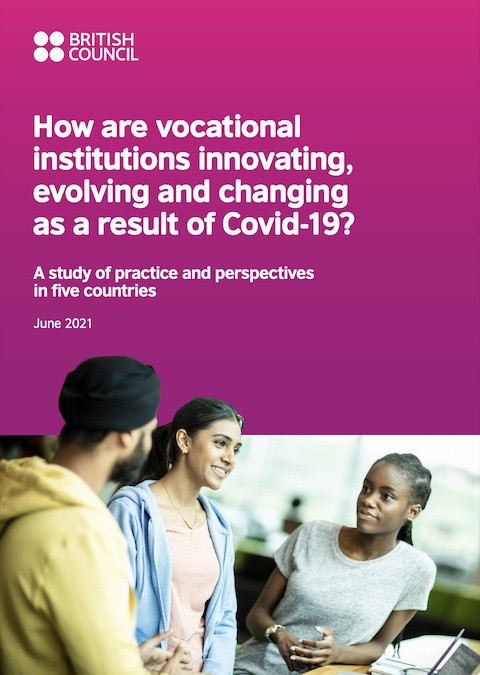 How Are Vocational Institutions Innovating, Evolving and Changing as a Result of COVID-19?: A Study of Practice and Perspectives in Five Countries Année de publication: 2021 Auteur institutionnel: British Council As an international problem, Covid-19 requires international cooperation. The social, economic and educational recovery from the pandemic can be enhanced by knowledge transfer and exchange. This research brought together 15 technical and vocational education and training (TVET) institutions from the five countries in the British Council’s I-WORK Programme (Improving Work Opportunities - Relaying Knowledge) to explore innovation, evolution and change stemming from the pandemic. TVET practitioners and leaders from Ghana, India, Malaysia, South Africa and the UK were asked to reflect on five key questions: How are institutional policy and structures likely to change to reflect the changing situation? Is this different for private institutions? What changes are proposed to the curriculum/ occupational areas to reflect the rapidly changing demand and how are they identifying this demand? How will learners get the practical and work-based experience they need and what changes to work- based learning and apprenticeships are needed? What changes are needed to the skills and type of staff in the teaching institution? How can new delivery models and ways of working promote more inclusive practice? The research took place as institutions approached almost a year of adapting their teaching, learning and support to localised lockdowns and the restrictions of the pandemic. The national policy context may have been different in each country, but the research findings pointed to a single conclusion: that across the board, the move to digital learning and teaching had brought benefits, opportunities and challenges that might not otherwise have been realised.
 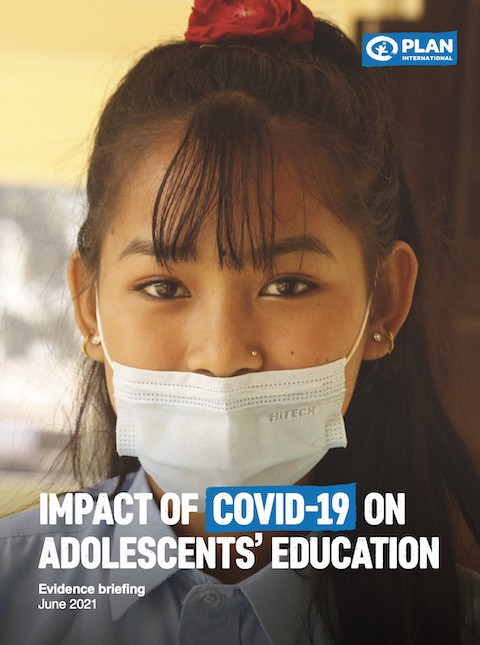 Impact of COVID-19 on Adolescents’ Education: Evidence Briefing Année de publication: 2021 Auteur: Adrienne Monteath-van Dok | Anthony Davis | Nicholas Frost Auteur institutionnel: Plan International UK This paper highlights the impact of COVID-19 on the education of adolescent girls and boys.
 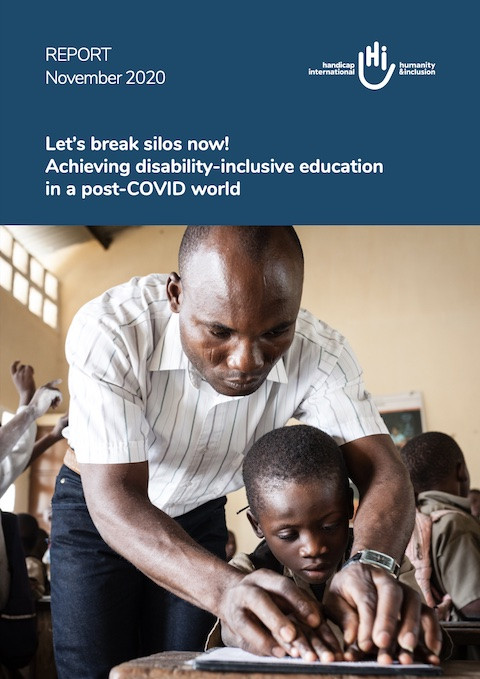 Let’s Break Silos Now!: Achieving Disability-Inclusive Education in a Post-COVID World Année de publication: 2020 Auteur: Aurélie Beaujolais | Blandine Bouniol | Francesca Piatta | Julia McGeown | Sandra Boisseau | Sandrine Bohan Jacquot | Valentina Pomatto Auteur institutionnel: Humanity & Inclusion This is a report on the difficulties children with disabilities face in accessing education in the world’s poorest countries. The report draws specifically on Humanity & Inclusion and its partners’ extensive global experience and learning around education and disability. More recently, this includes the impact of the COVID-19 pandemic on education for children with disabilities.
  경기도 문화다양성 정책 현황 및 발전 방안 연구 Année de publication: 2021 Auteur: 안태호 | 권범철 | 김강 | 손민아 | 임영준 Auteur institutionnel: 협동조합 예술과 도시사회연구소 | 경기문화재단 본 연구는 경기도 문화다양성 정책의 현황을 살펴보고 새로운 방향을 제시하는 데 그 목적이 있다. 경기도의 문화다양성 현황을 알기 위해 문헌조사와 함께 설문조사를 실시하고, 경기지역의 소수자들을 대상으로 문화다양성 정책에 대한 심층인터뷰를 통해 문화다양성 정책 방향에 대해 제안한다.본 저작물은 경기문화재단에서 2020년에 작성하여 공공누리 4유형으로 개방한 '경기도 문화다양성 정책 현황 및 발전 방안 연구보고서'이며, 해당 저작물은 경기문화예술교육지원센터(https://ggarte.ggcf.kr/)에서 무료로 다운받으실 수 있습니다.
 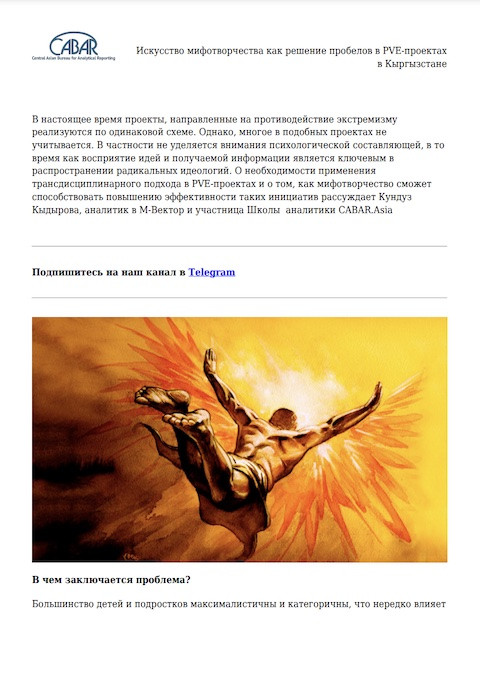 The Art of Mythmaking as a Solution to Gaps in PVE Projects in Kyrgyzstan Année de publication: 2020 Auteur: Kunduz Kydyrova Auteur institutionnel: Central Asian Bureau for Analytical Reporting (CABAR) | Institute for War and Peace Reporting (IWPR) Currently, projects aimed at countering extremism are being implemented according to the same scheme. However, much is not considered in such projects. In particular, no attention is paid to the psychological component, while the perception of ideas and information received is key in the spread of radical ideologies. Kunduz Kydyrova, an analyst at M-Vector and a member of the CABAR.asia School of Analytics, discusses the need to apply a transdisciplinary approach in PVE projects and how mythmaking can help increase the effectiveness of such initiatives. Искусство мифотворчества как решение пробелов в PVE-проектах в Кыргызстане Année de publication: 2020 Auteur: Kunduz Kydyrova Auteur institutionnel: Central Asian Bureau for Analytical Reporting (CABAR) | Institute for War and Peace Reporting (IWPR) В настоящее время проекты, направленные на противодействие экстремизму реализуются по одинаковой схеме. Однако, многое в подобных проектах не учитывается. В частности не уделяется внимания психологической составляющей, в то время как восприятие идей и получаемой информации является ключевым в распространении радикальных идеологий. О необходимости применения трансдисциплинарного подхода в PVE-проектах и о том, как мифотворчество сможет способствовать повышению эффективности таких инициатив рассуждает Кундуз Кыдырова, аналитик в М-Вектор и участница Школы аналитики CABAR.Asia.
  Discourses and Strategies for Solving Environmental Issues in Central Asia Année de publication: 2020 Auteur: Muslimbek Buriev Auteur institutionnel: Central Asian Bureau for Analytical Reporting (CABAR) | Institute for War and Peace Reporting (IWPR) The representative office of the Institute for War and Peace Reporting (IWPR) in Central Asia and CABAR.asia present an analytical note entitled “Discourses and Strategies for Solving Environmental Issues in Central Asia”. This work is an effort to outline the most significant environmental issues in the region and to analyze measures to solve them. In addition, it attempts to highlight cases of successful practice as well as to identify existing programs with significant shortcomings.The work is meant for young experts and consultants, researchers, decision-makers, as well as a wide range of readers interested in environmental issues and governance in Central Asia.