
Ressources
Explorez une large gamme de ressources sur le GCED afin d’approfondir votre compréhension et de renforcer vos activités de recherche, de plaidoyer, d’enseignement et d’apprentissage.
518 résultats trouvés
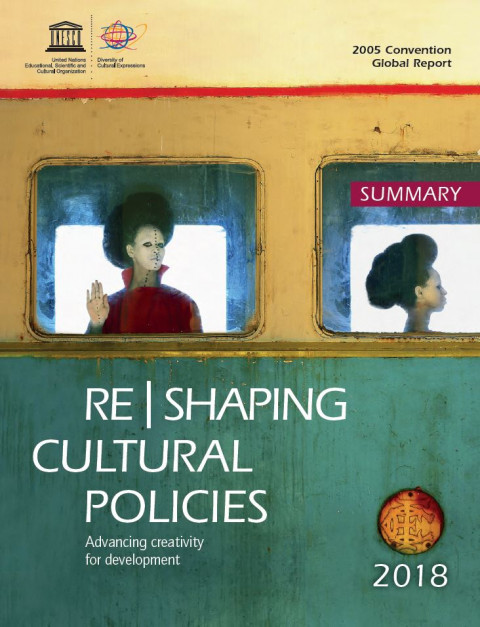 [Resumen] Re|pensar las políticas culturales: creatividad para el desarrollo, Convención de 2005 Informe Mundial 2018: resumen Année de publication: 2017 Auteur institutionnel: UNESCO Concebida para efectuar el seguimiento de la aplicación de la Convención de la UNESCO sobre la Protección y la Promoción de la Diversidad de las Expresiones Culturales (2005), esta serie de Informes Mundiales también proporciona pruebas de cómo el proceso de aplicación de esta Convención contribuye a la consecución de las metas fijadas en los Objetivos de Desarrollo Sostenible de la Agenda para 2030 de las Naciones Unidas.En el Informe Mundial 2018 se examinan los progresos realizados en la aplicación de la Convención de 2005 desde la publicación del primer Informe en 2015.Basándose en un análisis de los informes periódicos cuadrienales presentados por las Partes en la Convención, así como en los resultados pertinentes de recientes investigaciones, el presente Informe muestra cómo la Convención de 2005 ha contribuido a hacer evolucionar las políticas culturales a nivel nacional y mundial en diez ámbitos. En el Informe se formula un conjunto de recomendaciones sobre esas políticas con vistas al futuro, abordando la cuestión de su adaptación a la rápida evolución del universo digital sobre la base del respeto de los derechos humanos y las libertades fundamentales.Las dos ediciones de 2015 y 2018 del Informe Mundial proporcionan conjuntamente toda una serie de datos recientes y valiosos que aportan información para la elaboración de políticas culturales y contribuyen al progreso de la creatividad para el desarrollo.
  Human Right and Encryption Année de publication: 2016 Auteur: Wolfgang Schulz | Joris van Hoboken Auteur institutionnel: UNESCO This publication follows UNESCO’s new approach to Internet issues, as endorsed in November 2015 on the occasion of its 38th General Conference. Our 195 Member States have adopted the CONNECTing the Dots Outcome Document, in which 38 options for future action from UNESCO are set out; and the Internet Universality principles (R.O.A.M.),which advocates for a Human-rights-based, Open and Accessible Internet, governed by Multi-stakeholder participation.Encryption is a hot topic in the current global discussion on Internet governance. This research delves into the subject, to outline a global overview of the various means of encryption, their availability and their potential applications in the media and communications landscape. The research explains how the deployment of encryption is affected by different areas of law and policy, and it offers detailed case studies of encryption in selected jurisdictions.It analyzes in-depth the role of encryption in the media and communications landscape, and the impact on different services, entities and end users. Built on this exploration and analysis, the research provides recommendations on encryption policy that are useful for various stakeholders. These include signaling the need to counter the lack of gender sensitivity in the current debate, and also highlighting ideas for enhancing “encryption literacy”.
  Better Life, Better Future: UNESCO Global Partnership for Girl's and Women's Education Année de publication: 2015 Auteur institutionnel: UNESCO Since its inception, UNESCO has been a strong advocate, promoter and defender of the right to quality education for all, especially for girls and women. Gender equality and education are fundamental human rights, which stand at the core of UNESCO’s mandate. UNESCO launched the Global Partnership for Girls’ and Women’s Education in 2011, guided by the conviction that by educating girls and women, we can break persistent cycles of poverty and in turn foster greater social justice. The Partnership aims to increase learning opportunities for adolescent girls and women and to find solutions to some of the biggest challenges and obstacles to their education. The partnership addresses two weakest links which are secondery education and literacy. Une Vie meilleure, un avenir meilleur: partenariat mondial de l'UNESCO pour l'éducation des filles et des femmes Année de publication: 2015 Auteur institutionnel: UNESCO Since its inception, UNESCO has been a strong advocate, promoter and defender of the right to quality education for all, especially for girls and women. Gender equality and education are fundamental human rights, which stand at the core of UNESCO’s mandate. UNESCO launched the Global Partnership for Girls’ and Women’s Education in 2011, guided by the conviction that by educating girls and women, we can break persistent cycles of poverty and in turn foster greater social justice. The Partnership aims to increase learning opportunities for adolescent girls and women and to find solutions to some of the biggest challenges and obstacles to their education. The partnership addresses two weakest links which are secondery education and literacy.
 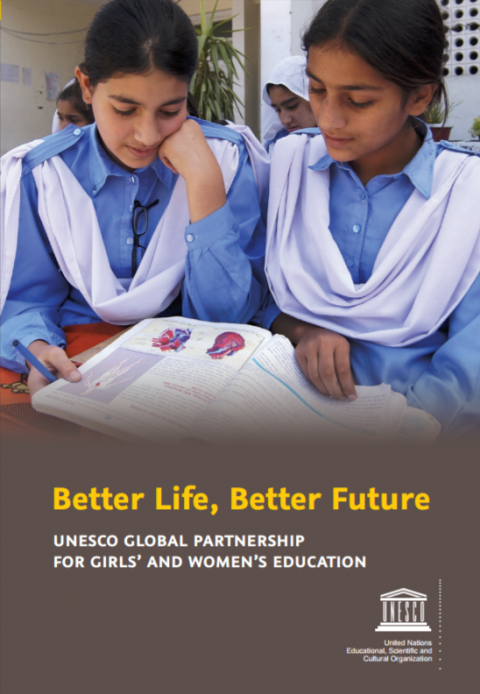 Better Life, Better Future: UNESCO Global Partnership for Girls' and Women's Education Année de publication: 2014 Auteur institutionnel: UNESCO Since its creation, UNESCO has been advocating for, promoting and defending the right to quality education for all, especially for girls and women. As fundamental human rights, gender equality and education stand at the core of UNESCO’s mandate. UNESCO launched the Global Partnership for Girls’ and Women’s Education in 2011 guided by the conviction that educating girls and women can break the cycle of poverty and foster greater social justice. The Partnership seeks to increase learning opportunities for adolescent girls and women and to find solutions to some of the biggest challenges and obstacles to their education. The Partnership addresses two main areas which require increased attention: secondary education and literacy.
 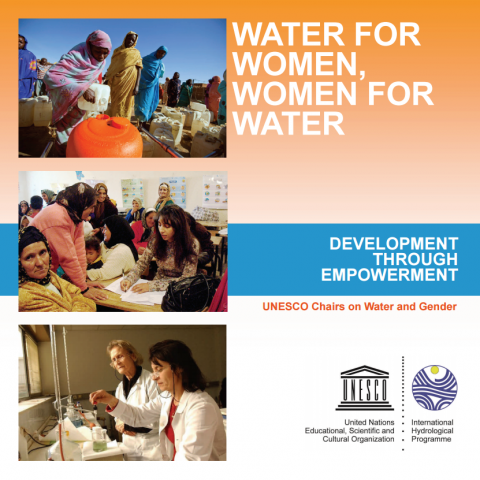 Water for Women, Women for Water: UNESCO's Chairs on Water and Gender Année de publication: 2014 Auteur institutionnel: UNESCO The access to sufficient, safe and affordable water is a basic human right. It calls for governments, institutions, corporations and public and private organizations involved in the water sector to eliminate various forms of discrimination in the access, management and decision‐making processes involving water resources. Within the framework of the UNITWIN/UNESCO Chairs Programme, UNESCO has established five Chairs seeking to promote the engagement of women in sustainable development and water resource management. These Chairs integrate the UNESCO Water Family, consisting of the International Hydrological Programme (IHP), water‐related Centers’, the UNESCO‐IHE Institute for Water Education, the World Water Assessment Programme (WWAP), and a total of 35 UNESCO Chairs and UNITWIN Networks.Located in Brazil, Côte d’Ivoire, Morocco, Togo and the Dominican Republic, the Chairs are based in institutions of research and higher education, working actively to develop human resources, build solutions, and share scientific and practical knowledge. They work in partnership with other academic institutions, as well as public and private organizations. They also pave the way for the research and higher education communities to join forces with UNESCO in an effort to achieve internationally agreed Development Goals and targets. With a high appreciation for the Chairs’ great potential for impact, IHP has strongly encouraged their projects and initiatives, as well their involvement in other focal areas of the Eighth Phase of IHP, in order to strengthen water security, enhance tertiary and technical water education and respond to the needs of communities, with a special focus on women’s needs. With their inception in 2006, the UNESCO Chairs on Water and Gender have built a remarkable combination of knowledge and experience in their area of expertise. Through their actions, the Chairs have successfully fostered cooperation and exchange of information among different institutions of higher education; conducted research and training activities on gender‐related issues, water and natural sciences; established networks between professionals, governmental, non‐governmental and private organizations; created new approaches to deal with the water‐related needs of local communities and succeeded in increasing participation, leadership and the role of women in the water sector.As a general goal, the Chairs strive to enhance women’s capacities through motivation, engagement, development of skills and education. They have been active in organizing learning courses, training sessions, workshops, conferences and a diverse range of research and community projects. The following pages present a detailed overview of the five Chairs and their goals, activities, and initiatives.
  UNESCO and Gender Equality in Sub-Saharan Africa: Innovative Programmes, Visible Results Auteur institutionnel: UNESCO For over twenty years, UNESCO’s work in Africa has been undertaken in a specific framework with a range of institutional mechanisms designed to help translate into action its priorities: Africa and gender equality. During this period, UNESCO achieved important results in the areas covered by its mandate to promote gender equality.This publication highlights UNESCO’s contribution to the implementation of the African Union’s Agenda 2063 and the 2030 Agenda for Sustainable Development of the United Nations, in the field of gender equality in Africa, through examples of good practice, lessons learnt as well as suggestions and recommendations for the future. L'UNESCO et l'égalité des Genres en Afrique Subsaharienne: Des Programmes Novateurs, des Résultats Perceptibles Auteur institutionnel: UNESCO Depuis plus d’une vingtaine d’années l’UNESCO a inscrit son action dans un cadre spécial assorti d’un ensemble de mécanismes institutionnels conçus pour appuyer l’opérationnalisation de ses Priorités: l’Afrique et l’égalité des genres. Au cours de cette période, l’UNESCO a été à l’origine d’importantes réalisations dans les domaines relevant de son mandat à travers la mise en oeuvre des programmes et activités novateurs.La présente publication met en exergue la contribution de l’UNESCO à la mise en oeuvre de l’Agenda 2063 de l’Union africaine et du Programme de développement durable à l’horizon 2030 dans le domaine de l’égalité des genres en Afrique, à travers des exemples de bonnes pratiques, de leçons apprises ainsi que des suggestions et recommandations pour le futur.
  Discours du Sous-Directeur général de l'UNESCO pour la culture M. Francesco Bandarin à l'occasion de la Journée internationale de la langue maternelle: Les langues locales pour la citoyenneté mondiale: zoom sur la science; UNESCO, le 21 février 2014 Année de publication: 2014 Auteur institutionnel: UNESCO This is an address by Mr. Francesco Bandarin, Assistant Director-General for culture of UNESCO, on the occasion of the International Mother Language Day: Local languages for global citizenship: focusing on science. Although little progress has been made to extend the benefits of multilingual education in the areas such as science, development of science will be considerably consolidated if people better understand and utilize local and international languages. Contributing to peace and human development in an era of globalization Année de publication: 2002 Auteur institutionnel: UNESCO The Medium-Term Strategy (2002-2007) for the countries of the Africa region is an essential programme axis of UNESCO’s new decentralization policy. It forms an integral part of the Organization’s overall strategic objectives defined by the Member States in the UNESCO MediumTerm Strategy for 2002-2007 (31 C/4), which aims to contribute to peace and human development through education, the sciences, culture and communication.