
Ressources
Explorez une large gamme de ressources sur le GCED afin d’approfondir votre compréhension et de renforcer vos activités de recherche, de plaidoyer, d’enseignement et d’apprentissage.
732 résultats trouvés
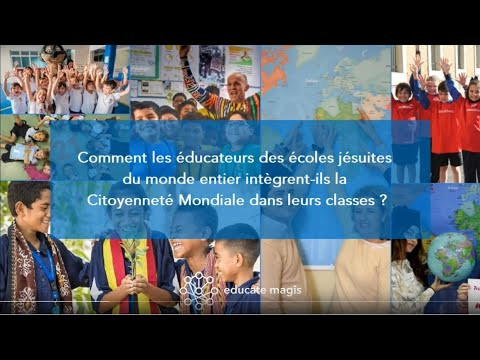 [Vidéo] Citoyenneté mondiale pour les écoles jésuites Année de publication: 2019 Auteur institutionnel: Educate Magis Pourquoi la Citoyenneté Mondiale est-elle importante dans le monde d’aujourd’hui et dans le contexte jésuite? Le Globale a toujours fait partie du fonctionnement de la Compagnie de Jésus. Dès le début, dans les années 1500, Ignace et ses compagnons missionnaires ont parcouru le monde, se sont écrit des lettres pour parler des expériences qu’ils vivaient ainsi les écoles en ont appris davantage sur le monde qui les entourait. Bien que notre monde ait changé, cet aspect de notre mission n’a pas changé. C’est sans doute plus important que jamais, car nous vivons dans un monde de plus en plus interconnecté.(José Alberto Mesa, SJ, Secrétaire pour l’Enseignement Secondaire et Présecondaire, Compagnie de Jésus)
 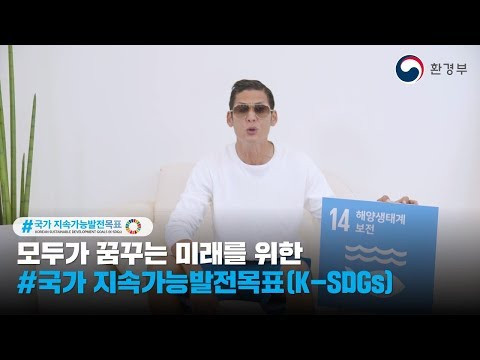 [Video] 국가 지속가능발전목표(K-SDGs) Année de publication: 2019 Auteur institutionnel: 대한민국 환경부 K-SDGs는 국제적 정세에 대응하여 수립한 한국형 SDGs이며, 경제, 사회, 환경 등 국정 전분야를 아울러 대한민국이 가야할 2030년까지 이정표를 설정한 것이다.K-SDGs는 기존에 행정부처에서 각종 정책 및 계획 등을 먼저 수립한 후 관계 전문가와 국민의견을 수렴하는 하향식(Top-down) 방식과는 다른 상향식(Bottom-up) 방식으로 추진되었다. 초안을 마련하는 단계부터 192명의 민간 작업반이 참여하여 우리 사회의 지속가능성을 위해 요구되는 사항들을 반영한 세부목표, 지표체계(안)을 마련했다.
  Reading the past, writing the future Année de publication: 2016
 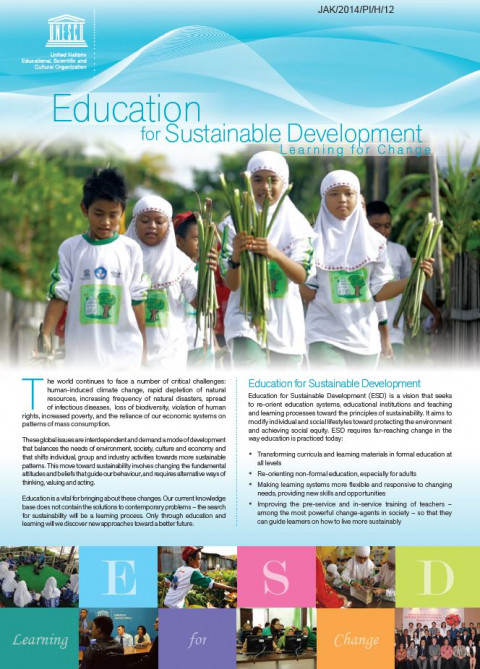 Education for Sustainable Development: Learning for Change Année de publication: 2014 Auteur institutionnel: UNESCO Jakarta The world continues to face a number of critical challenges: human-induced climate change, rapid depletion of natural resources, increasing frequency of natural disasters, spread of infectious diseases, loss of biodiversity, violation of human rights, increased poverty, and the reliance of our economic systems on patterns of mass consumption. These global issues are interdependent and demand a mode of development that balances the needs of environment, society, culture and economy and that shifts individual, group and industry activities towards more sustainable patterns. This move toward sustainability involves changing the fundamental attitudes and beliefs that guide our behaviour, and requires alternative ways of thinking, valuing and acting. Education is a vital for bringing about these changes. Our current knowledge base does not contain the solutions to contemporary problems – the search for sustainability will be a learning process. Only through education and learning will we discover new approaches toward a better future.
 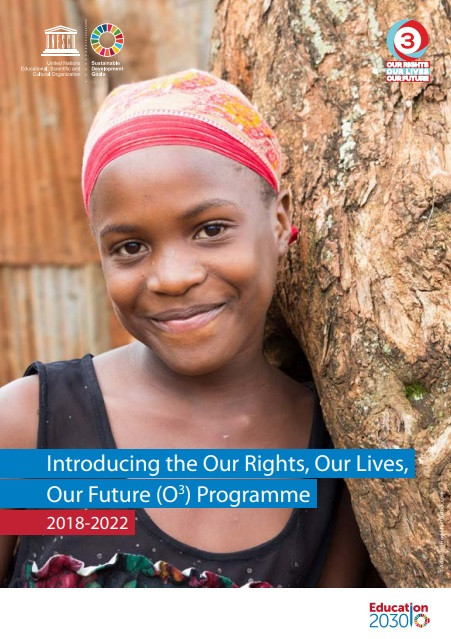 Introducing the Our Rights, Our Lives, Our Future (O3) Programme 2018-2022 Année de publication: 2019 Auteur institutionnel: UNESCO Harare Comprehensive sexuality education is a curriculum-based process of teaching and learning about the cognitive, emotional, physical, and social aspects of sexuality. It aims to equip children and young people with the knowledge, skills, attitudes, and values that will empower them to protect their health, well-being, and dignity, as well as to develop respectful social relationships and consider the well-being of others affected by their choices. Importantly, it also helps them to understand and act upon their rights throughout their lives.
 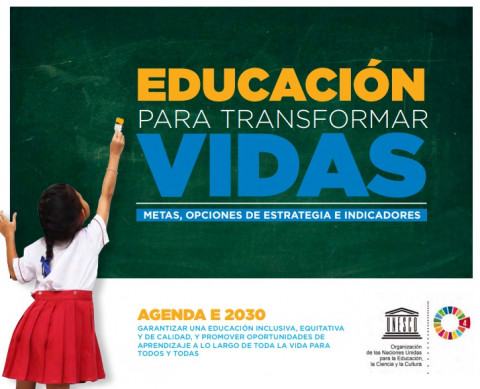 Educación para transformar vidas: metas, opciones de estrategia e indicadores Année de publication: 2016 Auteur institutionnel: UNESCO Santiago La educación está en el centro de la agenda de desarrollo sostenible y es esencial para el éxito de todas estas metas. La nueva agenda de educación resumida en el Objetivo 4 es holística, ambiciosa, deseable y universal, yestá inspirada por una visión de que la educación transforma las vidas de las personas, las comunidades y las sociedades. La agenda atiende los temas no resueltos de los objetivos de la Educación para Todos (EPT) ylos ODM relacionados con la educación, al tiempo que aborda de manera efectiva los actuales y futuros desafíos de la educación a nivel mundial y nacional. Está basada en los derechos y está inspirada en una visión humanista de la educación y el desarrollo, con base en los principios de la dignidad humana, los derechos igualitarios, la justicia social, la paz, la diversidad cultural y la responsabilidad compartida. Basándose y continuando con el movimiento EPT, Educación 2030 toma en cuenta lecciones aprendidas desde 2000. Lo que es nuevo en esta agenda es su enfoque en mayores y más amplios resultados en el acceso, la equidad e inclusión, calidad y aprendizaje, además de un aprendizaje a lo largo de toda la vida.
 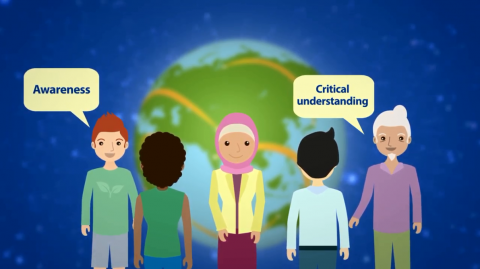 What is Global Education Année de publication: 2019 Auteur institutionnel: North-South Centre of the Council of Europe Pedagogical video about the concept of global education and the approach of the North-South Centre of the Council of Europe.
 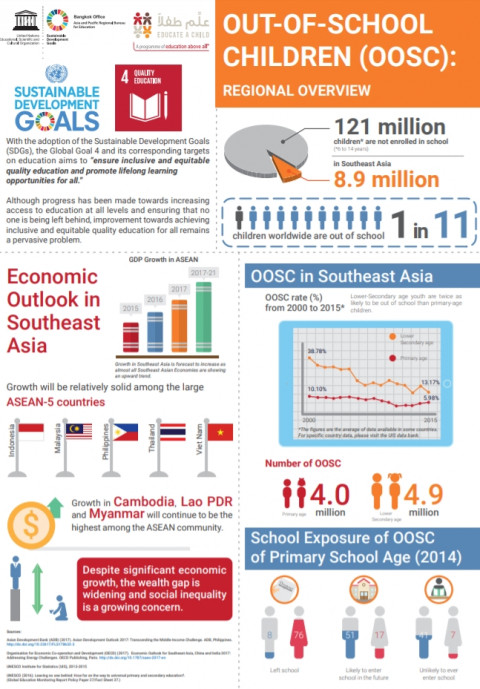 Out-of-School Children (OOSC): regional overview Année de publication: 2017 Auteur institutionnel: UNESCO Bangkok This leaflet provides a regional overview of out-of-school children (OOSC) situation in Southeast Asia including school exposure of OOSC of primary school age. To provide learning opportunities for OOSC in the region, UNESCO Bangkok has launched the project titled “Strengthening Education Systems for Out of School Children” with the support of Educate a Child (EAC). Information on country activities implemented under the project is included in the leaflet.
 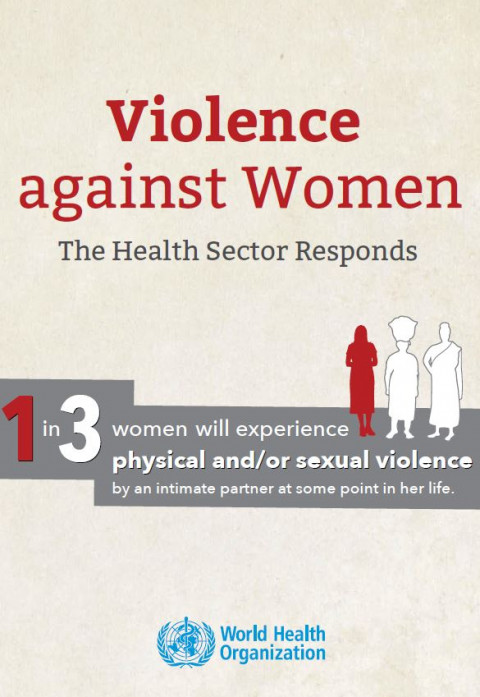 Violence Against Women Infographic: Health Impacts and the Role of the Health Sector Année de publication: 2013 Auteur institutionnel: World Health Organization (WHO) The WHO Department for Management of NCDs, Disability, Violence and Injury Prevention, and Department of Reproductive Health and Research, have prepared an infographic displaying the prevalence and health and social consequences of violence against women, and what the health sector can do to address this public health problem. The infographic is targeted at policy makers and professionals working in the health sector and other relevant sectors.
  [Video] We must act now - for people and our planet Année de publication: 2019 Auteur institutionnel: UN. Department of Economic and Social Affairs (UN. DESA) The world is facing challenges of an unprecedented nature. A polarized political landscape, worrisome signs of a global economic slow-down, growing inequalities, conflicts and a global environmental crisis. The evidence is clear: we must act now. The international community has a brief window of opportunity to accelerate action, using the plan in place to achieve a positive outcome for everyone: the 2030 Agenda for Sustainable Development and its 17 transformative Sustainable Development Goals (SDGs).