
Ressources
Explorez une large gamme de ressources sur le GCED afin d’approfondir votre compréhension et de renforcer vos activités de recherche, de plaidoyer, d’enseignement et d’apprentissage.
3,799 résultats trouvés
 L'éducation à la citoyenneté Mondiale (ECM) à Hong Kong et Shanghai écoles secondaires: les idéaux, les réalités et les attentes (vol 2, no 2). Année de publication: 2006 Auteur: Wing On Lee | Sai Wing Leung Auteur institutionnel: Intellect Le monde est devenu de plus en plus interdépendante avec la tendance actuelle de la mondialisation. Préparation à la citoyenneté doit évidemment aller au-delà les frontières nationales des élèves, telles que la compréhension de l'impact des comportements de citoyenneté dans une région sur les autres parties du monde, et la promotion de la paix et de la justice entre les nations. Cet article présente une étude sur L'éducation à la citoyenneté Mondiale (ECM) dans les écoles secondaires à Hong Kong et Shanghai réalisées à partir de Décembre 2002 à Juin 2003 organisé par le Centre d'éducation à la citoyenneté de l'Institut de Hong Kong de l'éducation, le ministère de l'éducation de l'Université de Shanghai enseignants, et la sensibilisation Amour Education Academy et Oxfam Hong Kong, grâce au financement fourni par ce dernier. L'étude visant à comprendre (1) les connaissances, les compétences et les valeurs des enseignants vers ECM, (2) programme d'ECM disponibles dans les écoles et sa mise en œuvre; (3) des difficultés dans la mise en œuvre ECM dans les écoles; et (4) le genre de changement et de soutien que les enseignants attendus pour améliorer le développement de l'ECM. L'étude a également fourni des données pour comparer les similitudes et les différences dans les deux grandes villes internationales en Chine. L'étude conclut que les enseignants à Hong Kong et Shanghai à la fois soutenir L'éducation à la citoyenneté Mondiale (ECM) dans leurs écoles, mais ils ont rencontré des problèmes et des difficultés telles que la pression du programme orienté vers les examens, le manque de formation, le manque de le soutien de l'école et du gouvernement, et aussi un manque dans l'auto-efficacité, ne se sentant pas que les efforts personnels peuvent apporter des changements dans le monde. Il y a des contrastes intéressants entre Hong Kong et Shanghai enseignants. Les enseignants Shanghai sont relativement plus intéressés dans les affaires mondiales, alors que les enseignants de Hong Kong sont relativement plus intéressés par les affaires locales. les enseignants de Shanghai ont tendance à se concentrer sur les connaissances et les compétences en matière d'éducation à la citoyenneté mondiale, alors que les enseignants de Hong Kong ont tendance à se concentrer sur les valeurs.
 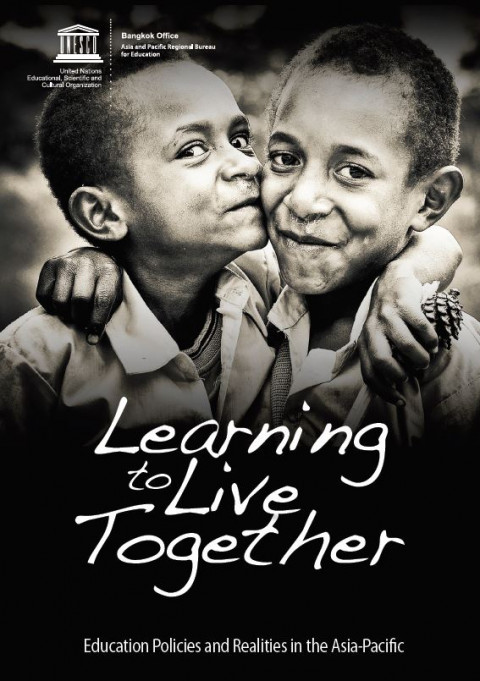 Learning to live together Année de publication: 2014 Auteur institutionnel: UNESCO Bangkok The importance of LTLT has increased in recent years. Indeed, relevant competencies appear to be gaining focus in international frameworks and educational initiatives across countries. This is all the more necessary as Voogt and Roblin (2012) argue, given the demands of our increasingly knowledge-based society in which “ideas and knowledge function as commodities” (p. 299 –300) and to which effective social and emotional skills are critical. It is perhaps all the more critical given the multivariate global challenges in the 21st Century and the need for unified global commitment to effectively combat these challenges. In this context, the significance of LTLT is reflected in both the rise of and growing interest in Global Citizenship Education (GCE), Education for Sustainable Development (ESD), Education for International Understanding (EIU) as well as peace and human rights education. The UN Secretary-General’s Global Education First Initiative, which lists ‘Fostering Global Citizenship’ as one of its three global priorities, also implicitly recognizes the significance of LTLT as a precursor to the building of a more peaceful society, one in which discrimination is intolerable and common challenges such as climate change and abject poverty are tackled together.Yet despite the significance of LTLT in the 21st Century, and despite numerous international initiatives to foster LTLT competencies, there is a large gap of evidence identifying how this supposition is translated into effective policy and curricula, and eventually into the reality of schools, teachers and learners. This report is a response to this gap, and attempts to understand how ten selected countries in the Asia-Pacific region – Afghanistan, Australia, Indonesia, Malaysia, Myanmar, Nepal, The Philippines, Republic of Korea, Sri Lanka and Thailand – have reflected and integrated LTLT into their education policies and initiatives. This variety of countries aims to reflect their diverse experiences in terms of reflecting LTLT through their education systems. By exploring a number of areas, namely policy, curricula, teachers and assessment, this study aims to identify what has so far been achieved in education systems of the Asia-Pacific region in the area of LTLT.This report is therefore targeted predominantly at education policy makers, researchers, academics as well as education practitioners of the Asia-Pacific region. Given its connection to Global Citizenship Education and other relevant international initiatives around sustainability and peace education, this report is also relevant to UNESCO’s partner organizations and the broader educational development community.This report will first present the research framework for the study, before exploring the social and economic contexts in the ten selected countries and wider regional factors in the Asia-Pacific in relation to global challenges in Chapter Two. Chapter Three will then examine national policy frameworks, including the vision of those policies in defining LTLT in education. Chapter Four focuses on the national curriculum in selected countries and the extent to which they incorporate learning objectives, subjects, and extra-curricular activities reflecting the concept of LTLT and related skills and competencies. In Chapter Five, teaching practices are examined, including the role of teachers and teacher education, as well as teaching methods and application of media and information literacy (MIL) in the classroom. Chapter Six then looks at assessment, and how far countries have attempted to develop assessment frameworks that measure the skills and competencies related to LTLT. Finally, Chapter Seven provides reflections and conclusions based on the main findings of the study, while also identifying trends across policy domains, shortcomings and some policy considerations.
  Comparative study of textbooks: working document in the framework of the Euro-Arab Dialogue; summary report Année de publication: 2015 Auteur: Jacqueline Costa-Lascoux | Janine d'Artois Pursuant to the Charter of the United Nations and the Constitution of UNESCO, calling for peace between peoples and respect for cultural diversity, several National Commissions for UNESCO have taken the initiative to create the conditions for a Euro-Arab dialogue in the field of education. The French and Moroccan National Commissions, in particular, have decided to launch studies to highlight stereotypes, misunderstandings and subliminal bias about Arab countries in European textbooks and about European countries in textbooks in the Arab world. First, these studies were conducted by researchers focusing on their own countries' textbooks in order to analyse how the history of the countries on "the other side of the Mediterranean" was represented. Second, a common methodology was developed to allow comoparative approaches favourable to Euro-Arab dialogue. This was to address any mutual bias or misrepresentations that may exist between the two regions and to work togehter to find ways of preventing and combating them. The originality of the approach was to conduct a critical analysis of textbooks published in each country and then underetake a comparative study to be used as the basis for common recommendations. Participants in this project initiated by the National Commissions defined three main objectives: 1. To strengthen dialogue, laying the foundations for learning to live together, based on mutual respect. 2. To help National Commissions for UNESCO, experts, institutions and non-governmental organizations (NGOs) to find ways to work together in areas of research of common interest. 3. To contribute to UNESCO's efforts to develop a stretegy relating to textbooks, to improve the quality of education for peace, human rights, mutual understanding and intercultural dialogue. Etude comparative de manuels scolaires: document de travail dans le cadre du dialogue Euro-Arabe, rapport de synthèse Année de publication: 2015 Auteur: Jacqueline Costa-Lascoux | Janine d'Artois Pursuant to the Charter of the United Nations and the Constitution of UNESCO, calling for peace between peoples and respect for cultural diversity, several National Commissions for UNESCO have taken the initiative to create the conditions for a Euro-Arab dialogue in the field of education. The French and Moroccan National Commissions, in particular, have decided to launch studies to highlight stereotypes, misunderstandings and subliminal bias about Arab countries in European textbooks and about European countries in textbooks in the Arab world. First, these studies were conducted by researchers focusing on their own countries' textbooks in order to analyse how the history of the countries on "the other side of the Mediterranean" was represented. Second, a common methodology was developed to allow comoparative approaches favourable to Euro-Arab dialogue. This was to address any mutual bias or misrepresentations that may exist between the two regions and to work togehter to find ways of preventing and combating them. The originality of the approach was to conduct a critical analysis of textbooks published in each country and then underetake a comparative study to be used as the basis for common recommendations. Participants in this project initiated by the National Commissions defined three main objectives: 1. To strengthen dialogue, laying the foundations for learning to live together, based on mutual respect. 2. To help National Commissions for UNESCO, experts, institutions and non-governmental organizations (NGOs) to find ways to work together in areas of research of common interest. 3. To contribute to UNESCO's efforts to develop a stretegy relating to textbooks, to improve the quality of education for peace, human rights, mutual understanding and intercultural dialogue. دراسة مقارنة للكتب املدرسية وثيقة عمل في إطار الحوار األوروبي - العربي Année de publication: 2015 Auteur: Jacqueline Costa-Lascoux | Janine d'Artois Pursuant to the Charter of the United Nations and the Constitution of UNESCO, calling for peace between peoples and respect for cultural diversity, several National Commissions for UNESCO have taken the initiative to create the conditions for a Euro-Arab dialogue in the field of education. The French and Moroccan National Commissions, in particular, have decided to launch studies to highlight stereotypes, misunderstandings and subliminal bias about Arab countries in European textbooks and about European countries in textbooks in the Arab world. First, these studies were conducted by researchers focusing on their own countries' textbooks in order to analyse how the history of the countries on "the other side of the Mediterranean" was represented. Second, a common methodology was developed to allow comoparative approaches favourable to Euro-Arab dialogue. This was to address any mutual bias or misrepresentations that may exist between the two regions and to work togehter to find ways of preventing and combating them. The originality of the approach was to conduct a critical analysis of textbooks published in each country and then underetake a comparative study to be used as the basis for common recommendations. Participants in this project initiated by the National Commissions defined three main objectives: 1. To strengthen dialogue, laying the foundations for learning to live together, based on mutual respect. 2. To help National Commissions for UNESCO, experts, institutions and non-governmental organizations (NGOs) to find ways to work together in areas of research of common interest. 3. To contribute to UNESCO's efforts to develop a stretegy relating to textbooks, to improve the quality of education for peace, human rights, mutual understanding and intercultural dialogue.
  Global Security, Religion and Education Development: a Crisis for the Field of Comparative Education? Année de publication: 2011 Auteur: Yusuf Sayed | Lynn Davies | Mike Hardy | Abbas Madandar Arani | Lida Kakia | Masooda Bano Auteur institutionnel: Taylor & Francis Building common ground on shared values should be a high priority for a diverse and devout society in an era of religious conflict. Otherwise we might fall into the equally false and far more dangerous illusion that we agree on nothing at all – and perhaps we tend to assume that education helps to do this, which is not necessarily the case. There is a greater concern that education is not just failing to step up effectively to the task of contesting undifferentiated and negative views of religions, but that it might not always be a force for good at all. It may in some cases help reinforce difference and create the conditions for conflict.The relationship, therefore, between religious difference, security and the assumed supportive role of education is far from a simple one. Global security, religion and education development: a crisis for the field of comparative education? Année de publication: 2011 Auteur: Yusuf Sayed | Lynn Davies | Mike Hardy | Abbas Madandar Arani | Lida Kakia | Masooda Bano Auteur institutionnel: Taylor & Francis Partager des valeurs communes devrait être une priorité absolue dans une société diversifiée et dévote en cette période de conflits religieux. Autrement, on pourrait tomber dans l’illusion, fausse et dangereuse, que nous sommes d’accord en rien - et on pense, probablement que l'éducation contribue à cet état de choses, alors que ce n’est pas forcément le cas. On est de plus en plus préoccupé par la question suivante : celle de considérer que non seulement l'éducation échoue quand il s’agit de contester d’une manière solide et efficace les points de vues non nuancés et négatifs en matière de religions, mais aussi que l’éducation n’est finalement pas une bonne chose. Dans certains cas, elle peut contribuer à renforcer la différence et créer les conditions d'un conflit. La relation, donc, entre la différence religieuse, la sécurité et le rôle présumé de soutien de l'éducation est loin d'être simple. Education 2030: Déclaration d'Incheon et Cadre d'action: vers une éducation inclusive et équitable de qualité et un apprentissage tout au long de la vie pour tous Année de publication: 2016 Auteur institutionnel: Organisation des Nations Unies pour l'éducation, la science et la culture (UNESCO) | United Nations Development Programme (UNDP) | United Nations Children's Fund (UNICEF) | United Nations Entity for Gender Equality and the Empowerment of Women (UN Women) | World Bank | United Nations Population Fund (UNFPA) | UN. Office of the United Nations High Commissioner for Refugees (UNHCR) This framework — painstakingly drafted over many months with input from governments, international agencies, civil society and experts — provides guidance for implementing the education commitments made in the 2030 Agenda for Sustainable Development at a national, regional and global level. In particular: it aims at mobilizing all countries and partners around Sustainable Education Goal 4 and its targets; it proposes ways of implementing, coordinating, financing and monitoring the new commitments; and it proposes indicative strategies which countries may wish to draw upon in developing their plans, taking into account different national realities, capacities and levels of development and respecting national policies and priorities.
 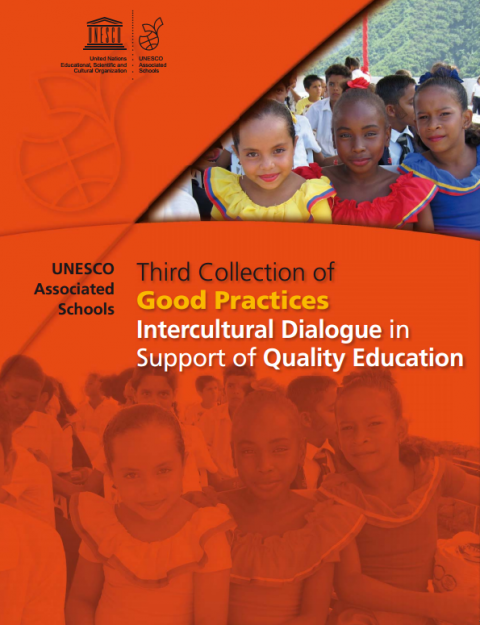 Third collection of good practices: intercultural dialogue in support of quality education Année de publication: 2013 Auteur institutionnel: UNESCO Associated Schools Project Network (ASPnet) The UNESCO Associated Schools Project Network (ASPnet) conducts pilot projects aimed at reinforcing the humanistic and ethical principles of UNESCO in school curricula and throughout the learning process, often within the framework of UN and UNESCO International Day, Years and Decades, Promoting intercultural dialogue is thus an ASPnet priority. The initiatives presented in this Third Collection of ASPnet Good Practices were carried out by ASPnet schools and their partner institutions in the context of the International Year for the Rapprochement of Cultures (2010). The selected projects illustrate both multicultural education and intercultural education in action. Troisième recueil de bonnes pratiques: le dialogue interculturel à l'appui de l'éducation de qualité Année de publication: 2013 Auteur institutionnel: UNESCO Associated Schools Project Network (ASPnet) Les écoles associées de l'UNESCO (réSEAU) mènent des projets pilotes visant à renforcer les principes humanistes et éthiques de l'UNESCO dans les programmes scolaires et tout au long du processus d'apprentissage, souvent dans le cadre de l'ONU et de la Journée internationale de l'UNESCO, années et décennies, la promotion du dialogue interculturel est donc une priorité Reseau. Les initiatives présentées dans ce troisième Collection de Reseau bonnes pratiques ont été réalisées par les écoles Reseau et leurs institutions partenaires dans le cadre de l'Année internationale du rapprochement des cultures (2010). Les projets sélectionnés illustrent à la fois l'éducation multiculturelle et l'éducation interculturelle dans l'action.