
Ressources
Explorez une large gamme de ressources sur le GCED afin d’approfondir votre compréhension et de renforcer vos activités de recherche, de plaidoyer, d’enseignement et d’apprentissage.
3,376 résultats trouvés
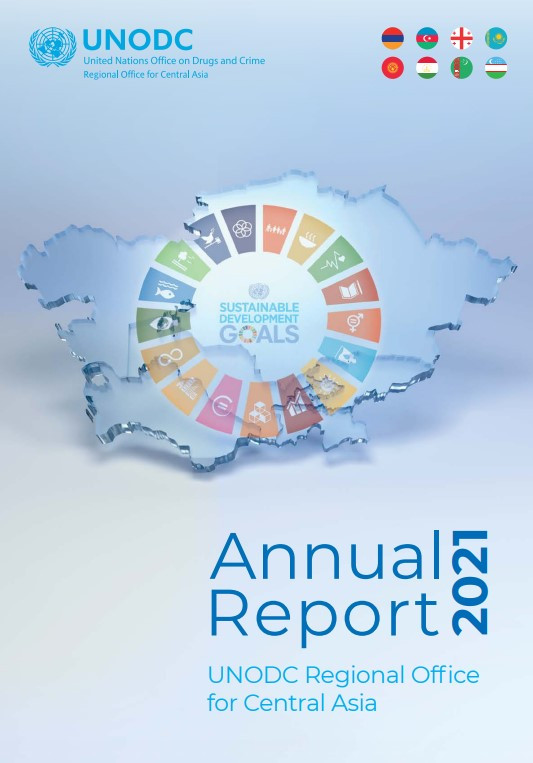 Годовой отчет за 2021 (Региональное представительство УНП ООН в Центральной Азии) Année de publication: 2022 Auteur institutionnel: UN. Office on Drugs and Crime (UNODC) Отчет содержит сведения об основных результатах, достигнутых Региональным представительством Управления Организации Объединенных Наций по наркотикам и преступности в Центральной Азии (РЦПДЦА УНП ООН) в 2021 году. УНП ООН наращивает свои усилия с целью оказания помощи людям в непростое время, помочь противостоять возникающим угрозам с учетом стандартов в области прав человека и гендерного равенства, а также верховенства закона. Благодаря стратегическим инициативам, способствуют укреплению мира, предотвращению конфликтов, устранению коренных причин и факторов нестабильности и насилия.
  Human Rights: 13 Ideas Received To Be Deconstructed Année de publication: 2022 Auteur: Céline Branaa | Louise Pluyaud | Louise Savri Auteur institutionnel: Commission nationale consultative des droits de l'homme (CNCDH) Aimed at 14-20 year-olds, this book aims to raise awareness of human rights and reminds us of the major role they play in our lives and in the organization of contemporary society. Today, human rights are being challenged by various movements that question their usefulness, effectiveness and universality. The links between certain violations of fundamental rights, climate change, the dangers of digital technology and so many other contemporary issues are often misunderstood or even ignored. The NCCHR is convinced of the urgent need to reaffirm that human rights are the foundation of a democratic society. To this end, the members of the NCCHR set out to deconstruct 13 of the most common misconceptions heard or disseminated in the media and on social networks. Through 13 illustrated chapters, each corresponding to a preconceived idea, human rights appear at the heart of our civilization as a current and indispensable reference. Readers are invited to become actively involved in their promotion. This book is a reminder that fundamental rights are not a construct of the past, but a necessary tool for the present. Highlighting the richness of human rights, this book is an invitation to anticipate a common future in which the dignity and freedom of the human person represent an accessible promise. Les droits humains: 13 idées reçues à déconstruire Année de publication: 2022 Auteur: Céline Branaa | Louise Pluyaud | Louise Savri Auteur institutionnel: Commission nationale consultative des droits de l'homme (CNCDH) Destiné aux 14-20 ans, ce livre vise à faire connaître les droits humains et rappelle la place majeure qu’ils occupent dans nos vies ainsi que dans l’organisation de notre société contemporaine. Aujourd’hui, les droits humains sont remis en cause par différents mouvements qui contestent leur utilité, leur efficacité ou encore leur universalité. Les liens entre certaines violations des droits fondamentaux, le changement climatique, les dangers du numérique, et tant d’autres aspects contemporains restent d’ailleurs bien souvent incompris voire méconnus. La CNCDH est convaincue de l’urgence de réaffirmer que les droits humains constituent le fondement d’une société démocratique. À cette fin, les membres de la CNCDH ont souhaité déconstruire 13 des idées reçues les plus souvent entendues ou diffusées dans les médias et sur les réseaux sociaux. À travers 13 chapitres illustrés, correspondant chacun à une idée reçue, les droits humains apparaissent au cœur de notre civilisation à la manière d’une référence actuelle et indispensable. Le lecteur y est invité à devenir acteur de leur promotion. Cet ouvrage rappelle à quel point les droits fondamentaux ne sont pas une construction appartenant au passé mais bien un outil nécessaire pour le temps présent. Mettant en avant la richesse des droits humains cet ouvrage est invitation à anticiper un avenir commun dans lequel la dignité et la liberté de la personne humaine représentent une promesse accessible. Pour toutes et tous.
  خطة العمل: البرنامج العالمي لل تثقيف في مجال حقوق الإنسان؛ المرحلة الأولى Année de publication: 2006 Auteur institutionnel: UN Office of the High Commissioner for Human Rights The Plan of Action for the first phase (2005-2007) of the World Programme was adopted by all United Nations Member States in July 2005. It proposes a concrete strategy and practical guidance for implementing human rights education in primary and secondary schools. On 10 December 2004, the General Assembly of the United Nations proclaimed the World Programme for Human Rights Education (2005-ongoing) to advance the implementation of human rights education programmes in all sectors. Building on the foundations laid during the United Nations Decade for Human Rights Education (1995-2004), this new initiative reflects the international community’s increasing recognition that human rights education produces far-reaching results. By promoting respect for human dignity and equality and participation in democratic decision-making, human rights education contributes to the long-term prevention of abuses and violent conflicts. To help make human rights a reality in every community, the World Programme seeks to promote a common understanding of the basic principles and methodologies of human rights education, to provide a concrete framework for action and to strengthen partnerships and cooperation from the international level down to the grass roots. План действий Всемирная программа образования в области прав человека : Первый этап Année de publication: 2006 Auteur institutionnel: UN Office of the High Commissioner for Human Rights The Plan of Action for the first phase (2005-2007) of the World Programme was adopted by all United Nations Member States in July 2005. It proposes a concrete strategy and practical guidance for implementing human rights education in primary and secondary schools. On 10 December 2004, the General Assembly of the United Nations proclaimed the World Programme for Human Rights Education (2005-ongoing) to advance the implementation of human rights education programmes in all sectors. Building on the foundations laid during the United Nations Decade for Human Rights Education (1995-2004), this new initiative reflects the international community’s increasing recognition that human rights education produces far-reaching results. By promoting respect for human dignity and equality and participation in democratic decision-making, human rights education contributes to the long-term prevention of abuses and violent conflicts. To help make human rights a reality in every community, the World Programme seeks to promote a common understanding of the basic principles and methodologies of human rights education, to provide a concrete framework for action and to strengthen partnerships and cooperation from the international level down to the grass roots. Plan de acción: programa Mundial para la Educación en Derechos Humanos, primera etapa Année de publication: 2006 Auteur institutionnel: UN Office of the High Commissioner for Human Rights The Plan of Action for the first phase (2005-2007) of the World Programme was adopted by all United Nations Member States in July 2005. It proposes a concrete strategy and practical guidance for implementing human rights education in primary and secondary schools. On 10 December 2004, the General Assembly of the United Nations proclaimed the World Programme for Human Rights Education (2005-ongoing) to advance the implementation of human rights education programmes in all sectors. Building on the foundations laid during the United Nations Decade for Human Rights Education (1995-2004), this new initiative reflects the international community’s increasing recognition that human rights education produces far-reaching results. By promoting respect for human dignity and equality and participation in democratic decision-making, human rights education contributes to the long-term prevention of abuses and violent conflicts. To help make human rights a reality in every community, the World Programme seeks to promote a common understanding of the basic principles and methodologies of human rights education, to provide a concrete framework for action and to strengthen partnerships and cooperation from the international level down to the grass roots. Plan d'action: programme mondial en faveur de l'Éducation aux droits de l'Homme, première phase Année de publication: 2006 Auteur institutionnel: UN Office of the High Commissioner for Human Rights The Plan of Action for the first phase (2005-2007) of the World Programme was adopted by all United Nations Member States in July 2005. It proposes a concrete strategy and practical guidance for implementing human rights education in primary and secondary schools. On 10 December 2004, the General Assembly of the United Nations proclaimed the World Programme for Human Rights Education (2005-ongoing) to advance the implementation of human rights education programmes in all sectors. Building on the foundations laid during the United Nations Decade for Human Rights Education (1995-2004), this new initiative reflects the international community’s increasing recognition that human rights education produces far-reaching results. By promoting respect for human dignity and equality and participation in democratic decision-making, human rights education contributes to the long-term prevention of abuses and violent conflicts. To help make human rights a reality in every community, the World Programme seeks to promote a common understanding of the basic principles and methodologies of human rights education, to provide a concrete framework for action and to strengthen partnerships and cooperation from the international level down to the grass roots.
  Plan of action: world programme for human rights education; first phase Année de publication: 2006 Auteur institutionnel: UN Office of the High Commissioner for Human Rights The Plan of Action for the first phase (2005-2007) of the World Programme was adopted by all United Nations Member States in July 2005. It proposes a concrete strategy and practical guidance for implementing human rights education in primary and secondary schools. On 10 December 2004, the General Assembly of the United Nations proclaimed the World Programme for Human Rights Education (2005-ongoing) to advance the implementation of human rights education programmes in all sectors. Building on the foundations laid during the United Nations Decade for Human Rights Education (1995-2004), this new initiative reflects the international community’s increasing recognition that human rights education produces far-reaching results. By promoting respect for human dignity and equality and participation in democratic decision-making, human rights education contributes to the long-term prevention of abuses and violent conflicts. To help make human rights a reality in every community, the World Programme seeks to promote a common understanding of the basic principles and methodologies of human rights education, to provide a concrete framework for action and to strengthen partnerships and cooperation from the international level down to the grass roots. Plan d’action Programme: mondial en faveur de l’éducation aux droits de l’homme; Première phase Année de publication: 2006 Auteur institutionnel: UN Office of the High Commissioner for Human Rights Le Plan d’action pour la première phase (2005-2007) du Programme mondial a été adopté par l’ensemble des États membres de l’ONU en juillet 2005. Il propose une stratégie concrète et des conseils pratiques pour intégrer l’éducation dans le domaine des droits de l’homme dans les écoles primaires et secondaires. Le 10 décembre 2004, l’Assemblée générale de l’ONU a adopté le Programme mondial d’éducation dans le domaine des droits de l’homme (qui est en cours depuis 2005) afin de promouvoir l’exécution des programmes d’éducation en la matière dans tous les secteurs2. S’appuyant sur le travail accompli au cours de la Décennie des Nations Unies pour l’éducation dans le domaine des droits de l’homme (1995-2004), cette nouvelle initiative traduit la reconnaissance croissante par la communauté internationale du fait que l’éducation dans le domaine des droits de l’homme produit des résultats d’une portée considérable. En favorisant le respect de la dignité humaine, l’égalité et la participation à la prise de décisions de façon démocratique, cette éducation contribue à prévenir à long terme les violations des droits de l’homme et les confl its violents. Pour aider à faire des droits de l’homme une réalité dans chaque société, la communauté internationale s’eff orce par le biais du Programme mondial à promouvoir une conception commune des principes fondamentaux et des méthodes d’éducation dans ce domaine, à mettre en place un cadre concret d’intervention et à renforcer les partenariats et la coopération sur tous les niveaux, depuis le niveau international jusqu’à l’échelon communautaire.
 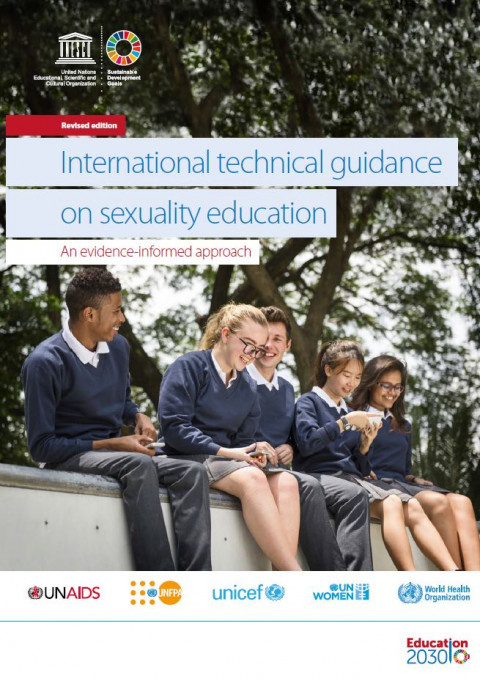 International Technical Guidance on Sexuality Education: An Evidence-Informed Approach Année de publication: 2018 Auteur institutionnel: Joint United Nations Programme on HIV/AIDS (UNAIDS) | United Nations Population Fund (UNFPA) | United Nations Children's Fund (UNICEF) | United Nations Entity for Gender Equality and the Empowerment of Women (UN Women) | World Health Organization (WHO) The UN International technical guidance on sexuality education was first published in 2009 as an evidence-informed approach for schools, teachers and health educators.Recognizing the dynamic shifts in the field of sexuality education that have occurred since then, an expanded group of UN co-publishing partners has reviewed and updated the content to respond appropriately to the contemporary needs of young learners, and to provide support for education systems and practitioners seeking to address those needs. The International technical guidance on sexuality education (revised edition) provides sound technical advice on the characteristics of effective comprehensive sexuality education (CSE) programmes; a recommended set of topics and learning objectives that should be covered in comprehensive sexuality education; and, recommendations for planning, delivering and monitoring effective CSE programmes. This revised edition of the Guidance reaffirms the position of sexuality education within a framework of human rights and gender equality, and promotes structured learning about sex and relationships in a manner that is positive, affirming, and centred on the best interests of the young person. It is based on a review of the latest evidence and lessons-learned from implementing CSE programmes across the globe. The revised Guidance reflects the contribution of sexuality education to the realization of multiple Sustainable Development Goals, notably Goal 3 on good health and well-being for all, Goal 4 on quality education for all, and Goal 5 to achieve gender equality.