
Ressources
Explorez une large gamme de ressources sur le GCED afin d’approfondir votre compréhension et de renforcer vos activités de recherche, de plaidoyer, d’enseignement et d’apprentissage.
2,161 résultats trouvés
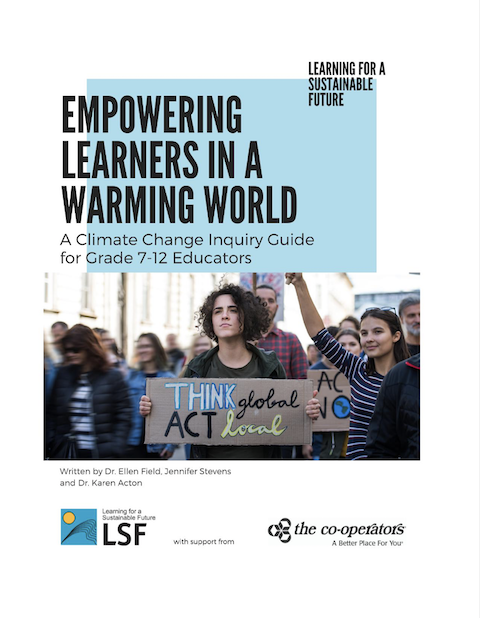 Empowering Learners in a Warming World: A Climate Change Inquiry Guide for Secondary Educators Année de publication: 2020 Auteur: Ellen Field | Jennifer Stevens | Karen Acton Auteur institutionnel: Learning for a Sustainable Future (LSF) The purpose of this guide is to present opportunities to evolve students’ understanding of the climate and climate change, assess the risks and opportunities to mitigate and adapt to the changing climate, unpack ethical dimensions, and honour emotions that are part of the process of coming to understand the complexity and urgency of the issue.Transformative teaching strategies used throughout this guide are important to tackling complex problems like climate change. These strategies often begin with the understanding and experiences that students bring with them. Educators, who themselves are grappling with climate change issues, take the role of facilitators and co-learners as the class works together to learn, critically reflect, and take action.Most importantly, this guide aims to engage students in contributing to solutions in their schools, communities and homes. It aims to connect educators to instructional strategies that allow for students’ perspectives and voice, currently available climate change science and research, teacher resources and activities, datasets, and action solutions.
  Young People’s Participation and Civic Engagement Année de publication: 2020 Auteur institutionnel: Generation Unlimited | Global Initiative on Decent Jobs for Youth The aim of this guide is to support the Generation Unlimited strategic priority to “Equip young people as problem-solvers and engaged members of society, helping to create a better world”, through providing evidence and guidance that has the potential to improve young people’s participation and civic engagement. This guide will identify successful strategies that can increase young people’s civic participation and boost the knowledge, skills, attitudes and values crucial for future civic engagement. It will identify structures that are likely to amplify young people’s voices in decision-making and benefit local communities.
  Introduction to Anti-Racist Curriculum Development: A Guide for Teachers in Scotland Année de publication: 2021 Auteur institutionnel: Coalition for Racial Equality and Rights (CRER) This guide outlines why anti-racist approaches are important in curriculum development, and explores the barriers that have hampered race equality in education. It then goes on to explore three key components for developing anti-racist approaches to curriculum development: Decolonising the curriculum Building intercultural competence Reducing racism, prejudice and discrimination
 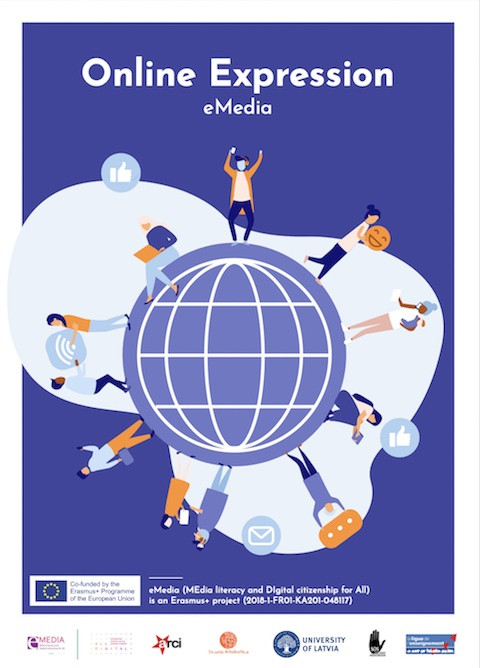 Online Expression: eMedia Année de publication: 2021 Auteur institutionnel: e-Media project Consortium | Erasmus+ The handbook on Online Expression gives an insight on what is online expression, and intends to promote a more creative, active and wise use of the web, exploring the opportunities given not only by social media and blogs. The aim of the handbook is to help teachers guide young people to hone their online expression skills by explaining how to be proactive in their online expressions and less reactive, to become a digital prosumer and not a consumer. The hanbook focuses on the following elements that characterizes online active participation: The creation of relationships; The building of a community or the fact of representing a community; The collective interest; The intention to produce a change, to influence society.
  The #Talking Climate Handbook: How to Have Conversations About Climate Change in Your Daily Life Année de publication: 2019 Auteur: Robin Webster | George Marshall Auteur institutionnel: Climate Outreach | EIT Climate-KIC This handbook is for anyone who wants to have constructive day-to-day conversations about the climate crisis. It provides pragmatic and evidence-based guidance on how to talk about climate change with friends and family, acquaintances and strangers - on the bus, at work, at a sports event or at home over dinner. The handbook is informed by the idea that you don’t have to be a scientist, or live in a certain place, to care about and want to talk about climate change. It is a topic for everybody, whoever and wherever we are.
 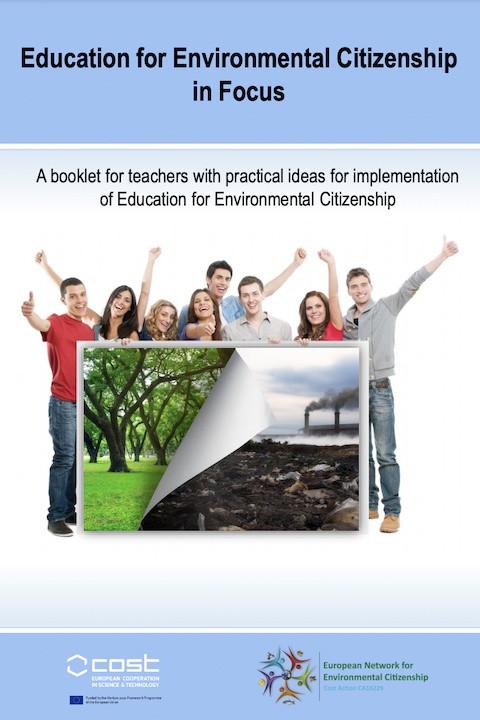 Una visión nítida de la Educación para la Ciudadanía Ambiental: Una publicación para profesorado con ideas prácticas para trabajar la Ciudadanía Ambiental a través de la educación Année de publication: 2019 Auteur institutionnel: European Network for Environmental Citizenship (ENEC) La Red Europea para la Ciudadanía Ambiental (ENEC) – financiada como Acción COST (CA16229-Horizon 2020) – aúna a más de 130 expertos de 38 países con el objetivo de mejorar la comprensión, práctica y evaluación de la Ciudadanía Ambiental en Europa y en los países participantes. El concepto de Ciudadanía Ambiental ha sido influyente en muchos ámbitos como la economía, la política, la filosofía, la gestión y el comercio y se podría desarrollar y aplicar mejor en el ámbito de la educación. La actual crisis ambiental, el cambio climático, la pérdida de biodiversidad y la contaminación requieren de una educación que permita el empoderamiento de los ciudadanos. La educación juega un papel clave en la formación de la futura ciudanía. El enfoque didáctico para una ciudadanía ambiental es una metodología que apunta en esta dirección. Esta metodología propone diferentes pasos y etapas, aunque no es obligatorio seguirlos todos o aplicarlos en un determinado orden. Dependiendo de las circunstancias, del problema ambiental que se esté tratando, del nivel educativo, (p. ej. Primaria o Secundaria) o del contexto (p. ej. formal o no formal), se pueden llevar a cabo unas adaptaciones u otras. Focus sur l’Éducation à la Citoyenneté Environnementale: Un livret pour les enseignants avec des idées pratiques pour l’éducation à la citoyenneté environnementale (EEC) Année de publication: 2019 Auteur institutionnel: European Network for Environmental Citizenship (ENEC) Le réseau européen pour la citoyenneté environnementale – European Network for Environmental Citizenship (ENEC) – financé en tant qu’Action COST (CA16229-Horizon 2020) – a réuni plus de 120 experts venant de 38 pays dans l’objectif d’améliorer la compréhension, la pratique et l’évaluation de la Citoyenneté Environnementale en Europe et dans lespays participants. La Citoyenneté Environnementale a été un concept influant dans de nombreux champs – économie, politique, philosophie, management organisationnel et entrepreneurial, marketing – et pourrait également être mieux exploitéeet davantage établie dans le champ de l’éducation. La crise environnementale contemporaine avec le changement climatique, perte de la biodiversité, pollution de l’air et tous les autres problèmes environnementaux locaux et globaux exigent une éducation à même d’habiliter des citoyens environnementaux. L’éducation joue un rôle clé dans la construction des futurs citoyens environnementaux. L’approche pédagogique de l’Éducation à la Citoyenneté Environnementale est une proposition qui va dans ce sens. L’approche recommande des éléments spécifiques tels des stades et étapes, mais il n’est pas obligatoire de tous les suivre ou de les appliquer selon un ordre linéaire particulier. Selon le problème environnemental à l’étude, le niveau d’éducation (par ex. primaire ou secondaire) et le mode éducatif (par ex. formel ou non-formel), les différenciations et adaptations nécessaires peuvent être faites.
  Gender-Responsive Education: Toolkit for Teachers, Teacher Educators, School Managers and Curriculum Developers in Africa Année de publication: 2020 Auteur: Dawit Mekonnen | Haregewoin Cherine Auteur institutionnel: UNESCO International Institute for Capacity-Building in Africa (IICBA) This GRE Toolkit is intended to address gender equality in education through intervention across the whole education sector. More specifically, the toolkit contributes to the enhancement of institutional capacities to develop gender responsive curricula, evaluate teaching-learning materials, organize/create gender responsive classroom interaction, eliminate stereotypes in teaching and learning materials, support improvement of the teaching methods and learning assessment techniques in schools and Teacher Training Institutes.The Toolkit is a guide for educators who plan to facilitate gender-responsive education. As such it consists of activities, tools and notes to the facilitators in addition to presenting conceptual discussions and relevant data.
  Toolkit for Designing a Comprehensive Distance Learning Strategy Année de publication: 2021 Auteur: Emily Morris | Yvette Tan Auteur institutionnel: United States Agency for International Development (USAID) The purpose of this toolkit is to provide practical guidance (tools, examples, and resources) for designing a comprehensive distance learning strategy that covers an entire education sector or system.
  Toolkit for Inclusive Early Childhood Education and Care (ECEC): Providing High Quality Education and Care to All Young Children Année de publication: 2021 Auteur institutionnel: European Commission | European Union (EU) Early childhood education and care (ECEC) is the first step on the lifelong learning ladder. It provides young children with professional support to grow, learn and flourish. While it benefits all children, it is even more crucial to children who may face additional needs or difficulties due to individual or family circumstances, e.g. children living in poverty or precarious conditions, children with disabilities or special learning needs, or children from a migrant background or from a minority ethnic community. All children must therefore be able to benefit from high quality ECEC, independently from their individual or family circumstances. It helps them develop to the best of their abilities and supports their well-being. The European Union 2019 Council Recommendation for High-Quality Early Childhood Education and Care Systems offers a Quality framework for ECEC to support Member States to work towards achieving higher quality and more inclusive ECEC systems. The 2020 Communication from the European Commission on achieving the European Education Area by 2025 announced the release of a European toolkit for inclusion in ECEC, drawing on exchange of best practice and the input of experts and stakeholders. The Toolkit for inclusion in ECEC recalls political commitments made e.g. in the European Pillar of Social Rights, policy recommendations which have been adopted by EU Member States as well as research findings. They all converge towards the need and will to develop more inclusive ECEC systems and settings. To ensure equity for all children in accessing and benefitting from ECEC, the toolkit includes a set of practical solutions and measures to inspire ECEC policy makers at the national, regional or local level, as well as ECEC practitioners. It includes examples of good practice in ECEC settings and identifies useful ideas and resources to inspire leaders and staff across Europe to progress towards practice that is more inclusive. The toolkit aims to inspire decision-makers to use the examples of good practice to create appropriate conditions that can benefit all children and families.