
Ressources
Explorez une large gamme de ressources sur le GCED afin d’approfondir votre compréhension et de renforcer vos activités de recherche, de plaidoyer, d’enseignement et d’apprentissage.
2,781 résultats trouvés
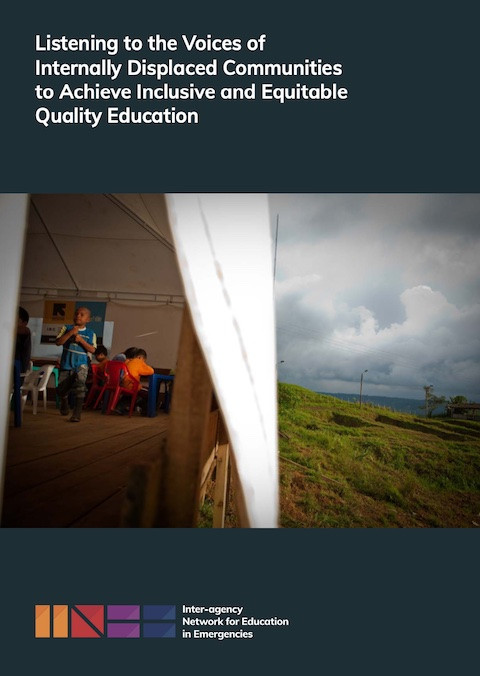 Listening to the Voices of Internally Displaced Communities to Achieve Inclusive and Equitable Quality Education Année de publication: 2021 Auteur: Caroline Keenan Auteur institutionnel: Inter-agency Network for Education in Emergencies (INEE) This paper outlines the real-life day-to-day challenges young IDPs experience when seeking access to quality education, which is fundamental to their healthy development and future life chances. It reflects the perspectives of teachers who have been displaced, and the challenges they have faced both personally and professionally in attempting to support the learning of children and young people in their communities. Young IDPs and internally displaced teachers shared these experiences in a series of five roundtable events hosted by the Inter-agency Network for Education in Emergencies (INEE) in March and April 2021. The paper also provides insights from other roundtable participants, including education in emergencies (EiE) practitioners, government representatives, United Nations (UN) staff, members of international non-governmental organizations (INGOs) and local civil so- ciety, and other stakeholders who are working to support access to education in displaced communities. They all are calling for taking urgent and concrete action to ensure access to quality education for internally displaced children and young people. The United Nations Secretary-General’s High-Level Panel has a unique opportunity to influence the changes needed to achieve this. The recommendations made in the panel’s final report to the Secretary-General and United Nations Member States will be critical to the future outcomes of millions of children and young people around the world.
  Inequalities in Learning in Vietnam: Teachers’ Beliefs About and Classroom Practices for Ethnic Minorities (RISE Working Paper Series; 21/061) Année de publication: 2021 Auteur: Joan DeJaeghere | Vu Dao | Bich-Hang Duong | Phuong Luong Auteur institutionnel: Research on Improving Systems of Education (RISE) Global and national education agendas are concerned with improving quality and equality of learning outcomes. This paper provides an analysis of the case of Vietnam, which is regarded as having high learning outcomes and less inequality in learning. But national data and international test outcomes may mask the hidden inequalities that exist between minoritized groups and majority (Kinh) students. Drawing on data from qualitative videos and interviews of secondary teachers across 10 provinces, we examine the role of teachers’ beliefs, curricular design and actions in the classroom (Gale et al., 2017). We show that teachers hold different beliefs and engage in curricular design – or the use of hegemonic curriculum and instructional practices that produce different learning outcomes for minoritized students compared to Kinh students. It suggests that policies need to focus on the social-cultural aspects of teaching in addition to the material and technical aspects.
 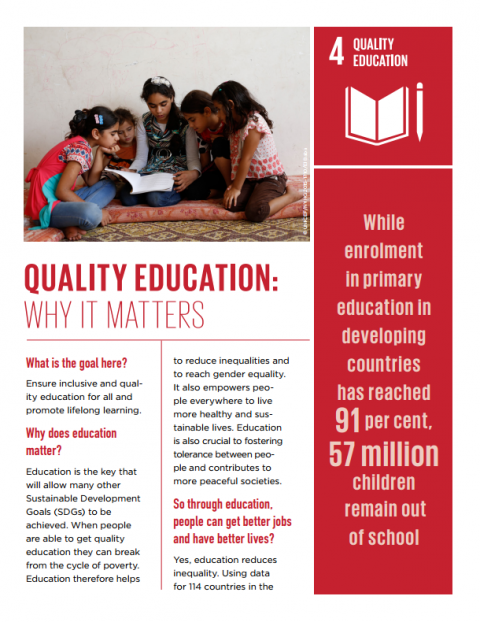 Quality Education: Why It Matters Auteur institutionnel: United Nations Children's Fund (UNICEF) Education is the key that will allow many other Sustainable Development Goals (SDGs) to be achieved. When people are able to get quality education they can break from the cycle of poverty. Education therefore helps to reduce inequalities and to reach gender equality. It also empowers people everywhere to live more healthy and sustainable lives. Education is also crucial to fostering tolerance between people and contributes to more peaceful societies.
  On Education & Democracy: 25 Lessons from the Teaching Profession Année de publication: 2019 Auteur: Susan Hopgood | Fred van Leeuwen Auteur institutionnel: Education International (EI) On the occasion of the 25th anniversary of Education International, the authors have selected 25 lessons which educators and their organizations have learnt throughout history on education and democracy.These lessons serve as a set of recommendations to every classroom teacher working at all levels in education systems and in their education unions. These lessons are an invitation to take a stand in favour of democracy and its institutions and to consider contributions that teachers, schools, universities and representative organizations can make to solidify and progress democratic life. Sobre la educación y la democracia: 25 lecciones de la profesión docente Année de publication: 2019 Auteur: Susan Hopgood | Fred van Leeuwen Auteur institutionnel: Education International (EI) Con motivo del 25o aniversario de la Internacional de la Educación, que actualmente reúne a los sindicatos de la educación de 170 países, que representan a 32,5 millones de docentes y personal de apoyo educativo, hemos seleccionado 25 lecciones sobre la educación y la democracia que el personal docente y sus organizaciones han aprendido a lo largo de la historia. Nuestras lecciones ofrecen una serie de recomendaciones destinadas a todo el personal docente que trabaja en todos los niveles de nuestros sistemas educativos y en sus sindicatos de la educación. Estas lecciones son una invitación a posicionarse en favor de la democracia y sus instituciones y a analizar las contribuciones que el profesorado, las escuelas, las universi- dades y las organizaciones que los representan pueden aportar para consolidar y hacer progresar la vida democrática. Éducation & démocratie: 25 leçons de la profession enseignante Année de publication: 2019 Auteur: Susan Hopgood | Fred van Leeuwen Auteur institutionnel: Education International (EI) À l’occasion du 25e anniversaire de l’Internationale de l’Éducation, qui regroupe actuellement les syndicats nationaux de l’éducation de 170 pays représentant 32,5 millions d’éducateur·rice·s et de membres des personnels de soutien à l’éducation, les auteurs ont sélectionné 25 leçons que les éducateur·rice·s et leurs organisations ont tirées sur l’éducation et la démocratie au long de l’histoire. Ces leçons établissent une série de recommandations destinées à tou·te·s les enseignant·e·s travaillant à tous les niveaux de nos systèmes éducatifs et de leurs syndicats d’ensei- gnement. Les leçons sont une invitation à prendre position en faveur de la démocratie et de ses institutions et à examiner les contributions que les enseignant·e·s, les écoles, les universités et les organisations représentatives peuvent apporter pour consolider et faire avancer la vie démocratique.
 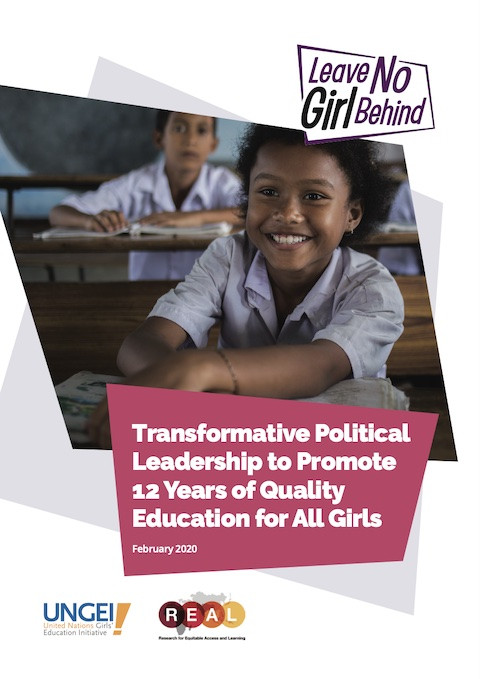 Transformative Political Leadership to Promote 12 Years of Quality Education for All Girls Année de publication: 2020 Auteur: Gloria Diamond Auteur institutionnel: University of Cambridge. Research for Equitable Access and Learning (REAL) Centre | United Nations Girls' Education Initiative (UNGEI) How can political leadership promote 12 years of quality education for all girls? This report from the Research for Equitable Access and Learning (REAL) Centre, University of Cambridge, seeks to answer this question. The study is based on a review of global evidence, with a focus on low- and lower-middle income countries where most action is needed to achieve the world’s development goals. The researchers also conducted interviews with 11 current and former political leaders involved in championing girls’ education. On the basis of this research, this report outlines seven recommendations on how political leadership can be leveraged to achieve 12 years of quality education for all girls.
 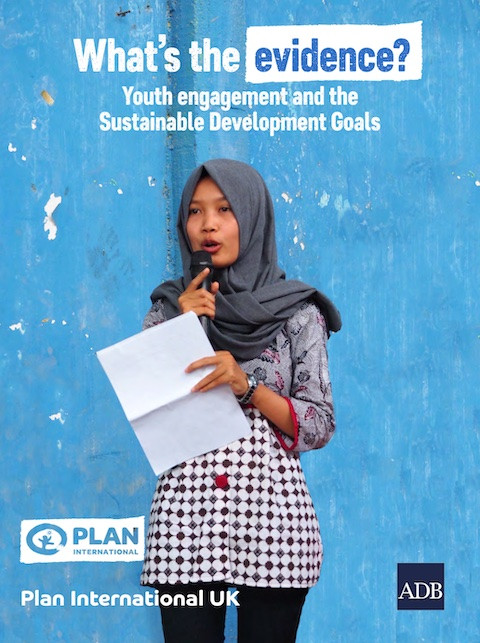 What’s the Evidence?: Youth Engagement and the Sustainable Development Goals Année de publication: 2018 Auteur institutionnel: Asian Development Bank (ADB) | Plan International UK This study represents an encouraging body of evidence, both primary and secondary, which will inform future practice and policymaking with regard to young women and men’s contributions towards the Sustainable Development Goals (SDGs). The learnings from this study provide important insight that will support the design and implementation of youth programming. It examines five programs across three youth-focused or youth-led organisations: Plan International UK, the Asian Development Bank (ADB), and AIESEC.
  Positioning ICT in Education to Achieve the Education 2030 Agenda in Asia and the Pacific: Recommendations for a Regional Strategy Année de publication: 2018 Auteur: Hyojeong So | Kyungsim Yeon | Kyungsim Yeon | Jian Xi Teng Auteur institutionnel: UNESCO Bangkok This regional study is an important document for Asia-Pacific Member States as it consolidates data related to the effective use of ICT in education. One highlight of this study is the five priority areas for the use of ICT towards achieving SDG4 and Education 2030 that were identified based on a synthesis of the data:ICT for transforming and expanding TVET and higher education ICT for improving teacher qualityICT for improving access to and quality of secondary education ICT for enabling inclusive and equitable learningICT for monitoring and evaluation
 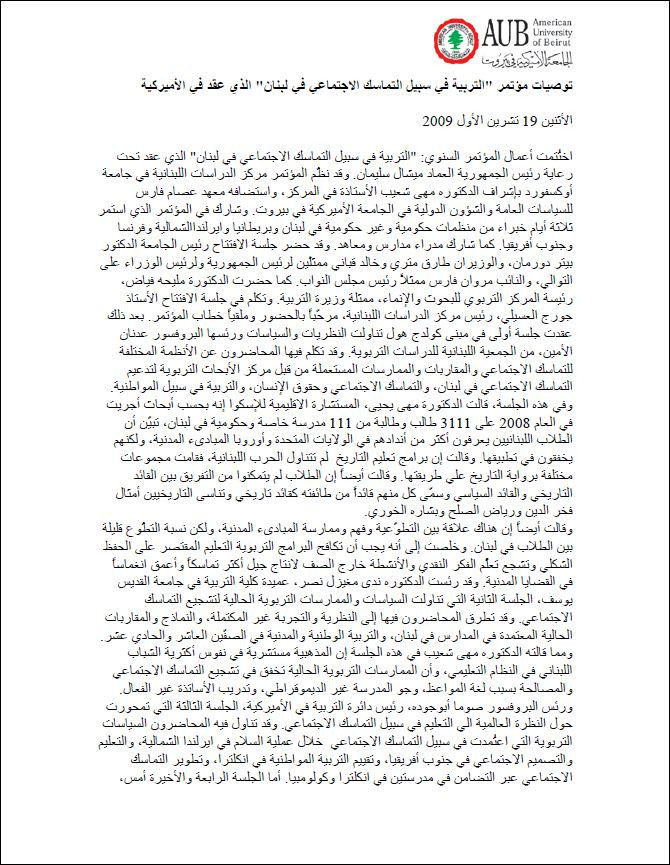 توصيات مؤتمر " التربية في سبيل التماسك الاجتماعي في لبنان " Année de publication: 2009 Auteur institutionnel: American University of Beirut الملف عبارة عن التوصيات التي خرج بها مؤتمر "التربية والتماسك الاجتماعي في لبنان"، والذي أقيم بالجامعة الامريكية في بيروت. التوصيات تتعاطى مع تحديات التماسك الاجتماعي في لبنان باختلاف طوائفه ومكوناته العرقية. أستمر هذا المؤتمر ثلاث أيام وحضرها مجموعة من المشاركين من لبنان وخارجه.